Nov 7, 2019 | News
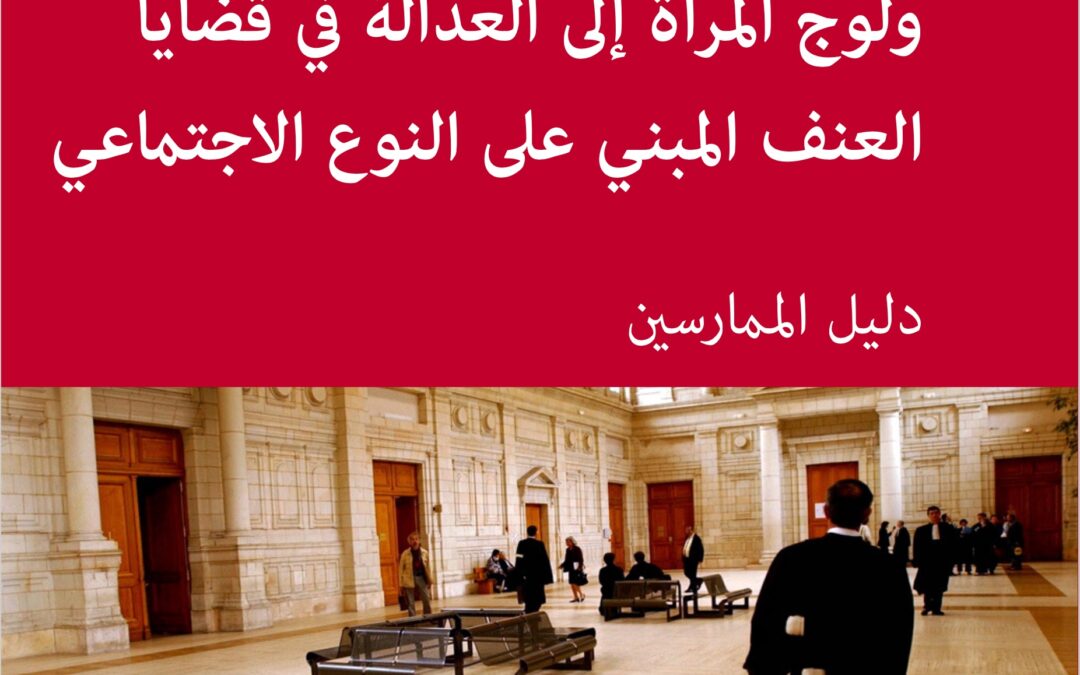
Today, the ICJ published an Arabic translation of Practitioners’ Guide N°12 on Women’s Access to Justice for Gender-based Violence.
The Guide is designed to support legal practitioners and human rights defenders involved or interested in pursuing cases of gender-based violence.
It provides information about regional and international law and standards relevant to gender-based violence, advice on implementing these standards as part of domestic law reform and examples of existing good practice in seeking protection for women.
The Guide (Arabic version here) also addresses the practical issues that are faced by women who have been subject to gender-based violence and the steps that are necessary to secure their access to justice in practice. It considers women’s experiences of the criminal justice system and reflects on how the justice system deals with women’s safety and need for access to services beyond legal assistance.
Download
Universal-Womens accesss to justice-Publications-Practitioners’ Guide Series-2019-ARA (full guide, in PDF)
Nov 6, 2019 | News
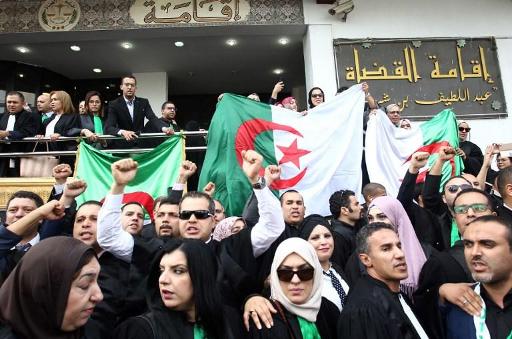
The ICJ today called on the Algerian authorities to reverse the decision of the Minister of Justice to transfer 2’998 judges, and instead ensure their right to security of tenure and protect the individual and institutional independence of the judiciary in the country.
The ICJ further called on the authorities to refrain from any unlawful or disproportionate use of force against the judges who are currently on strike in a protest against the Minister’s decision.
The call comes after security forces stormed the Oran’s Court of Appeal on 3 November 2019, using force against the judges to end the strike, and amidst the growing, legitimate demands for the establishment of the rule of law and the end the executive’s control over the judiciary.
“The Algerian authorities must end their interference in judicial affairs and ensure that all decisions pertaining to the management of the career of judges, including transfers, are taken by an independent High Judicial Council on the basis of objective criteria and transparent procedures,” said Said Benarbia, Director of ICJ’s Middle East and North Africa Programme.
Under Organic Law n° 04-12 on the High Judicial Council (HJC), the President and Vice-President of the HJC are respectively the Algerian President and the Minister of Justice. For this and other reasons the ICJ considers that the HJC as currently constituted is not independent of the executive, and consequently that the judiciary as a whole is both institutionally and in practice subordinated to the executive in contravention of international standards on judicial independence and impartiality.
“Instead of attacking judges who are seeking to defend the rule of law, the most urgent priority for Algerian authorities should be the reform of the HJC to ensure its full independence,” Benarbia added.
In 2018, the Human Rights Committee expressed, in its Concluding Observations on the fourth periodic report of Algeria, its concerns over the insufficient guarantees for judicial independence and the need to strengthen the independence and the powers of the HJC.
Contact:
Said Benarbia, Director of ICJ’s Middle East and North Africa Program, t: +41 22 979 38 17 ; e: said.benarbia(a)icj.org
Algeria-Judges strike-News-2019-ARA (Arabic version, in PDF)
Nov 5, 2019 | News
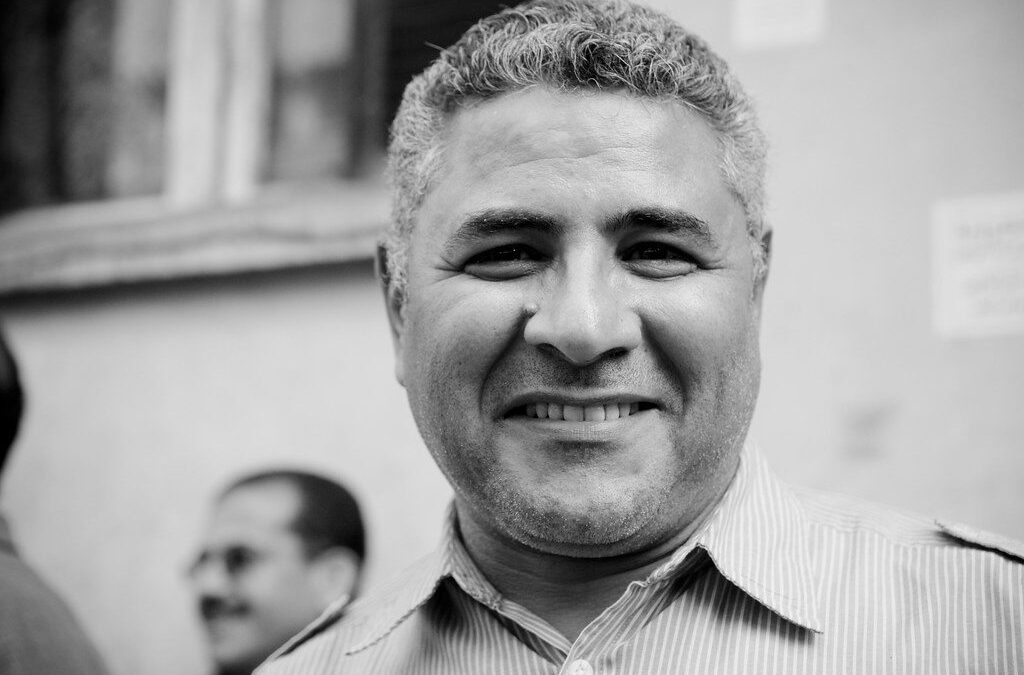
The ICJ today condemned the physical assault and acts of threats and intimidation taken against its Commissioner Gamal Eid, a prominent Egyptian lawyer and human rights defender.
The ICJ called on the Egyptian authorities to investigate the attacks and bring those responsible to justice. They should also take effective measures to ensure that Gamal Eid and other lawyers and human rights lawyers are protected.
Amidst the ongoing crackdown on human rights defenders and the arrest of more 4,000 individuals since recent anti-corruption protests began, Gamal Eid has been subjected to a sustained campaign of intimidation and harassment.
Two armed men in civilian clothes physically assaulted him on October 10, stole his cellphone and tried to seize his laptop. The assault resulted in injuries to his arm and leg and several cracks in his ribs.
Prior to this assault, Eid’s car was stolen on 30 September and he has repeatedly received anonymous phone calls and messages ordering him to “stop and behave.”
The ICJ believes these attacks to be related to Eid’s work as a lawyer and to his human rights activities, and are part of a pattern by the Egyptian military and government to silence people suspected of opposing them, including those documenting and reporting on the ongoing crackdown on human rights and fundamental freedoms.
“Instead of resorting to cynical, thuggish tactics to silence Gamal Eid, Egypt’s military and government must act to ensure his safety and physical integrity,” said Said Benarbia, Director of ICJ’s Middle East and North Africa Program.
“ They must also ensure that lawyers and human rights defenders are able to carry out their work free of fear, harassment or intimidation,” he added.
In the context of the recent protests against President El-Sisi, the Egyptian security forces have arbitrarily detained at least 16 lawyers in relation to the exercise of their professional functions, including Mahienour El-Massry and Mohamed El-Baqer.
Amr Imam, a lawyer and colleague of Gamal Eid at Arabic Network for Human Rights Information was also arrested on 16 October 2019.
The threats to, attacks against, and arbitrary detention of Egyptian lawyers and human rights defenders are in contravention with Egypt’s obligations under international law, and run counter to the UN Basic Principles on the Role of Lawyers and the UN Declaration on Human Rights Defenders, which respectively provide that lawyers and human rights defenders must be able to carry out their professional functions and work without hindrance, harassment, intimidation, or improper interference.
Contact:
Said Benarbia, Director of ICJ’s Middle East and North Africa Program, t: +41 22 979 38 17 ; e: said.benarbia(a)icj.org
Egypt-Gamal Eid-News-press releases.2019-ARA (Arabic version, in PDF)
Nov 5, 2019 | News
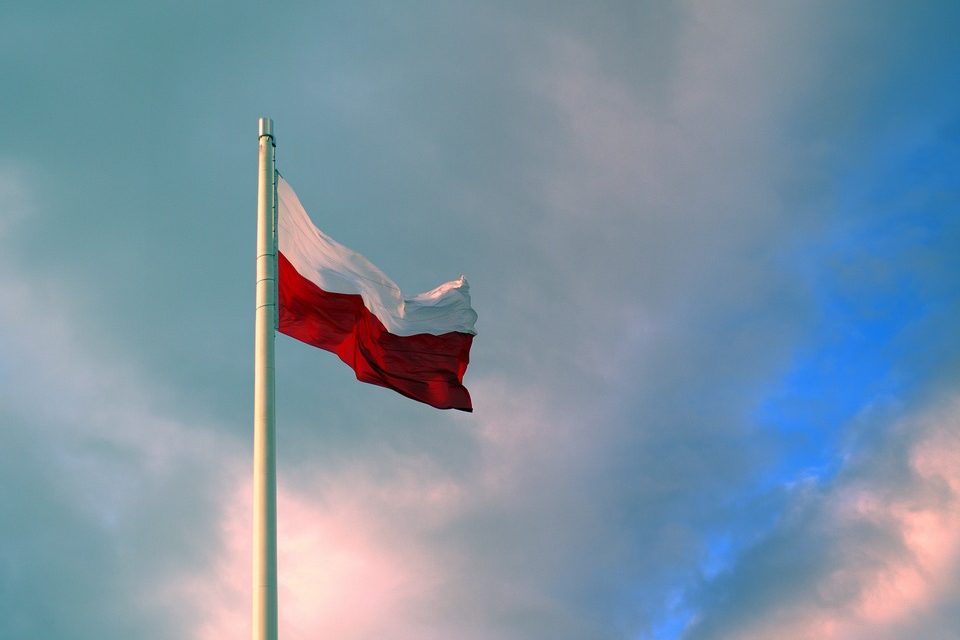
The ICJ welcomed today’s ruling of the Court of Justice of the European Union finding that Poland violated the independence of the judiciary by lowering in 2017 the pension age of Polish judges and giving the power to maintain them in office to the Minister of Justice.
The Court also found that the new law creating widely disparate retirement ages between women and men who are ordinary court judges or prosecutors – 60 and 65 respectively – constituted unlawful discrimination
“The Court of Justice has upheld the cardinal principle of the rule of law that the terms of judges cannot be determined controlled on an ad hoc basis by political powers,” said Massimo Frigo, Senior Legal Adviser of the ICJ Europe and Central Asia Programme.
“This judgment confirms that these retirement laws were a direct blow to the principle of separation of powers, the bedrock of the rule of law,” he added.
The Court of Justice held as contrary to the principle of independence of the judiciary under article 19 of the Treaty on the Functioning of the EU as series of laws lowering the age of retirement for ordinary judges, prosecutors and Supreme Court judges from 70 to 65 years for men and 65 to 60 for women. These laws allowed the Minister of Justice to decide which judges are to be reinstated.
“Poland should scrap these laws entirely and reinstate fully the situation of the judiciary prior to their enactment,” Frigo said.
“These laws were but a part of the systemic attack to the independence of the judiciary that the Polish government should stop,” he added.
The ICJ also called on Poland to bring the retirement ages of men and women back into parity.
The case was brought by the European Commission in an infringement proceeding against Poland for violation of the obligation to provide access to justice for EU law violations under article 19 TFEU.
Contact:
Massimo Frigo, Senior Legal Adviser of the ICJ Europe and Central Asia Programme, t: +41 22 979 3805 ; e: massimo.frigo(a)icj.org
More information on Massimo Frigo’s blog
Nov 5, 2019 | News
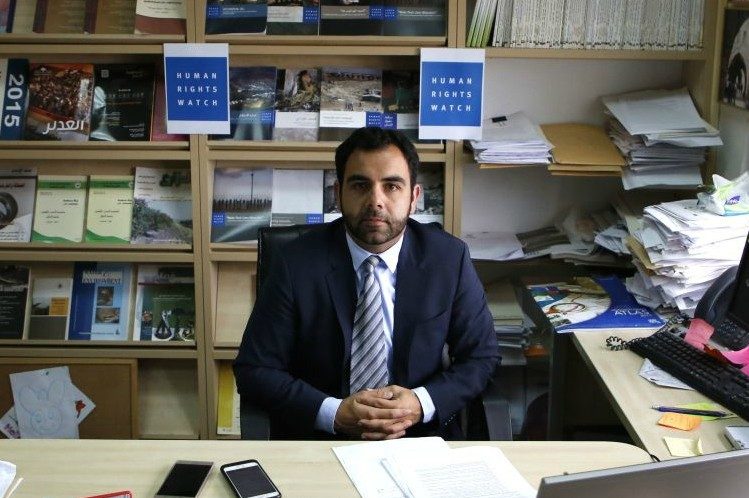
Today, the ICJ called on the Israeli Government to reverse its decision to deport Omar Shakir, the Human Rights Watch (HRW) Israel and Palestine Director, and ensure that he, HRW, and other human rights defenders are able to carry out their human rights work without intimidation.
The ICJ fears that the decision will have a chilling effect on human rights defenders in the country, who the Israeli authorities are bound to protect and not intimidate or persecute.
The deportation decision is based on a 2017 amendment to the “Entry into Israel Law”, which allows authorities to deny foreigners a permit for entry to and residence in Israel “if he or she, or the organization or the body for which he or she operates, has knowingly published a public call to engage in a boycott against the State of Israel or has made a commitment to participate in such a boycott.”
An appeal against the deportation decision was rejected by the Jerusalem District Court in April 2019, and by Israel’s Supreme Court today.
Israel’s Supreme Court seems to have accepted the Government’s claim that Shakir’s work at HRW, which entailed calling on businesses to cease operating in Israeli settlements in the West Bank, as required by international law, constitutes a call for the boycott of Israel.
The ICJ noted that the move to deport Omar Shakir constitutes an unjustifiable infringement on his right to freedom of expression, guaranteed by article 19 of the International Covenant on Civil and Political Rights. As a State party to the Covenant, Israel has an obligation to respect and protect this right.
The Human Rights Committee already expressed its concern with regard to Israel’s anti-boycott legislation and called on the Israeli authorities to “ensure that individuals fully enjoy their rights to freedom of expression and association and that any restrictions on the exercise of such rights comply with the strict requirements of article 19.”
The deportation would also contravene the UN Declaration on Human Rights Defenders, which affirms the duty of States to promote and facilitate the work of human rights defenders, while scrupulously protecting their fundamental freedoms.
Nov 4, 2019 | News
The ICJ today expressed its grave concern at the conduct of police forces in their enforcement of a court order to remove refugees and asylum seekers from the offices of the United Nations High Commission for Refugees (UNHCR) in Cape Town on October 30.
Police appeared to be using excessive and unlawful force, resulting in injuries to some protestors.
The ICJ called for a prompt independent, impartial, and through investigation into the police conduct, with a view to holding account officials responsible for any ill-treatment and to prevent such methods of policing to recur.
While trying to remove largely peaceful protestors from the premises, police fired rubber bullets and stun grenades against refugees who were protesting in the streets of Cape Town last week. A video clip widely shared on social media showed police ripped a baby from a woman.
The court had granted an interdict to remove the group in Cape Town on October 18 at the Cape Town Magistrate’s Court following an application by the building landlord to evict the group. More than 100 protestors were arrested and released on warnings.
“The way refugees were treated in Cape Town on Wednesday is shameful. South African authorities should be acting to protect migrants from the xenophobic violence and threats they have been experiencing, not to perpetuate them,” said Arnold Tsunga, ICJ Africa regional director.
Refugees and asylum seekers had staged a sit-in outside the UNHCR offices in Cape Town and Pretoria for four weeks now, pleading to be resettled outside of South Africa, claiming that they felt unsafe. They said that recent attacks on foreign nationals left them feeling unsafe in South Africa. (Read the ICJ statement on the attacks here.)
In a statement, the UNHCR said the organization had received concerns of personal safety, access to documentation, challenges accessing services, and lack of job opportunities from the asylum seekers and refugees who had been camping outside of its offices.
The statement also indicated that some of the protesting group had demanded resettlements, which were only available for a limited number of vulnerable refugees. The UNHCR said it had been engaging with the refugees and asylum seekers since the protests began, encouraging them to participate in constructive dialogue to address their grievances and find a peaceful resolution to the situation.
“We call on South African authorities the United Nations Human Rights Council (UNHRC) to urgently address migrants’ concerns in a constructive and amicable manner before the situation escalates further,” Tsunga added.
Background
South African law and international law forbid the unnecessary and disproportionate use of force and protect people from ill-treatment. .
The UN Basic Principles on the Use of Force and Firearms by Law Enforcement Standards provides that law enforcement officials must use restraint and may use force only where only where strictly necessary, and any such force must be proportionate to the legitimate object, such as making a lawful arrest and protecting the lives and safety of others.
South Africa is party of the African Charter of Human and Peoples Rights and the International Covenant on Civil and Political Rights, both of which guaranteed from torture and cruel, inhuman or degrading treatment, including that resulting from unlawful use of force.
Contact
Arnold Tsunga (Director): c: +26 37 7728 3249 e: arnold.tsunga(a)icj.org
Shaazia Ebrahim (Media Officer): c: +27 71 670 6719 e: shaazia.ebrahim(a)icj.org