Dec 18, 2017 | Multimedia items, News, Video clips
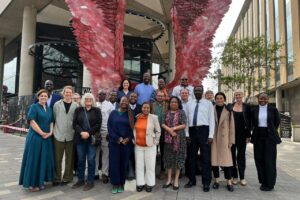
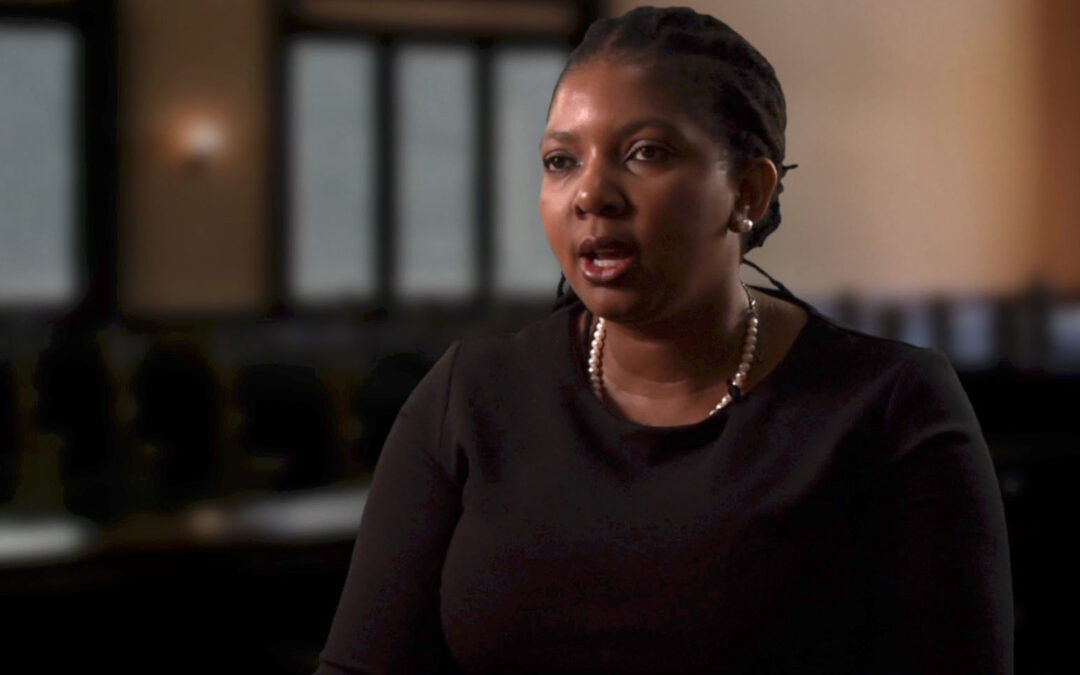
Raquel Yrigoyen Fajardo, Karabo Ozah and Charles Dinda talk about traditional justice systems in video interviews recorded at the 2017 ICJ Geneva Forum.
Dr. Raquel Yrigoyen Fajardo, Lawyer and Professor at the Law Faculty of the Pontifical Catholic University of Peru, and founding member of the International Institute on Law and Society (IIDS), describes the survival and contemporary recognition of justice systems of indigenous peoples in the Americas, despite the history of colonial domination.
She argues that indigenous justice systems often already reflect many international human rights standards, and where there may be discrepancies change should be sought through respectful engagement and consultation rather than coercive imposition.
In contrast, Ms Karabo Ozah, Deputy Director of the Centre for Child Law at the University of Pretoria in South Africa, argues that it is crucially important to ensure that customary and traditional courts respect domestic legislation and international standards on human rights.
Otherwise she warns, based on her experience, customary courts too frequently fail to protect the rights of marginalized groups, children, LGBTI, and women.
Charles Dinda, Senior Legal Adviser with the Danish Institute for Human Rights in Zambia, points out that while traditional and customary justice institutions are the most easily accessible and in many respects most credible institutions for some populations, their decisions are too often inconsistent or unfair.
To avoid this, he insists on the importance of understanding and studying the way these systems operate and on the need to engage with them to learn about their practices and to build their capacities so that they have better knowledge of international human rights standards and indeed of the national laws in the countries where they operate.
Watch the interview with Dr. Raquel Yrigoyen Fajardo
Watch the interview with Karabo Ozah
Watch the interview with Charles Dinda
NOTE:
The views expressed by the participants do not necessarily reflect those of the ICJ.
For more information about the 2017 Geneva Forum on Customary and Traditional Justice Systems, click here or contact matt.pollard(a)icj.org .
Dec 18, 2017 | Multimedia items, News, Video clips
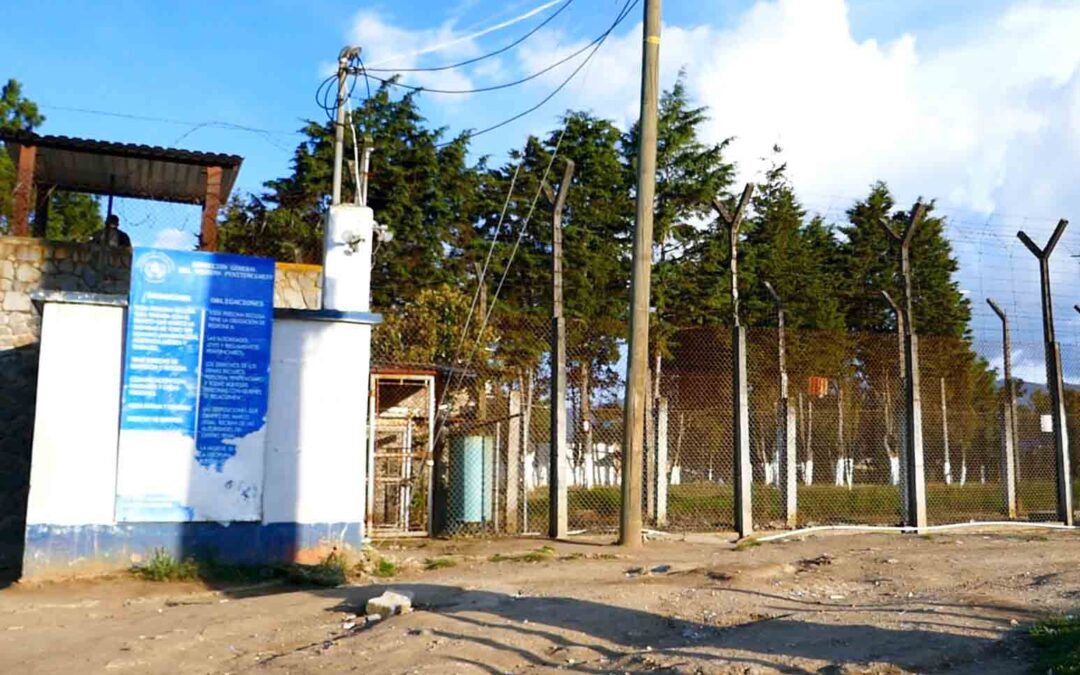
Leaders of indigenous communities in Guatemala, seeking to protect their lands and natural resources from the negative impacts of business operations and infrastructure projects, have been charged with alleged criminal offences and in some instances arbitrarily detained.
This response is designed to silence voices of protest and legitimate demands for free, prior and informed consent for infrastructure or other projects in indigenous communities.
The video includes interviews with Ramón Cadena, ICJ Director for Central America, two indigenous traditional leaders, who have been the victims of arbitrary detention, and a women community leader, explaining the impact of the detention on the family and the whole community.
The criminalization of human rights work is a phenomenon whereby community leaders are charged with different criminal activities because of their opposition to a development model based on extractive industries or the privatization of essential social services.
This development model affects the natural resources (water, land and the environment) on indigenous peoples’ territories.
This is a global phenomenon and is particularly acute in Guatemala.
The exploitation of natural resources, such as open-cast mining and the operations of extractive industries in the territories of indigenous peoples, is one of the main reasons which are behind the crackdown on social protest and human rights work.
The different communities that have been affected seek to defend their territories and oppose the different forms of exploitation of the natural resources found on their territories or in the surrounding areas because it can affect the water supply, the land and the environment.
A number of leaders have been killed because of their opposition to these projects.
Some family members of those killed have in turn taken on the task of opposing these projects and they have also been charged with criminal offences.
In Guatemala, there is also an intense social conflict because of the way in which electricity services are delivered.
As a result of the privatization of the service in 1996, the Guatemalan State has granted concessions to national and international companies to provide electricity services.
Over the years, many users have complained about the poor quality and high cost of the services that these private companies provide.
The National Electricity Commission has failed to respect its legal duty to “ensure that the obligations of the concessionaries and contractors are fulfilled and to protect the rights of users,” which many discontented users have demanded.
The social protests concern the three different phases of electricity production: the generation of electricity, involving the construction of hydroelectric dams by multinational companies that impact on indigenous peoples’ territories, the electricity transmission grids, and the electricity services.
Because of this situation, many electricity users have declared that they are in resistance, citing article 45 of the Guatemalan Constitution that states: “It is legitimate for the people to resist in order to protect and defend the rights and guarantees enshrined in the Constitution.”
Acting on this Constitutional protection has led to human rights attacks on many community leaders, lawyers and human rights defenders.
The ICJ supports access to justice for persons who are victims of these human rights violations.
The ICJ supports lawyers who defend these victims of the criminalization of social protest; it carries our trial observations in significant cases; it promotes dialogue between the communities and the relevant State authorities as well as the local Mayors; and in some cases, it supports submissions before the Constitutional Court.

Dec 18, 2017 | News
The ICJ today called on Myanmar authorities to immediately disclose the whereabouts of two journalists who have been detained incommunicado for nearly one week, and to grant prompt access to lawyers and families.
Reuters reporters Wa Lone and Kyaw Soe Oo have not been heard from since they were arrested by police in Yangon on Tuesday 12 December.
“Fair trial rights violations seriously undermine the rule of law in Myanmar. All detainees must be allowed prompt access to a lawyer and to family members,” said Frederick Rawski, the ICJ’s Asia-Pacific Regional Director.
“Authorities are bound to respect these rights in line with Myanmar law and the State’s international law obligations,” he added.
The right to legal counsel is a bedrock rule of law principle that is set out in a range of international human rights laws and standards, including in article 11 of the Universal Declaration of Human Rights.
Sean Bain, Legal Adviser for the ICJ, said that jurists should assess if the journalists’ detention conforms to applicable laws.
“Their situation appears to constitute arbitrary detention,” he said. “The judiciary should immediately review the lawfulness of detention and demand their release if it is indeed unlawful.”
“Judges and lawyers in Myanmar have an opportunity to assert their independence by challenging the unlawful actions of officials. Such blatant violations of fair trial rights should not go unanswered,” he added.
State media reports the journalists were charged under the 1923 Official Secrets Act in connection with their work investigating actions of security forces in Rakhine State.
More than 650,000 people, mostly Rohingya Muslims, fled to Bangladesh as a result of military operations following attacks on police posts in August by the Arakan Rohingya Salvation Army.
Reuters has reported from both sides of the Myanmar-Bangladesh Border.
“The treatment of these reporters threatens freedom of expression. The harsh penalties they face sends a clear message to other journalists that they could face the same consequences for doing their job,” said Rawski.
In Myanmar, colonial-era laws were invoked to bring criminal charges against journalists in at least three jurisdictions in 2017.
Offences in these laws are often broadly defined, carry harsh penalties, and are open to abuse by authorities.
Journalists who received ten-year jail terms in 2014 under the Official Secrets Act were later released in a Presidential amnesty.
Amendments proposed at the time in parliament were rejected.
“The abuse of archaic laws like the Official Secrets Act must end. It is within the power of the National League for Democracy-dominated legislature to review these laws with a view to aligning them with the rights reflected in Myanmar’s constitution and in international law,” Rawski added.
Contact
Frederick Rawski, ICJ Asia Pacific Regional Director, t: +66 6 4478 1121 ; e: frederick.rawski(a)icj.org
Sean Bain, ICJ International Legal Adviser, e: sean.bain(a)icj.org
Background
The UN Basic Principles on the Role of Lawyers emphasize that, “Governments shall further ensure that all persons arrested or detained, with or without criminal charge, shall have prompt access to a lawyer, and in any case not later than 48 hours from the time of arrest or detention.”
Sections 19 and 375 of the Myanmar Constitution also guarantee the right of legal defense, as does Myanmar’s Code of Criminal Procedure (section 340), Courts Manual (section 455(1)), the Police Manual (section 1198c) and the Prisons Act (section 40).
Sections 21(c) and 376 of the Constitution and section 61 of the Code of Criminal Procedure state that persons cannot be detained for more than 24 hours without a judge’s order.
The right to legal defense implies the right to access legal counsel during this 24-hour period.
Under section 403 of the Courts Manual, a detainee can be remanded only once he or she has appeared before a judge. It is unknown if the two Reuters journalists have appeared in court.
Competent judges are empowered to compel a search for a detainee if they have reason to believe the person is confined unlawfully, as per section 100 of the Criminal Procedure Code.
Lawyers and family members may also request the courts to review the lawfulness of detention, by submitting a habeas corpus petition to the High Court and or to the Supreme Court.
The Tshwane Principles on National Security and the Right to Information, which address the right to access and to share information, as an aspect of freedom of expression in the context of national security, affirm that journalists “should not be prosecuted for receiving, possessing or disclosing classified information to the public, or for conspiracy or other crimes based on their seeking or accessing classified information.”
Read also
Handbook on Habeas Corpus in Myanmar
Right to Counsel: The Independence of Lawyers in Myanmar
Myanmar-Reuters Journos-News-Press releases-2017-BUR (Story in Burmese, PDF)
Dec 13, 2017 | News
The ICJ today urged the Government of Singapore to end the harassment of human rights defender Jolovan Wham and to amend laws used to restrict his work and the work of other human rights defenders.
Jolovan Wham is to appear at a pre-trial conference on seven criminal charges today. Jolovan Wham is a well-known human rights defender in Singapore who previously worked for a group that advocates for the rights of migrant workers and plays a leading role against the death penalty and the promotion of freedom of expression.
“These charges are not only an impermissible attack on Jolovan Wham individually, but human rights work more generally in Singapore,” said Sam Zarifi, Secretary General of ICJ.
“It is an unmistakable message to other human rights defenders that they may face the same harassment and intimidation if they continue their work,” he added.
Jolovan Wham was charged in connection with facilitating a Skype conference with Hong Kong human rights defender, Joshua Wong Chi-Fung, on “civil disobedience and democracy in social change”.
Other charges relate to his organizing peaceful public assemblies, allegedly without permits, to protest the death penalty and to commemorate the day when 16 individuals were arrested by Singapore authorities in 1987 and detained without trial under the country’s Internal Security Act (ISA).
He was also charged for refusing to sign statements prepared by police authorities when he was taken in for investigation on 28 November 2017.
Most of the charges against Jolovan Wham were for alleged violations of Section 7 of the Public Order Act, which makes an offence the holding of a public assembly or public procession without a permit.
The ICJ considers that aspects of Section 7, particularly as applied to the charges against Jolvan Wham, may serve to impermissibly restrict the exercise of the right to freedom of peaceful assembly in Singapore, which is protected under international standards.
“Singapore should immediately act to amend the Public Order Act with a view to ensuring that it is consistent with international human rights law and standards, particularly as they relate to the exercise freedoms of expression and assembly,” Zarifi said.
Under international law and standards, prior authorization of assemblies is generally inconsistent with the right to freedom of peaceful assembly, except for narrow exceptions.
The UN Special Rapporteur on the rights to freedom of peaceful assembly and association, in a 2012 report, clarified that prior authorization should generally not be necessary.
At most, it should require notification that is not unduly burdensome, so as allow the authorities to facilitate the exercise of the right to peaceful assembly and to take measures to protect public safety and public order and the rights and freedoms of others.
The Declaration on the Right and Responsibility of Individuals, Groups and Organs of Society to Promote and Protect Universally Recognized Human Rights and Fundamental Freedoms (Declaration on Human Rights Defenders), emphasizes the right of human rights defenders “to meet or assemble peacefully” and “to study, discuss, form and hold opinions on the observance, both in law and in practice, of all human rights and fundamental freedoms, and through these and other appropriate means, to draft public attention to those matters
Contact:
Emerlynne Gil, ICJ Senior International Legal Adviser, t: +66 840923575 ; e: emerlynne.gil(a)icj.org
Singapore-Wham harrassment-News-Press releases-2017-ENG (full story with additional info, in PDF)
Dec 12, 2017 | News
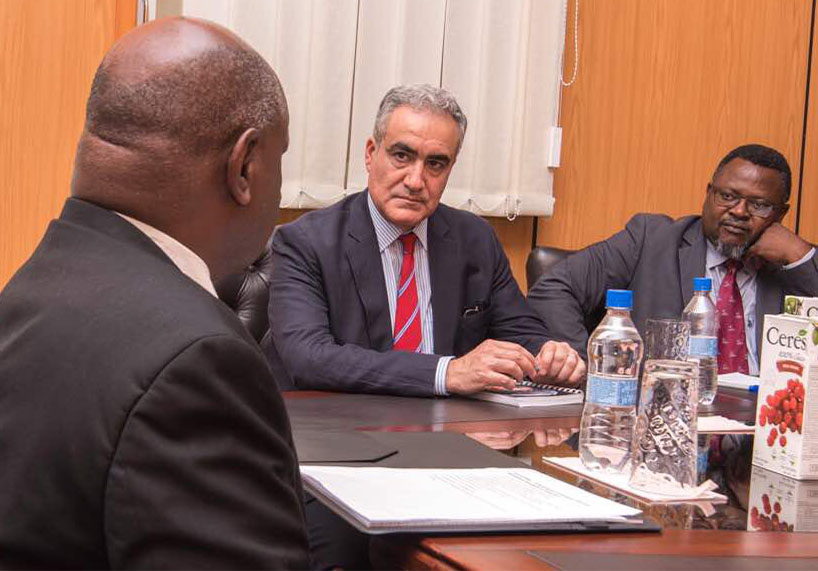
Zimbabwe’s new government must urgently restore the rule of law and ensure free and fair elections, said the ICJ at the conclusion of a visit by its Secretary General Sam Zarifi to the country.
After the recent military intervention in Zimbabwe that led to the ouster of former President Robert Mugabe, the government headed by Emmerson Mnangagwa is expected to remain in office until new elections, currently scheduled to be held before August 2018.
“The change in leaders in Zimbabwe presents an opportunity to reverse decades of damage to the rule of law and respect for human rights in the country,” said Zarifi, ICJ’s Secretary General.
“As an immediate matter, the new government must take concrete steps that demonstrate it is committed to observing the country’s obligations under international law, as well as the human rights protections of Zimbabwe’s own constitution,” he added.
The ICJ calls on the government of Zimbabwe to:
- ensure free and fair elections are held as scheduled, and the country’s electoral laws comply with the Constitution and international standards;
- accelerate measures to ensure compliance of all relevant laws with the country’s constitution and its international legal obligations;
- ensure the independence of the judiciary and the legal system;
- ensure all those arrested and detained during the military intervention are identified and brought immediately before an independent and impartial tribunal, and, where charged with recognized crimes, are given fair trials;
- investigate all allegations of unlawful deaths, torture or ill-treatment, and arbitrary arrest and detention;
- ensure the military acts within strict legal bounds, operates under civilian control, and does not engage in arrest and detention of civilians;
- ensure all security forces, including the police and the military, are subject to accountability and receive proper and adequate training in performing their duties in conformity with international human rights standards; and
- provide credible mechanisms to combat corruption in all branches of government, and ensure that anti-corruption efforts are not politicized.
“Zimbabwe’s military has played a central role in the country’s affairs for decades, while civilian institutions have suffered under intense political pressure, at great cost to the people of the country,” Zarifi said.
“Zimbabwe should grasp this opportunity to demonstrate that it can and will strengthen the rule of law and respect for human rights in order to improve the lives of all people in the country.”
Contact
Arnold Tsunga, ICJ-Director: Africa Regional Programme, t: +27716405926, e: arnold.tsunga(a)icj.org
Dec 11, 2017 | News
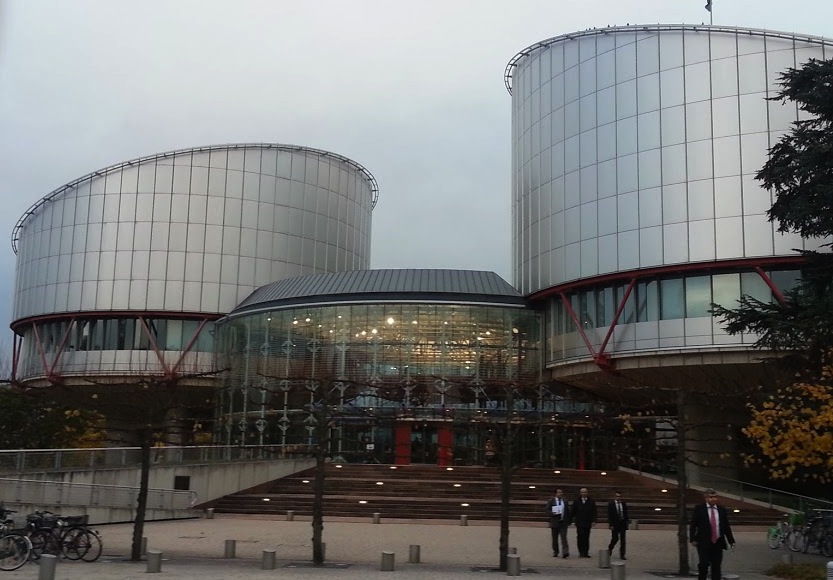
Discussions on the future of the European human rights system should focus on effective national implementation of human rights obligations and should protect the Court from undue political pressure, the ICJ and other NGOs said today.
The ICJ and other human rights NGOs that participated in the High-Level Expert Conference ‘2019 and Beyond: Taking Stock and Moving Forward from the Interlaken Process’, held in Kokkedal, Denmark from 22-24 November 2017, commended the Danish Chairmanship of the Council of Europe for its stated commitment to involving civil society throughout the process leading up to the adoption of a political Declaration on the European Convention on Human Rights’ system in April 2018.
The NGOs believe that the anticipated Copenhagen Declaration should emphasize:
- The need for enhanced measures at the national level to prevent and address violations of the Convention rights – in particular to remedy systemic and institutional problems – and to implement the Court’s judgments.
- The need for the Committee of Ministers to take more effective action to support and ensure thorough and prompt execution of judgments, through individual and general measures.
- The importance of nominating the most- qualified candidates as judges of the Court.
- That it is a fundamental principle of the rule of law that the Court should be free from political interference.
The NGOs urged the Danish Chairmanship and all Member States to refrain from any reforms that would place undue pressure on the Court in its interpretation and application of the Convention. Any undermining of established jurisprudential principles, such as the dynamic interpretation of the Convention, must be rejected.
Europe-NGO statement on ECHR reform-News-web story-2017-ENG (full story in PDF)