Dec 9, 2017 | Agendas, Events, News
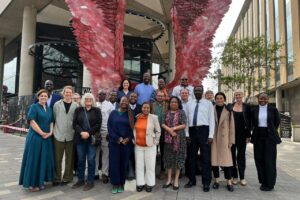
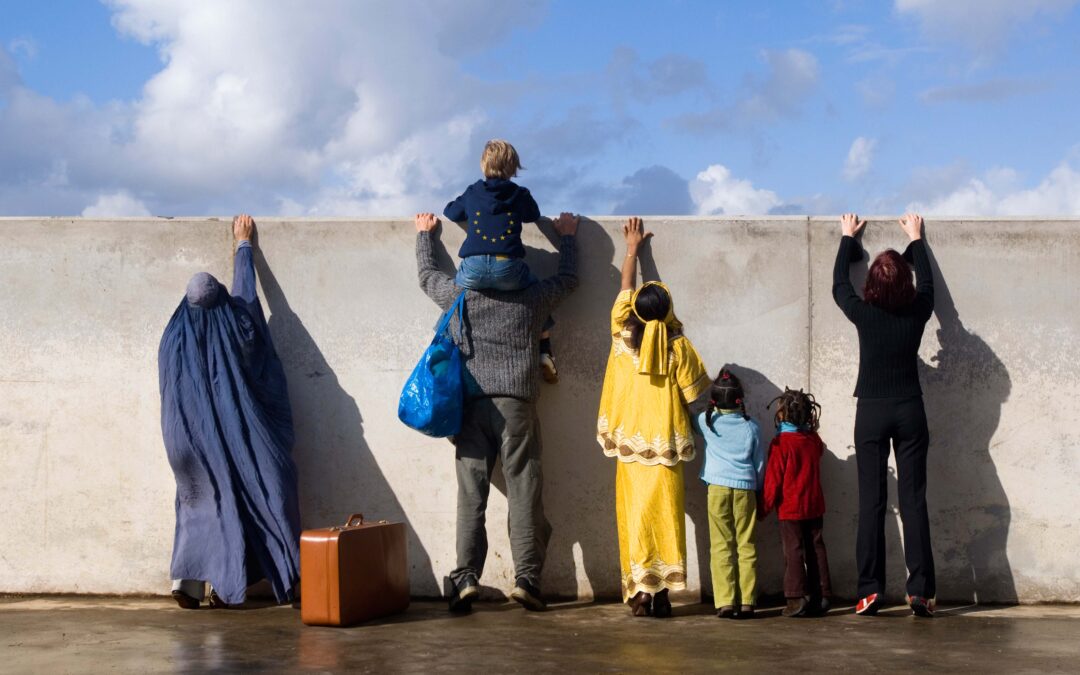
Today begins in Izmir (Turkey) a two-day training for lawyers and CSO practitioners representing and working with migrants, refugees and asylum-seekers.
This event is organized by ICJ, in cooperation with its partners Refugee Rights Turkey, the European Council on Refugees and Exiles (ECRE), Mülteci-Der (MD) and ICJ-EI, as part of the EU co-financed project Fostering Access to Rights for Migrants, Refugees and Asylum-Seekers in Turkey.
30 lawyers and civil society practitioners – representing nine different bar associations and relevant organisations from the Istanbul area and other nearby key migration and asylum locations – are taking part in the training on 9 and 10 December.
The training aims to update lawyers and CSOs on the international and national law on the rights of refugees, migrants and asylum-seekers in order to be effective in their work at both the national and international levels. It aims at an effective implementation of the Turkish legal framework on asylum and migration.
The main thematic areas to be discussed will be the principle of non-refoulement, international protection, detention and access to economic, social and cultural rights.
The training will use as a basis the draft training materials prepared by the ICJ and its partners (to be published an the end of 2019) and, among other sources, the ICJ Practitioners Guide no. 6: Migration and International Human Rights Law.
The project “Fostering Access to Rights for Migrants, Refugees and Asylum-Seekers in Turkey” is funded by the European Instrument for Democracy and Human Rights (EIDHR) of the European Union.
Turkey-Training-Izmir-MigrationAsylum-Agenda-2017-tur-eng (download the agenda in Turkish and English)
Dec 8, 2017 | News
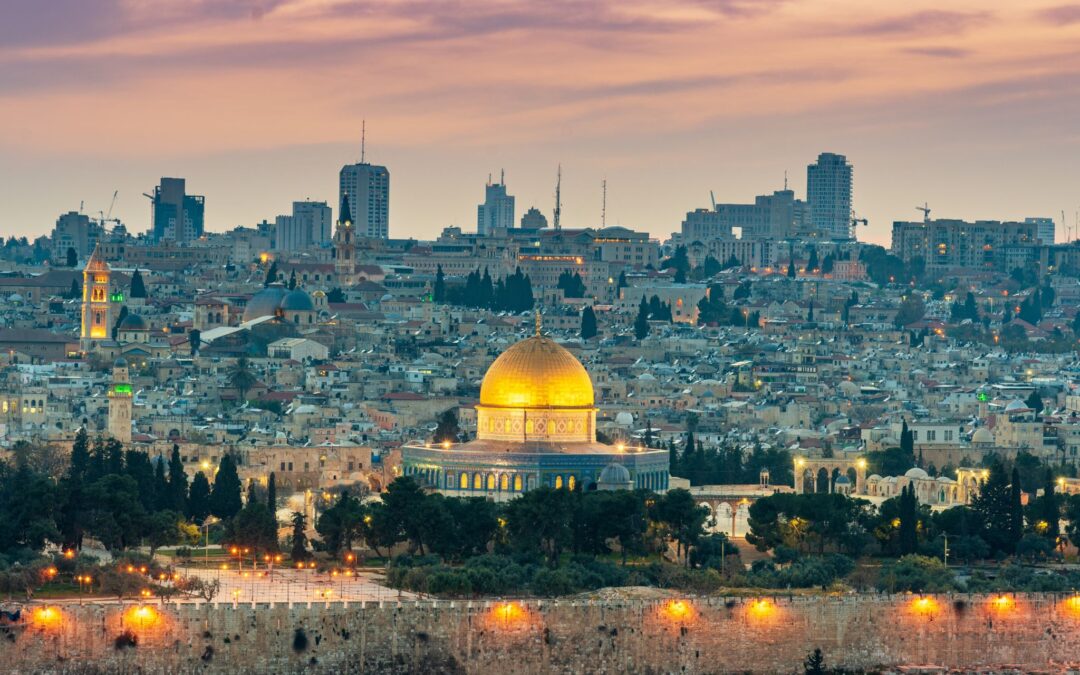
US President Donald Trump’s declaration recognizing Jerusalem as Israel’s capital and indicating an intention to move its embassy there, dangerously ignores long-standing international law, the ICJ said today.
Numerous United Nations Security Council’s Resolutions have reiterated the inadmissibility of the acquisition of territory by war, and have urged the withdrawal of Israel armed forces from territories occupied in the 1967 conflict, including East Jerusalem.
Trump’s announcement turns a blind eye on this legal reality and the related 50 years of occupation.
It also implicitly condones Israeli policies and practices that aim at altering the character and status of the Palestinian territory, including through the annexation of East Jerusalem, particularly by failing explicitly to similarly endorse Palestinian claims to East Jerusalem.
“Trump’s declaration cannot form the basis for any alteration of the status of Jerusalem under international law. However, it has the potential of provoking and fuelling a new cycle of violence in the region,” said Said Benarbia, ICJ MENA Director.
Thousands of Palestinians have taken to the streets to protest against Trump’s declaration. Dozens were injured in clashed with Israeli forces.
“The Israeli authorities should guarantee the right to peaceful protest and refrain from any disproportionate use of force against protesters, including the unlawful use of lethal force,” Benarbia added.
Background
The 2016 UN SC Resolution 2334 specifically reiterate that the Security Council “will not recognize any changes to the 4 June 1967 lines, including with regard to Jerusalem, other than those agreed by the parties through negotiations,” and that “the establishment by Israel of settlements in the Palestinian territory occupied since 1967, including East Jerusalem, has no legal validity and constitutes a flagrant violation under international law and a major obstacle to the achievement of the two-State solute on and a just, lasting and comprehensive peace.”
This reaffirms a series of similar resolutions by the Security Council since 1967.
Palestine-Trump Decla-News-2017-ARA (Statement in Arabic, PDF)
Dec 8, 2017 | News
The South African government should reconsider its move to withdraw from the ICC, said the ICJ, the Southern Africa Litigation Centre and Lawyers for Human Rights, local, regional and international human rights advocacy organizations.
This will be the second attempt by South Africa to withdraw from the Rome Statute, after the first attempt in 2016 was declared unconstitutional by the High Court after being successfully challenged by several parties including the Southern Africa Litigation Centre.
This week Minister Michael Masutha announced the government’s intention to pursue withdrawal from the ICC in a speech at the Assembly of State Parties of the ICC in New York.
The Minister was critical of Pre-Trial Chamber ruling of the ICC, which found that South Africa was obliged to arrest and detain Sudanese President Omar Al-Bashir.
He claimed that South Africa’s continued membership on the ICC would undermine “its ability to carry out its peace-making mission efforts in Africa” and “fulfill its role as mediator for peace”.
“The pursuit of justice and the pursuit of peace are complementary and mutually reinforcing objectives that South Africa will best achieve by remaining party to the Rome Statute of the ICC,” said Kaajal Ramjathan-Keogh, Executive Director of the Southern Africa Litigation Centre.
“Protecting heads of state from justice compromises efforts at trying to establish peace. South Africa’s refusal to arrest Bashir is an affront to Darfur victims,” she added.
Arnold Tsunga, the ICJ’s Africa Director said: “The notion that South Africa needs to embrace impunity in order to help peace is irrational and at odds with experience around the world. Greater accountability, for instance through international mechanisms, assists the rule of law, development efforts and respect for human rights. It is vital that South Africa projects itself as a leader in anti-impunity efforts in the region.”
“Withdrawing from the ICC would destroy a pillar of African efforts to tackle impunity which would be an unfortunate move for South Africa and the international community,” he added.
Masutha did not outline how the withdrawal will take place in compliance with South African law, indicating only that he would “shortly serve on Parliament” notice of withdrawal.
The African National Congress (ANC), South Africa’s ruling party, has indicated that it will discuss the issue of withdrawal at its policy conference scheduled for later this month.
According to a High Court judgment handed down earlier this year, however, the executive has no legal authority to withdraw South Africa from the ICC.
The High Court held “South Africa can withdraw from the Rome Statute only on approval of parliament and after the repeal of the Implementation Act”.
If notice were given to Parliament, it would have to independently consider the merits of withdrawal.
Under South African law the public should then be given an opportunity to participate in this process, which would involve the repeal of the Implementation Act.
“There is the added danger of an impunity gap should South Africa pull out of the ICC without putting in place any other mechanisms to ensure accountability for international crimes. There are currently no other regional or international fora to prosecute serious crimes under international law,” said Jacob van Garderen, Director of Lawyers for Human Rights.
Contact
Arnold Tsunga, ICJ’s Africa Director, t:+27 716405926, e: arnold.tsunga@icj.org
Tim Fish Hodgson, ICJ Legal Adviser, t:+27 828719905, e: timothy.hodgson@icj.org
Contact at Southern Africa Litigation Centre: Kaajal Ramjathan-Keogh kaajalr@salc.org.za / +27 84514 8039
Contact at Lawyers for Human Rights: Jacob van Garderen, jacob@lhr.org.za / +27 828203960
Background
Burundi left the ICC on 27 October 2017. South Africa has declared its intention to be the second African country to leave.
Gambia, which a year ago, had also indicated its intention to withdraw, spoke at the Assembly of State Parties of its pride to remain with the ICC and of its re-commitment to the ICC.
The South African government appeared before the Pre-Trial Chamber of the International Criminal Court in April 2017 to defend its failure to cooperate with an ICC request to arrest and surrender President Omar al Bashir of Sudan when he attended an African Union Summit in June 2015.
The Pre-Trial Chamber issued its ruling on 6th July 2017 which confirmed that South Africa did in fact fail to cooperate with a request from the ICC in violation of its international law obligations. The Chamber did not, however, issue any sanction for this non-compliance.
Read also
ICJ Briefing submitted to the Portfolio Committee on Justice and Correctional Services.
High Court judgment on withdrawal from the ICC.
ICC ruling on South Africa’s failure to arrest President Omar Al-Bashir.
Opening Statement of Minister of Justice Michael Masutha at Assembly of States Parties of the ICC.
Dec 8, 2017 | News
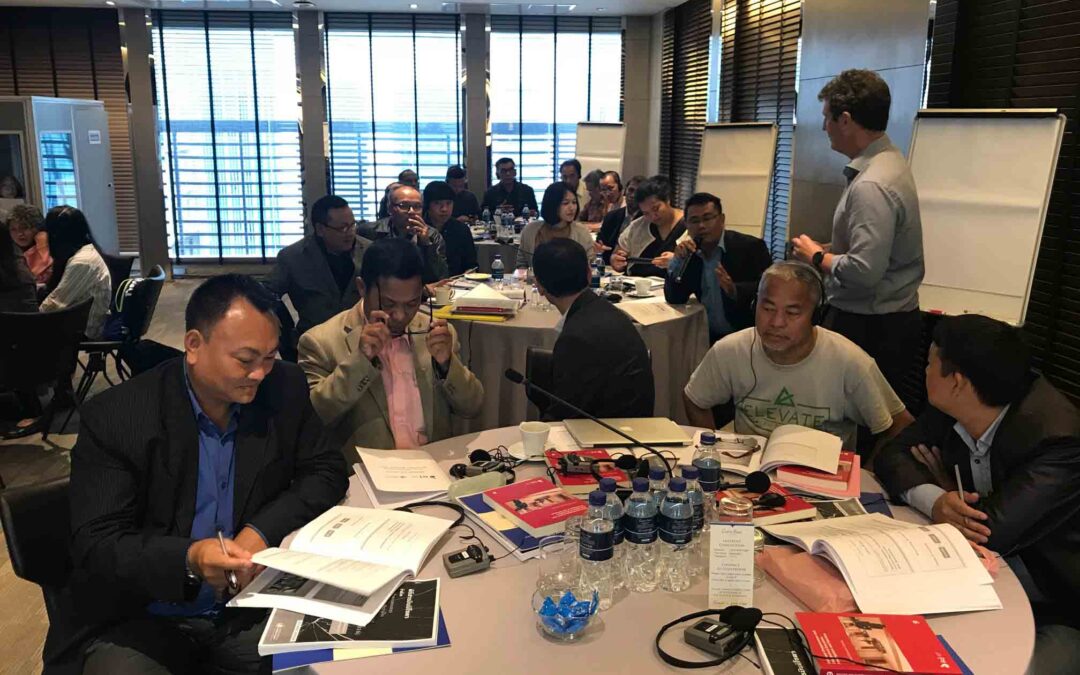
From 5 to 8 December 2017, the ICJ co-hosted two workshops – the first one for lawyers with the UN Office of the High Commissioner for Human Rights (OHCHR) and the second one for authorities in Thailand – on the investigation of potentially unlawful deaths and enforced disappearance.
The first workshop’s attendees included 17 lawyers and academics from Thailand and eight lawyers from India.
Participants in the second workshop included 26 participants from Thailand’s Ministry of Justice, Department of Special Investigation (DSI), Royal Thai Police, Office of the Attorney-General, Ministry of Defence, Ministry of Interior, Southern Border Province Administration Centre and the National Human Rights Commission of Thailand.
The first event commenced with opening remarks by OHCHR Human Rights Officer and Thailand team coordinator, Imesh Pokharel, and Frederick Rawski, the ICJ’s Regional Director for Asia and the Pacific.
Aem-on Siang-Yai, Director of the Office of Rights and Freedoms Protection from the Rights and Liberties Protection Department of Thailand’s Ministry of Justice made additional opening remarks in the second event.
In both workshops, Kingsley Abbott, Senior International Legal Adviser for Southeast Asia at the ICJ provided an introduction to the revised Minnesota Protocol on the Investigation of Potentially Unlawful Death (2016), which was launched in Thailand on 25 May 2017; ICJ Practitioners Guide No 9 – Enforced Disappearance and Extrajudicial Execution: Investigation and Sanction (2015, in English, Spanish and Thai); and the international legal framework governing investigations into unlawful deaths, noting that Thailand has legal obligations including under its Constitution and the International Covenant on Civil and Political Rights (ICCPR), to which it is a State Party, to respect, protect and fulfil the right to life.
These obligations entail a duty to ensure investigations into potentially unlawful deaths are independent, impartial, effective, thorough and transparent.
Sean Buckley of OSACO Group, former New Zealand Police Detective and now an independent, international, investigative specialist with more than 20 years of investigations experience including more than seven years with the United Nations (including at the Special Tribunal for Lebanon and the United Nations High Commissioner for Refugees), provided in both events a technical training on a range of topics relevant to investigations using the revised Minnesota Protocol as a guide.
Kingsley Abbott was a member of the Forensics and Legal Working Groups which assisted with the revision of the Minnesota Protocol, while Sean Buckley was a member of the Advisory Panel.
The workshops focused on investigation techniques of potentially unlawful deaths, including controlling the crime scene, preserving the security of evidence and ensuring the safety of all parties involved in investigations, including witnesses, investigators and family members of victims.
The workshops also covered witness identification and interview techniques, collection of DNA evidence, drafting of investigation reports and crime file management.
Sean Buckley shared with participants different means of international assistance available for investigations of potentially unlawful deaths.
The Workshop also covered the collection and potential use of telecommunications evidence.
Sean Buckley and Imesh Pokharel presented on the interview and protection of witnesses.
Thailand and India are both state parties to the ICCPR.
Contact
Kingsley Abbott, ICJ Senior International Legal Adviser for Southeast Asia, kingsley.abbott(a)icj.org
Dec 5, 2017 | News
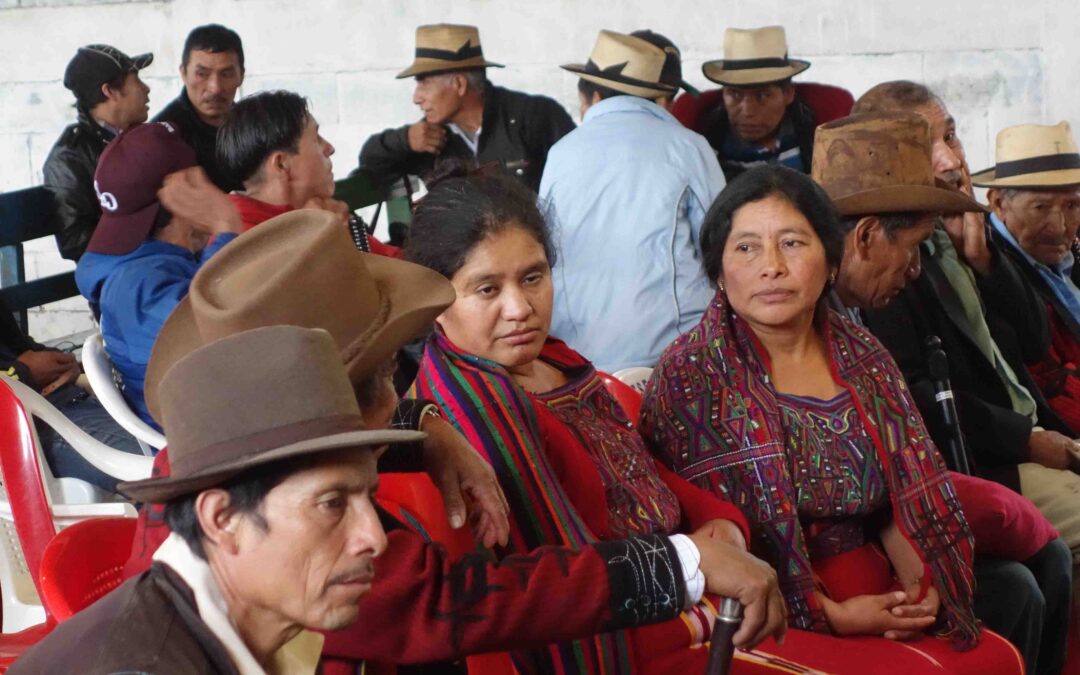
Guatemalan indigenous and peasant communities are finally finding a measure of justice and recovering lands and territories that had previously been seized by authorities or private economic actors, including during the internal armed conflict that took place from 1960 to 1996.
The ICJ learned of these encouraging developments at a workshop it held jointly with the UN Office of the High Commissioner on Human Rights (OHCHR) at an International Workshop on strategic litigation in the defense of land and territory, in Guatemala City, between 9 and 10 November.
One of the successful stories, told by Don Pedro Herrera, a community leader from Tzalbal community, municipality of Nebaj, Department of Quiché (Northern Guatemala), concerns a favourable decision by a first instance judge in Nebaj, in August 2016, ordering the restitution of some 1485 hectares (33 caballerias in the old measurement system still in use in Central America) to the Tzalbal communities.
The decision is under appeal before Guatemala’s Constitutional Court, but the Workshop heard that it had already boosted morale and hope among members of local communities on prospects for restitution for violations of their land rights.
The 33 caballerias had been segregated from the rest of municipal and community land in around 1984, in the midst of the Guatemalan civil war and as part of the counter-insurgency plans drawn by the military rulers purportedly to create loyal villages in the frontline to combat insurgency.
Most members of the community at the time had fled their homes, fearing for their lives that were threatened by both the armed insurgency and State military forces.
The de facto local authorities were coerced into signing documents agreeing to the separation of the land, but much of the population had remained unconcerned with the operation.
However, in 2011 FONTIERRAS, the government land authority, revealed to the community that their land had in fact been registered as State property following the forced separation in 1984.
Since then, Tzalbal communities started to take concerted action to recover the lands that they considered to be lawfully theirs and were the places where they maintained their homes and livelihood.
Tzalbal communities have some 70 families with some 500 people of all ages. When they learned that the land they traditionally possessed was “legally” the property of the State of Guatemala, they approached the ICJ- to provide legal assistance.
An Amparo constitutional writ was filed on behalf of the Tzalbal communities requesting the court to protect the rights of property and due process under the Guatemalan Constitution and declare the entry of land property in favour of the State in the land register invalid.
In August 2016, the first instance judge ruled in favour of the communities and ordered the register to amend the entry into the land registry. However, the State representatives have appealed against the ruling and a public hearing on the case took place the first week of November 2017. A final decision on the case by the Constitutional Court is now awaited.
Land, territory and resources are crucial assets for the survival and well being of indigenous and other local communities in Guatemala and other countries. For indigenous peoples, there is also an inherent and special relationship with land and territory which many times acquires religious and cultural significance. At the Workshop on Strategic Litigation, several other groups explained how they carry on their fight for justice and in defense of their land and territory.
Several of those groups recognized the instrumental assistance from the Guatemala office of the UN High Commissioner for Human Rights, which through its Maya Programme provides advice and support to local communities in their defense of land and territory.
One case under discussion, still underway, concerns the legal challenge to the Environmental Impact Assessment carried out by the Island Oil Company pursuant an oil exploration and exploitation contract with the government involving five municipalities of El Petén department. El Petén is the location of the largest biosphere reserve in Guatemala, where, curiously, human settlements are not allowed but some oil companies are authorized to carry out operations.
The legal battle has been led by Qeqchi, Mopan and Itza peoples and supported by the Maya Programme. An administrative remedy known as opposition was filed before MARN, the national authority for the preservation of the environment, alleging the violation of rights such as lack of consultation and consent from local communities. The administrative authority ruled in favour of the plaintiffs and ordered the exploration to stop until regulatory requirements are fully complied with.
Over time, the work of the ICJ and other groups, taken in coordination with the UN human rights office in Guatemala, has begun to show results.
More and more communities are taking concrete steps to legally challenge the actions or laws that cause or perpetuate their dispossession of their traditional land and territory.
Dec 5, 2017 | News
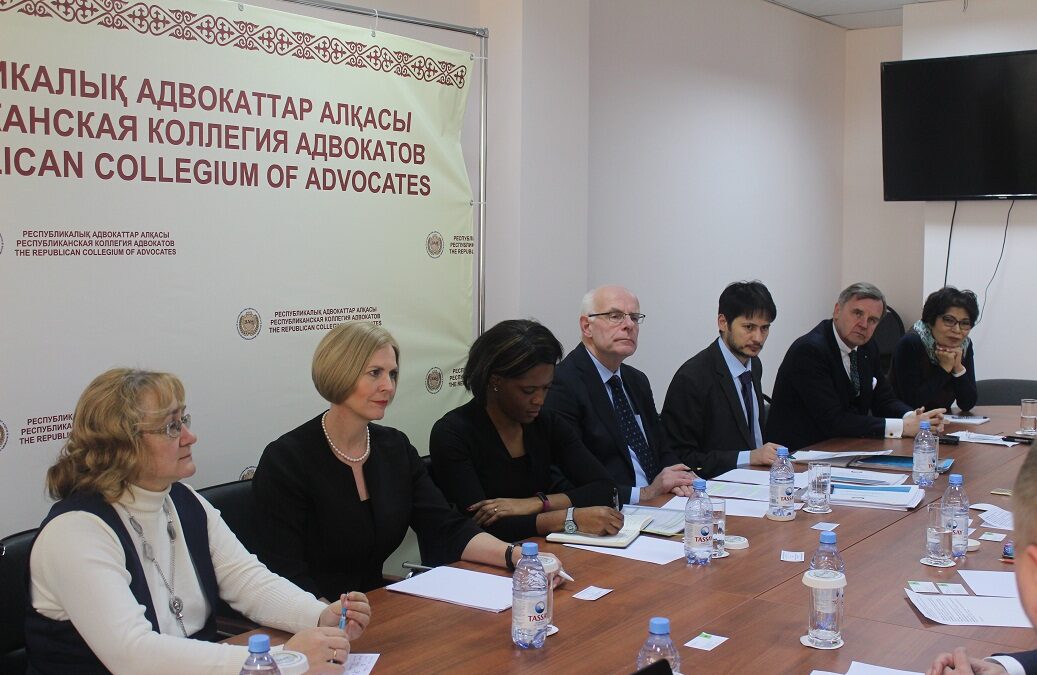
The ICJ, following a mission to Kazakhstan this week to assess the proposed draft law reforming the regulation of the legal profession, called for the postponement of the adoption of the law and more active participation of the legal profession in its development.
The ICJ stressed that any reform of the legal profession should strengthen the independence of lawyers to ensure that it is fully in line with international law and standards on the role of lawyers.
The independence of the legal profession is vital for lawyers to protect the human rights of their clients, including the right to a fair trial and access to justice.
The ICJ is concerned that the Draft Law changes the disciplinary system for lawyers from an independent procedure to one under significant influence of the executive.
In particular, the Draft Law provides for participation of representatives of the executive in disciplinary bodies.
The ICJ recalls that an independent disciplinary procedure is one of the pillars of an independent legal profession and should be guaranteed by law and in practice.
In line with the principle of an independent legal profession, the ICJ also believes that the provision in the Draft Law allowing for the creation of a “State Advokartura” should be removed.
One of the weaknesses of the current administration of the legal profession in Kazakhstan is that the qualification process for lawyers is not independent of the executive.
The ICJ stresses that the reform creates an opportunity to make the qualification procedure for lawyers fully independent, and administered by the Bar Association.
This would bring the current legislation in line with best international practices and with the principle of the independence of the legal profession.
The ICJ has noted that the Bar Association has not been sufficiently involved in the discussion of the reform of the profession. As a professional association of lawyers, the Bar Association should play a significant role the development of the legislation regulating its functioning and should ideally lead the discussion on the reform.
The ICJ believes that the adoption of the law should not be rushed and further discussion among all interested parties should take place before the Draft Law progresses further.
Reforms along the lines set out above would be consistent with Kazakhstan’s international obligations and commitments under, for instance, the International Covenant on Civil and Political Rights, and the UN Basic Principles on the Role of Lawyers.
Background
On 4 and 5 December, the ICJ carried out a visit to Astana where a number of high-level meetings were held. The visit was prompted by the reform of the legal profession and the related draft law which has been submitted to the Parliament.
The ICJ is grateful to its delegates from different jurisdictions who agreed to join the ICJ mission:
Mr. Otmar Kury, President of the Hamburg Bar Association, Chairman of the Commission on Federal Lawyers Act of the German Federal Bar
Jeroen Browder, President of the Ethics Commission of the Bar Association of the Netherlands and former President of the Bar Association of the Netherlands
Georg Stawa, President of the European Commission for the Effectiveness of Justice (CEPEJ)
Christina Blacklaws, Vice President of the Law Society of England and Wales
Chika Muorah, International Policy Adviser of the Law Society of England and Wales
The ICJ expresses its gratitude to all who kindly agreed to meet with it. In particular, the Mission thanks the Minister of Justice of Kazakhstan, the Supreme Court, members of the Parliament, the President of the Republican Bar Association, the “Kazbar” NGO and all others who it met with.
Kazakhstan-News-Web stories-Independence of the judiciary-2017-ENG (full report, in English)
Kazakhstan-MissionLawyers-News-pressreleases-2017-RUS (full story in Russian, PDF)