Mar 30, 2017 | News
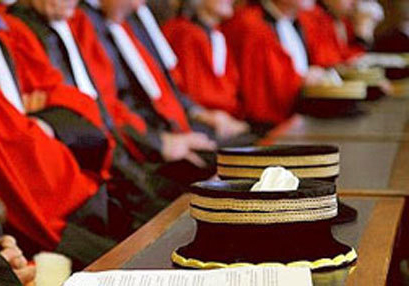
The ICJ today called on the Tunisian President, Beji Caid Essebsi, to refrain from signing into law amendments to the law that regulates the country’s High Judicial Council (HJC). The amendments were adopted on Tuesday 28 March 2017 by the People’s Representatives Assembly.
The ICJ also urged the Head of the Cabinet, Youssef Chahed, to act, as a matter of highest priority, on the nominations by the Instance Provisoire de la Justice Judiciaire (IPJJ) with a view to filling the positions of the First President of the Cassation Court and its General Prosecutor.
The ICJ expressed concern that the amendments revising the country’s 2016 HJC law would weaken the effective functioning of the judiciary and the administration of justice in several respects
- The amendments would strip the IPJJ President of the authority to convene the HJC’s first meeting and instead provide the President of the Parliament with such power. This would constitute an inappropriate interference of the legislative branch into the management of the judiciary in clear violation of the principle of separation of powers and judicial independence.
- The amendments would explicitly exclude any possibility of challenge or judicial review of such action of the President of the Parliament. The ICJ considers that the judiciary must be able to review such decisions to ensure that they are not exercised arbitrarily or outside the law.
- The amendments would also reduce the quorum required for the validity of HJC meetings from one-half to one-third of its members. This could lead to situations where non-judicial members of the HJC have the power to take decisions over the judiciary, in contravention of international standards.
“Instead of using legislative tactics and procedures to weaken the independence and the effective functioning of the HJC, the Tunisian Head of Cabinet should act on the IPJJ’s nominations to fill the positions of the President and the Prosecutor General of the Cassation Court as a matter of urgency, and ensure that until the HJC is properly established, the IPJJ continues to fully exercise its competencies in overseeing and managing the judiciary,” said Said Benarbia, Director of the ICJ Middle-East and North Africa (MENA) Programme.
Indeed, irrespective of the amendments, the ICJ recalls that article 148(8) of the Constitution clearly states that the IPJJ is to carry out its mandate until the seats on the HJC have been filled. This is further affirmed under article 74 of the 2016 HJC Law and article 19 of the 2013 IPJJ Law. Both of these laws make the end of the exercise of the IPJJ’s functions dependent on two conditions, namely that the HJC be fully composed and established.
The ICJ considers that the delay in acting on the IPJJ nominations of senior judges risks undermining the effective functioning of the judiciary, as well as adversely affecting the functioning of other institutions that are essential to upholding the rule of law and protecting human rights in Tunisia. The adopted amendments are no answer to this problem.
“The ongoing crisis is political and not judicial,” Benarbia said.
“Solving it does not require the introduction of legislative amendments that erode the rule of law and judicial independence, but rather the compliance with existing laws and the Constitution,” he added.
Contact
Theo Boutruche, Legal Adviser of the ICJ Middle-East and North Africa Programme, t: +33 6 42837354, e: theo.boutruche(a)icj.org
Background
The amendments were introduced and adopted amid a continuing crisis and functional paralysis of the judiciary that also impact on the effective functioning of other State institutions, including the body in charge of reviewing the conformity of laws with the Constitution.
In particular, two key positions have been left vacant as neither the First President of the Cassation Court, nor its General Prosecutor, have been appointed, and both of these positions also serve as ex officio members of the HJC.
In October 2016, elections were organized to choose the members of the HJC. A swearing-in ceremony before the President of the Republic followed in 14 December 2016, in which not all the HJC Members participated.
In November 2016, the IPJJ proposed candidates including to fill these two positions. Under the Tunisian Law, the Head of the Cabinet must confirm these nominations.
Alternatively, this official may request new nominations from the IPJJ until agreement is reached, as provided for in article 12 and 14 of the IPJJ Law No.13 of 2013. So far, the Head of the Cabinet has failed to act on the IPJJ’s nominations and uncertainty prevails as to whether the HJC has been properly established.
Under the Tunisian Constitution and laws, the President of the Cassation Court is also the President of the Instance Provisoire de Contrôle de la Constitutionnalité des Projets de Loi, the body in charge of assessing the conformity of laws with the Constitution during the transition period.
When established, the HJC will be charged with appointing four members of the Constitutional Court.
Tunisia-Statement new HJC Law-News-Web stories-2017-ARA (full story in Arabic, PDF)
Mar 21, 2017 | News
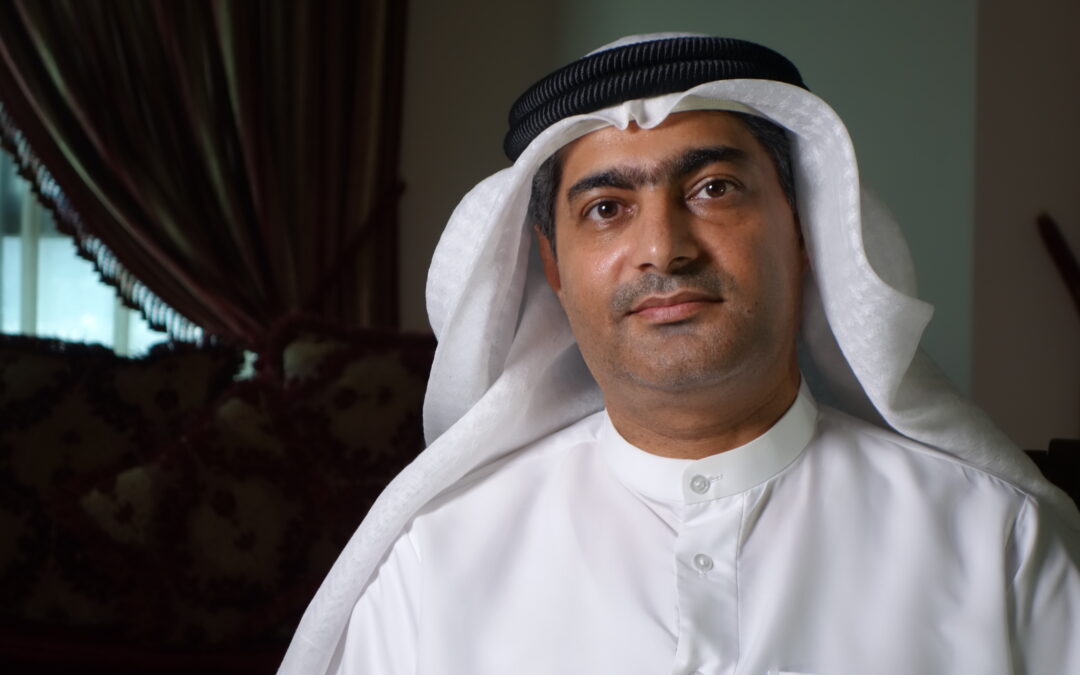
The ICJ today called on the Untied Arab Emirates (UAE)’ authorities to immediately release Ahmed Mansoor, the 2015 Laureate of the Martin Ennals Award for Human Rights Defenders, and to ensure that he is not subjected to any form of ill-treatment as long as he remains detained.
On 20 March 2017, security officials raided the apartment where Ahmed Mansoor and his family resides and confiscated electronic devices. They took Ahmed Mansoor away at around 3:15AM local time. His present whereabouts remain unknown.
The authorities have not informed his family members of the reasons for his arrest, the authority that ordered such arrest, or the location to which he was taken.
The ICJ calls upon the UAE authorities to disclose, as a matter of urgency, Ahmed Mansoor’s place of detention and provide full information about his fate and whereabouts.
International law requires that detainees be held in officially recognized places of detention and that no one is held secretly in detention, whether in officially recognized detention facilities or elsewhere.
The ICJ fears that the arrest and secret detention of Ahmed Mansoor is likely related to his human rights work, protected under international law.
His activities involve the exercise of his right to the freedom of expression, including his use of social media to criticize attacks on human rights defenders in the UAE.
“Arbitrarily detaining Ahmed Mansoor and subjecting him to secret detention exemplifies the lengths to which the UAE authorities are prepared to go in their relentless campaign to suppress peaceful human rights work and to reduce to silence all those perceived to be critical of the authorities,” said Said Benarbia, Director of the ICJ Middle East and North Africa Programme.
“The UAE authorities must comply with their obligations under international law and release immediately and unconditionally all those individuals detained or imprisoned solely for peacefully exercising their rights to freedom of expression and association,” he added.
Mansor’s arrest and secret detention comes amidst a continuing crackdown on individuals calling for peaceful political reform.
Many of them were subjected to serious human rights violations, including torture and other-ill-treatment, arbitrary detention and enforced disappearances.
The ICJ has previously documented such cases.
Contact:
Said Benarbia, ICJ Director of the Middle East and North Africa Programme, t: 41 22 979 38 17, e: said.benarbia(a)icj.org
Background
Ahmed Mansoor is a highly prominent human rights defender in the UAE and well known in the Arab region and around the world.
He has regularly monitored and raised awareness about cases of serious human rights violations in the UAE, including cases arbitrary detention, torture and other ill-treatment, enforced disappearances and violations of fair trial rights.
Since 2006, has faced repeated intimidation and harassment, including imprisonment in 2011 after being convicted of “insulting officials” and sentenced to three years’ in prison, although he was released after eight months.
Since being jailed in 2011, he has been denied a passport and banned from travelling.
Oct 11, 2016 | Multimedia items, News, Video clips
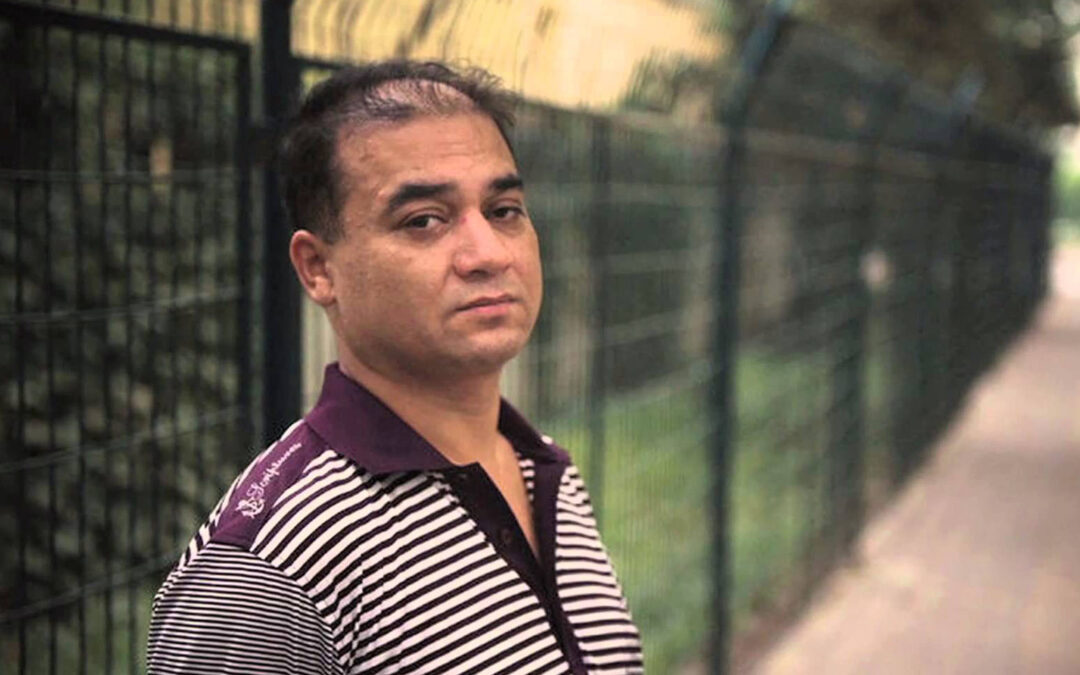
Selected by a jury of 10 global human rights organizations, including the ICJ, Ilham Tohti has worked for two decades to foster dialogue and understanding between Uyghurs and Han Chinese. Detained in China, he could not travel to collect his prize in Geneva.
A renowned Uyghur intellectual in China, Ilham Tohti (photo) has rejected separatism and violence, and sought reconciliation based on a respect for Uyghur culture, which has been subject to religious, cultural and political repression in the Xinjiang Uyghur Autonomous Region.
In 1994 he began to write about problems and abuses in Xinjiang, which led to official surveillance.
From 1999 to 2003 he was barred from teaching.
Since then the authorities have also made it impossible for him to publish in normal venues.
As a response, he turned to the Internet to broaden public awareness of the economic, social and developmental issues confronting the Uyghurs.
In 2006 he established Uyghurbiz.net, a Chinese-language site, to foster dialogue and understanding between Uyghurs and Han Chinese.
Over the course of its existence, it has been shut down periodically, and people writing for it have been harassed.
In 2009, he was arrested for several weeks after posting information on Uyghurs who had been arrested, killed and “disappeared” during and after protests.
In the following years he was periodically subjected to house arrest, and in 2013, while bound to take up a post as a visiting scholar at Indiana University, USA, he was detained at the airport and prevented from leaving China.
On January 15, 2014, Ilham Tohti was arrested on charges of separatism and sentenced to life imprisonment, after a two-day trial.
Numerous statements were issued by Western governments and the European Union condemning his trial and sentence, and in early 2016 several hundred academics petitioned the Chinese leadership for his release.
Upon his nomination as a Finalist for the Martin Ennals Award earlier this year, his daughter stated: “My father Ilham Tohti has used only one weapon in his struggle for the basic rights of the Uyghurs of Xinjiang: Words; spoken, written, distributed, and posted. This is all he has ever had at his disposal, and all that he has ever needed. And this is what China found so threatening. A person like him doesn’t deserve to be in prison for even a day.”
Martin Ennals Foundation Chair Dick Oosting said: “The real shame of this situation is that by eliminating the moderate voice of Ilham Tohti the Chinese Government is in fact laying the groundwork for the very extremism it says it wants to prevent.”
The two other finalists received Martin Ennals Prizes.
Zone 9 Bloggers (Ethiopia) are nine young activists who called themselves ‘Zone 9’ as a symbol for Ethiopia as a whole (Kality prison in Ethiopia, has 8 zones and holds many journalists and political prisoners).
They document human rights abuses and shed light on the situation of political prisoners in Ethiopia.
Six of its members were arrested and charged with terrorism.
Although they have now been released, three are in exile while four of the six remaining in Ethiopia are still facing charges and banned from travel.
Razan Zaitouneh (Syria) has dedicated her life to defending political prisoners, documenting violations, and helping others free themselves from oppression.
She founded the Violations Documentation Center (VDC), which documents the death toll and ill-treatment in Syria’s prisons.
She had started to cover all sides in the conflict when she was kidnapped, alongside with her husband and two colleagues, on 9 December 2013. Her whereabouts remain unknown.
Background
The “Nobel Prize of Human Rights”, the Martin Ennals Award for Human Rights Defenders (MEA) is a unique collaboration among ten of the world’s leading human rights organizations to give protection to human rights defenders worldwide.
Strongly supported by the City of Geneva, the award is given to Human Rights Defenders who have shown deep commitment and face great personal risk. Its aim is to provide protection through international recognition.
The Jury is composed of the following NGOs: ICJ, Amnesty International, Human Rights Watch, Human Rights First, Int’l Federation for Human Rights, World Organisation Against Torture, Front Line Defenders, EWDE Germany, International Service for Human Rights, and HURIDOCS.
Contact:
Michael Khambatta, Director, Martin Ennals Foundation, t: +41 79 474 8208, e: khambatta(a)martinennalsaward.org
Olivier van Bogaert, Director, ICJ Media and Communications, and ICJ Representative on the MEA Jury, t: +41 22 979 38 08, e: olivier.vanbogaert(a)icj.org
china-mea-laureate-2016-news-press-releases-2016-chi (full text in Chinese, PDF)
Watch the Martin Ennals Award Ceremony 2016:
Watch the Ilham Tohti movie:
Jul 7, 2016 | News
Following reports that Saif al Islam Gadhafi has been released from prison in Libya, the ICJ today called for him to be promptly arrested and surrendered to the International Criminal Court (ICC).
Saif al Islam Gadhafi was convicted by the Tripoli Criminal Court in July 2015 and sentenced, along with eight other former officials of the Moammar Gadhafi regime, to the death penalty.
At the time, the ICJ expressed its concern that the trial had not been fair, expressed its opposition to the death penalty, and called on the Libyan authorities to surrender Saif al Islam Gadhafi to the ICC.
In 2011, the ICC issued an arrest warrant for Gadhafi, who faces two counts of Crimes against Humanity including murder and persecution of civilians, allegedly conducted as part of an orchestrated campaign against demonstrators during the uprising in Libya in 2011.
Gadhafi was reportedly released from a prison in Zintan in April 2016, following instructions from the Minister of Justice to the city’s chief prosecutor. The instructions were reportedly based on a general amnesty law that was promulgated by the Libyan House of Representatives in August 2015.[1]
“Granting amnesty for crimes such as those for which Saif al Islam Gadhafi was allegedly responsible is totally incompatible with the rule of law, the right of victims to justice, and Libya’s international human rights obligations”, said Said Benarbia, Director of the MENA programme at the International Commission of Jurists.
“Instead of shielding him from accountability, the Libyan authorities should ensure that all those responsible for past and ongoing gross violations of international human rights law and serious violations of international humanitarian law are brought to justice in fair and effective criminal trials. A first step in this direction would be for the Libyan authorities to arrest Saif al Islam Gadhafi and surrender him to the ICC as a matter of urgency.”
The ICJ believes that impunity for gross human rights violations and war crimes, including impunity resulting from amnesties, is not conducive to peace, political stability and national reconciliation in Libya.
Indeed, such impunity may be perceived by those who continue to systematically violate rights and freedoms as a signal that they may never be criminally held to account.
At the same time, the ICJ absolutely opposes the death penalty, which it considers inherently to violate the right to life and the right not to be subjected to cruel, inhuman or degrading punishment.
Gadhafi would not face the death penalty in any ICC trial.
Saif al Islam Gadhafi’s lawyer has reportedly indicated that he will argue to the ICC that it should drop its proceedings, on the basis of article 20 of the Statute of the ICC, which addresses the circumstances in which a person who has already been tried for certain conduct by another court, may subsequently be tried by the ICC.
The ICJ stresses that any hearing to consider such arguments should not in any way suspend Libya’s obligation immediately to implement the ICC arrest warrant and to surrender Saif al Islam Gadhafi to the ICC.
“Libya should comply with its obligations under international law and dismantle the structural impunity that continues to prevail in the country, including by putting an end to politicized judicial proceedings and ensuring that prosecutors carry out their functions independently, impartially, and in defence of human rights,” added Benarbia.
[1] Law No. 6 of 2015
Contact
Doireann Ansbro, Associate Legal Adviser, ICJ Middle East and North Africa Programme, t: +216 71 841 701, e: doireann.ansbro(a)icj.org
Libya-Saif al Islam Gadhafi-News-Press Releases-2016-ARA (full press release in Arabic, PDF)
May 10, 2016 | News
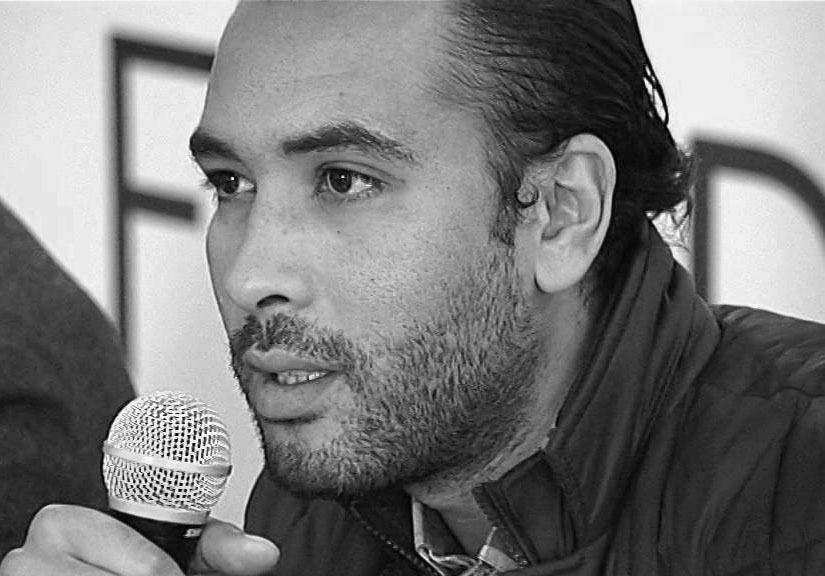
The ICJ today called on the Egyptian authorities to immediately release human rights lawyer Malek Adly and to drop all charges against him. He was arrested on Thursday 5 May 2016, pursuant to an arrest warrant.
Malek Adly has been charged with a number of offences, including “attempting to overthrow the regime,” “spreading false rumors,” and “using force against a public servant.”
The Prosecuting authorities have not provided information on specific behaviour that would constitute criminal conduct.
The ICJ is concerned that the charges may be in retaliation for Malek Adly’s work as a lawyer and human rights defender, and are aimed to chill him and others from engaging in work perceived as threatening to or disfavoured by Egyptian authorities.
They came at the backdrop of his work as a human rights lawyer, his critical views on the rule of law situation in Egypt, and his legitimate and peaceful exercise of freedom of expression and assembly in opposing transferring the sovereignty of Tiran and Sanafir islands from Egypt to Saudi Arabia, the ICJ says.
“Malek Adly’s arrest, detention and prosecution for carrying out his work as a lawyer and human rights defender and for peacefully expressing his views is yet another attempt by the Egyptian regime to muzzle lawyers, the last line of defence for victims of human rights violations in Egypt,” said Said Benarbia, Director of the ICJ Middle East and North Africa Programme.
“The regime’s crackdown on fundamental rights and freedoms has been worryingly extended to the very lawyers whose role is to challenge and protect against such crackdown,” he added.
Over the last three years, the ICJ has documented numerous cases of lawyers who have been subjected to human rights violations and reprisals in relation to the representation of their clients.
These include the cases lawyers Imam Afifi and Karim Hamdi who were allegedly subjected to torture and subsequently died while in police custody.
International standards aiming to safeguard the role of lawyers provide that States have a duty to ensure that lawyers are able to perform their functions “without intimidation, hindrance, harassment or improper interference” and that lawyers must not be subject to prosecution or other sanction for carrying out their professional responsibilities, the Geneva-based organization reminds.
International standards on human rights defenders require States protect human rights defenders from attacks, threats, retaliation and arbitrary action.
The Egypt 2014 Constitution guarantees the “independence of the lawyer’s profession and the protection of its interests as a guarantee to protecting the right to defence”. In addition, it prohibits the arrest of a lawyer while he or she is exercising the right to defence, except in flagrante delicto crimes.
“The Egyptian authorities must live up to their obligations under the Constitution and international law and put an immediate end to their attacks against lawyers,” concluded Benarbia.
Contact
Nader Diab, Associate Legal Adviser of the ICJ Middle East and North Africa Programme, t: +216 51727023; e: nader.diab(a)icj.org
Egypt-HR Lawyer MalekAdly-News-Press Releases-2016-ARA (full text in Arabic, PDF)
Mar 28, 2016 | News
The ICJ today calls for the reversal of the Supreme Disciplinary Board’s decisions to force into retirement 47 judges following two separate, mass proceedings known as the “July 2013 Statement Case” and the “Judges for Egypt Case”, which concern over 60 judges.
Today’s final decision in the “July 2013 Statement Case” forcibly removed 32 judges from their offices.
It comes after all of the 15 judges referred to disciplinary proceedings in the “Judges for Egypt” were forcibly removed from their offices last Monday.
In a third case on 7 March 2016, the Disciplinary Board removed from office Zakaria Abdel Aziz, a former President of the Judges Club (Egypt’s representative body of judges) and a leading advocate of judicial independence.
“The intensity of Egypt’s attacks against individual judges is reaching a frightening level,” said Said Benarbia.
“By removing judges from the office following mass, arbitrary and unfair disciplinary proceedings, the authorities are purging from the judiciary the very voices that have promoted its independence, and sending a chilling message to others who might challenge the ongoing crackdown on fundamental rights and freedoms in Egypt,” he added.
The ICJ had previously raised concerns about fairness of these proceedings as well as the nature of the charges against the concerned judges.
In the “July 2013 Statement Case” and the “Judges for Egypt Case,” the Disciplinary Board found that the judges had been involved in politics and were therefore “unfit” to carry out their functions.
Article 73 of Egypt’s Judicial Authority Law prohibits judges from engaging in “political activity”.
This prohibition was interpreted by the Disciplinary Board to include “discussing or commenting on legislative and governmental decisions as long as it does not pertain to a case that he [the judge] is looking into as part of his judicial function”.
The ICJ considers that the interpretation by the Disciplinary Board could result in arbitrary limitations to the judges’ right to freedom of expression, assembly and association, well beyond any restrictions that could possibly be justified as necessary to preserve the dignity of their office and the impartiality and independence of the judiciary.
Furthermore, these disciplinary proceedings have failed to meet international standards of fairness, the ICJ says.
The Geneva-based organization previously highlighted procedural flaws in the proceedings against the judges such as failure to be notified properly, to be represented before the Board and to be provided with adequate time and facility to prepare a defense.
“The Egyptian authorities must reinstate all judges that have been removed from their office as a result of unfair and arbitrary proceedings”, said Benarbia.
“Furthermore, they must amend the Judicial Authority Law to ensure that disciplinary offences are clearly and precisely defined within the law; that the exercise of the rights to freedom of expression, association and assembly in a manner consistent with the dignity of the office and the impartiality and independence of the judiciary does not constitute a disciplinary offence; and that the disciplinary procedure is fair and does not undermine the independence and impartiality of the judiciary,” he added.
Contact:
Nader Diab, Associate Legal Adviser of the ICJ Middle East and North Africa Programme, t: +216 51727023; e: nader.diab(a)icj.org
Background
The UN Basic Principles on the Independence of the Judiciary, which were adopted by the UN in 1985 and elaborate on states’ obligations under international law, include the following provisions:
- In accordance with the Universal Declaration of Human Rights, members of the judiciary are like other citizens entitled to freedom of expression, belief, association and assembly; provided, however, that in exercising such rights, judges shall always conduct themselves in such a manner as to preserve the dignity of their office and the impartiality and independence of the judiciary.
- Judges shall be free to form and join associations of judges or other organizations to represent their interests, to promote their professional training and to protect their judicial independence. (…)
- A charge or complaint made against a judge in his/her judicial and professional capacity shall be processed expeditiously and fairly under an appropriate procedure. The judge shall have the right to a fair hearing. The examination of the matter at its initial stage shall be kept confidential, unless otherwise requested by the judge.
- Judges shall be subject to suspension or removal only for reasons of incapacity or behaviour that renders them unfit to discharge their duties.
- All disciplinary, suspension or removal proceedings shall be determined in accordance with established standards of judicial conduct.
- Decisions in disciplinary, suspension or removal proceedings should be subject to an independent review. This principle may not apply to the decisions of the highest court and those of the legislature in impeachment or similar proceedings.
Egypt- removal of judges-press release-2016-ARA (full text, Arabic, in PDF)