Jun 22, 2021 | News, Publications
The Thai authorities should immediately reform laws, policies and practices that have led to increasing violations of human rights in the digital sphere, the ICJ said in a new report launched today.
The 75-page report, Dictating the Internet: Curtailing Free Expression and Information Online in Thailand, documents a range of laws that does not comply with international human rights law and standards. These laws contain vague and overbroad provisions, wrongly criminalize free expression or prescribe disproportionately harsh penalties, and are applied without independent oversight mechanisms.
These arbitrary restrictions have intensified in response to the COVID-19 pandemic and pro-democracy protests.
“The Thai authorities have continued their systematic abuse of existing and new deficient laws to curtail not only the right to freedom of expression, opinion and information online, but also the rights to peaceful assembly, health and other rights,” said Sam Zarifi, ICJ’s Secretary General.
The Thai authorities have also pressured and co-opted big technological companies to improperly restrict or block content on their platforms, through court-enforced demands and the filing of criminal complaints for failing to comply.
The report further documents how the Thai authorities have failed to adequately protect individuals against the human rights abuses of private actors, who include companies harassing its critics through legal processes and perpetrators of online speech inciting discrimination, hostility or violence.
The report provides specific recommendations to the Thai authorities and technological companies in the communications sector to safeguard in law and practice the rights to expression, opinion and information online as well as offline. These recommendations call for the authorities to, among other recommendations:
- Repeal or substantially amend criminal law provisions that criminalize or unduly restrict human rights online, and review existing laws or develop legislation to protect against SLAPP lawsuits and the incitement of discrimination, hostility or violence;
- Cease harassment and persecution of all individuals for merely exercising their human rights online;
- Refrain from future charges and drop all existing charges against individuals and social media companies facing prosecution for alleged violations of non-human rights compliant laws, and immediately release all held in pre-trial detention or imprisoned on conviction for such cases; and
- Refrain from restricting or blocking online content unless the decision to block has been undertaken following a full analysis applying international human rights law and standards, and authorized pursuant to an order by an independent and impartial judicial authority.
“The Thai authorities must act urgently to stem this deteriorating trend of human rights violations and abuses in the digital space, by repealing or substantially amending its laws, policies and practices in line with Thailand’s international legal obligations,” added Zarifi.
The report follows on from the ICJ’s December 2019 regional report entitled Dictating the Internet: Curtailing Free Expression, Opinion and Information Online in Southeast Asia assessing non-human rights compliant legal frameworks and case studies across Southeast Asia, including Thailand.
Report Launch
The report will be launched on 22 June 2021. The launch includes a panel discussion, which draws together human rights defenders, diplomats, journalists, lawyers and civil society to discuss the increasing attacks on freedom of expression and information online in Thailand through non-human rights compliant laws and practices.
The discussion will include as panelists:
- Sam Zarifi, Secretary General, International Commission of Jurists;
- Poonsuk Poonsukcharoen, Thai Lawyers for Human Rights (TLHR); and
- Chavarong Limpattamapanee, Chairman, National Press Council, Thailand.
Download
The full report is available in English here and in Thai here. The executive summary of the report is available in English and Thai. (PDF)
Contact
Sam Zarifi, ICJ Secretary General, e: asiapacific@icj.org, t: +66-62-702-6369
See also
ICJ, ‘Southeast Asia: ICJ launches report on increasing restrictions on online speech’, 11 December 2019
ICJ, ‘Vietnam: authorities must act to safeguard rights online and end harassment of those expressing themselves – ICJ new report’, 9 December 2020
Jun 1, 2021 | News, Publications
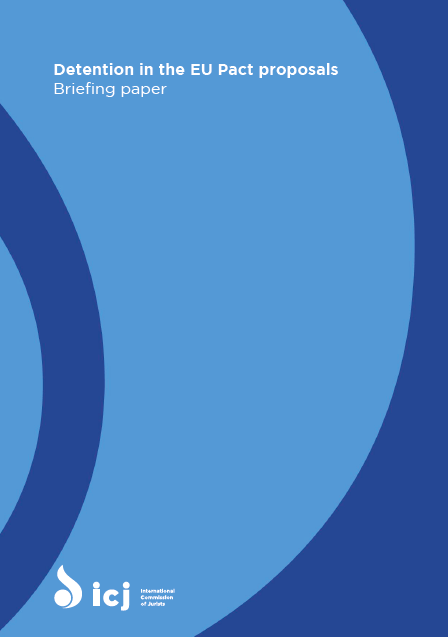
European legislators should reject the Screening Regulation proposal and revise the amended Asylum Procedures Regulation proposal that were proposed as part of the European Union Pact on Migration and Asylum. These proposals would result in the prolonged detention of migrants and refugees, said the International Commission of Jurists (ICJ) in a briefing paper released today.
“These proposals would result in impermissible detention of people not having committed any crime including those fleeing danger and seeking safety in the European Union in violation of international law, and would be especially cruel for children, who should not be detained at all,” said Karolína Babická, Legal Adviser at the ICJ.
The briefing paper published today comments on two proposals of the EU Pact, focusing on the impact of the new proposals on immigration detention and deprivation of liberty, providing recommendations to co-legislators in relation to the proposed EU Screening Regulation and the border procedures that would be established by the amended Asylum Procedures Regulation proposal.
If the proposals are adopted as proposed by the European Commission, prolonged immigration detention will inevitably result in practice, due to a lack of safeguards in the legislation. And there is a high risk of systematic detention at the border in breach of international human rights and refugee law.
In order to comply with international law obligations, detention during the screening and border procedures must only be used as a measure of last resort, applicable only in well-defined situations and based on a case-by-case assessment of the situation, while privileging alternatives to detention. Furthermore, children, as well as people in need of special procedural guarantees or with special reception needs, must not be detained.
The new EU Pact on Migration and Asylum developed by the European Commission was communicated by the Commission to other EU institutions on 23 September 2020. The Pact proposes a set of new legislation and amends existing proposals. The proposed Regulations will be directly applicable in EU Member states when adopted.
See the full briefing paper here: Detention in the EU Pact proposals-briefing-2021-ENG
May 14, 2021 | Advocacy, News, Publications
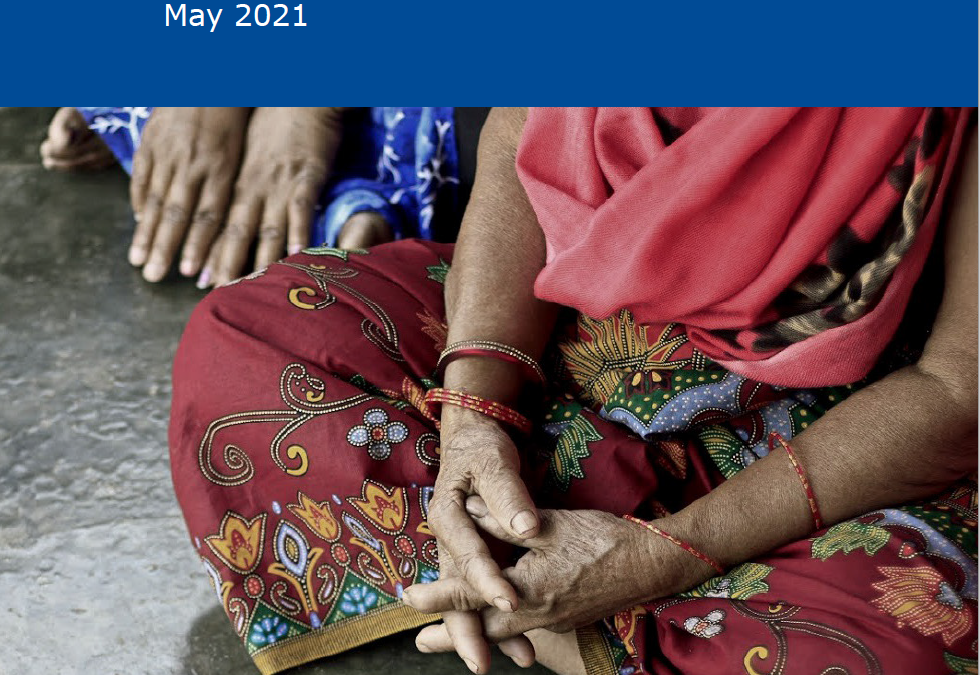
The ICJ launched a new briefing paper Nepal: Transitional Justice Mechanisms with Gender Perspective in a webinar held on 12 May 2021.
The discussion included the need to give practical effect to Nepal’s obligation under international law to ensure the right to an effective remedy to the victims, including women victims of sexual and gender-based violence during the country’s internal armed conflict (1996 – 2006). Participants focused in particular on the need to ensure that gender issues are incorporated in the transitional justice mechanism.
The Honourable Kalyan Shrestha, former Chief Justice of the Supreme Court of Nepal and ICJ Commissioner, stressed the importance of the role of the Supreme Court of Nepal in establishing landmark jurisprudence on transitional justice.
Justice Shrestha explained how despite the fact that the country had established a progressive Constitution and amended legislation to provide for equality, non-discrimination and access to justice, women victims and survivors of a decade long armed conflict continued to face real barriers to justice. These including short periods of statute of limitations preventing the filing rape and sexual violations cases and lack of support mechanisms for women, which compounded existing economic pressure and social obstacles.
Bandana Rana, Member of the UN Committee on the Elimination of Discrimination against Women (CEDAW), addressed the situation of sexual and gender – based violence against women in Nepal during the armed conflict. She said that Nepal was bound by clear international legal obligations, including under the CEDAW and other treaties. Yet the Nepali government has not taken effective measures to ensure access to justice and the right to an effective remedy to the victims of SGBV during the conflict.
Laxmi Pokharel, ICJ Legal Adviser, summarized the ICJ’s briefing paper on “Nepal: Transitional Justice Mechanisms with Gender Perspective”. The Paper’s major recommendations, to the Government of Nepal, are:
- Amend the Truth and Reconciliation Act (TRC) in line with the Supreme Court’s order and Nepal’s international obligations;
- Ensure participatory, consultative processes while amending the TRC Act;
- Ensure the participation of women at all levels of recruitment, including in the formation of the recommendation committee, in the appointment of Commissioners of both the TRC and the Commission on Investigation of Disappeared Persons (COID) and at all levels of staffing with a view to ultimately achieving gender parity;
- Provide gender-sensitive trainings to the Commissioners and staff of the Commissions in order to enhance their capacity to address gender issues in their operation;
- Take all necessary steps to amend the Criminal Code to remove the statutory limitation for filing incidents of rape and other sexual violence, including in relation to acts committed during the armed conflict, in order to ensure justice for all victims;
- Ensure that amnesties and mediation are not used to replace criminal responsibility for gross violations of human rights, including rape and other sexual violence.
- Incorporate a gender-responsive approach in all aspects of the Commissions’ work, including in the interpretation and application of the mandate of the Commissions, prosecution of perpetrators and reparation to the victims and survivors;
- Incorporate an approach in the Commissions’ work that does not restrict women’s experiences during the armed conflict only to bodily harm suffered, but also takes account of structural gender biases and its consequences during the period of a conflict;
- Design and implement gender-friendly procedures for investigation, including statement taking, victim and witness protection and other activities of the Commissions;
- Design and implement specific reparation policies to address the unique needs of women victims;
- Ensure that the gendered aspects of the armed conflict, including its causes and consequences are incorporated in the final report of the Commissions;
- Take effective measures to ensure the widest possible dissemination of the final report of the Commissions in order to ensure that the wider population is made aware of the truth, most especially in relation to women.
The webinar was jointly organized by ICJ in collaboration with the United Nation’s Office of the High Commissioner for Human Rights (OHCHR) and UN Women. This event was organized under the ‘Enhancing Access to Justice for Women in Asia and the Pacific’ project funded by the Swedish International Development Cooperation Agency (SIDA). Due to the COVID – 19 pandemic the webinar was conducted virtually and live broadcasted on Facebook. It was conducted in English language and simultaneous translation in Nepali language was also available.
Contact
Laxmi Pokharel, ICJ Legal Adviser – Nepal, email: laxmi.pokharel(a)icj.org
Download
Briefing paper on “Nepal: Transitional Justice Mechanisms with Gender Perspective” (full report in PDF)
May 6, 2021 | News, Publications, Reports
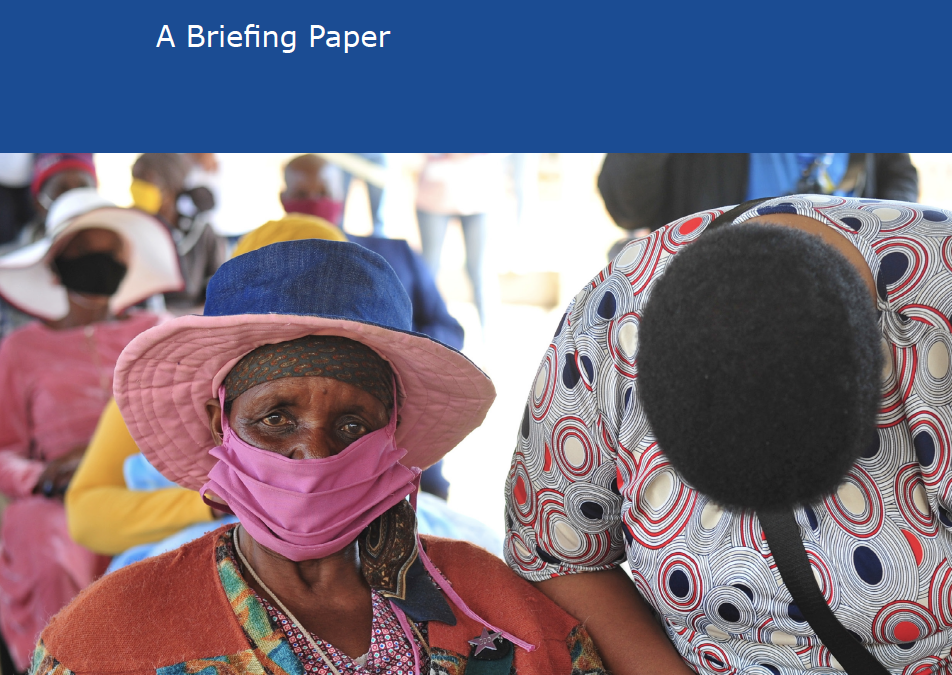
Southern African States have individually and collectively failed to provide sufficient and equitable COVID-19 vaccine access to meet their human rights obligations, the ICJ said today in a new briefing paper entitled The Unvaccinated: Equality not Charity in Southern Africa.
The paper focuses on the impact of COVID-19 on countries of the Southern African Development Community (SADC), a regional economic community comprising 16 Southern African countries whose goal is to enhance the standard and quality of life of the peoples in the region.
The publication considers SADC and its Member States’ collective failure to ensure access to COVID-19 vaccines despite more than 63,000 lives lost to the virus and countless others’ lives and livelihoods affected in the region.
This is due to a multitude of reasons, some common amongst the countries and others unique to individual Member States. While Tanzania and Madagascar denied the existence of the virus and rejected COVID-19 vaccines respectively, other countries with relatively greater resources, such as South Africa, failed to mobilize their resources adequately and equitably.
“COVID-19 is a global pandemic, but its impact was aggravated in southern Africa by the failure of governments to prepare and respond, individually or through SADC,” said Tim Fish Hodgson, ICJ’s Legal adviser on Economic, Social and Cultural Rights, in Johannesburg.
Combatting deadly communicable diseases like COVID-19 is one of the founding objectives under SADC’s founding treaty, and is also accounted for under the SADC Health Protocol. Yet, SADC has failed to provide almost any concrete guidance or coordinating role in regional procurement of COVID-19 vaccines since October 2020, prior to the availability of COVID-19 vaccines. While SADC’s chair, President Filipe Nyusi of Mozambique has encouraged a regional pooling of resources to facilitate procurement of necessary vaccines and distribution in a statement in January 2021, SADC has since taken no clear action towards this goal.
“While powerful global actors have erected roadblocks to equitable vaccine access in southern Africa, this should not conceal the burning need for SADC States to take essential measures to mobilize their collective resources towards efficient and equitable vaccine acquisition, allocation and distribution. As our research shows, they have failed to do so and SADC has been conspicuously silent,” Hodgson said.
These dire circumstances have led Fatima Hassan, South African human rights defender and director of the Health Justice Initiative, to observe that “philanthropy [and] benevolence cannot fund equality” in vaccine access. Indeed, the donation of vaccine doses through COVAX and other measures are not enough, and without rapid and adequate action to ensure equitable access to COVID-19 vaccines, it might be too late.
The ICJ’s research at a global and regional level have emphasized the urgent need for international institutions like the World Trade Organization and wealthier States to help countries to manufacture or otherwise acquire and distribute vaccines at affordable prices unimpeded by rigid intellectual property rights restrictions.
“All States should urgently heed the proposal by South Africa and India before the WTO for a waiver of the TRIPS intellectual property rules to allow faster, wider, and better distribution of COVID-19 vaccines,” Hodgson said.
“It is encouraging to see the United States end their opposition to the TRIPS waiver, and we hope that other States, in the European Union, Switzerland, Norway, and Brazil, will end their opposition and recognize that until everyone is safe, no one is truly safe.”
The ICJ emphasized that efforts by SADC and Southern African States is essential alongside ramped up global action.
“The pandemic is raging around the world even though a few countries, mostly the wealthiest, are now able to look beyond the worst of it. Most countries in Southern Africa remain unvaccinated, and in fact we are looking at new devastating waves of the illness. SADC should immediately improve efforts at collaboration and coordination to ensure compliance with their human rights obligation to provide everyone in the region with vaccine access as soon as possible,” Hodgson added.
The ICJ makes recommendations to specific States including Malawi, Tanzania, Madagascar, Zimbabwe and South Africa as well as a range of general recommendations to the SADC, including:
- The SADC Secretariat should urgently and actively facilitate and advance sub-regional COVID-19 vaccine procurement and distribution between the Member States.
- The SADC Secretariat should provide clear guidance to Member States on their human rights obligations pertaining to vaccine access. They should take effective action to address the failure of Member States to act according to their obligations under international law, including under regional agreements.
- All SADC member States should, as a matter of priority, develop, publish and publicize national vaccine acquisition and rollout plans and procurement strategies, detailing concrete measures to ensure non-discriminatory access to vaccines to all people.
Contact
Timothy Fish Hodgson, Legal Adviser on Economic, Social and Cultural Rights, timothy.hodgson(a)icj.org
Tanveer Jeewa, Legal and Communications Officer, tanveer.jeewa(a)icj.org
Download
Africa-The Unvaccinated-Publications-Reports-2021-ENG (full report, in PDF)
Mar 29, 2021 | News, Publications, Reports, Thematic reports, Uncategorized
The International Commission of Jurists (ICJ) has published a new report Accessing Economic and Social Rights in Uzbekistan: An Analysis of Selected Laws and Practices. In the report, it considers aspects of Uzbekistan’s implementation of its obligations to respect, protect and fulfil economic, social and cultural (ESC) rights through laws and policies as well as through access to justice and remedies for those who allege that their ESC rights have been violated.
Analysing the general legal framework for protection of these rights, the report considers in more detail particular challenges in Uzbekistan, in respect of the right to adequate housing, the right to health, and rights in the workplace.
In the report, the ICJ concludes that in-depth reforms of the justice system are still needed to ensure effective remedies for ESC rights violations in practice, including through genuine independence of the judiciary and regular application of international human rights law in and by the courts.
In general, the use of international law in the Uzbekistan justice system remains weak and underdeveloped. International law is to a high degree theoretical for most legal practitioners, an approach that appears to have its roots in legal tradition and culture, lack of political will and a lack of concrete programmes of measures to make progress in this regard. In practice, judges, prosecutors and lawyers continue not to be exposed to international law on ESC rights, and usually do not apply it in their work directly.
The report concludes that in Uzbekistan the justiciability of ESC rights is not always accepted, as some ESC rights are not seen as rights whose violation could or should be remedied through and by the courts. Rather, many actors see guarantees of non-discrimination or aspects of the right to health or education as benefits which are not of a justiciable nature. Lawyers, sharing a similar legal mindset and background, do not tend to demonstrate the necessary legal activism in pursuing judicial remedies in such cases.
The report contains five chapters. Chapter 1 of the report outlines the general issues which are essential to ensure access to justice for ESC rights in Uzbekistan. Chapter 2 is dedicated to issues related to the right to housing, its international legal aspects and national implementation. Chapter 3 discusses issues related to the right to health while Chapter 4 describes the aspects of the protection of the right to work internationally as well as in Uzbekistan. In Chapter 5, the report sets out conclusions and recommendations on access to justice as well as the measures to protect specific rights addressed in the report.
The publication of the report marks the conclusion of a three-year project, ACCESS, of the International Commission of Jurists (ICJ), which has worked to advance civil society engagement for the protection of ESC rights in Uzbekistan. It draws on several discussions in Uzbekistan, as well as on legal research carried out throughout the project.
Please see the report below:
In English: Accessing Economic and Social rights in Uzbekistan: an analysis of selected laws and practices
In Russian: Доступ к экономическим и социальным правам в Узбекистане: анализ законодательства и практики
In Uzbek: Ўзбекистонда иқтисодий ва ижтимоий ҳуқуқларни баҳолаш: айрим қонунлар ва амалиёт таҳлили
Please see the executive summaries below:
In English: Accessing Economic and Social rights in Uzbekistan: an analysis of selected laws and practices. Executive summary
In Russian: Доступ к экономическим и социальным правам в Узбекистане: анализ нормативно-правовых актов и практики. Резюме отчета.
In Uzbek: Ўзбекистонда иқтисодий ва ижтимоий ҳуқуқлардан фойдаланиш имкониятлари: алоҳида норматив-ҳуқуқий ҳужжатлар ва амалиёт таҳлили.Ҳисоботнинг қисқача мазмуни
Feb 18, 2021 | Advocacy, News, Publications
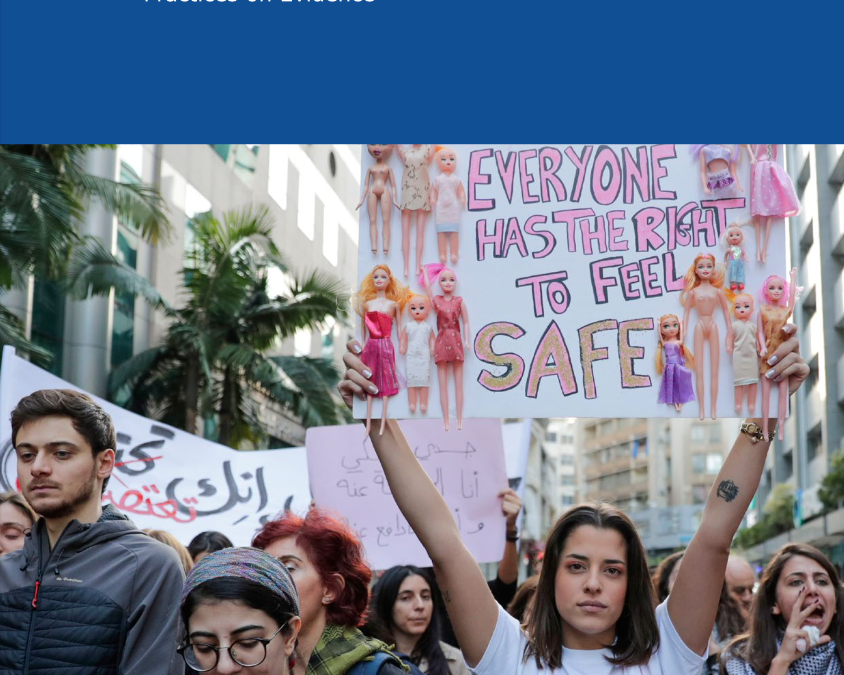
In a memorandum released today, the ICJ published guidance and recommendations aimed at assisting Lebanon’s criminal justice actors in addressing significant gaps in evidentiary rules, practice and procedures undermining the investigation, prosecution and adjudication of sexual and gender-based violence (SGBV) crimes in the country.
The 42-page memorandum, Sexual and Gender-based Violence Offences in Lebanon: Principles and Recommended Practices on Evidence (available in English and Arabic), aims to advance accountability and justice for SGBV, and is especially designed for investigators, prosecutors, judges and forensic practitioners.
“Criminal justice actors are indispensable to eradicating harmful practices and curbing entrenched impunity for SGBV in Lebanon,” said Said Benarbia, Director of the ICJ’s Middle East and North Africa Programme.
“Rather than buying into false, stereotyped narratives that impugn survivors’ credibility and call into question their sexual history, the criminal justice system must adopt and enforce gender-sensitive, victim-centric evidence-gathering procedures that put the well-being of SGBV survivors at the forefront.”
The memorandum provides criminal justice actors with guidance and recommendations on the identification, gathering, storing, admissibility, exclusion and evaluation of evidence in SGBV cases, as well as on their immediate applicability in practice, pending consolidation and reform of Lebanon’s existing legal framework and procedures for the investigation, prosecution and adjudication of SGBV offences.
“Lebanon’s legal framework fosters and perpetuates a systematic denial of effective legal protection and access to justice for women survivors of SGBV,” said Benarbia. “The justice system must counter harmful gender stereotypes and attitudes rooted in patriarchy, which continue to undermine survivors’ right to effective remedies.”
The memorandum’s release is particularly timely given the escalation of SGBV witnessed since the outbreak of the COVID-19 pandemic.
The memorandum builds on previous research undertaken by the ICJ in this area, including Gender-based violence in Lebanon: Inadequate Framework, Ineffective Remedies and Accountability for Sexual and Gender-based Violence in Lebanon: Guidance and Recommendations for Criminal Justice Actors.
Download
Lebanon-GBV-Memorandum-2021-ENG (Memorandum in English)
Lebanon-GBV-Memorandum-2021-ARA (Memorandum in Arabic)
Lebanon-GBV-Web-Story-2021-ARA (Web story in Arabic)
Lebanon-GBV-Web-Story-2021-ENG (Web story in English)
Contact:
Said Benarbia, Director, ICJ Middle East and North Africa Programme, t: +41-22-979-3817; e: said.benarbia(a)icj.org
Asser Khattab, Research and Communications’ Officer, ICJ Middle East and North Africa Programme, e: asser.khattab(a)icj.org