Jan 30, 2020 | News
The ICJ, in collaboration with the Zimbabwe Judicial Service Commission (JSC), convened an Anti-Corruption workshop from 27-30 January 2020.
The objective was to enhance the capacity of judicial and law enforcement officials and prosecutors in respect of their roles in anti-corruption prevention and enforcement and cyber-crime investigation.
The workshop was led by Hon. Justice Lawrence Gidudu, the Head of the Anti-Corruption Division of the High Court in Uganda, who was assisted by Moses Modoi a lawyer specializing in research and capacity building that supports anti-corruption courts.
In his keynote address, Hon. Mr Justice L. Malaba Chief Justice underlined that participation by key justice actors showed commitment towards the fight against corruption.
He noted that the education and training aspects aimed to create a common understanding of standards and techniques to be applied when handling corruption matters.
He expressed the sentiment that there were lessons to be learned from the Ugandan Court which currently has had a high success rate in corruption cases.
The training workshop is part of the ICJ’s wider efforts to ensure access to justice for all in Zimbabwe and elsewhere.
The main focus here was on the global outlook and emergency of anti-corruption action; analysis of municipal Anti-Corruption legislation; managing trials in anti-corruption courts, corruption as a transnational crime, admissibility of digital evidence; asset recovery and ethics and integrity.
There were 49 participants in the portions of the workshops from 27-28 January, including 18 women, comprising Judges from the Zimbabwe High Court; Regional, Provincial and Senior Magistrates; and Registrars from the Superior Courts.
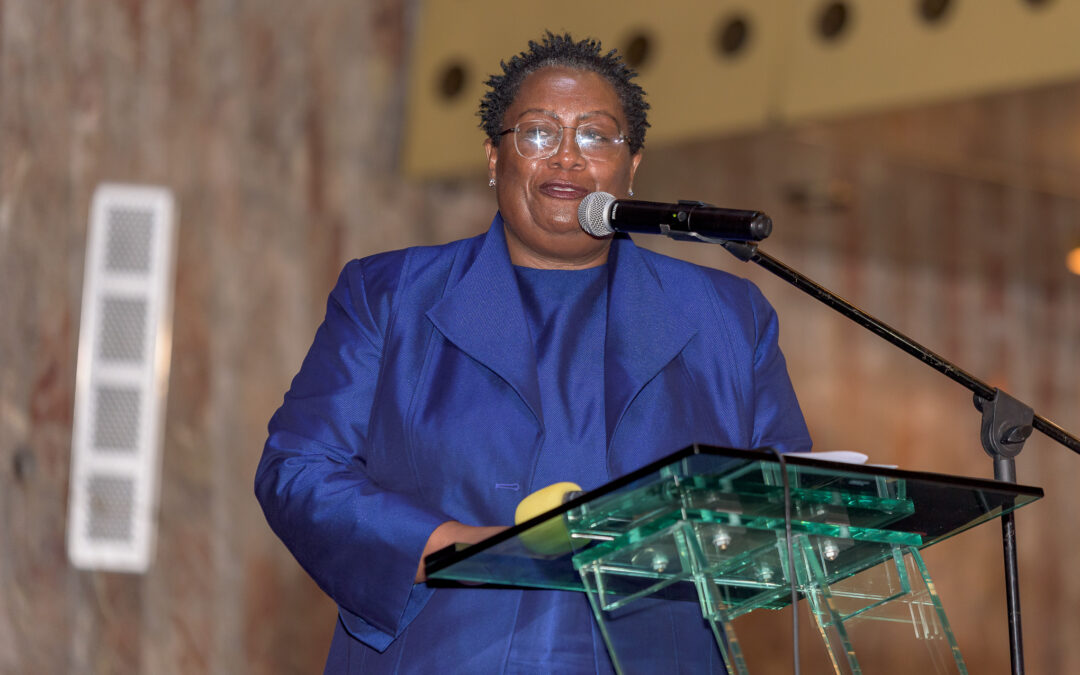
Photo: Justice Loice Matanda-Moyo, Chairperson for the Zimbabwe Anti-Corruption Commission Justice Loice Matanda-Moyo

Dec 10, 2019 | Multimedia items, News, Video clips
Today, the ICJ launched the animated video titled “UN Committee Recommends Socio-Economic Rights Protections in South Africa” in commemoration of International Human Rights Day, at an event sponsored in collaboration with local partner Lawyers for Human Rights (LHR).
With support from the European Union (EU), the ICJ and LHR have been jointly implementing a project promoting the protection of Economic, Social and Cultural Rights (ESCR) over the last three years.
The project included workshops co-ordinated by the ICJ and LHR on the protection of ESCR with magistrates, lawyers, paralegals and civil society organizations. As part of the project published a detailed Guide for the Legal Enforcement and Adjudication of Economic, Social and Cultural Rights in South Africa to assist legal practitioners, including magistrates, lawyers, paralegals and civil society, in understanding and applying international and domestic legal standards relating to ESCR. The ICJ also joined other local and international organizations in making submissions to the UN Committee on ESCR, which ultimately informed the Committee’s recommendations to South Africa.
During the event 10 December event in Pretoria, the LHR launched the documentary “Everyone Lies to Popo Molefe”, which tells the true story of the community’s struggle to basic services. Members of the Popo Molefe community were guests of honour at the event, which was also attended by a representative of the South African Human Rights Commission.
“If we can have roads, water and electricity… We are struggling without electricity. This situation we are living in is not good. I wish the President could see this documentary,” Popo Molefe Community Leader Kgomotso Susan Nkolisa said.
The ICJ’s animation explains in simple terms the recommendations made by the UN Committee on Economic, Social and Cultural to the government on South Africa.
These recommendations are based on the international standards and protection of the rights contained within the International Covenant on ESCR ratified by South Africa in 2015.
The animation uses illustrative examples of South Africa’s obligations under the Covenant relating to housing, education and just and equitable wages, urging viewers to hold government accountable for the implementation of the UN Committee’s recommendations.
Watch the animation
Dec 6, 2019 | Events, News
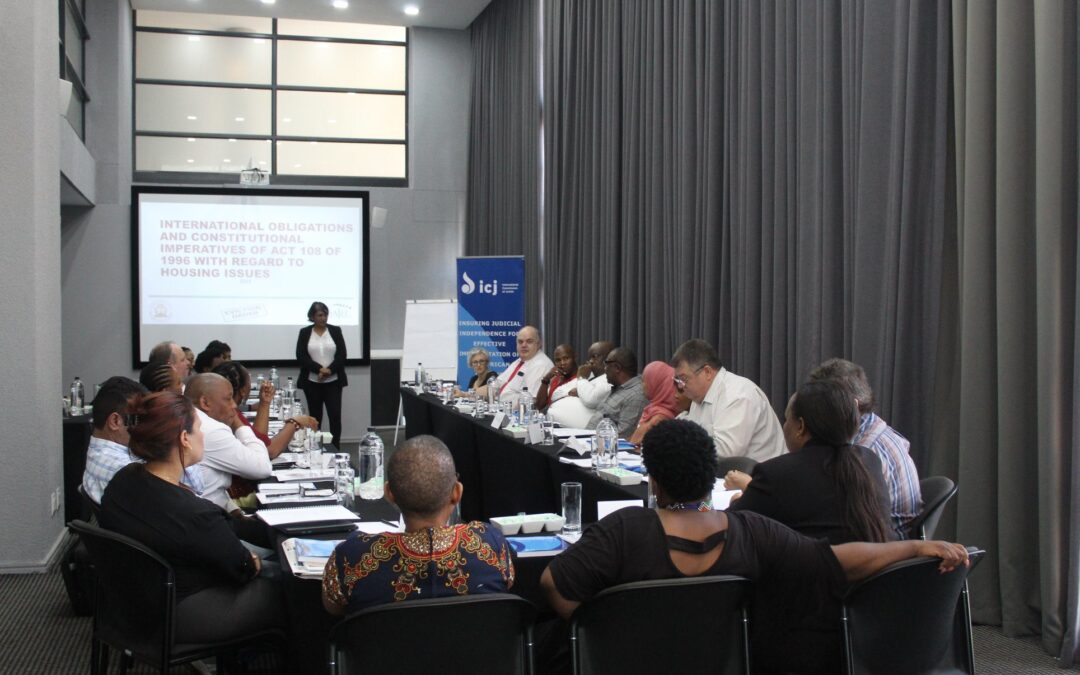
This year, the ICJ collaborated with the South African Judicial Education Institute (SAJEI) to conduct workshops aimed at strengthening the ability of judicial officers, including Magistrates, to deliver judgments in line with the Constitution and international law. The workshops focused on housing rights and informal traders’ rights.
Topics covered included the social and economic context of South Africa, the role of judicial officers in ensuring the protection of economic, social and cultural rights (ESCR) and the obligation to consider international law standards.
The workshops were conducted using the ICJ Practitioners’ Guide on ESCR and tailor-made training resources that the ICJ designed and produced with SAJEI, while the European Union and the German Institut für Auslandsbeziehungen’s Zivik programme supported the training financially.
Senior magistrate and judicial educator at SAJEI Jinx Bhoola and ICJ Legal Advisor Tim Fish Hodgson facilitated the workshops with the support of ICJ Associate Legal Advisor Khanyo Farisè.
Most of the judicial officers who participated were Magistrates.
“Ensuring effective access at a magistrates’ court level is crucial as Magistrates are the judicial officers concerned with delivering justice in the majority of cases at first instance level. Besides, the majority of people living in South Africa will rarely have the means or assistance to access justice in High Courts,” Hodgson said.
The workshops aimed to introduce the international human rights law and standards framework on social and economic rights to Magistrates.
“The hope is that Magistrates will be able to more effectively perform their functions, while drawing on international law, in cases relating to housing rights and the rights of informal traders if equipped with easily accessible resources to do so,” Hodgson added.
Adding to this, Farisè said: “There is sometimes an assumption that certain groups of individuals are excluded from the rights provided for in the Bill of Rights. It must be emphasized that international human rights law and the right to dignity in the South African Constitution apply to all”.
“When considering these cases, it’s important that judicial officers including Magistrates, have a human rights approach,” Farisè added.
The workshops were well-received. “The Magistrates engaged with energy and enthusiasm with the workshop material, confident that they will be able to ensure the enforcement of socio-economic rights and the securing of access to justice for all in South Africa,” Hodgson said.
Contact:
Khanyo Farisè, Legal Adviser, e: Nokukhanya.Farise(a)icj.org
Tim Fish Hodgson (Legal Adviser), e: Timothy.Hodgson(a)icj.org
Dec 5, 2019 | Advocacy, Analysis briefs
Today, the International Commission of Jurists published a legal briefing on the hearing on provisional measures to be held at the International Court of Justice between 10-12 December 2019 in the case of The Gambia v Myanmar.
Questions answered include:
- What allegations does The Gambia make against Myanmar?
- What provisional measures has The Gambia requested?
- What are provisional measures?
- What is the process for requesting provisional measures?
- What factors are taken into account on a request for provisional measures?
- If the Court indicates provisional measures, are they binding on the parties?
- What is Daw Aung San Suu Kyi’s role in the proceedings?
Download:
Myanmar-Provisional Measures Briefing-Advocacy-Analysis Brief-2019-ENG (English)
Myanmar-Provisional Measures Briefing-Advocacy-Analysis Brief-2019-BUR (Burmese)
Contact:
Kingsley Abbott, Senior Legal Adviser and Coordinator of the ICJ’s Global Accountability Initiative, kingsley.abbott(a)icj.org
Dec 1, 2019 | News
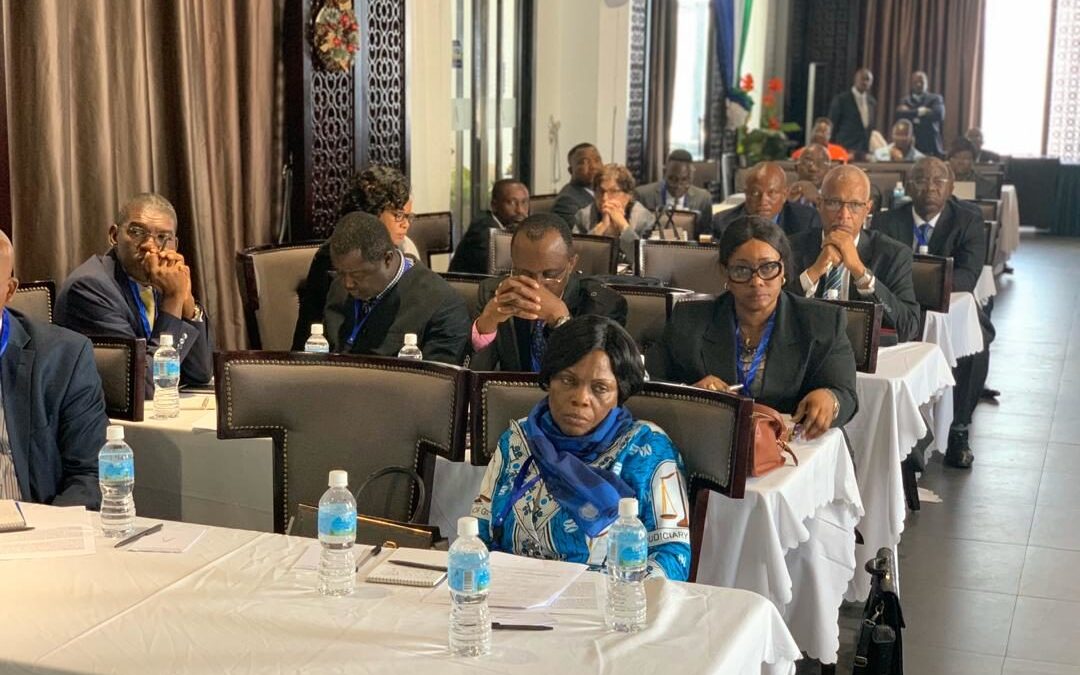
The ICJ, in collaboration with the Judicial Training Institute of Sierra Leone and the Judiciary of Sierra Leone, hosted a judicial dialogue for effective implementation of global, regional and sub-regional human rights standards.
The event brought together over 40 judges representing the High Courts, Courts of Appeal and Supreme Courts of the Gambia, Ghana, Liberia, Nigeria, and Sierra Leone.
The President of the Republic of Sierra Leone Julius Maada Bio, addressed the opening ceremony, stressed the critical role of the judiciary and called on the judges to remain focused and independent even in the face of unwarranted criticism.
Sierra Leone’s Chief Justice Desmond Babatunde Edwards, for his part, emphasized the duty of the judiciary to ensure that the protection of internationally guaranteed human rights is not compromised.
Other speakers at the opening ceremony were Sierra Leone’s Attorney-General/Minister of Justice Ms Priscilla Schwartz, the Chairperson of the Human Rights Commission of Sierra Leone Ms Patricia Ndanema, and the President of the Sierra Leone Bar Association Mr Basita Michael.
‘‘A core objective of the ICJ is to support the protection of human rights across the globe through the promotion of respect for the rule of law,‘‘ said Arnold Tsunga, ICJ’s Africa Regional Director. Tsunga stressed that the programme was initiated based on the ICJ’s conviction that the challenge in Africa is not necessarily a lack of human rights law and standards, but the existence of a huge gap in the implementation.
“The training sessions and judicial dialogue are important to ensure that the quality of supply meets the demand for human rights protection in Africa,” he added.
Working sessions of the event were facilitated by resources persons, including ICJ Commissioners Justice Jesmina King of the African Commission on Human and Peoples’ Rights and Professor Michelo Hansungule; Dr Chidi Anslem Odinkalu of the Africa office of the Open Society Justice Institute and Madam Hannah Forster, Executive Director of the African Centre for Democracy and Human Rights Studies.
The event was enabled through support by the European Union.
Contact
Arnold Tsunga, ICJ Regional Director for Africa, t: +27 716405926 or +263 777 283 249: e: arnold.tsunga(a)icj.org
Solomon Ebobrah, Senior Legal Adviser (ARP), t: +234 803 492 7549, e: solomon.ebobrah(a)icj.org