Mar 18, 2013 | News
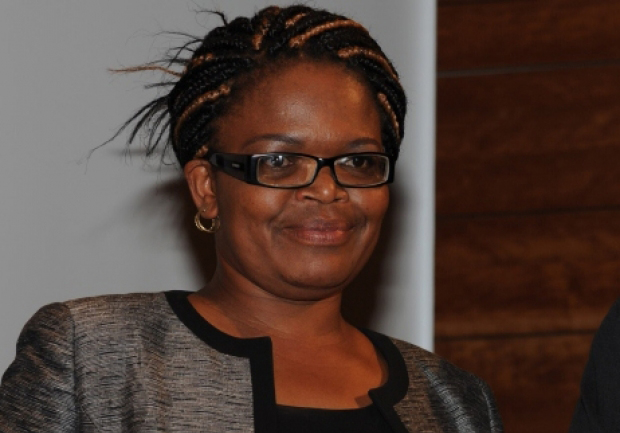
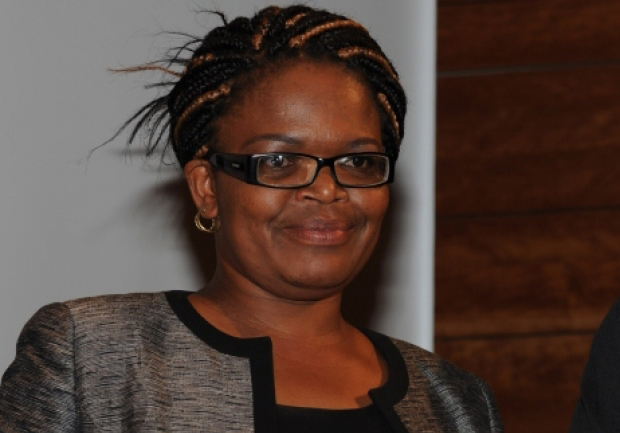 The ICJ and other legal groups express their deepest concern at the unlawful arrest and detention of prominent Zimbabwean human rights lawyer, Beatrice Mtetwa and officials of the MDC-T party.
Beatrice Mtetwa was arrested after attempting to come to the aid of her clients, Thabani Mpofu, Felix Matsinde, Anna Muzvidziwa and Worship Dumba. Mtetwa had sought to ensure that the search of the communications office of the MDC-T and the arrest of the four complied with legal requirements, demanding that the police produce a search warrant. She was instead arrested and charged with “obstructing the course of justice.”
Thereafter, she and the four MDC-T officials were taken to Rhodesville police station in Harare. Lawyers from Zimbabwe Lawyers for Human Rights (ZLHR) worked late into the night of Sunday, 17 March, urgently petitioning the High Court of Zimbabwe to secure Mtetwa’s release. The order was granted just before midnight.
At present it appears that police are seeking to elude compliance with the order as reports indicate that Mtetwa is being transferred from one Harare police station to another as lawyers for Mtetwa seek to serve the court order on different police stations.
The arrest of Mtetwa and the four MDC-T officials is in itself alarming, but that it comes on the heels of a referendum to endorse a new constitution which, whatever its other limitations, contains strong protection of the rights of those arrested and detained, is more distressing still.
Without a clear and unambiguous departure from a past characterized by harassment and intimidation of human rights defenders and of impunity for Zimbabwe’s police and security sector, the promise of the new Constitution will be laid to waste.
The ICJ, Pan African Lawyers Union (PALU), SADC Lawyers Association (SADC LA) and Southern Africa Ligitation Centre (SALC) urge the Zimbabwean police and authorities to respect the Zimbabwean High Court order, to release Mtetwa from detention and to allow her and other human rights defenders to conduct their work unhindered.
Contact:
Arnold Tsunga, ICJ Africa Director, +27 73 131 8411; e-mail: arnold.tsunga(at)icj.org

Mar 5, 2013 | Advocacy, Legal submissions, Non-legal submissions
The ICJ today requested the UN Special Rapporteur on the situation of human rights defenders to call on Zimbabwe, Angola, the Democratic Republic of Congo and Swaziland to take effective measures to prevent and end attacks on and persecution of human rights defenders.
The ICJ delivered its oral statement today during an interactive dialogue with the Special Rapporteur as part of the Human Rights Council’s 22nd regular session (25 February to 22 March 2013).
The ICJ also noted the need for these States to:
- Ensure adherence to international standards on detention and fair trial in cases where human rights defenders have been arrested;
- Conduct prompt and impartial investigations and, where human rights abuses are criminal in character, prosecute all persons responsible; and
- Ensure that affected human rights defenders have access to effective remedies and reparation for such abuses.
Also addressed to the Special Rapporteur on the situation of human rights defenders was a written statement submitted earlier this month concerning legislative restrictions on ‘homosexual propaganda’ that threaten LGBT human rights defenders.
SouthernAfrica-HRC22-IDItem3-SRHRDs-Non-LegalSubmission-2013 (download oral statement in PDF)
For the written statement click here
Feb 15, 2013 | News
The ICJ today expressed its great concern at reports that the police in Zimbabwe have carried out what appears to be an unjustifiable raid against human rights defenders, Zimbabwe Peace Project (ZPP).
On 11 February 2013, police reportedly raided the offices of ZPP, a non-profit organization comprising of non-governmental organizations (NGO) and church-based organizations, and confiscated mobile phones, wind up radios, files with donor information, political violence reports and DVDs.
“The continuous attacks against NGOs by law enforcement agencies clearly shows that there are systematic assaults on human rights defenders which are closing the democratic space within which human rights defenders operate”, said Martin Masiga, Deputy Director of the ICJ Africa Regional Program. “It appears that the police are trying to discourage human rights defenders from engage with citizens of Zimbabwe to exchange information concerning their rights and freedoms, as the country heads for a referendum and election during the course of the current year”.
The police undertook the raid pursuant to a search warrant issued by the Superintendent of the C.I.D Law and Order Division of the Zimbabwe Republic Police (ZRP).
The search warranted stated that there were reasonable grounds to believe that ZPP had committed offences in terms of the Criminal Law (Codification and Reform) Act, the Immigration Act, and the Customs and Excise Act.
On the same evening eight police officers were discovered by the security team that provides rapid response for the ZPP at the ZPP premises, after an alarm had been tripped.
The police officers demanded to gain access into the office of ZPP Director, Jestina Mukoko. However the office was locked and they could not enter. These officers did not have a search warrant.
The ICJ welcomes the statement of the Co-Minister of Home Affairs, the honourable Theresa Makone, which says that the Cabinet is concerned “over the overzealousness of some police officers”, and that the police “must follow the basic principle of policing” which is to investigate “to arrest rather than arresting to investigate”.
The ICJ urges the Zimbabwean government to ensure that it protects human rights defenders in accordance to United Nations Human Rights Defenders Declaration, endorsed by all the States including Zimbabwe.
The ICJ further urges the Zimbabwean government to stand by its commitments to the Zimbabwean Constitution, the African Charter on Human and Peoples’ Rights and the International Covenant on Civil and Political Rights, to which it is a state party. These instruments expressly guarantee the right to the freedom of opinion, expression and association.
Lastly, the ICJ further urges the police in Zimbabwe to conduct impartial investigations into allegations of violations of human rights, to hold accountable those responsible for human rights abuse and to protect human rights defenders and NGOs that work for the protection of human rights in Zimbabwe.
Contact:
Martin Okumu-Masiga, Deputy Director of the ICJ Africa Regional Programme, t: +27110248268; e-mail: martin.okumu-masiga@icj.org
Jan 17, 2013 | News
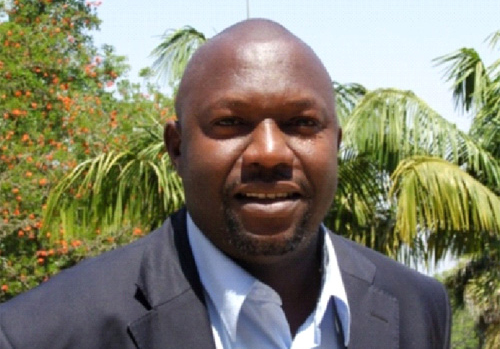 The ICJ expresses great concern over the recent pattern of attacks on human rights defenders in Zimbabwe by the Law and Order Section of the Zimbabwe Republic Police (ZRP).
The ICJ says the systematic assault on human rights defenders has taken the form of arbitrary arrests of human rights practitioners, unjustifiable raids on their offices and interference with their meetings amongst other forms of harassment.
Such attacks have been a continuous source of international concern, including when raised by United Nations Human Rights Council in its Universal Periodic Review of Zimbabwe in 2011.
There has been a failure on the part of the Zimbabwe judiciary to exercise its responsibility of judicial oversight over these abuses, the ICJ adds.
“Government officials including the ZRP are using repressive laws to harass and intimidate human rights defenders and NGOs with the aim of causing them to abandon their work in promoting and defending human rights in Zimbabwe,” said Martin Masiga, Deputy Director of the Africa Regional Programme of the ICJ. “It is deplorable that the government has contrived to fabricate charges against its own citizens to discredit, delegitimize and frustrate their lawful civic activities.”
The ICJ underscores the reports of the arrest of Zimbabwe Human Rights Association (ZimRights) Director Okay Machisa (photo) on Monday, 14 January 2013 in Harare on charges of allegedly “conspiring to commit voter registration fraud and publishing or communicating falsehoods”.
The magistrate in this matter denied bail for reasons inconsistent with international fair trial standards and which appeared to be politically motivated.
The arrest of Okay Machisa follows the detention of his deputy, Leo Chamahwinya and three other staff members of ZimRights in December 2012 on the same charges.
These arrests occurred just a few weeks after ZimRights [publicly] denounced the trend of increasing police brutality across Zimbabwe and called for urgent action by competent authorities to address these human rights violations.
The Zimbabwean Constitution, the African Charter on Human and Peoples’ Rights and the International Covenant on Civil and Political Rights, to which Zimbabwe is a state party, guarantees the right to the freedom of opinion, expression and association.
The UN Declaration on Human Rights Defenders, which articulates universal standards for the protection of those working to protect human rights, affirms that “everyone has the right, individually and in association with others, to promote and to strive for the protection and realization of human rights and fundamental freedoms at the national and international levels “.
Accordingly, Zimbabwe has a legal obligation to protect those persons and organisations that strive for the protection and promotion of human rights.
Zimbabwe reportedly will hold national elections in 2013, the first since the formation of the Government of National Unity following the tragic events of the 2008 national election.
The ICJ insists it is essential for the people of Zimbabwe and for the advancement of Zimbabwe in the arena of constitutional democracy that State officials exercise their responsibility to protect human rights activists instead of attacking them.
The ICJ urges the Government of Zimbabwe to respect regional and international human rights standards, and to call upon its law enforcement agencies to cease the harassment and intimidation of HRDs in Zimbabwe.
The ICJ calls on the Zimbabwean judiciary to exercise its responsibility to uphold international fair trial standards and the constitutional provisions of Zimbabwe in adjudicating the matters relating to human rights defenders, including the officials of ZimRights.
Contact:
Martin Okumu-Masiga, Deputy Director of the ICJ Africa Regional Programme, t: +27110248268; e-mail: martin.okumu-masiga(at)icj.org
Dec 6, 2012 | News
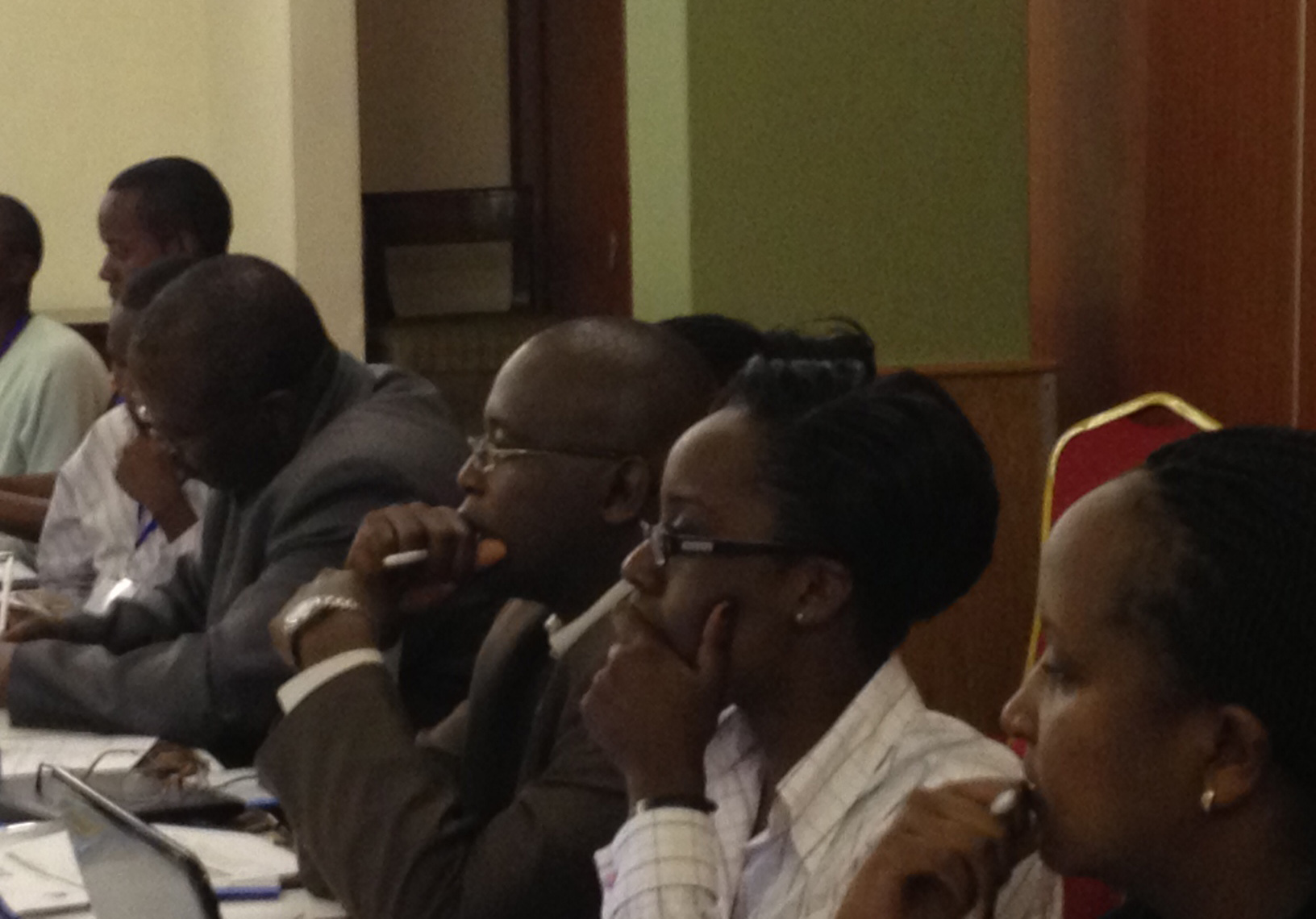 On 6 December 2012, the ICJ and ICJ-Kenya convened a roundtable entitled “LGBT Human Rights” in Nairobi.
The event brought together members of the Kenyan bar with LGBT human rights activists for a full discussion of criminal and constitutional law and international human rights standards, as well as possibilities for reform through either judicial or parliamentary processes.
The event was opened by Lawrence Mute, a former national human rights commissioner, signatory of the Yogyakarta Principles, and winner of ICJ-Kenya’s Jurist of the Year award.