Feb 12, 2019 | News
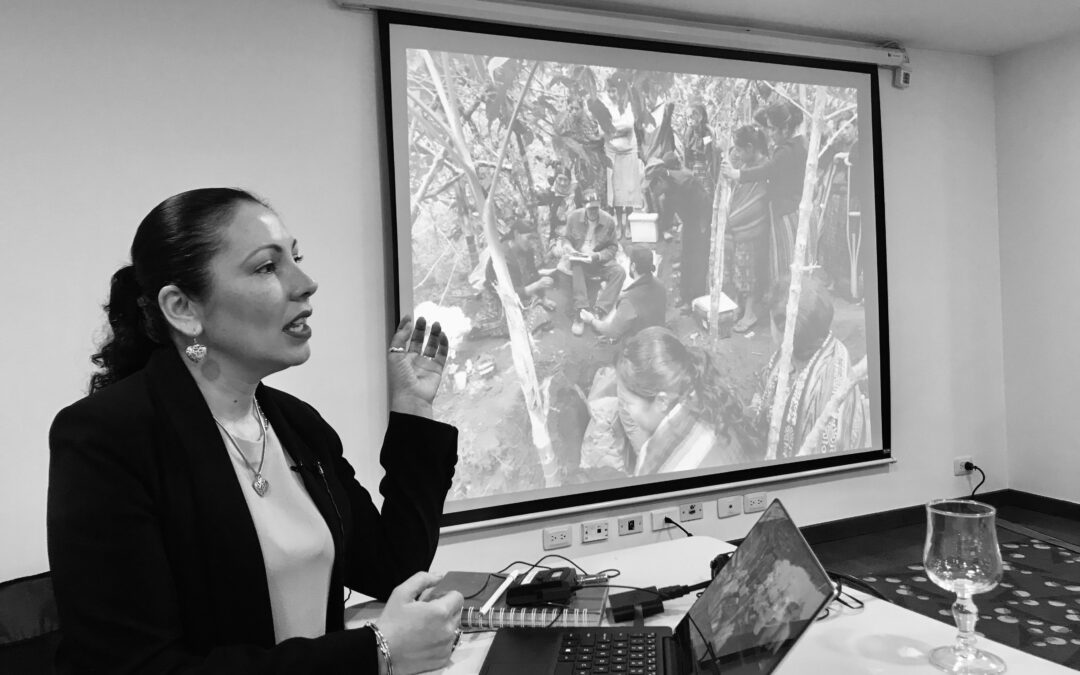
Today in Bogotá, Colombia, ICJ and its partners launched a new 30-month project under the ICJ’s Global Accountability Initiative entitled, Promoting justice for extrajudicial killings and enforced disappearances in Colombia, Guatemala and Peru.
The aim of the project is to promote the accountability of perpetrators and access to effective remedies and reparation for victims and their families in cases of extrajudicial killings and enforced disappearances in Colombia, Guatemala and Peru – and Latin America more broadly – through effective, accountable and inclusive laws, institutions and practices that also reduce the risk of future violations
The ICJ’s partners include the Asociacion de Familiares de Detenidos-Desaparecidos de Guatemala (FAMDEGUA), Asociación Red de defensores y defensoras de derechos humanos (dhColombia), Equipo Argentino de Antropología Forense (EAAF), Equipo Peruano de Antropología Forense (EPAF), Fundación de Antropología Forense de Guatemala (FAFG), and the Instituto de Defensa Legal (IDL).
Christof Heyns, Director of the Institute for International and Comparative Law in Africa and Professor of Human Rights Law at the University of Pretoria – and a former Special Rapporteur on extrajudicial, summary or arbitrary executions – also joins the project as special adviser.
In carrying out the project the ICJ will conduct general studies on obstacles to impunity in Colombia, Guatemala and Peru, as well as specific documentation of emblematic cases of serious human rights violations. The ICJ will also produce a practitioners’ guide for use by civil society, victims and their representatives on the investigation and prosecution of potentially unlawful death, and a regional guide for forensic experts on the investigation and prosecution of potentially unlawful death. In connection with the project the IJC intends to conduct strategic litigation, trial observations and capacity building activities involving judges, prosecutors, investigators, lawyers, civil society, victim groups and forensic experts.
The project is supported by the EU European Instrument for Democracy and Human Rights (EIDHR).
Contacts:
Kingsley Abbott, Senior Legal Adviser & Coordinator of the ICJ’s Global Accountability Initiative, email: kingsley.abbott(a)icj.org
Rocío Quintero, Legal Adviser, Latin America, email: rocio.quintero(a)icj.org
Dec 19, 2018 | News
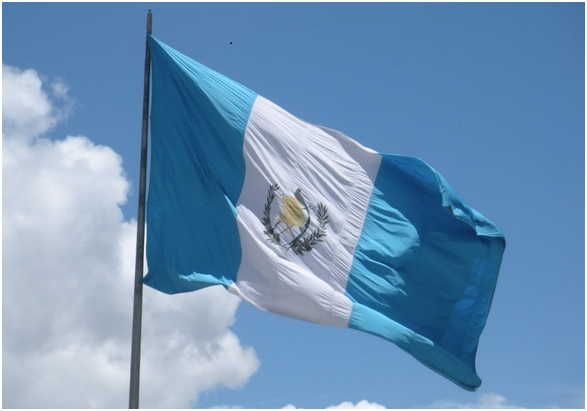
According to information published in the Official Gazette, the government of Guatemala has ordered that eleven more officials and two family relatives from the CICIG leave the country within 72 hours from the time of issuing the notification. However, no official communication using the usual diplomatic channels has yet been sent to the CICIG.
In September 2018, the head of the CICIG, Commissioner Ivan Velasquez, was banned from re-entering the country and the government stated it would not renew the CICIG mandate after September 2019.
Ramon Cadena, the ICJ Director for Central America, stated: “The ICJ considers this new measure is designed to hinder criminal investigations against high-level government officials accused of corruption.”
The CICIG acts as a special prosecutor in serious corruption and other criminal cases and carries out investigations to identify responsible parties. The persons who have been asked to leave the country are the lawyers, police and prosecutors who are investigating important corruption cases, such as the ‘The Line’ case, in which the former President and Vice-President have been charged and other cases including those within the National Police.
Ramon Cadena continued: “It cannot escape anyone’s attention that one of the CICIG investigators who has been asked to leave the country was the person who is responsible for the corruption case involving the General Property Registry, that allegedly implicates both the son and brother of President Jimmy Morales”.
This new measure by the government seriously affects the rule of law and constitutes a flagrant violation of article 10 (4) of the agreement establishing the CICIG signed between Guatemala and the UN, which states:
“The Government agrees to provide to CICIG and its personnel the security necessary for the effective completion of CICIG’s activities throughout Guatemala, and to protect the personnel of CICIG, whether national or international, from abuse, threats, reprisals or acts of intimidations, in virtue of their status as personnel of, or their work for CICIG.”
Cadena added: “It is deeply regrettable that it is precisely the CICIG staff acting in high-impact cases who are being targeted by these measures because of their work to combat corruption and impunity. It is clear that the government is seeking to divert the CICIG from its path.”
Furthermore, according to the UN Basic Principles on the Role of Lawyers, No 16: “Governments shall ensure that lawyers: a) are able to perform all of their professional functions without intimidation, hindrance, harassment or improper interference… “ Cadena continued, “The ICJ is deeply concerned that several CICIG personnel affected by these measures are lawyers and members of the Guatemalan Bar Association. Their work is being hindered and the Guatemalan Bar Association should take action to defend its members.”
“Guatemala should comply with international human rights law and ensure that acts of corruption that impact human rights are fairly and impartially investigated and prosecuted. The presence of the CICIG contributes to ensuring that Guatemala complies with its international obligations” he added.
Cadena concluded by stating: “With these arbitrary measures, the Constitutional order of Guatemala and its democratic institutions are undermined. The Guatemalan State should ensure effective measures are taken against corruption, consistent with its international human rights and other obligations. The CICIG is one of the most successful examples of work to end corruption and impunity. The Guatemalan authorities should support the CICIG instead of hindering its work and obstructing justice.”
Dec 11, 2018 | Advocacy
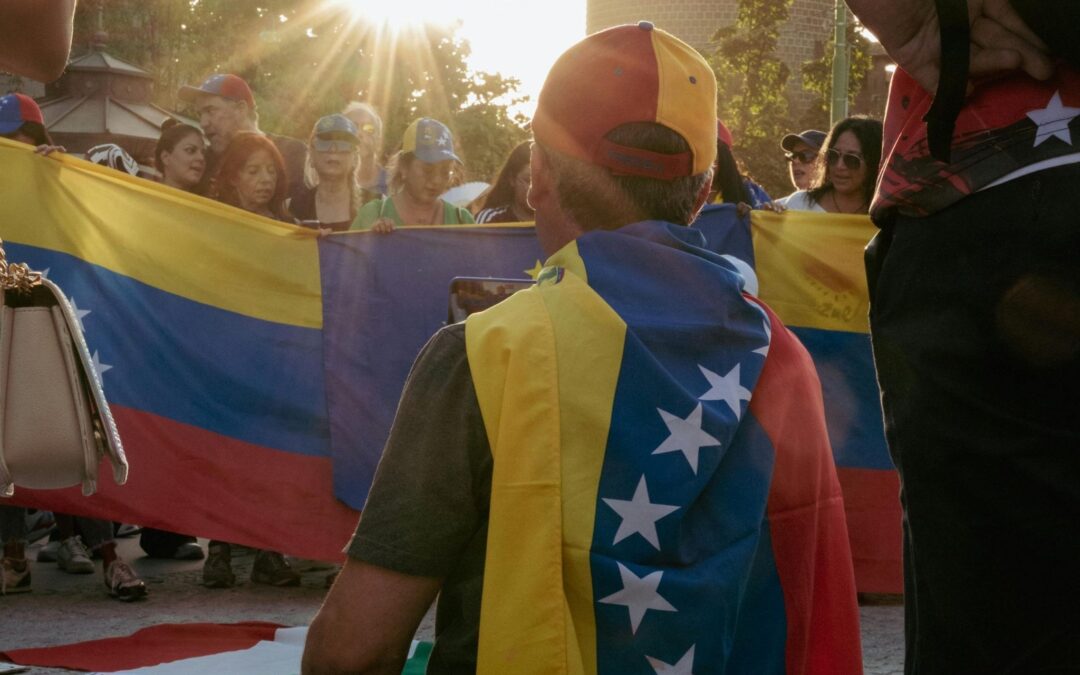
In a document presented to the Inter-American Commission on Human Rights, ICJ Vice President Carlos Ayala explains that Venezuela’s denunciation of the OAS Charter remains without effect.
In April 2017, Venezuela lodged a notification with the Secretary General of the Organisation of American States (OAS) that Venezuela denounced the OAS Charter in order the withdraw its membership from the organisation.
In a document presented to the Inter-American Commission on Human Rights on 4 December 2018, ICJ Vice President Carlos Ayala explains why the denunciation is unconstitutional and violates binding principles of international law.
According to Professor Ayala, who served as President of the Inter-American Commission between 1996 and 1999, the OAS Charter holds a constitutional status under Venezuela’s domestic law that does not permit withdrawal from the Charter on the basis of political interests.
Additionally, the Charter establishes that it will cease to be in force following a notification of denunciation only after the denouncing State has fulfilled its obligations under the Charter. Since Venezuela is the subject of several pending matters concerning its purported failure to fulfil Charter obligations, its denunciation remains without effect.
Venezuela-OAS denunciation-Advocacy-2018-SPA (see full document, in Spanish)
Nov 28, 2018 | Events, News
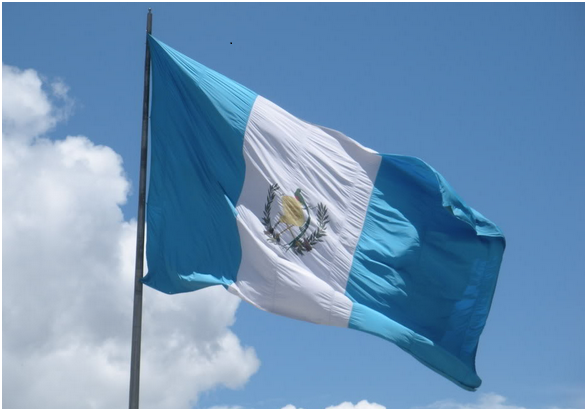
A conference on the situation of business and human rights in Izabal, Guatemala will be held on 29 November 2018 at UNIMAIL University of Geneva at 6:30 pm.
THIS CONFERENCE IS IN FRENCH AND SPANISH ONLY
The conference is co-organised by the International Commission of Jurists, the Department of International Public Law and International Organisation, Faculty of Law, University of Geneva and the Town of Geneva.
Speakers at the conference include Ramon Cadena, the Director of the ICJ Central America Office, Amalia Caal Coc, a local community leader from the Guilermo Torielo Foundation, Maynor Alvarez, Director of Community Relations from the Guatemalan Nickel Company, Solway Group, and Sandra Ratjen, Franciscans International. The panel moderator is Dr Antonella Angelini from the Department of International Public Law and International Organisation.
The meeting room is R070 at UNIMAIL, There will be a discussion after the panel. Entrance is free and there will be interpretation in French and Spanish.
Flyer in Spanish (PDF)
Flyer in French (PDF)
Oct 24, 2018 | News
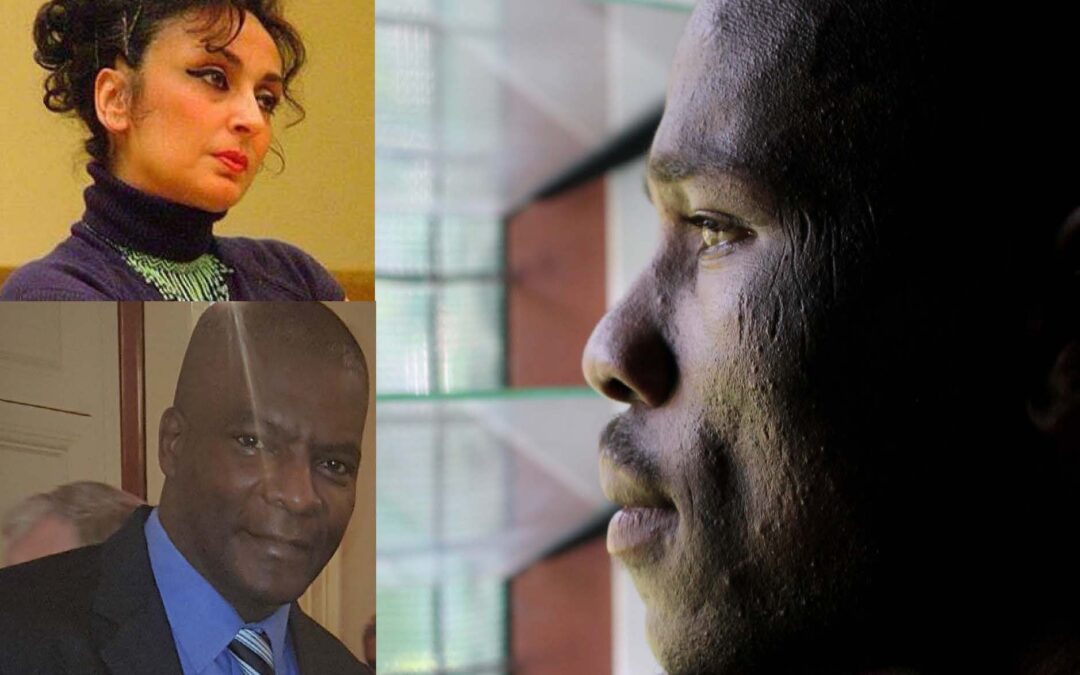
The three finalists who will compete for this prestigious award given to human rights defenders having shown deep commitment and facing great personal risk are: Eren Keskin (Turkey), Marino Córdoba Berrio (Colombia) and Abdul Aziz Muhamat (Papua New Guinea/Australia). The ICJ is member of the MEA Jury.
The finalists were selected by the International Human Rights Community (members of the jury are the ICJ, Amnesty International, Human Rights Watch, Human Rights First, International Federation for Human Rights, World Organisation Against Torture, Front Line Defenders, EWDE Germany, International Service for Human Rights and HURIDOCS).
Nominees and laureates of the Martin Ennals Award for Human Rights Defenders (MEA) are human rights defenders that have demonstrated a deep commitment to human rights, often working under threat of imprisonment, torture, or worse.
The international recognition provided by the Award, on top of raising their profile and their work, often provides significant protection.
The 2019 Martin Ennals Award will be presented on 13 February 2019 at a ceremony hosted by the City of Geneva, which for many years has strongly supported the Award.
Eren Keskin (Turkey)
Eren Keskin (upper left corner of the picture) is a lawyer and human rights activist.
For more than thirty years, she has struggled for fundamental rights and freedoms in Turkey, especially for the Kurds, women and the LGBTI+ community.
Within the context of the worsening human rights situation in Turkey, Keskin is once again at the centre of intimidation attempts.
As part of a solidarity campaign to support the Özgür Gündem newspaper, Keskin held the title of “editor-in-chief” of the newspaper from 2013 to 2016, when it was closed by the authorities.
On 30 March 2018, she was convicted and sentenced to 12.5 years in jail for having published articles deemed to have “degraded” the Turkish nation and “insulted” the Turkish president.
She is currently free while the case is appealed.
She said: “To defend human rights is not easy in our territory. I am being prosecuted with 143 charges for my solidarity with an opposition newspaper in the context of freedom of expression. International awards and solidarity have “protective” characteristics and reassure those of us in repressive societies. It also it gives us a morale boost and helps our motivation for the struggle. Thank you for not forgetting us. Your solidarity and protection mean so much.”
Marino Córdoba Berrio (Colombia)
A member of the Afro-Colombian ethnic group, Marino Córdoba Berrio (bottom left corner of the picture) led his community as they faced the loss of their land to powerful commercial interests, notably in logging and mining.
After successfully working towards the legal recognition of their community’s land rights, much of his community was driven out by force in 1996.
Constant threats and attacks drove him to seek asylum in the United States in 2002 where he built a network of supporters.
He returned to Colombia in 2012 and worked to ensure a role for ethnic communities in the peace agreement, notably as a member of “Ethnic Commission for Peace and the Defense of Territorial Rights ” that provides input as the peace agreement is implemented.
He has regularly received death threats and is under constant armed guard.
He said: “We have historically been excluded politically, socially and economically, also affected by war, providing measures of overcoming is a primary responsibility of the State. I believe in the power of my mind and my hands as a determinant to do what is right, therefore the justice that is applied to my people is crucial for their survival. It is also in our hands to promote those changes so this effort involves exposing my own life.”
Abdul Aziz Muhamat (Papua New Guinea/Australia)
Abdul Aziz Muhamat (Aziz, on the right-hand side of the picture), from Sudan, is a compelling and tireless advocate for refugee rights.
Seeking asylum, he has been held in Australian immigration detention on Manus Island, Papua New Guinea since October 2013, when his boat was intercepted by the Australian authorities.
Aziz has seen friends die. He has been shot at by local police. He was also sent to a local prison for refusing to eat in protest at the cruelty and suffering being inflicted on others.
Aziz is one of the primary public voices among the men held on Manus Island. Despite the isolated location, he has exposed the harsh conditions there through podcasts and media interviews.
He has paid a price for this as he is seen as a “ring leader” by both the PNG and Australian authorities.
He stated: “My work to expose this cruel system helps preserve my self-respect and inherent human dignity. It helps me fight for the rights of every refugee around the universe, which I’ll do until my last breath. It is not always easy when living under conditions of fear and persecution. Yet even under the most crushing state machinery, courage rises up again and again, for fear is not the natural state and I will do everything to keep going.”
Contact
Olivier van Bogaert, Director Media & Communications, ICJ representative in the MEA Jury, t: +41 22 979 38 08 ; e: olivier.vanbogaert(a)icj.org
Michael Khambatta, Director, Martin Ennals Foundation, t: +41 79 474 8208 ; e: khambatta(a)martinennalsaward.org
TUR-Eren Keskin_Bio-News-2018-ENG (Eren Keskin full bio in PDF)
COL-Marino Cordoba Bio-News-2018-ENG (Marino Córdoba Berrio full bio in PDF)
AUS-Abdul Aziz Muhamat Bio-News-2018-ENG (Abdul Aziz Muhamat full bio in PDF)