May 8, 2017 | Advocacy
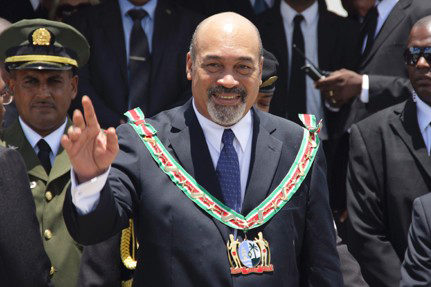
The following document updates a report issued by the ICJ on 29 May 2012 as part of an on-going trial observation mission concerning the trial of Suriname President Desiré Delano Bouterse, accused of crimes involving unlawful killings.
Download the update below:
Suriname-Justice delayed Bouterse case-Advocacy-2017-ENG (in PDF)
Feb 27, 2017 | News
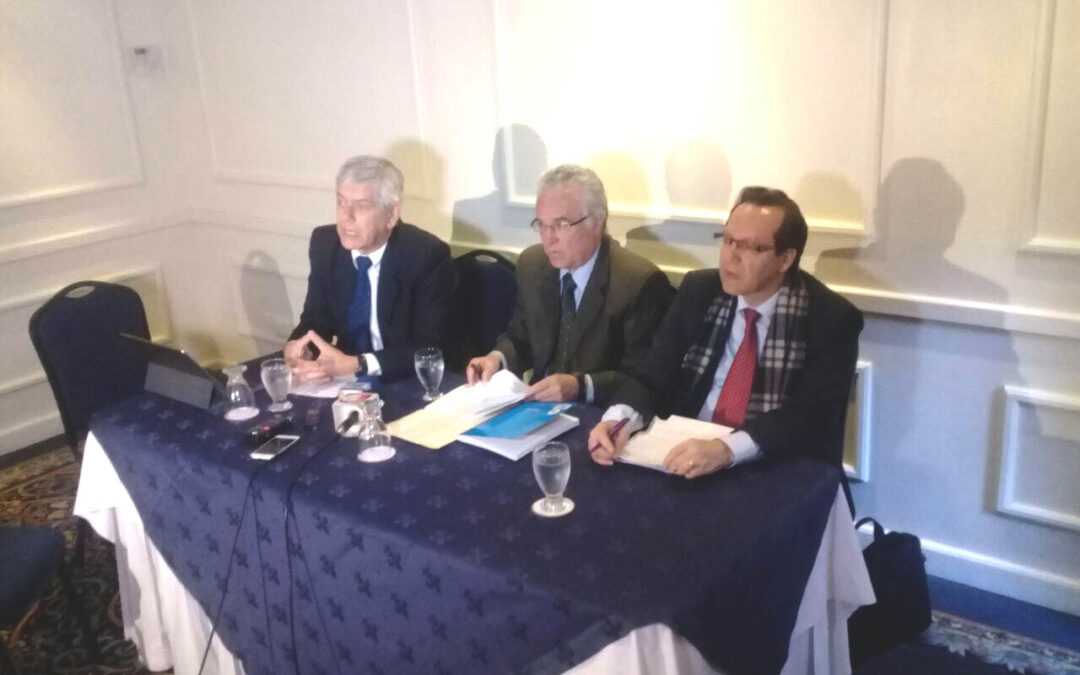
La visita se enmarcó dentro de los esfuerzos que la CIJ lleva a cabo en distintos países para acompañar procesos de fortalecimiento del Estado de Derecho y respeto de los derechos humanos.
Guatemala-Conclusions of Mission-News-web story-2017-SPA (informe completo, PDF)
Feb 20, 2017 | News
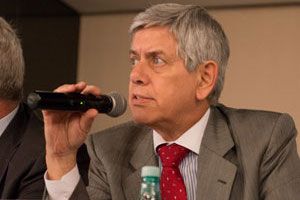
On Monday 20 February 2017, the ICJ Commissioner Belisário Dos Santos Júnior and the lawyer, Jaime Araíújo Rentería commenced an international mission in Guatemala.
The ICJ Commissioner Belisário Dos Santos Júnior (photo) is the former representative of the Brazilian lawyers’ association at the São Paulo Human Rights Commission, who has acted as the legal representative for political detainees. Jaime Araújo Rentería, former President of the Colombian Constitutional Court is a practicing lawyer and university professor.
The objective of the mission is to evaluate the situation of the legal profession in the country, identify obstacles and challenges, and offer perspectives about ways in which the State can provide better protection for lawyers so they can carry out their functions in an independent and safe manner.
The two mission members will be in Guatemala for a week and will interview the President and Executive Committee of the Bar Association, human rights lawyers, and high-level officials from the three branches of the State, members of the international community and representatives of human rights organizations.
On Friday 24 February, the two lawyers will hold a press conference to present the conclusions and recommendations of the mission to the press and general public.
Jan 31, 2017 | Multimedia items, News, Video clips
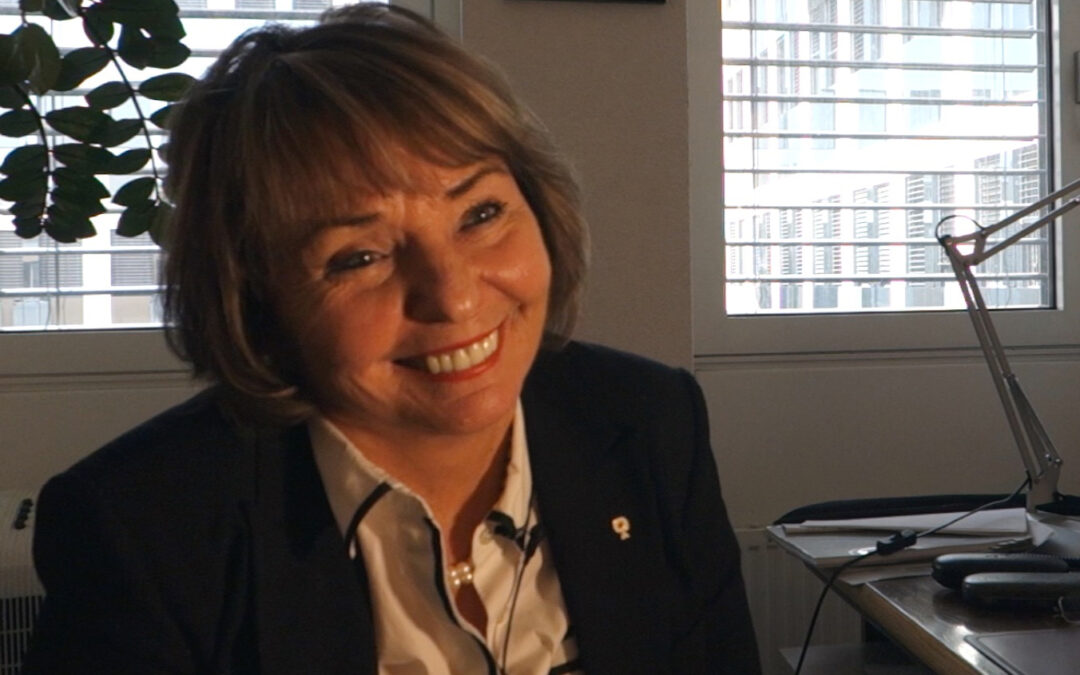
The ICJ continues its series of profiles of ICJ’s women Commissioners with an interview with ICJ Vice-President Michèle Rivet.
Michèle Rivet was a judge for 30 years. Previously a Children’s Judge, she was appointed the first President of the Quebec Human Rights Tribunal when it was first established in 1990 and remained in that position until 2010.
In the interview she explains how the Human Rights Tribunal was constituted and how the Tribunal gave itself the mission to develop jurisprudence on equality and non-discrimination by referring to the fundamental international standards elaborated in the ICCPR and the ICESCR, by giving them the broadest interpretation possible.
A key goal of the Tribunal was to ensure that it was as accessible and as effective as possible, so that the people who came to the Tribunal could express themselves freely. Careful measures were taken to ensure that the Tribunal would work well and to ensure that anyone putting questions or issues to the Tribunal could know that the judges were listening to them and would provide an answer.
Michèle spoke of the advances that were achieved in the Tribunal. Some of the most significant decisions handed down by the Tribunal refer to cases of multi-faceted systemic discrimination. Justice Rivet explained that discrimination is about daily life: for example it may be a woman who is fired because she is pregnant, or it could be about a homosexual person who is refused accommodation.
A particular case referred to a large Canadian gas company, a big employer in Quebec, where women were never being appointed to certain posts, as there were a whole series of barriers at the point of recruitment, at the level of tests, and other conditions. After a series of profound reflections, evidence gathering and a long hearing the Tribunal reached the decision that the five women plaintiffs had been discriminated against.
However, the Tribunal also went further in its judgement by requesting that an equal access employment programme be implemented for the whole staff. The Court of Appeal upheld the decision on appeal and that decision marked a real victory for women in the recognition of their rights.
Michèle considers that the ICJ, with its mandate to promote the rule of law, acts as a laboratory of great ideas and carries out fundamental and far-reaching work to advance the rights for those who otherwise would not be able to speak.
Those who work in the field of human rights form a global village, said Michèle, and members have a duty to help women victims of violence: those forced to marry when they are 13 years old, those forced to keep their children because abortion is not an option and all those who are battered or disfigured by relatives because they dare to leave the home.
“This eventually led to the establishment of an international community of women and of all those who are fighting for equality, and for a society where everyone is fully integrated,” she said.
Justice Rivet considers herself privileged to work in the field of human rights as it is such rewarding work, and although it can be also be very challenging she says “we must all walk together on the long march towards equality.”
Watch the interview:
The series of profiles introducing the work of ICJ Commissioners and Honorary Members on women’s rights was launched on 25 November 2016 to coincide with the International Day to Eliminate Violence against Women and the first day of the 16 Days of Activism Against Gender-Based Violence Campaign.
Jan 26, 2017 | News
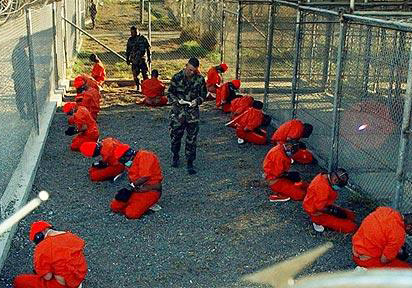
The ICJ deplores comments made last night by the United States President Donald Trump, expressing approval for the practice of torture in counter-terrorism operations.
The ICJ is also alarmed at reports that the US administration is considering resurrecting the most abusive policies and practices during the early 2000s, including prolonged arbitrary detention in CIA-administered secret “black site” facilities, enforced disappearance, and rendition to other countries for torture and ill-treatment.
“These practices of torturing detainees and ‘disappearing’ them in black sites are serious crimes which must never be repeated,” said Ian Seiderman, ICJ Legal and Policy Director.
“Even President Bush, despite his administration’s appalling record, publicly denounced torture as being against the laws and values of the United States,” he added.
Contact:
Ian Seiderman, ICJ Legal and Policy Director, t: +41 22 979 3837 ; e: ian.seiderman(a)icj.org
Background:
During an interview on US television last night, President Trump repeated his support for torture practices such as waterboarding (near-drowning) and declared that “torture works.”
A number of media reports have indicated that the Trump Administration may issue an Executive Order to review “whether to reinitiate a program of interrogation of high-value alien terrorists to be operated outside the United States” and whether the CIA should be in charge of such a programme.
Counter-terrorism abuses during the Bush administration from 2001-08 involving torture, enforced disappearance, secret detention and rendition were widely condemned as unlawful, morally unacceptable, and ineffective, both internationally and in the US, leading to the abandonment of such practices.
A report by the Eminent Jurists Panel of the ICJ on Terrorism, Counter-terrorism and Human Rights, issued in 2009 conducted after a four-year study concluded that “such practices are not a legitimate response to the threat of terrorism. Such practices are not only inconsistent with established principles of international law, and undermine the values on which free and democratic societies are based, but as the lessons of history show, they put the possibility of short term gains from illegal actions, above the more enduring long term harm that they cause.”
The Obama administration definitively abolished the practices of torture and secret detention upon taking office in 2009, although they had already been substantially wound down in the later years of the second Bush administration.