Feb 5, 2015 | News
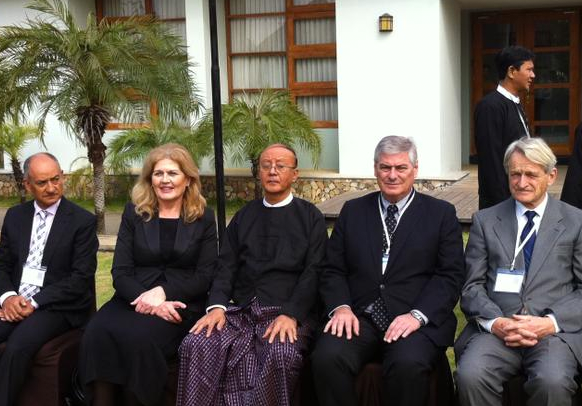
Myanmar must follow through on promising efforts to improve the independence and accountability of its legal system, and particularly its judiciary, said the ICJ today at the launch of one of its landmark book in Yangon.
The ICJ launched today the Myanmar language version of its Practitioners’ Guide to the Independence and Accountability of Judges, Lawyers and Prosecutors.
“The judiciary in Myanmar has taken important steps towards asserting its independence from the other branches of government, but we heard repeatedly from the judiciary that they still face significant obstacles in this regard,” said Wilder Tayler, ICJ’s Secretary-General.
The book launch wrapped a series of discussions regarding judicial ethics and the rule of law with the Supreme Court of the Union of Myanmar, as well as with the parliamentary Committee on Rule of Law and Tranquility.
The ICJ’s Practitioners’ Guide n°1 is the first of its kind to be published in the Myanmar language providing detailed references to international and comparative standards on the independence and accountability of judges and lawyers.
“The Supreme Court emphasized its belief that an independent judiciary plays a key role in ensuring access to justice and the protection of human rights, but with independence must come accountability,” Tayler added. “The Myanmar judiciary must be accountable not just in deciding cases according to the law and facts, but also as a separate and equal branch of the government, and ultimately, to the people of Myanmar.”
In the course of its discussions at an earlier workshop in Naypyidaw, the ICJ was repeatedly told that the judiciary is trying to address challenges to its institutional independence, as well as the independence of individual judges.
Corruption, which remains a serious problem throughout all social sectors, including the judiciary, interferes with the judiciary’s ability to provide a remedy for human rights violations and bringing perpetrators to justice.
Undue influence by powerful political and economic actors continues to hamper the push for greater trust and credibility for the judiciary among the general public.
“As we heard at the workshop, at all levels of the system, from the Supreme Court to the Townships, a lack of resources, poor working conditions and low remunerations contribute to an environment where the temptations of corruption, or outside pressure, undermine judicial independence and impartiality,” said Tayler.
“We also heard strong support from all levels of the judiciary for establishing a judicial code of conduct that incorporates international standards and best practices in response to the demands of the people of Myanmar for more rule of law. Producing such a code, and implementing it, would go a long way toward increasing the judiciary’s independence and accountability,” he added.
Wilder Tayler was joined by a senior panel of international legal experts on judicial integrity, including three ICJ Commissioners: Justice Azhar Cachalia of the Supreme Court of Appeals of South Africa, Justice Radmila Dicic of the Supreme Court of Serbia, and retired Justice Ketil Lund of the Supreme Court of Norway.
Feb 3, 2015 | News
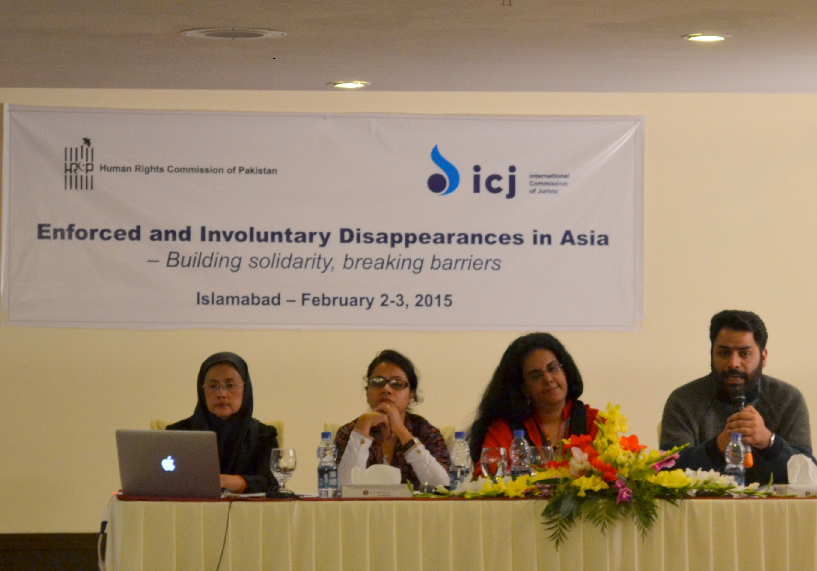
In partnership with the Human Rights Commission of Pakistan (HRCP), the ICJ convened a two-day conference in Islamabad on 2-3 February 2015.
The conference brought together civil society activists, lawyers and journalists from across Asia, including Thailand, the Philippines, Sri Lanka, India, Nepal and Pakistan with experience of working on enforced disappearances in the their national contexts as well as regional and international forums.
The participants expressed alarm at the continuing practice of enforced disappearances in the region and regretted that a culture of moral, political and legal impunity prevented perpetrators to be brought to justice.
They also urged their respective states to promptly ratify the International Convention for the Protection of all Persons from Enforced Disappearance, criminalize enforced disappearances, and meet their obligations under international law to provide remedy and reparations for human rights violations.
At the end of the two-day event, the participants of the conference adopted a resolution (download below) resolving to work together to address the common challenges and hurdles they encounter in their work on enforced disappearances.
Asia-Enforced disappearances Resolution final-Advocacy-2015-ENG (full text in PDF)
Asia-Enforced disappearances Resolution final-Advocacy-2015-URD (full text in PDF)
Feb 3, 2015 | Multimedia items, News, Video clips
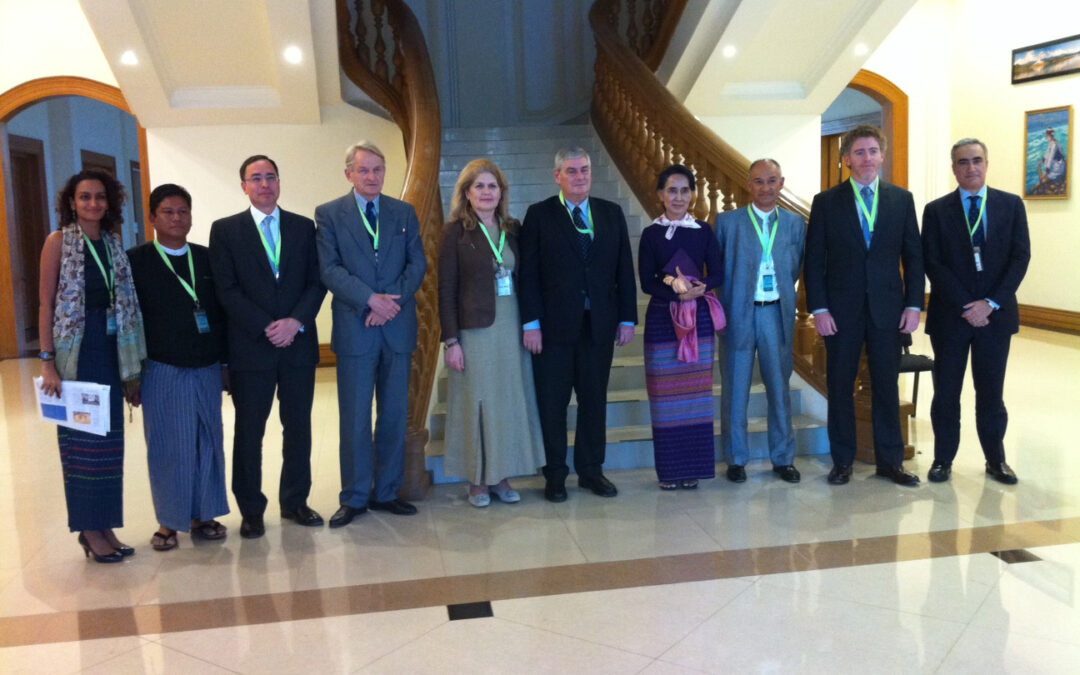
On video, ICJ Commissioner Azhar Cachalia and ICJ Asia & Pacific Regional Director Sam Zarifi, talk about a workshop with the Supreme Court of the Union of Myanmar. In parallel with this event, the ICJ met with Daw Aung San Suu Kyi.
The ICJ’s workshop with the Supreme Court of the Union of Myanmar was on the subject of judicial ethics and the rule of law, while at the meeting with Daw Aung San Suu Kyi, discussions covered the ICJ’s focus in Myanmar to support the judiciary in taking important steps towards asserting its independence from other branches of government; and to overcome significant individual and institutional obstacles, such as undue influence by the Executive in politically sensitive and criminal cases, corruption and a lack of resources.
Daw Suu and her colleagues shared information about the Rule of law Centres being initiated as a step towards building the capacity of local legal practitioners and contributing to rule of law reforms in Myanmar.
The ICJ delegation was led by Secretary-General Wilder Tayler, and included Asia & Pacific Regional Director Sam Zarifi, ICJ Commissioners Justices Azhar Cachalia, Ketil Lund and Radmila Dicic, International Legal Advisers Vani Sathisan and Daniel Aguirre and National Legal Adviser Kyawmin San.
Daw Aung San Suu Kyi is the Chairperson of the Lower House Committee for Rule of Law, Peace and Tranquility in the Myanmar Parliament and Chairperson of the National League for Democracy, and members of her Committee. She was awarded the Nobel Peace Prize in 1991.
Justice Azhar Cachalia, ICJ Commissioner and Chair of ICJ’s Executive Committee, talks about his participation in, and contribution to, an ICJ workshop with the Supreme Court of Myanmar.
Sam Zarifi, Director of ICJ’s Asia & Pacific Programme talks about ICJ’s workshop with the Supreme Court of Myanmar
Jan 29, 2015 | News
Three recent decisions by the Bangkok Military Tribunal affirming its jurisdiction over civilians violate international law and represent another serious setback for human rights in Thailand, the ICJ said today.
“International standards are clear – military tribunals are not competent to prosecute civilians,” said Wilder Tayler, ICJ’s Secretary General. “Military tribunals are not independent from the executive and the lack of an appeal removes any possibility of a remedy against the judgments of the Tribunal.”
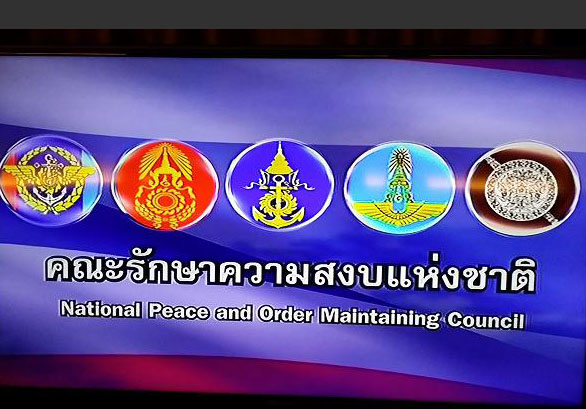
The first case concerns a political activist, Sirapop Korn-arut, who was charged with violating an order of Thailand’s ruling military junta, the National Council for Peace and Order (NCPO), to report to the military for allegedly violating Thailand’s highly restrictive lese majeste law. The second case concerns the prosecution of an anti-military coup activist, Sombath Boonngam-anong, accused of violating NCPO orders and instigating rebellion in June 2014. In the third, a Thammasat University law lecturer, Worajet Pakeerat, is charged with violating a NCPO summons to report to the military.
All three had challenged the jurisdiction of the Tribunal to prosecute civilians.
In three separate rulings, delivered on 22, 23 and 26 January 2015, the Tribunal rejected the defendants’ challenges to its jurisdiction.
“These decisions set a worrying precedent for all civilians currently facing prosecution before military tribunals in Thailand. All cases of civilians facing charges before military tribunals must be transferred to civilian courts immediately if Thailand is to comply with its international obligations,” said Tayler.
According to observers, at least 100 civilians have faced prosecution in military tribunals since the military coup. The Royal Thai Government has not yet released the official number.
While the ICJ observed Professor Worajet’s hearing on 26 January, written decisions have not yet been made publically available in these cases.
Background
Under Article 14 of the International Covenant on Civil and Political Rights (ICCPR), to which Thailand is a state party, everyone has the right to a “fair and public hearing by a competent, independent and impartial tribunal established by law.”
The imposition of Martial Law and the State’s suspension of some of its obligations under the ICCPR, including the right to appeal guaranteed by Article 14(5) for cases heard by military tribunals, does not affect the applicability of this provision.
Article 61 of the Thai Act for the Organization of the Military Court prevents any appeal from the decision of military tribunals so long as Thailand remains under Martial Law, which has been in force nationwide since 22 May 2014.
The Principles Governing the Administration of Justice through Military Tribunals sets out principles that apply to state use of military tribunals.
Principle 5 states “Military courts should, in principle, have no jurisdiction to try civilians. In all circumstances, the State shall ensure that civilians accused of a criminal offence of any nature are tried by civilian courts.”
Further, Principle 2 clarifies that even in times of crisis military tribunals must “apply standards and procedures internationally recognized as guarantees of a fair trial.”

Jan 18, 2015 | News
The ICJ condemned the execution in Indonesia of six persons convicted of drug trafficking offences. Other rights groups issued similar denunciations.