Jul 21, 2019 | News
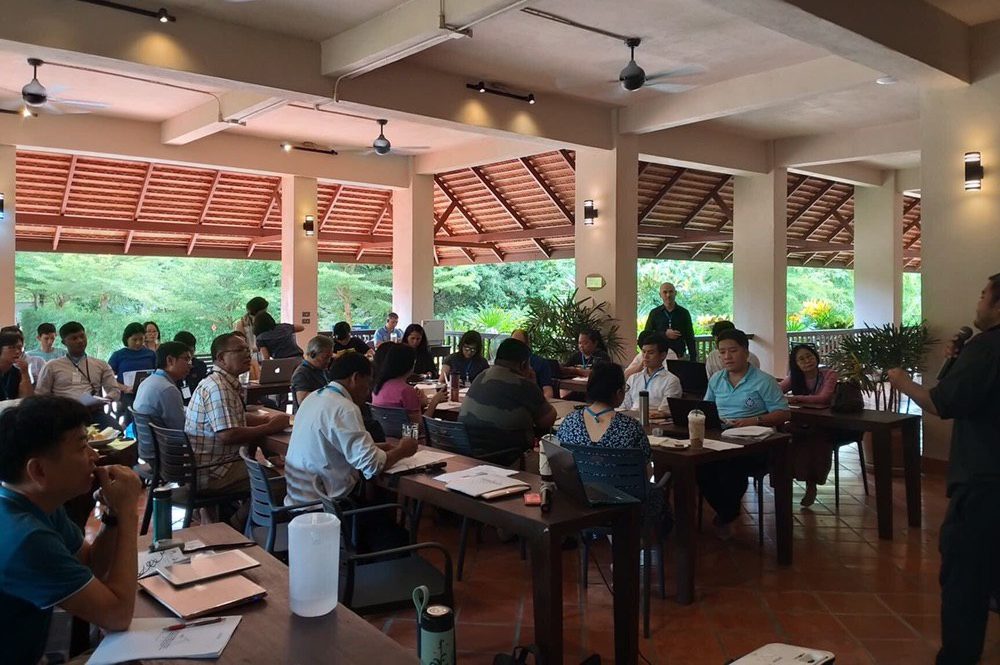
Today, the ICJ hosted a discussion on Thailand’s legal frameworks on corporate accountability for outbound investments in Chiang Mai, Thailand. The forum was co-organized with Earth Rights International.
Lawyers, members of civil society organizations and academics from Cambodia, Laos, Myanmar, and Thailand attended the discussion.
Participants discussed:
- corporate civil, criminal and administrative liability and in particular, the applicable laws governing the prosecution and adjudication of human rights abuses committed by Thai corporations and gaps in Thailand’s legal frameworks. The meeting also looked into recommendations to strengthen Thailand’s domestic laws to increase access to justice for victims of human rights abuses committed by Thai corporations in the context of their business activities abroad, particularly on issues such as: limited liability of shareholders and the “corporate veil” in relation to the responsibilities of Thai corporations, the complexity of laws governing joint ventures, and challenges in bringing state-owned enterprises to justice;
- jurisdiction of Thai courts in civil, criminal and administrative cases where de facto and de jure foreign subsidiaries of a Thai corporation were involved in wrongful acts or omissions abroad, and problems posed by statutes of limitation;
- tools for preventing human rights abuses by corporations such as Human Rights Due Diligence (HRDD), Transboundary environmental impact assessments (EIA), Corporate Social Responsibility (CSR) measures, and the Duty of Care principle under tort law; and
- the role of other related actors to prevent and mitigate human rights risks, including the National Human Rights Commission of Thailand (NHRCT), National Contact Points (NCPs), financial institutions and securities institutions, and provided recommendations to strengthen mandates of such organizations which would allow them to provide better protection for individuals and communities who may be affected by outbound investments.
This discussion will provide the foundation for further work and analysis by the ICJ regarding Thailand’s legal frameworks on corporate accountability for outbound investments. It will also provide the basis for ICJ strategic advocacy at the national level.
Jul 18, 2019 | News
The International Commission of Jurists (ICJ) today welcomed the decision of the International Court of Justice (ICJ-CIJ for its acronym) upholding the right of consular access and notification for Indian national Kulbhushan Jadhav.
The Court determined that Pakistan had unlawfully denied Jadhav consular access before and after his summary trial by a military court.
It emphasized that any “potential prejudice and the implications for the evidence and the right of defence of the accused should receive close scrutiny during the review and reconsideration.”
The Court categorically held that Article 36 of the Vienna Convention on Consular Relations (VCCR) “does not exclude from its scope certain categories of persons, such as those suspected of espionage,” as argued by Pakistan.
“The decision by the International Court today is a resounding affirmation that there can be no curtailment of the right to consular access by foreign nationals by States that are Party to the VCCR,” said Ian Seiderman, Legal and Policy Director of the ICJ.
“Consular access is essential to ensure a fair trial for foreign nationals and this human right must not in any way be made contingent upon the offence foreign nationals are charged with.”
The International Court called on Pakistan to give effect to the Court’s ruling by providing effective review and reconsideration of both his conviction and sentence, including by taking account of the principles of the right to a fair trial.
The ICJ has pointed out that Pakistan’s military justice system and procedures are incompatible with the right to a fair trial. Under international standards, military tribunals are never permissible in prosecutions against civilians for offences carrying the death penalty.
Since 3 March 2016, Kulbhushan Jadhav has been in custody of the Pakistani authorities. The circumstances of his arrest remain in dispute between the Parties.
India was informed of the arrest on 25 March 2016. On 10 April 2017, Pakistan’s military announced Kulbhushan Jadhav had been convicted and sentenced to death by a military court for “espionage and sabotage activities against Pakistan.”
India had brought the case against Pakistan before the International Court of Justice, alleging “egregious violations” of the VCCR by Pakistan because of the denial of consular access to Jadhav.
In response, Pakistan had primarily argued that Jadhav is a an Indian spy involved in acts of terrorism in Pakistan, and the VCCR is not applicable to spies or “terrorists” due to the inherent nature of the offences of espionage and terrorism.
“States around the world continue to use counter terrorism and national security as a justification to curtail human rights – the International Court of Justice’s affirmation that the protections under the VCCR are not conditional is hugely significant in this context,” said Ian Seiderman.
The International Court also held that it considered a continued stay of Jadhav’s execution as constituting “an indispensable condition for the effective review and reconsideration of the conviction and sentence.”
In May 2017, the Court had asked Pakistan to take all measures at its disposal to ensure that Jadhav is not executed pending the final decision in the proceedings.
The ICJ considers the death penalty a violation of the right to life and cruel, inhuman or degrading punishment and notes that a large majority of States, in repeated UN resolutions, have called on retentionist states to declare a moratorium on the practice with a view to abolition.
Background
In addition to the arguments regarding espionage and terrorism, Pakistan also relied on a bilateral agreement on consular access, signed by India and Pakistan in 2008, arguing that the agreement overrides the obligations under the VCCR. The International Court of Justice, however, rejected this argument, on the ground that, among other things, obligations under the VCCR may be enhanced or clarified by bilateral treaties, but cannot be diluted or undermined.
India had requested a number of other measures of relief from the Court, including the annulment of Kulbhushan Jadhav’s death sentence; a declaration that Kulbhushan Jadhav’s military trial was in violation of the VCCR and international human rights law, including the International Covenant on Civil and Political Rights (ICCPR); a directive restraining Pakistan from giving effect to the death sentence; and a directive to release Kulbhushan Jadhav and ensure his safe passage to India.
However, in accordance with its jurisdictional competencies and prior precedents, the Court denied these remedies to India. As “appropriate reparation” in this case, the Court directed Pakistan to effectively review and reconsider Jadhav’s conviction and sentence “to ensure that full weight is given to the effect of the violation of the rights set forth in Article 36 of the Vienna Convention.”
Contact
Ian Seiderman: ICJ Legal and Policy Director, e: ian.seiderman(a)icj.org
Frederick Rawski: ICJ’s Asia Pacific Region, e: frederick.rawski(a)icj.org
Jul 15, 2019 | News
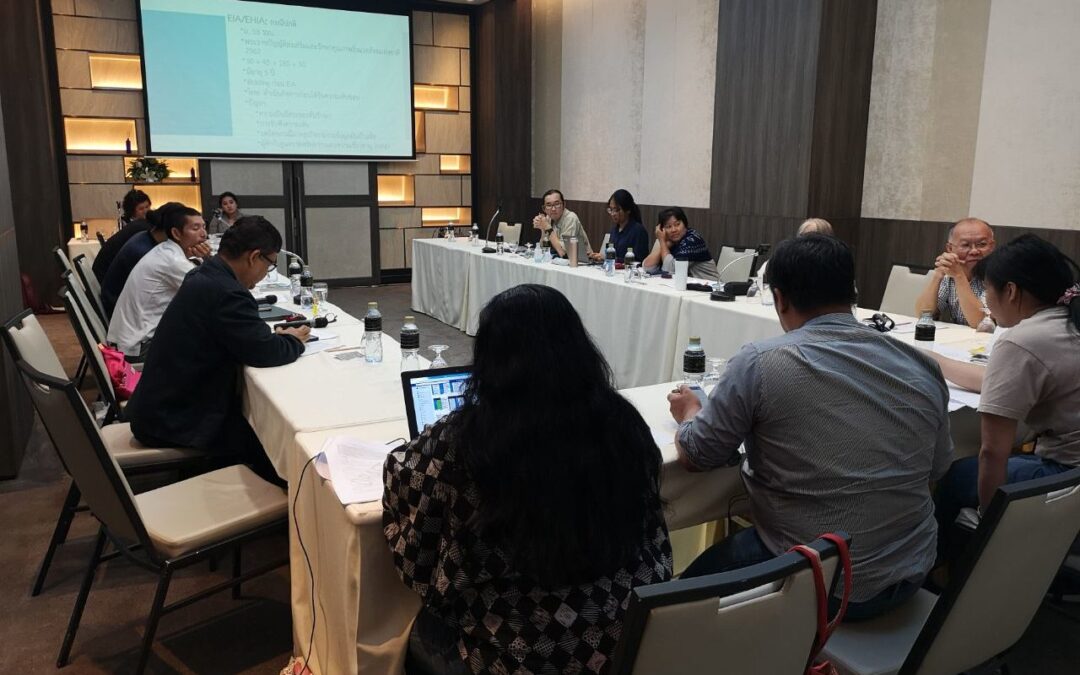
On 13 July 2019, the ICJ hosted a discussion on the human rights consequences of Special Investment Zones in Thailand particularly focusing on the legislative frameworks of Thailand’s Special Economic Zones (SEZs) and the Eastern Economic Corridor (EEC).
Lawyers, members of civil society organizations and academics from across Thailand attended the discussion.
The participants explored existing adverse impacts and potential future impacts on human rights arising from the implementation of the current EEC and SEZ legal frameworks.
The discussion focused on: (i) governing authorities of the SEZs and EEC; (ii) designation of target areas and land acquisition; (iii) environment, health and well-being of the local communities; (iv) other rights of affected individuals and communities; (v) issues pertaining to workers and labour rights and (vi) roles of other stakeholders, including financial institutions, the National Human Rights Commission of Thailand, and the corporate sector.
The participants considered concerns with respect to Thailand’s duty to protect human rights under international human rights standards and identified key issues of concern relating to the legal frameworks of the EEC and SEZs.
During their discussion, the participants highlighted the lack of meaningful participation of affected individuals or communities at the policy and law-making levels and the absence of a formalized way for such individuals and communities to voice their concerns regarding their inability to exercise their rights connected to economic, cultural and social development and international human rights law.
The participants highlighted that the processes of land acquisition and classification of State-owned lands in the areas of SEZs and the EEC were allegedly not carried out in a human rights-compliant manner, and were not in line with the UN Basic Principles and Guidelines on Development-Based Evictions and Displacement.
Key concerns were raised regarding people and communities who has been living on lands upon which they depend for their livelihoods but to which they do not hold land title deeds.
Some participants also stressed the importance of strengthening Environmental Impact Assessment (EIA) and Environmental & Health Impact Assessment (EHIA) procedures.
Proposed improvements included the hiring of independent consultants to carry out EIA and EHIA assessments, effective review by an independent body to ensure the credibility of assessment reports, and other mechanisms to ensure effective monitoring and follow-up on assessments.
Participants also called for the following rights to be respected in the implementation of development-based policy:(i) the right to genuinely and meaningfully take part in public affairs; (ii) the right to take part in cultural life; (iii) the right to secure one’s livelihood; (iv) the right to enjoyment of the highest attainable standard of physical and mental health; (v) the right to water and sanitation; and (vi) the right of access to justice, which encompasses the right to effective remedy and guarantees of the due process of law.
They also urged financial institutions which fund the development of the EEC and SEZs to take a more active role to prevent and mitigate human rights risks.
This discussion will provide the foundation for further work and analysis by the ICJ in detailing the human rights consequences of special investment zones frameworks in Thailand, focusing on the implementation of SEZs and EEC policies. It will also provide the basis for ICJ strategic advocacy at the national level.
Background
The Eastern Economic Corridor (EEC) and Special Economic Zones (SEZs) are flagship economic schemes of the Thai government to boost Thailand’s economy after the military coup in 2014 through large-scale investments into special investment zones covering areas in 13 provinces of Thailand.
In 2015, 10 SEZs were established in 10 different provinces of Thailand as a means to create economically-productive areas in border cities linked to other countries in Southeast Asia.
The SEZs were established towards enhancing growth in 13 target industries. Each SEZ will have different targets depending on each location development and province strategy.
Launched in 2016, the EEC builds upon the former Eastern Seaboard project and is being developed in the eastern coastal provinces of Rayong, Chonburi, and Chachoengsao purportedly to encourage investment into 10 next-generation industries that use innovation and high technology.
The EEC is also designated to be a pilot model in developing other SEZ areas in the future.
The EEC is currently already in operation in part. Most of the SEZs are currently in the process of land acquisition or classification.
Criticisms raised during the discussion noted that (i) the SEZs and EEC had been established without carrying out assessments with the full participation of affected persons, groups and communities; (ii) local residents had been forced off their land without fair or adequate compensation; and (iii) allowing fast-track environmental impact assessments (EIA) could result in undermining the overall objective and effectiveness of EIA.
Jul 12, 2019 | Advocacy, Non-legal submissions
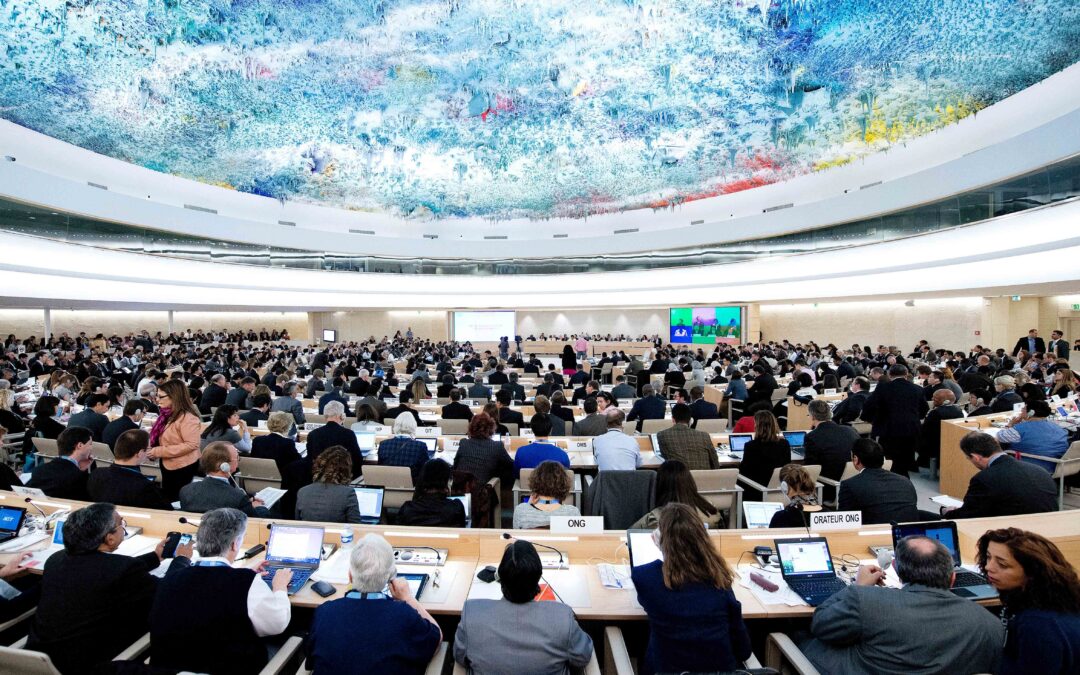
The ICJ joined other NGOs in an end-of-session statement, highlighting the achievements and shortfalls of the 41st Ordinary Session of the UN Human Rights Council, 24 June – 12 July 2019.
The statement, delivered by International Service for Human Rights (ISHR), reads as follows:
By renewing the mandate of the Independent Expert on protection against violence and discrimination based on sexual orientation and gender identity (SOGI), the Council has sent a clear message that violence and discrimination against people of diverse sexual orientations and gender identities cannot be tolerated. It reaffirmed that specific, sustained and systematic attention is needed to address these human rights violations and ensure that LGBT people can live a life of dignity. We welcome the Core Group’s commitment to engage in dialogue with all States, resulting in 50 original co-sponsors across all regions. However, we regret that some States have again attempted to prevent the Council from addressing discrimination and violence on the basis of SOGI.
The Council session also sent a clear message that Council membership comes with scrutiny by addressing the situations of Eritrea, the Philippines, China, Saudi Arabia and the Democratic Republic of Congo. This shows the potential the Council has to leverage its membership to become more effective and responsive to rights holders and victims.
The Council did the right thing by extending its monitoring of the situation in Eritrea. The onus is on the Eritrean Government to cooperate with Council mechanisms, including the Special Rapporteur, in line with its membership obligations.
We welcome the first Council resolution on the Philippines as an important first step towards justice and accountability. We urge the Council to closely follow this situation and be ready to follow up with additional action, if the situation does not improve or deteriorates further. We deeply regret that such a resolution was necessary, due to the continuation of serious violations and repeated refusal of the Philippines – despite its membership of the Council– to cooperate with existing mechanisms.
We deplore that Council members, such as the Philippines and Eritrea, sought to use their seats in this Council to seek to shield themselves from scrutiny, and those States[1] who stand with the authorities and perpetrators who continue to commit grave violations with impunity, rather than with the victims.
We welcome the written statement by 22 States on China expressing collective concern over widespread surveillance, restrictions to freedoms of religion and movement, and large-scale arbitrary detention of Uyghurs and other minorities in Xinjiang. We consider it as a first step towards sustained Council attention and in the absence of progress look to those governments that have signed this letter to follow up at the September session with a resolution calling for China to allow access to the region to independent human rights experts and to end country-wide the arbitrary detention of individuals based on their religious beliefs or political opinions.
We welcome the progress made in resolutions on the rights of women and girls: violence against women and girls in the world of work, on discrimination against women and girls and on the consequences of child, early and forced marriage. We particularly welcome the renewal of the mandate of the Working Group on Discrimination Against Women and Girls under its new name and mandate to focus on the intersections of gender and age and their impact on girls. The Council showed that it was willing to stand up to the global backlash against the rights of women and girls by ensuring that these resolutions reflect the current international legal framework and to resist cultural relativism, despite several amendments put forward to try and weaken the strong content of these resolutions.
However, in the text on the contribution of development to the enjoyment of all human rights, long standing consensus language from the Vienna Declaration for Programme of Action (VDPA) recognising that, at the same time, “the lack of development may not be invoked to justify the abridgement of internationally recognized human rights” has again been deliberately excluded disturbing the careful balance established and maintained for several decades on this issue.
We welcome the continuous engagement of the Council in addressing the threat posed by climate change to human rights, through its annual resolution and the panel discussion on women’s rights and climate change at this session. We call on the Council to continue to strengthen its work on this issue, given its increasing urgency for the protection of all human rights.
The Council has missed an opportunity on Sudan where it could have supported regional efforts and ensured that human rights are not sidelined in the process. We now look to African leadership to ensure that human rights are upheld in the transition. The Council should stand ready to act, including through setting up a full-fledged inquiry into all instances of violence against peaceful protesters and civilians across the country.
During the interactive dialogue with the Special Rapporteur on extrajudicial and summary executions, States heard loud and clear that the time to hold Saudi Arabia accountable is now for the extrajudicial killing of journalist Jamal Khashoggi. We recall that women human rights defenders continue to be arbitrarily detained despite the calls by 36 States at the March session. We urge States to adopt a resolution at the September session to establish a monitoring mechanism over the human rights situation in the country.
We welcome the landmark report of the High Commissioner on the situation for human rights in Venezuela; in response to the grave findings in the report and the absence of any fundamental improvement of the situation in the meantime, we urge the Council to adopt a Commission of Inquiry or similar mechanism in September, to reinforce the ongoing efforts of the High Commissioner and other actors to address the situation.
We welcome the renewal of the mandate on the freedom of peaceful assembly and association. This mandate is at the core of our work as civil society and we trust that the mandate will continue to protect and promote these fundamental freedoms towards a more open civic space.
We welcome the renewal of the mandate of the Special Rapporteur on Belarus. We acknowledge some positive signs of re-engagement in dialogue by Belarus, and an attempted negotiation process with the EU on a potential Item 10 resolution. However, in the absence of systemic human rights reforms in Belarus, the mandate and resolution process remains an essential tool for Belarusian civil society. In addition, there are fears of a spike in violations around upcoming elections and we are pleased that the resolution highlights the need for Belarus to provide safeguards against such an increase.
We welcome the renewal of the quarterly reporting process on the human rights situation in Ukraine. However, we also urge States to think creatively about how best to use this regular mechanism on Ukraine to make better progress on the human rights situation.
The continued delay in the release of the UN database of businesses engaged with Israeli settlements established pursuant to Council resolution 31/36 in March 2016 is of deep concern. We join others including Tunisia speaking on behalf of 65 states and Peru speaking on behalf of 26 States in calling on the High Commissioner to urgently and fully fulfil this mandate as a matter of urgency and on all States to cooperate with all Council mandates, including this one, and without political interference.
Numerous States and stakeholders highlighted the importance of the OHCHR report on Kashmir; while its release only a few days ago meant it did not receive substantive consideration at the present session, we look forward to discussing it in depth at the September session.
Finally, we welcome the principled leadership shown by Belgium, Luxembourg and the Netherlands, in pursuing accountability for individual victims of acts of intimidation and reprisals under General Debate Item 5, contrasting with other States which tend to make only general statements of concern, and call on States to raise all individual cases at the interactive dialogue on reprisals and intimidation in the September session.
(text in italics was not read out due to the limited time)
Signatories:
- International Service for Human Rights (ISHR)
- Amnesty International
- ARTICLE 19
- Asian Forum for Human Rights and Development (FORUM-ASIA)
- Association for Progressive Communications (APC)
- Cairo Institute for Human Rights Studies
- Center for Reproductive Rights
- CIVICUS: World Alliance for Citizen Participation
- DefendDefenders (the East and Horn of Africa Human Rights Defenders Project)
- Franciscans International
- Global Initiative for Economic, Social and Cultural Rights
- Human Rights House Foundation
- Human Rights Watch
- International Commission of Jurists (ICJ)
- International Federation for Human Rights (FIDH)
- International Lesbian and Gay Association (ILGA)
[1] States who voted against the resolution on Eritrea: Bahrain, Burkina Faso, Cameroon, China, Cuba, Egypt, Eritrea, Iraq, India, Saudi Arabia, Somalia, the Philippines and Pakistan.
States who voted against the resolution on the Philippines: Angola, Bahrain, Cameroon, China, Cuba, Egypt, Eritrea, Hungary, Iraq, India, Qatar, Saudi Arabia, Somalia, and the Philippines.

Jul 11, 2019 | News
The ICJ today condemned the raids on 11 July by India’s Central Bureau of Investigation (CBI) on the homes and offices of Anand Grover and Indira Jaising, two lawyers prominent for frequently challenging the Indian government’s failures to respect and promote the rights of all people in India.
Grover and Jaising are both Supreme Court lawyers and co-founders of the Lawyers Collective, a non-governmental organization.
These raids were reportedly conducted pursuant to CBI’s registration of criminal charges into alleged violations of Foreign Contribution (Regulation) Act (FCRA), a much criticized law frequently used to target human rights defenders and critics of the Indian government.
“This raid seems designed to harass and intimidate two tireless advocates of Constitutional and international rights in India,” said Sam Zarifi, Secretary-General of the ICJ.
“The Indian government must immediately cease harassment of the Lawyers Collective and its founders Anand Grover and Indira Jaising,” he added.
The CBI raids appears to be based on a 2016 Ministry of Home Affairs report, now under appeal in the Bombay High Court, and without any material change in circumstances since its release.
The raid has also been conducted notwithstanding a National Human Rights Commission statement seeking a status report from the CBI by 21 July 2019 to ensure that the investigation is “non-discriminatory and to avoid arbitrariness”.
The attack is emblematic of a broader pattern of official threats to and harassment of Indian civil society in general, and the Lawyers Collective in particular.
Lawyers Collective’s FCRA license was cancelled in November 2016, a decision that is under appeal in the Bombay High Court. The action relied upon overly broad and vague legal provisions of the FCRA that violate India’s legal obligation to respect and protect the rights to freedom of expression, association and peaceful assembly.
“The repeated use of the FCRA to target civil society including Lawyers Collective has had a devastating chilling effect on public comment about the government,” said Zarifi.
“The law should be repealed, or substantially amended to include safeguards against arbitrary use of its provisions, and to protect freedom of expression and association,” he added.
The ICJ supports the 2016 call by three United Nations Special Rapporteurs to the Indian Government to repeal FCRA, which decried the FCRA’s use to “silence organisations involved in advocating civil, political, economic, social, environmental or cultural priorities, which may differ from those backed by the Government”.