Apr 13, 2021 | News
Today, the ICJ called on the Belarus Ministry of Justice and other relevant authorities to end the recent practice of using legal proceedings against lawyers in retaliation for discharging their professional duties and to reinstate those already disbarred.
In recent months, in the context of widespread violations of the human rights of those protesting against the outcome of the disputed 2020 presidential election, there has been an unprecedented increase of cases of disbarment of lawyers especially those who comment on violations of the human rights of their clients. Among the most recently disbarred lawyers are Konstantin Mikhel, Maxim Konon, Mikhail Kirilyuk and Yulia Ivanchuk.
“This recent wave of criminal and disciplinary proceedings against lawyers is highly worrying and it constitutes an attack on the independence of the legal profession. These proceedings, be they of criminal, administrative or disciplinary nature, should be discontinued or reconsidered as being contrary to the international human rights law concerning the independence of the legal profession,” said Temur Shakirov, Senior Legal Adviser of the ICJ Europe and Central Asia Programme.
There is a clear pattern of the misuse of disciplinary proceedings against lawyers who represent political opponents of the government or those who openly criticize the government on issues of public significance.
Disciplinary proceedings in Belarus are not independent of the executive, since they are conducted by the Qualification Commission which operates under the Ministry of Justice.
Notably, disciplinary proceedings are pending against lawyer Dmitry Layevski, allegedly following his public comments on a pending Draft Law on advocates’ activities.
Dmitry Layevski is a lawyer representing Victor Babaryko, an opposition leader in Belarus currently in detention, and Maxim Znak, former legal representative of Maria Kolesnikova, another detained opposition leader.
Earlier, a number of lawyers, including Aleksandr Pylchenko, former legal representative of Viktor Babaryko and Maria Kolesnikova, and Lyudmila Kazak, former legal representative of Maria Kolesnikova, faced disciplinary sanctions, and Lyudmila Kazak incurred an administrative fine, as a result of discharging their professional functions.
Several lawyers involved in human rights cases have been called by the Qualification Commission to undergo an examination to re-certify their qualification to practice law and have failed the exam. This procedure appears to target lawyers working to defend human rights, as a means of harassment or reprisal.
For example, following comments in mass media, Sergey Zikraskiy, a lawyer who often represented Belarusian journalists, was called to pass extraordinary re-examination which he failed. The certification is carried out by the Qualification Commission.
Criminal cases are still pending against lawyers Ilya Saley and Maxim Znak, who appear to have suffered consequences as a result of their representation of opposition leaders Maria Kolesnikova and Victor Babaryko.
“These disbarments have a significant chilling effect on work of the legal profession and undermine the ability of lawyers to defend human rights of their clients in accordance with international standards on the role of lawyers,” Shakirov said.
Background
International law and standards
According to the UN Basic Principles on the Role of Lawyers, the State authorities must guarantee that lawyers are able carry out their professional functions without hindrance, intimidation, harassment or fear of retaliation (Principle 16). The UN Basic Principles on the Role of Lawyers affirm that lawyers “shall not suffer, or be threatened with, prosecution or administrative, economic or other sanctions for any action taken in accordance with recognized professional duties, standards and ethics.” (Principle 16.c) They further stipulate that lawyers must not be identified with their clients or their clients’ causes as a result of discharging their functions (Principle 18).
International standards also require the institutional independence of the legal profession. The executive body of the professional associations of lawyers must be elected by its members and must exercise its functions without external interference (Principle 24, The UN Basic Principles on the Role of Lawyers).
Apr 1, 2021 | Agendas, Events, News
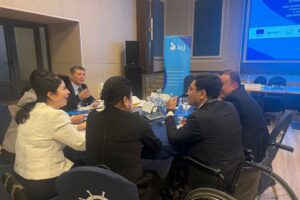
Migrants and asylum seekers must be provided adequate procedural guarantees in asylum procedures and in immigration detention, a group of experts and judges asserted during a seminar for Greek and Italian judges held by the ICJ, Scuola Superiore Sant’Anna (SSSA), and Greek Council for Refugees (GCR) on 29-31 March.
Asylum applicants should have access to adequate information about the procedure and their entitlements in a language they understand, access to a reliable communication system with the authorities, the availability of interpreters, access to legal aid, and reasoned decisions, experts said during the seminar, held in the framework of the FAIR plus project. Speakers further emphasized that immigration detention must be subject to automatic review by an independent body with a power to release detainees, especially when removal is no more an option.
More than 30 judges from Italy and Greece came together for this event to discuss procedural guarantees for migrants and asylum seekers, related to the safe third country concept, the access to legal assistance and interpretation, safeguards related to immigration detention, and procedural guarantees in the asylum procedure, especially in the accelerated procedures.
A summary of the discussions
On the first day, the judges exchanged overviews of national systems and presented some specific questions regarding the Italian and the Greek systems. Following the discussion on the safe third country concept and its implementation in Greece, an Italian judge presented recent developments in the Italian case-law, and the role of the judge, country of origin information, accelerated procedures, the length of procedures and the question of credibility assessment.
On the second day, the discussion related to the impact of Covid-19 pandemic on the rights of migrants and asylum seekers took place. The situation in Greece and in Italy was described by judges, in particular in relation to the access to the asylum procedure, the lawfulness of detention, the right to health and the question of access to a personal hearing when some of the hearings take place electronically.
An overview of the situation of immigration detention in Italy and Greece was presented by an Italian lawyer and an expert from UNHCR Greece. Speakers highlighted that in cases when people cannot be returned, they should not be kept in detention without a legal basis.
Accelerated procedures in law and in practice in both countries have been introduced by UNHCR Greece and Italy were addressed through a case-study and discussion, covering mainly the specific needs in accelerated procedures, automatic suspensive effect of appeals, and time limits in the accelerated procedures.
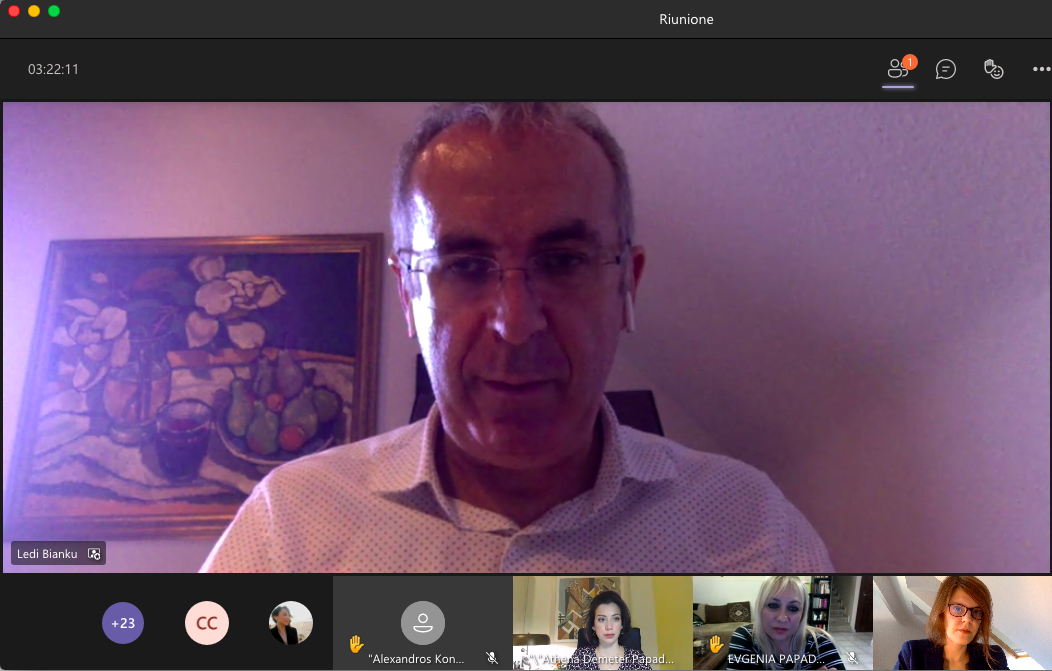
Finally on the last day, two lectures were delivered by Ledi Bianku, a former judge of the European Court for Human Rights, and an Associate Professor at the University of Strasbourg. First, looking into the guarantees in asylum and migration proceedings, Ledi Bianku stressed the need to always provide asylum applicants adequate information about the procedure and their entitlements in a language they understand, access to a reliable communication system with the authorities, the availability of interpreters, access to legal aid, and reasoned decisions in order to provide access to an effective remedy. In the second part of his intervention, Mr. Bianku discussed the detention of migrants, where he stressed the need for automatic review of detention, especially when removal is no more an option, by an independent body with a power to release.
The FAIR plus project is a judicial training and cooperation project supported by the European Union’s Justice programme, focusing on four countries Ireland, Greece, Italy and the Czech Republic. The aim of the project is to contribute to better judicial protection of the fundamental rights of migrants across the EU. Within the project the ICJ and partners are drafting of training materials and relevant legal briefings, implement training of the existing judicial trainers in the target countries, conduct four national trainings, two transnational seminars, and an international roundtable. The project is implemented in collaboration with national partners: Immigrant Council of Ireland (ICI), Scuola Superiore Sant’Anna (SSSA), Greek Council for Refugees (GCR) and Forum for Human Rights (Czech Republic).
Please find the agenda here.
Mar 29, 2021 | News, Publications, Reports, Thematic reports, Uncategorized
The International Commission of Jurists (ICJ) has published a new report Accessing Economic and Social Rights in Uzbekistan: An Analysis of Selected Laws and Practices. In the report, it considers aspects of Uzbekistan’s implementation of its obligations to respect, protect and fulfil economic, social and cultural (ESC) rights through laws and policies as well as through access to justice and remedies for those who allege that their ESC rights have been violated.
Analysing the general legal framework for protection of these rights, the report considers in more detail particular challenges in Uzbekistan, in respect of the right to adequate housing, the right to health, and rights in the workplace.
In the report, the ICJ concludes that in-depth reforms of the justice system are still needed to ensure effective remedies for ESC rights violations in practice, including through genuine independence of the judiciary and regular application of international human rights law in and by the courts.
In general, the use of international law in the Uzbekistan justice system remains weak and underdeveloped. International law is to a high degree theoretical for most legal practitioners, an approach that appears to have its roots in legal tradition and culture, lack of political will and a lack of concrete programmes of measures to make progress in this regard. In practice, judges, prosecutors and lawyers continue not to be exposed to international law on ESC rights, and usually do not apply it in their work directly.
The report concludes that in Uzbekistan the justiciability of ESC rights is not always accepted, as some ESC rights are not seen as rights whose violation could or should be remedied through and by the courts. Rather, many actors see guarantees of non-discrimination or aspects of the right to health or education as benefits which are not of a justiciable nature. Lawyers, sharing a similar legal mindset and background, do not tend to demonstrate the necessary legal activism in pursuing judicial remedies in such cases.
The report contains five chapters. Chapter 1 of the report outlines the general issues which are essential to ensure access to justice for ESC rights in Uzbekistan. Chapter 2 is dedicated to issues related to the right to housing, its international legal aspects and national implementation. Chapter 3 discusses issues related to the right to health while Chapter 4 describes the aspects of the protection of the right to work internationally as well as in Uzbekistan. In Chapter 5, the report sets out conclusions and recommendations on access to justice as well as the measures to protect specific rights addressed in the report.
The publication of the report marks the conclusion of a three-year project, ACCESS, of the International Commission of Jurists (ICJ), which has worked to advance civil society engagement for the protection of ESC rights in Uzbekistan. It draws on several discussions in Uzbekistan, as well as on legal research carried out throughout the project.
Please see the report below:
In English: Accessing Economic and Social rights in Uzbekistan: an analysis of selected laws and practices
In Russian: Доступ к экономическим и социальным правам в Узбекистане: анализ законодательства и практики
In Uzbek: Ўзбекистонда иқтисодий ва ижтимоий ҳуқуқларни баҳолаш: айрим қонунлар ва амалиёт таҳлили
Please see the executive summaries below:
In English: Accessing Economic and Social rights in Uzbekistan: an analysis of selected laws and practices. Executive summary
In Russian: Доступ к экономическим и социальным правам в Узбекистане: анализ нормативно-правовых актов и практики. Резюме отчета.
In Uzbek: Ўзбекистонда иқтисодий ва ижтимоий ҳуқуқлардан фойдаланиш имкониятлари: алоҳида норматив-ҳуқуқий ҳужжатлар ва амалиёт таҳлили.Ҳисоботнинг қисқача мазмуни
Mar 25, 2021 | Agendas, Events, News
Today, the ICJ, the Office of the High Commissioner for Human Rights (OHCHR) Regional Office for Central Asia (ROCA) and the Supreme School of Judges of the Republic of Uzbekistan (SSJ) are holding a final conference on the implementation of international law on economic, social and cultural rights in the national legal framework of Uzbekistan.
This is the final event of a three-year project “Advancing Civil Society in Promoting economic, social and cultural rights Standards” (ACCESS), implemented by the ICJ, funded by the European Union.
Participants will discuss the obstacles to the enjoyment of economic, social and cultural (ESC) rights in Uzbekistan and how to strengthen protection of these rights through access to justice and legal remedies. The discussions will aim to strengthen the implementation of international law on ESC rights, including rights to housing, healthcare and rights to equal protection in the workplace, and ensure that the justice system provides effective protection and remedies where they are violated.
The OHCHR for Central Asia, the SSJ, Tashkent State University of Law, the Nationwide Movement “Yuksalish,” national and international experts will participate in the final conference.
“This is a very important project, which was timely but also challenging to implement during the period of COVID-19 pandemic. The right time to raise awareness around economic, social and cultural rights in particular. This is about accompanying the important reforms of the Government of Uzbekistan, it is about promoting human rights and the rule of law, which is also an important part of our EU Central Asia Strategy,” said H.E. Charlotte Adriaen, Ambassador of the European Union to Uzbekistan.
Ryszard Komenda, Regional Representative of the UN Human Rights Office for Central Asia noted that “this project to promote economic, social and cultural rights in Uzbekistan was and remains highly relevant and needed, including for the dissemination of legal knowledge on human rights among lawyers and representatives of civil society. The implementation of this project during the period of ongoing reforms in the country and participation of UN experts from CEDAW and CRC, makes the project especially effective, unique and timely.”
“Uzbekistan has a solid legal basis to meet its obligations to protect economic, social and cultural rights. But to realize the law’s potential in practice, people whose rights are violated need effective access to the justice system, and the courts need to apply the rights set out in international law,” said Róisín Pillay, Director of the ICJ Europe and Centra Asia Programme.
“We are happy to share our recommendations designed to ensure that people’s economic and social rights, as guaranteed in international law, are protected in practice, including through the justice system. I look forward to discussions with national and international partners during our final event,” she added.
“This project is a clear example of international cooperation of the Supreme School of Judges, which is fully consistent with its priorities. Of course, the implementation of international law on economic, social and cultural rights at the national level in Uzbekistan is one of the most significant national priorities, which requires active interaction between State authorities, the academic and expert community, and of course cooperation with international organizations,” said Khadji-Murod Isakov, the Director of the Supreme School of Judges under the Supreme Judiciary Council of the Republic of Uzbekistan.
Agenda in English
Agenda in Russian
Compilation of papers in Uzbek, Russian and English: Realising economic, social and cultural rights-2021
Contacts:
Ms. Dilfuza Kurolova, ICJ Legal consultant, t: +998 90 9050099 ; e: dilfuza.kurolova(a)icj.org
Ms. Guljakhon Amanova, National Program Officer, Uzbekistan, Regional Office of the UN High Commissioner for Human Rights (OHCHR), e:gamanova@ohchr.org
Mr. Utkir Khalikov, Head of the international department The Supreme School of Judges under the Supreme Judicial council of the Republic of Uzbekistan for Central Asia, e: inter.dep.ssj@mail.ru
The Project is financed by the European Instrument for Democracy and Human Rights (EIDHR) Delegation of the European Union to the Republic of Uzbekistan
Watch the video
Mar 22, 2021 | Advocacy, Non-legal submissions
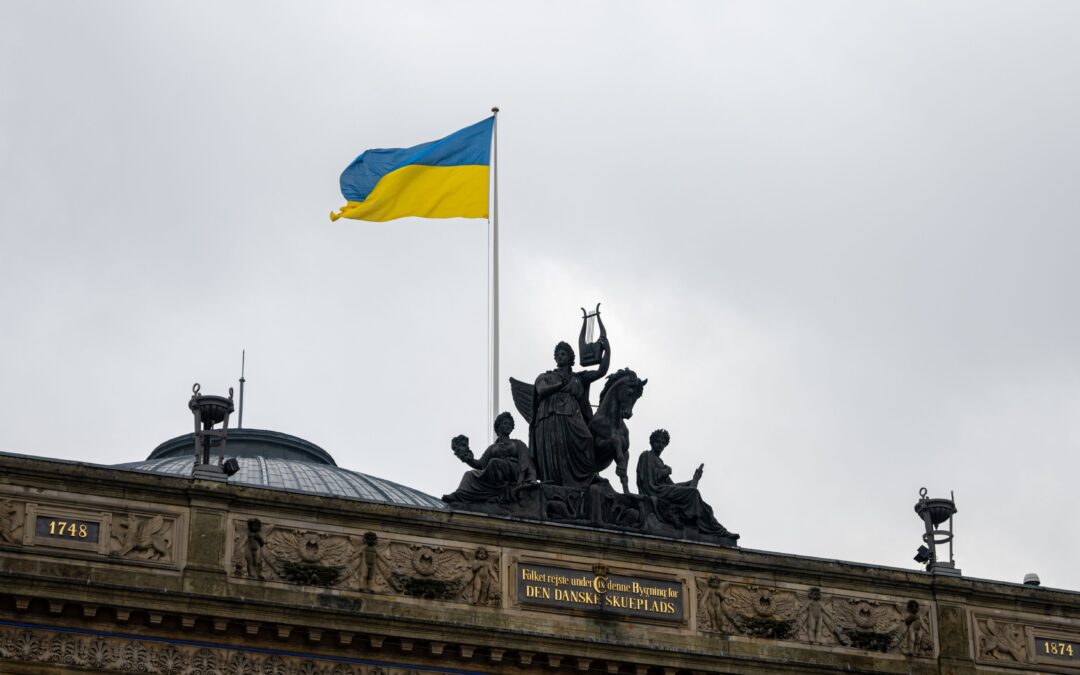
Today, before the UN Human Rights Council, the ICJ called on Ukrainian authorities to ensure the security of lawyers and the independence of the judiciary, essential elements to make effective any human rights technical assistance and capacity building.
The statement reads as follows:
“Madame President,
In Ukraine, a number of lawyers, including those who defend human rights, in and outside of courts, including to face threats, harassment, and other attacks on their security.
Lawyers continue to be associated with their clients and may face detrimental consequences for representing them.
For example, in November 2020, lawyer Nikolay Osipchuk was physically attacked by the local Prosecutor and several other people in the court room of a district court. A pattern of such attacks was identified by the ICJ in a report issued last year.
The ICJ is further concerned at recent the attempts of interference by the Government with the independence of the judiciary in Ukraine.
The ICJ welcomes the withdrawal of the presidential draft law by which all judges of the Constitutional Court would have been dismissed. However, it is concerning that, following a criminal case initiated against him, the President of the Constitutional Court was suspended by a decision of the President of Ukraine. This decision, on dubious legal grounds, undermines the independence of the judiciary.
The ICJ urges that Ukraine:
- Ensure prompt, thorough, impartial and independent investigations of all attacks on lawyers, leading where appropriate, to bringing those responsible to justice;
- refrain from any acts which interfere with the independence of the judiciary and annul the suspension of the President of the Constitutional Court.
I thank you.”
Contact:
Massimo Frigo, ICJ UN Representative, e: massimo.frigo(a)icj.org, t: +41797499949