Oct 8, 2020 | News
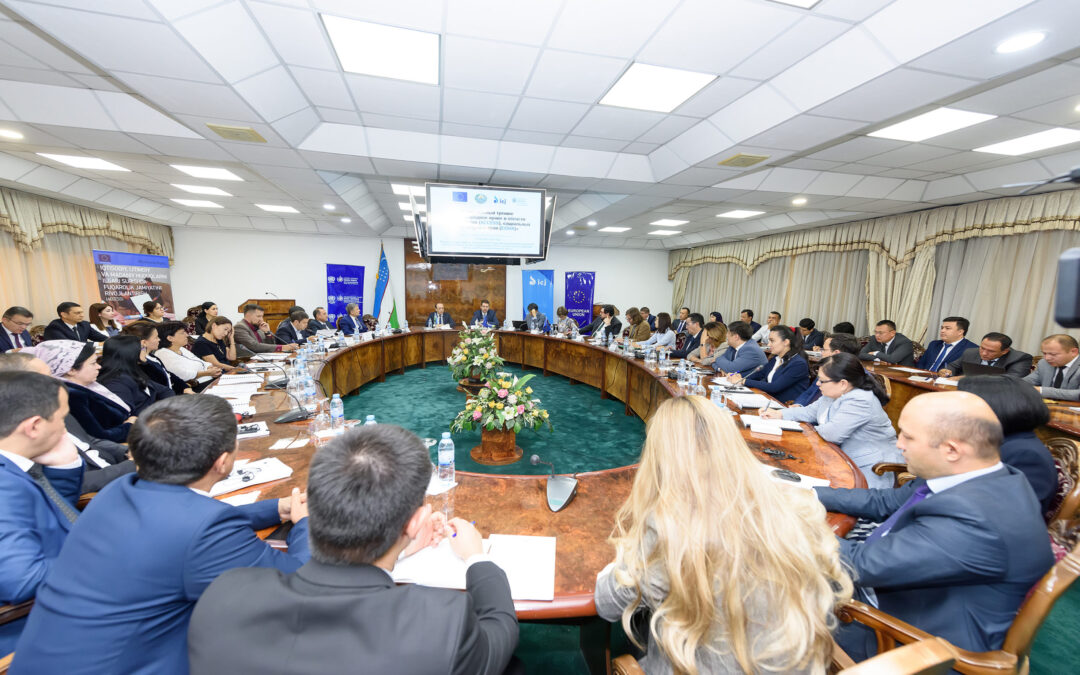
Today, the ICJ, the Regional office of the UN High Commissioner for Human Rights (OHCHR) for Central Asia and the Supreme School of Judges of the Republic of Uzbekistan (SSJ) are beginning a national training on “International law on economic, social and cultural (ESC) rights.”
This two-day online-training is the second of a series of trainings on ESC rights, including, the right to health, education, housing, child protection and rights in the workplace.
The online-training aims to build the capacity of judges, lawyers, prosecutors, legal academics and other representatives of civil society to apply international law and standards on ESC rights. Trainers will share best practices on implementation by States of their international obligations, including through judicial practice, and in ensuring access to justice for ESC rights. The online-training will also allow for exchanges between members of the judiciary, other legal practitioners, and members of civil society.
The training will be based on four modules: (1) introduction to international law on ESC rights; (2) international obligations concerning access to justice and effective remedies for ESC rights in national courts and comparative examples of good practices; (3) children`s ESC rights and (4) women`s ESC rights. The office of the UN Special Rapporteur on independence of judges and lawyers and representatives of the UN Committee on the Elimination of Discrimination against Women will participate in the training.
“Nobody could imagine the challenges the world will face only in few months after my visit to Uzbekistan. We are witnessing and living this unprecedently challenge for individuals, societies and states to response to crisis at global and national level to protect right to life and health, and to protect individuals from impact of lockdowns and restrictions. Economic, social and cultural rights are the heart of these challenges,” said Diego Garcia-Sayan, the UN Special Rapporteur on independence of judges and lawyers in his video-address to the participants of the training.
Francois Begeot, Head of Cooperation of the Delegation of the European Union to the Republic of Uzbekistan pointed out, “COVID-19 pandemic showed the urgency and importance of economic, social and cultural rights that have to be ensured by the states, even in the emergency situations. Taking international obligations, Uzbekistan has to respect, protect and fulfil human rights including during the state of emergency and ensure access to justice and legal remedies.”
Read full press release here.
Watch Diego García-Sayán speech for the event:
Contact:
Ms. Dilfuza Kurolova, Legal Consultant, ICJ Europe and Central Asia Programme, e: dilfuza.kurolova@icj.org
Ms. Guljakhon Amanova, National Program Officer, Uzbekistan, Regional Office of the UN High Commissioner for Human Rights (OHCHR), e:gamanova@ohchr.org
Mr. Utkir Khalikov, Head of the international department The Supreme School of Judges under the Supreme Judicial council of the Republic of Uzbekistan for Central Asia, e: inter.dep.ssj@mail.ru
Oct 5, 2020 | Advocacy, Non-legal submissions
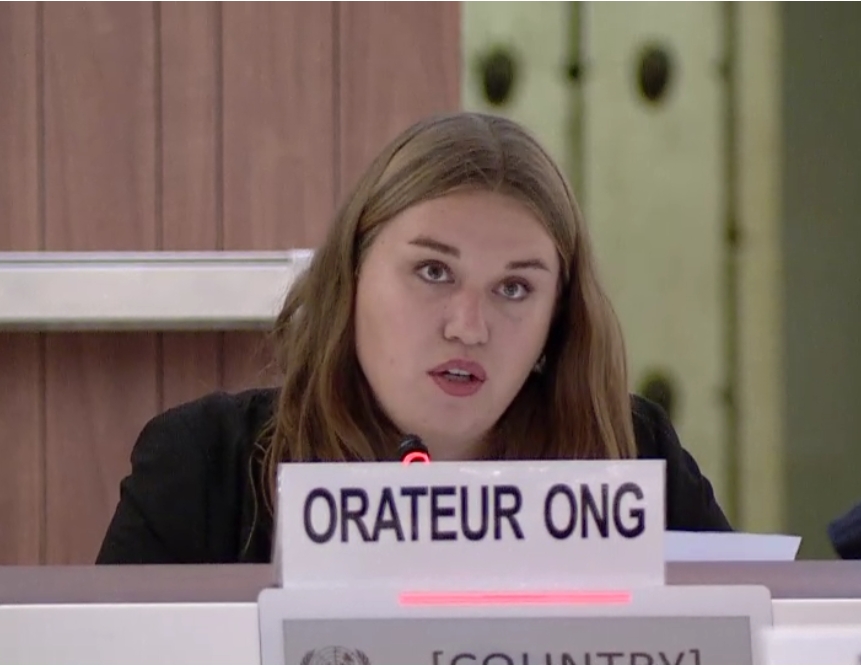
The ICJ today highlighted the need for accountability for crimes under international law in Libya, and concerns for the independence of lawyers in Ukraine, at the UN Human Rights Council in Geneva.
The oral statement, delivered in the general debate on technical cooperation and capacity building, read as follows:
“Madame President,
The International Commission of Jurists (ICJ) welcomes the oral updates on Ukraine and Libya.
Technical assistance and capacity building objectives in Libya can only be achieved if the protection of human rights, entrenchment of the rule of law and pursuit of accountability are prioritized.
States should support the Fact-Finding Mission by extending its reporting mandate, increasing contributions to the UN budget necessary to establish the Mission’s secretariat, and fully cooperating with it.
States should also support the Berlin Process working groups, ensuring that the political and accountability pillars work in unison and making meaningful commitments to implement their recommendations.
Across all of Ukraine, lawyers continue to be associated with their clients and may face consequences for representing them by private individuals and also through abuse of legal proceedings. High-profile cases bear risks for independent lawyers who choose to diligently represent their clients.
The decline in security of lawyers in and outside of courts, and the problem of threats, harassment, and attacks against lawyers, should be addressed as a matter of priority, including through technical cooperation. Measures should be taken to build the capacity of law enforcement agencies and court security personnel to ensure that lawyers and others involved in court proceedings can work in an atmosphere free from intimidation, harassment, and improper interference.
Thank you.”
Sep 30, 2020 | News
The ICJ today welcomed the first annual rule of law report of the European Commission, which analyses the compliance of all EU Member States with rule of law standards, including on judicial independence, freedom of the media and civil society.
The report is a welcome recognition that rule of law guarantees cannot be taken for granted in any European country, and that all EU institutions must be particularly vigilant in their defence.
But the ICJ warns that the report is only valuable if it leads to strengthened EU enforcement action to address the serious rule of law crises in Poland and in Hungary.
“This report is further testimony to the actions of governments of Poland and Hungary, to deliberately and systematically dismantle protections for judicial independence and other essential rule of law protections,” said Róisín Pillay, ICJ Europe and Central Asia Programme Director.
“We need the EU to use its powers of enforcement promptly and to the full, to defend these fundamental guarantees, including through prompt progression of Article 7 and enforcement proceedings. It is welcome that the European Commission calls on Member States to accelerate the resolution of problems raised under the Article 7 proceedings against Poland and Hungary. This report should lead to renewed efforts of all the institutions to urgently progress these proceedings,” she added.
Additional information
The full text of the European Commission report is available here: https://ec.europa.eu/info/publications/2020-rule-law-report-communication-and-country-chapters_en
The International Commission of Jurists has repeatedly expressed serious concern at the deteriorating rule of law situation in both Poland and Hungary, see for example:
https://www.icj.org/poland-judges-and-lawyers-from-around-the-world-condemn-rapidly-escalating-rule-of-law-crisis/
And here: https://www.icj.org/european-union-icj-joins-call-for-urgent-eu-response-to-hungarys-covid-19-emergency-law/
Contact:
Róisín Pillay, ICJ Europe and Central Asia Programme Director, t: +32 476 97 42 63; e: roisin.pillay@icj.org
Karolina Babicka, Legal Adviser, ICJ Europe and Central Asia Programme, t: +32 475 46 20 67; e: karolina.babicka@icj.org
Sep 29, 2020 | Advocacy, Non-legal submissions
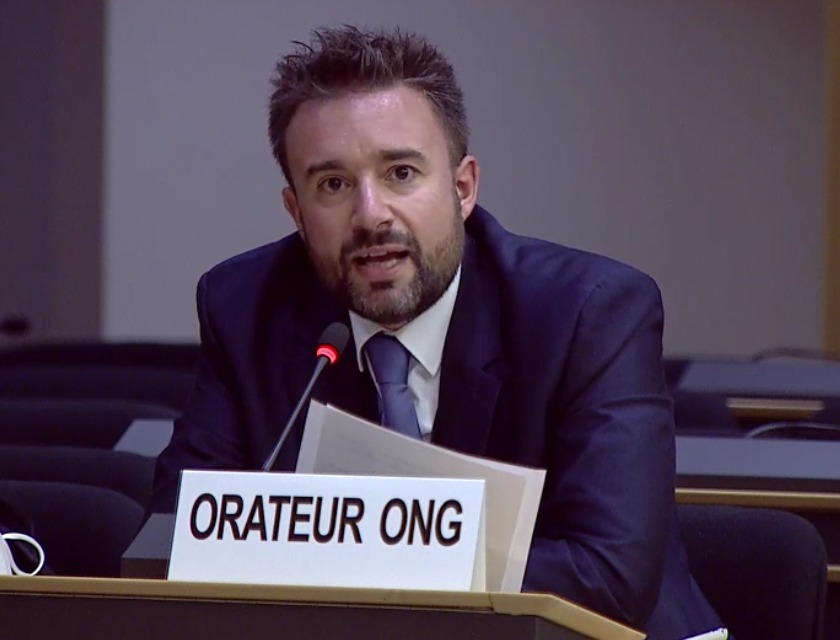
The ICJ and IHOP today put the spotlight the lack of independence of the judiciary and the abuse of criminal and anti-terrorism laws in Turkey, speaking at the UN Human Rights Council in Geneva.
The statement, made during the consideration of the Universal Periodic Review (UPR) of Turkey, reads as follows:
The International Commission of Jurists (ICJ) and the Human Rights Joint Platform (IHOP) welcome the acceptance by Turkey of recommendations to ensure the independence of the judiciary (recommendations 45.112, 45.113, 45.114, 45.115, 45.118, 45.120, 45.121, 45.124, 45.125, 45.126, 45.127, 45.128, 45.129, 45.132, 45.133).
The ICJ and IHOP however regret to report that, based on their research and experience, the statements by the Turkish Government that the recommendations on the independence of the judiciary have already been implemented is simply not correct.
On the contrary, during the state of emergency more than 4000 judges and prosecutors were dismissed, more than 2000 judges and prosecutors were detained, through arbitrary processes that did not meet international standards.
The judiciary in Turkey does not enjoy basic guarantees of institutional independence because its Council of Judges and Prosecutors is fully appointed by the Legislative and Executive powers contrary to international standards on judicial independence.
The ICJ and IHOP further regret that Turkey only noted and did not explicitly support the recommendations to reform its penal and counter-terrorism legislation in line with international standards on freedom of expression (recommendations 45.90, 45.91, 45.92, 45.93, 45.94, 45.95, 45.96, 45.97, 45.98, 45.99, 45.100, 45.101, 45.102, 45.103, 45.104, 45.148, 45.158).
The statement by the Government that “legal amendments have already been adopted” and that these laws are in line with international standards is also fundamentally incorrect.
Anti-terrorism laws and other criminal offences continue to be abused to unjustifiably prosecute political opposition members, judges, lawyers, prosecutors and human rights defenders.
To actually implement the recommendations accepted by Turkey, ICJ calls on Turkish authorities to
- radically reform the governance of the judiciary to restore its independence in line with international standards;
- promptly finalize all criminal and administrative cases concerning former judges and prosecutors, respecting international standards of judicial independence;
- truly reform the country’s anti-terrorism law, and
- stop all arbitrary prosecution of human rights defenders, lawyers, judges, prosecutors and academics.
Contact:
Massimo Frigo, ICJ Senior Legal Adviser, e: massimo.frigo(a)icj.org, t: +41797499949
Sep 23, 2020 | News
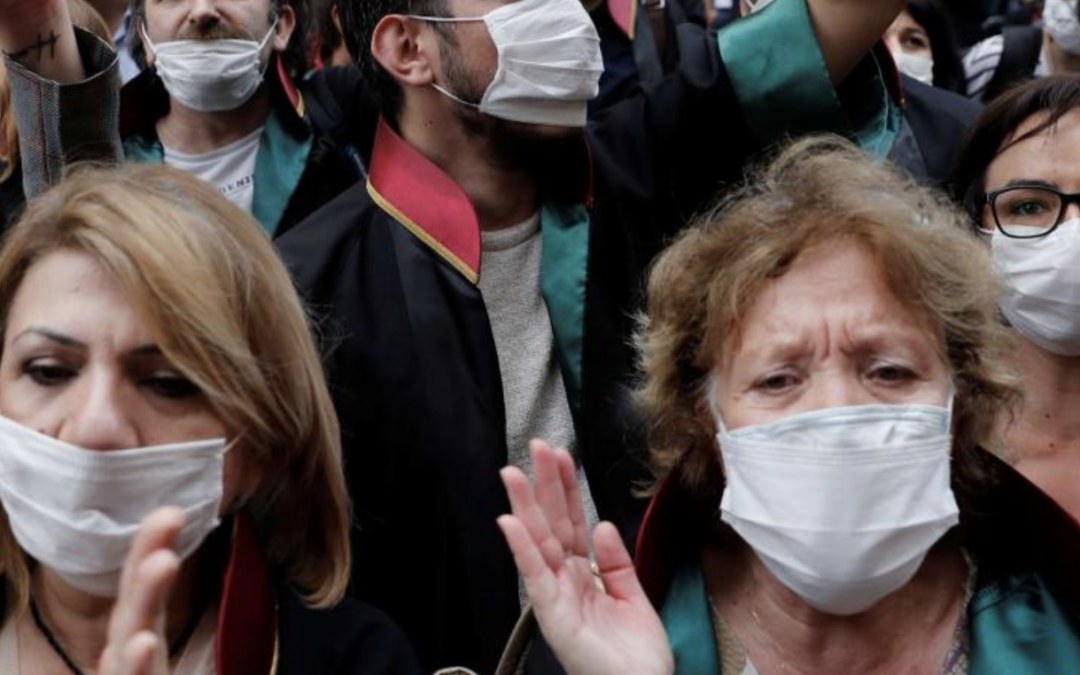
The ICJ called today on the Public Prosecutor Office of Istanbul to drop criminal charges and investigations against the President and Board Members of the Istanbul Bar Association for having publicly displayed a photograph of lawyer Ebru Timtik, who died following a hunger strike while in detention.
“These charges have been brought as a direct result of the lawyers’ exercise of their freedom of expression,” said Massimo Frigo, Senior Legal Adviser with the ICJ Europe and Central Asia Programme. “ They should be dropped immediately.”
On 21 September, the Chief Public Prosecutor’s Office of Istanbul notified to the 11 members of the board of the Istanbul Bar Association, including its President Mehmet Durakoğlu, that they were under criminal investigation.
The charges are not yet known but it is confirmed that the investigation concerns their hanging of a large picture of lawyer Ebru Timtik out of the window of the Istanbul Bar Association’s headquarters.
Lawyer Ebru Timtik died last 27 August on the 238th day of her hunger strike, while in detention on remand. She was a lawyer in the Progressive Lawyers Association and was under trialto answer to the unfounded accusation of being a member of a terrorist organisation. She undertook the hunger strike to protest against these accusations, which are often used in Turkey to silence political opposition and human rights defenders.
Following the bar association’s display of Ebru Timtik’s photograph, Minister of Interior Süleyman Soylu targeted the İstanbul Bar, saying, “I strongly condemn the ones who hung the photograph of a terrorist organization member on the İstanbul Bar Association.” Minister of Justice Abdulhamit Gül also said, “It is unacceptable that the bar association has become a backyard for illegal and marginal structures.” President Erdoğan also stated in the opening speech of the new legal year that “In the next period, we will do what is necessary to cut the bloody road extending from being attorneys to terrorists.”
“It is particularly worrying that these investigations were triggered after statements by the Minister of the Interior and the President, besmirching the legitimate work of lawyers and bar associations as linked to ‘terrorism,” added Massimo Frigo.
International standards
The UN Basic Principles on the Role of Lawyers state:
18. Lawyers shall not be identified with their clients or their clients’ causes as a result of discharging their functions.
23. Lawyers like other citizens are entitled to freedom of expression, belief, association and assembly. In particular, they shall have the right to take part in public discussion of matters concerning the law, the administration of justice and the promotion and protection of human rights and to join or form local, national or international organizations and attend their meetings, without suffering professional restrictions by reason of their lawful action or their membership in a lawful organization. In exercising these rights, lawyers shall always conduct themselves in accordance with the law and the recognized standards and ethics of the legal profession.
24. Lawyers shall be entitled to form and join self-governing professional associations to represent their interests, promote their continuing education and training and protect their professional integrity. The executive body of the professional associations shall be elected by its members and shall exercise its functions without external interference.
Contact
Massimo Frigo, Senior Legal Adviser, e: massimo.frigo(a)icj.org, t: +41797499949; twitter: @maxfrigo