Nov 17, 2020 | News
The ICJ today denounced the renewed threat of criminal proceedings by prosecutorial authorities against Judge Igor Tuleya on charges arising from the judge’s independent exercise of his judicial functions, as his case is appealed before a panel of the Supreme Court Disciplinary Chamber.
Judge Tuleya faces prosecution for having allowed the presence of media in a sensitive case concerning the investigations on the 2017 budget vote in the Polish House of Representatives (Sejm) that took place without the presence of the opposition.
He has been charged with ‘failing to comply with his official duties and overstepping his powers’ for having allegedly disclosed a secret of the investigation to ‘unauthorized parties’.
The accusations stem from the initiative of the judge to allow media and the public in the courtroom while issuing his ruling. Usually rulings on investigations are issued behind closed doors in Poland, but the criminal procedure code allows judges to make the hearing public “in the interest of justice”.
“Judge Tuleya’s immunity should be maintained. Actually he should not face any criminal proceedings to begin with as its decisions were in accordance with the law and the principles of transparency and public trials,” said Massimo Frigo, Senior Legal Adviser for the ICJ Europe and Central Asia Programme.
“His case is a further demonstration of the relentless attacks against the independence of judges ongoing in Poland.”
The Disciplinary Chamber, in a single-judge formation, upheld Judge Tuleya’s immunity on 9 July but the prosecution appealed the ruling that will be now decided by the same Chamber before a three-judge panel, Tomasz Przelawski, Slawomis Niedzielak and Jaroslaw Sobutka.
These proceedings are the first case of implementation the draconian Act amending the Law on the Common Courts, the Law on the Supreme Court and Some Other Laws, signed into law on 4 February and widely known as the ‘Muzzle Act’, which has given competence to waive judicial immunity to the Disciplinary Chamber of the Supreme Court.
“Immunity claims against a judge should be decided only by an independent body,” Massimo Frigo added.
“As EU Court of Justice held, the Disciplinary Chamber of the Supreme Court is not independent and is open to undue influence or interference by political authorities. It should therefore not rule on this case.”
Background
On 19 November, the Court of Justice of the European Union (CJEU) delivered a ruling in the case A.K. and others (C-585/18, C-624/18, C-625/18), on a preliminary question by the Supreme Court of Poland. The preliminary question asked whether the recently established Disciplinary and Extraordinary Chambers of the Supreme Court could be considered to be independent.
The CJEU ruled that a court cannot be considered independent “where the objective circumstances in which that court was formed, its characteristics and the means by which its members have been appointed are capable of giving rise to legitimate doubts, in the minds of subjects of the law, as to the imperviousness of that court to external factors, in particular, as to the direct or indirect influence of the legislature and the executive and its neutrality with respect to the interests before it and, thus, may lead to that court not being seen to be independent or impartial with the consequence of prejudicing the trust which justice in a democratic society must inspire in subjects of the law.”
Based on this ruling, the Labour, Criminal and Civil Chambers of the Supreme Court declared that the Disciplinary and Extraordinary Chambers of the Supreme Court were not properly constituted and independent.
According to the UN Basic Principles on the Independence of the Judiciary, judges are entitled to a fair hearing in all disciplinary proceedings (principle 17). In order for such a hearing to be fair, the decision-maker must be independent and impartial.
International and European standards on the independence of the judiciary provide that judges should have immunity from criminal prosecution for decisions taken in connection with their judicial functions in the absence of proof of malice, and any procedure for removing immunity must itself be independent (see for instance, UN Special Rapporteur on the Independence of Judges and Lawyers, paras 65-67 and 98; Council of Europe Committee of Ministers, para 68; Consultative Council of European Judges, para 20; ICJ Practitioners Guide no 13, pp. 27-30).
On 26 February 2020, the Polish Prosecutor’s Office requested a waiver of Judge Tuleya’s immunity in order to press criminal charges which might lead to imprisonment. The waiver was rejected on 9 June 2020 by the Disciplinary Chamber of the Supreme Court appointed by the government, in a single-judge formation. The Prosecutor’s Office appealed the ruling. The case will be now considered by the same Disciplinary Chamber in a three-judge formation. A first hearing was scheduled for 5 October 2020 but was postponed. It will take place on 18 November.
In an open letter of 5 February 2020, 44 ICJ Commissioners and Honorary Members denounced the recent legislative changes adopted by the Polish government threatening the role and the rights of judges and denouncing the risks faced by legal practitioners when fighting for the rule of law. Two weeks later, the risks highlighted by the letter have become reality for an increasing number of Polish judges, including Judge Tuleya.
Contact:
Massimo Frigo, Senior Legal Adviser, Europe and Central Asia Programme, e: massimo.frigo(a)icj.org, t: +41 797499949
Nov 16, 2020 | Advocacy
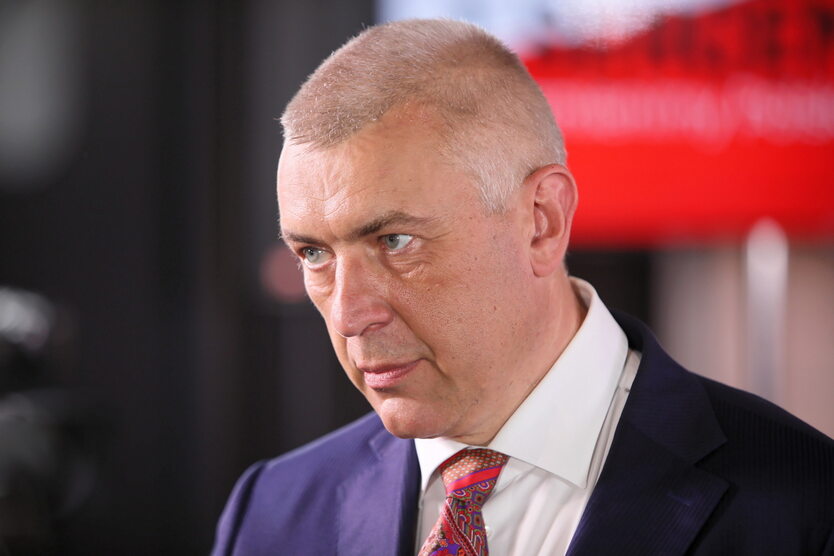
On 15 October 2020, Polish lawyer Roman Giertych was detained by the Central Anticorruption Bureau (CBA) on accusations of money laundering. His house and office were searched and prosecutors imposed preventive measures, including suspension of his right to practice law.
Lawyers for Lawyers, the ICJ and the Amsterdam Bar Association are concerned that the manner in which these measures were taken is inconsistent with international standards on the independence of the legal profession.
Roman Giertych has worked on a series of high-profile cases against the governing Law and Justice party. He has also represented various prominent opposition figures, including Donald Tusk, the former Polish prime minister and head of the Civic Platform opposition party, and former president of the European Council.
Mr. Giertych’s arrest happened one day before the scheduled detention hearing in another politically significant high-profile case, concerning Leszek Czarnecki, in which Roman Giertych was appointed as defence counsel.
According to the information available to Lawyers for Lawyers (L4L), the ICJ and the Amsterdam Bar Association, Mr. Giertych was arrested merely to serve him with charges. He was not given a chance to appear voluntarily.
On 22 October 2020, Mr Giertych’s defense lawyers filed four complaints with the court about the actions of the Poznań prosecutor’s office relating to his arrest and the search of his home and office.
Professional lawyers’ associations such as the National Council of Attorneys-at Law, the Association of Attorneys-At-Law “Defensor Iurius”, the Polish Bar Council and the Council of the Warsaw Bar Association of Advocates have expressed “great concern” about Mr. Giertych’s detention, the search of his house and office, and the preventive measures that were taken against Mr. Giertych.
Lawyers for Lawyers, the ICJ and the Amsterdam Bar Association are concerned about the circumstances of Mr. Giertych’s arrest, in particular the fact that the arrest seems to have only been made in order to present him with charges.
L4L, ICJ and the Amsterdam Bar Association are also concerned by the fact that the searches of his house and office were conducted without proper safeguards of attorney-client privilege and by the suspension of Mr. Giertych’s right to practice his legal profession by a public prosecutor. We will continue to monitor the case of Mr. Giertych closely.
Download
Poland-Roman Giertych-Advocacy-2020-ENG (full statement with additional information, in PDF)
Nov 16, 2020 | Advocacy, News
Today, the ICJ calls on the Ukrainian authorities to abandon a draft law which would dismiss the judges of the Constitutional Court of Ukraine, as a means of retaliation for a decision adopted by the Court and in order to circumvent the decision.
The authorities should also refrain from any other actions, including harassment of judges, which undermine the independence of the Constitutional Court.
“This draft law constitutes a direct attack on the ability of the judiciary to exercise its functions independently. It is incompatible with basic principles of the rule of law and the separation of powers, and with international standards on the independence of the judiciary,” said Róisín Pillay, Director of the ICJ Europe and Central Asia Programme.
“By the nature of their role, the judiciary, and especially constitutional courts may be required to decide on controversial matters. It is however essential that particularly in such cases, courts are able to operate without fear of retaliation or repression for the decisions they take,” she added.
The draft law on Restoring Public Confidence in the Constitutional Court, submitted by President Zelensky to the Ukrainian Parliament (Verkhovna Rada), aims to pronounce a decision of the Constitutional Court on anti-corruption legislation “void” and without legal consequences.
This runs contrary to the Ukrainian Constitution according to which “[d]ecisions and opinions adopted by the Constitutional Court of Ukraine shall be binding, final and may not be challenged” (Article 151-2).
The draft law would terminate the mandate of the judges of the Constitutional Court, in contravention of the Constitution of Ukraine as well as basic principles of independence of the judiciary, governing appointments, dismissal and security of tenure of judges.
The draft law provides that the powers of the Constitutional Court of Ukraine in force at the time of the decision on the anti-corruption law would be terminated from the date of entry into force of the law.
According to the explanatory note to the Draft Law, one reason the adoption of the law would be justified is because there had not been a “proper substantiation” of its judgment on the anti-corruption law. The note alleges that Court’s decision was adopted in the private interests of judges of the Constitutional Court of Ukraine, that its proper substantiation was not provided and that it contradicts the principle of the rule of law and denies the European and Euro-Atlantic choice of the Ukrainian people. The ICJ considers these allegations are inappropriate as they directly interfere with the judicial function of the Constitutional Court of Ukraine, contrary to the national legislation and international law on the independence of the judiciary.
On 2 November 2020, Oleksandr Tupitsky, the President of the Constitutional Court was summoned for interrogation by the State Investigation Bureau in connection with allegations against him of committing crimes as part of an organized group. The ICJ fears that this may be a form of pressure in relation to the Constitution Court’s decision.
Following these incidents, the Constitutional Court has stopped working as four of the judges refuse to take part in its sessions. The Court therefore lacks the necessary quorum to operate.
The ICJ calls on Ukraine to withdraw the draft law, and to refrain from any further reprisals against judges for their decisions.
Download
Ukraine-draft law constitutional court-News-ENG-2020 (full statement with background information)
Nov 12, 2020 | Agendas, Events, News
The International Commission of Jurists and the Human Rights Joint Platform (IHOP) invite you to a Zoom workshop where Turkish and international experts will discuss the legacy of the 2016-2018 state of emergency in Turkey for access to justice today.
To participate, please register by writing an email to ihop@ihop.org.tr (the Human Rights Joint Platform)
Join our great panel of speakers:
– Professor Sarah Cleveland, ICJ Commissioner
– Dr. Dilet Kurban, Hertie School
– Lawyer Ziynet Özçelik, Ankara Bar Association
– Dinçer Demirkent, Human Rights School
– Roisin Pillay, Director of ICJ Europe and Central Asia Programme
– Kerem Altiparmak, ICJ Turkey Legal Adviser
The workshop will address how state of emergency measures, such as dismissals and closures of legal entities, still impact on the human right of people in Turkey today.
The experts will discuss whether the remedies set up by Turkish authorities are up to standard with Turkey’s international human rights law obligations.
IHOPICJ-ZoomWorkshop-StateofEmergency-Agenda-2020-ENG (download the agenda in English)
IHOPICJ-ZoomWorkshop-StateofEmergency-Agenda-2020-TUR (download the agenda in Turkish)
The event is part of the REACT project: implemented jointly by ICJ and IHOP, this project seeks to support the role of civil society actors in turkey in ensuring effective access to justice for the protection of human rights. This project is funded by the European Union. The views expressed in the event do not necessarily reflect the opinion of the EU.
Nov 3, 2020 | Advocacy, Non-legal submissions
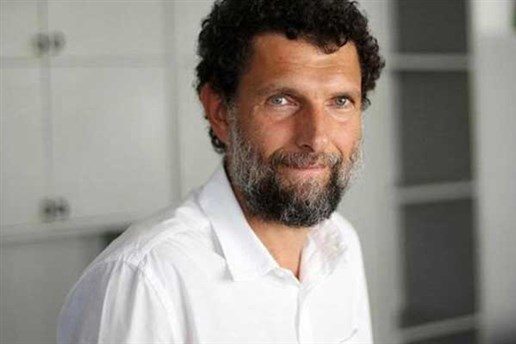
Today, the ICJ, jointly with Human Rights Watch and the Turkey Human Rights Litigation Support Project presented a submission to the Council of Europe’s Committee of Ministers on the Execution of the judgment Kavala v. Turkey by the European Court of Human Rights.
The ICJ, Human Rights Watch and the Turkey Human Rights Litigation Support Project have reported to the Committee of Ministers that new charges against Osman Kavala lack concrete evidence and have been brought in disregard of the ECtHR’s judgment whose execution the Committee is supervising.
The three NGOs have invited the Committee of Ministers to:
- consider adopting the relevant recommendations formulated in their submission of 29 May 2020;
- take further steps to end immediately Mr. Kavala’s ongoing detention, which has now exceeded three years;
- recognise at its 1390th 1-3 December 2020 meeting that the continuing detention of Osman Kavala violates Article 46 of the Convention concerning the binding nature of final judgments of the ECtHR and may trigger Article 46(4) infringement proceedings against Turkey; and
- take the necessary general measures identified in the NGOs submission of 29 May 2020 to implement the ECtHR’s ruling concerning Article 5 and 18 of the Convention in Kavala v. Turkey and its findings in relation to human rights defenders.
In their initial submission dated 29 May 2020, the NGOs underlined that decisions taken to prolong Mr. Kavala’s detention had been guided by political expediency and there had been a concerted political effort by the Turkish authorities to prevent Mr. Kavala’s release. These bases for their action are evident in the sequence of court orders prolonging Mr. Kavala’s detention, the actions of the executive and prosecutors in relation to the judicial procedures against him, and the lack of due consideration of the ECtHR’s findings and objective deliberation as to the legality of any deprivation of liberty. The NGOs made several recommendations to the Committee of Ministers, on the issues of the general and individual measures, to ensure full implementation of the ECtHR’s judgment and Mr. Kavala’s immediate release on the ground that the Court’s judgment clearly applies to his ongoing detention.
In its judgment on Kavala v. Turkey, the EUropean Court of Human Rights, on 10 December 2019, found violations of Article 5(1) (right to liberty and security), Article 5(4) (right to a speedy decision on the lawfulness of detention) and Article 18 (limitation on use of restrictions on rights) of the European Convention on Human Rights taken together with Article 5(1). The Court required the Government of Turkey to take measures to end the detention of human rights defender Osman Kavala and to secure his immediate release. The Court stated that any continuation of Mr. Kavala’s detention would prolong the violations and breach the obligation to abide by the Court’s judgment in accordance with Article 46(1) of the Convention. The judgment became final on 11 May 2020.
Despite the Court’s clear findings and mandatory order, Mr. Kavala remains in detention as of the date of this submission.
Turkey-Kavala_v_TurkeyExecution-JointSubmission2-HRWICJTHRLP-2020-ENG