Jun 22, 2016 | Advocacy, Non-legal submissions
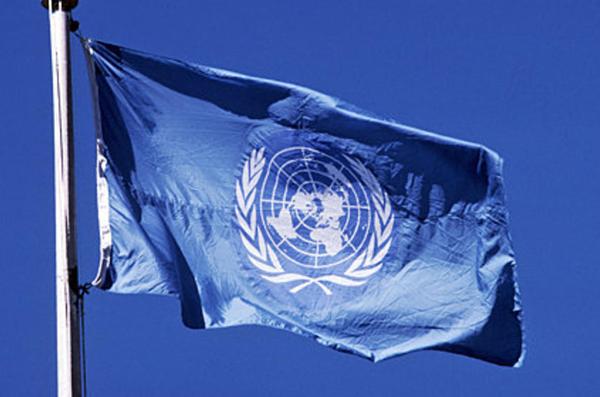
The ICJ today made an oral statement at the United Nations, on threats to the independence of lawyers in Azerbaijan.
In the statement to the Human Rights Council, the ICJ emphasised that lawyers in Azerbaijan face suspension or disbarment for statements clearly constituting protected freedom of expression. In some cases, they are subject to arrest, detention, unfair trial, and arbitrary imprisonment.
The lack of independence of the Bar Association is a serious concern. This body is increasingly initiating apparently groundless disciplinary proceedings, including leading to disbarment, against lawyers who defend the interests of clients in high profile or politically sensitive cases. Disciplinary penalties in such cases are routinely upheld by the judiciary, which does not appear to be fully independent.
This was highlighted in preliminary findings of the Working Group on Arbitrary Detention following its recent visit (Working Group on Arbitrary Detention Statement upon the conclusion of its visit to Azerbaijan (16-25 May 2016)). Representatives of the ICJ are currently visiting Azerbaijan to further assess the situation.
The cases of Khalid Bagirov, Alaif Ghasanov and Intigam Aliyev illustrate these concerns. While welcoming the release of Mr Aliyev, we remain concerned at the maintenance of his underlying conviction despite credible reports that the charges against him were politically motivated.
Lawyer Muzaffar Bakhishov is currently subject to disbarment proceedings for having criticized the lack of independence of the judicial system.
These disbarments have a chilling effect on the work of other lawyers. They undermine access to effective and independent legal assistance to protect human rights.
The ICJ urged the Council to closely monitor this worrying trend for the rule of law.
The statement may be downloaded in PDF format here: HRC32-OralStatement-Azerbaijan-2016-final-ENG
Jun 9, 2016 | Agendas, News
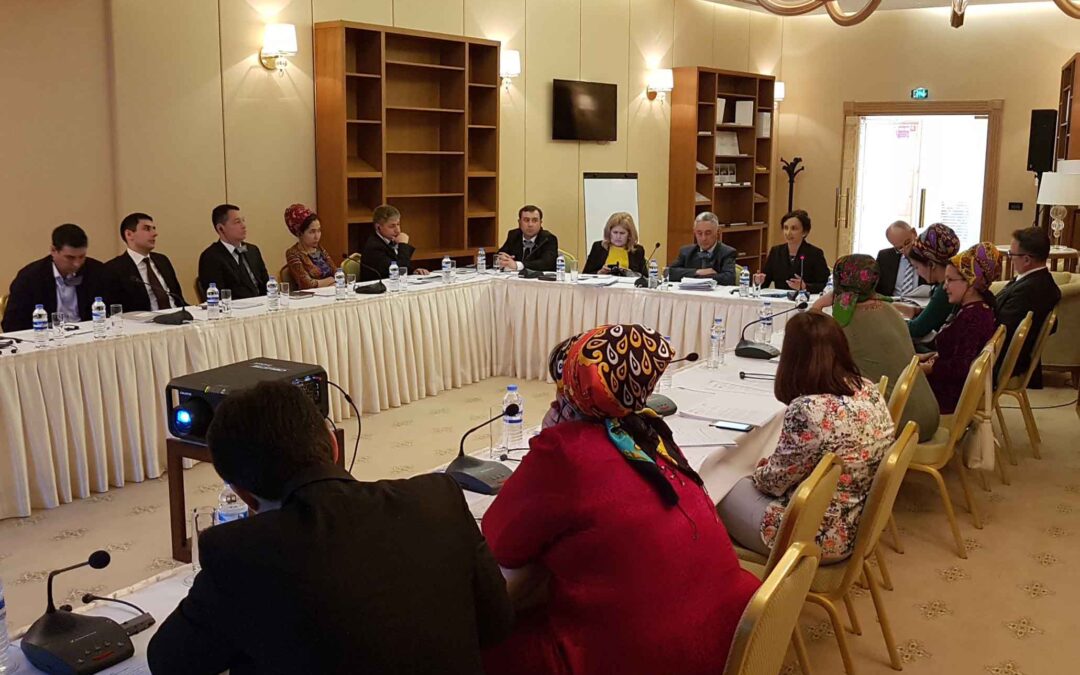
The ICJ today conducts a training seminar organized in Ashgabat on international human rights obligations and national courts.
The seminar will be attended by judges of the Supreme Court, representatives of the Prosecutor General’s office, the Ministry of Justice, lawyers as well as representatives of other institutions.
ICJ commissioners and staff members will participate event, including Justice Azhar Cachalia, Justice Radmila Dicic, Professor Andrew Clapham.
The seminar is organised in cooperation with the EU.
Contact
Róisín Pillay, Director, Europe Programme, roisin.pillay(a)icj.org
Temur Shakirov, Legal Adviser, Europe Programme, temur.shakirov(a)icj.org

Jun 9, 2016 | News
The ICJ welcomes the landmark decision issued today by the UN Human Rights Committee in the case of Amanda Mellet v. Ireland under the Optional Protocol to the International Covenant on Civil and Political Rights.
The Committee found that, by forcing Amanda Mellet to choose either to carry her foetus to term, despite its fatal fœtal abnormality, or to travel abroad to seek an abortion, Ireland had subjected her to cruel, inhuman or degrading treatment and discrimination, in violation of its obligations under the Covenant.
The ICJ considers that in light of the Committee’s decision Ireland must provide reparation to Amanda Mellet and reform its laws to prevent future violations.
Otherwise, Ireland will be in breach of its legal obligation to provide Amanda Mellet with an effective remedy – including in the terms set out in the Committee’s decision – for the human rights violations she suffered.
Related readings:
Full text of Human Rights Committee’s decision (download in PDF)
May 12, 2016 | News
The ICJ is concerned at the reported resignations of federal judges in the Chechen Republic of the Russian Federation following apparent pressure by the acting Head of the Republic Ramzan Kadyrov who had suggested that resignation would be the “most correct decision of their lives”.
The ICJ considers these statements, which appear to have led directly to the resignations of federal judges, to be inappropriate interference with the functioning and independence of the judiciary.
The ICJ calls on the Russian Federation judicial authorities to take all measures within their power to ensure that all judges’ security of tenure is preserved and that any allegations of misconduct are addressed through appropriate disciplinary proceedings that respect the right to a fair hearing.
The ICJ further calls on the executive authorities to refrain from any comments which may undermine the independence of the judiciary.
On 5 May, Ramzan Kadyrov, currently acting Head of the Chechen Republic, recommended that several named judges should step down.
In his post on social media, Kadyrov identified as problems unfair decisions of courts, procrastination in criminal cases, decisions regarding housing and inconsistent decisions.
He mentioned that although examples of such decisions were sporadic, they did not help build trust in the judiciary.
He then recommended that the President of the Supreme Court of the Chechen Republic, Magomed Karatayev (photo) and three other judges, Takhir Murdalov, Sulyan Yandarov and Zayndi Khusainov, should resign “if they had a notion of honour and professional ethics”.
It was reported that two judges of the Urus-Martan City Court and Grozny District Court, Sulyan Yandarov and Zayndi Khusainov, submitted their resignations on the same day.
The President of the Supreme Court of Chechnya, Magomed Karatayev, and his deputy Takhir Murdalov, are reported to have already filed a request for resignation.
The resignations, apparently in direct response to criticism by the executive, undermine the separation of powers and the independence of the judiciary in the Russian Federation.
Under international law, including the right to a fair trial protected, inter alia, by Article 6 of the European Convention on Human Rights and Article 14 of the International Covenant on Civil and Political Rights, the independence of the judiciary must be guaranteed.
The UN Basic Principles on Independence of the Judiciary enshrines “the duty of all governmental and other institutions to respect and observe the independence of the judiciary” and provides the judiciary shall not be subject to “any restrictions, improper influences…pressures, threats or interferences, direct or indirect from any quarter or for any reason.”
While judges have an obligation to adhere to judicial ethics and should be held accountable for professional misconduct, the representatives of the executive must refrain from statements which jeopardize the independence of the judiciary.
The Council of Europe’s Recommendation on judges specifies that “the executive and legislative powers should avoid criticism that would undermine the independence of or public confidence in the judiciary.”
Public pressure from the executive on judges to resign can nullify the security of tenure of judges protected under national and international law and standards.
According to Principle 12 of the Basic Principles on the Independence of the Judiciary, “[j]udges, whether appointed or elected, shall have guaranteed tenure until a mandatory retirement age or the expiry of their term of office, where such exists.”
Under international standards, allegations of misconduct against judges should be dealt with by the self-governing institutions of the judiciary, through fair disciplinary procedures.
Under the Basic Principles, the only basis for removal of judges is “incapacity or behaviour that renders them unfit to discharge their duties.
The comments by Ramzan Kadyrov also run contrary to the legislation of the Russian Federation, which spells out in detail the procedure for disciplinary measures against judges in case of alleged professional misconduct.
RUSSIA-Chechen judges statement-News-web story-2016-RUS (full text in Russian, PDF)
May 10, 2016 | News
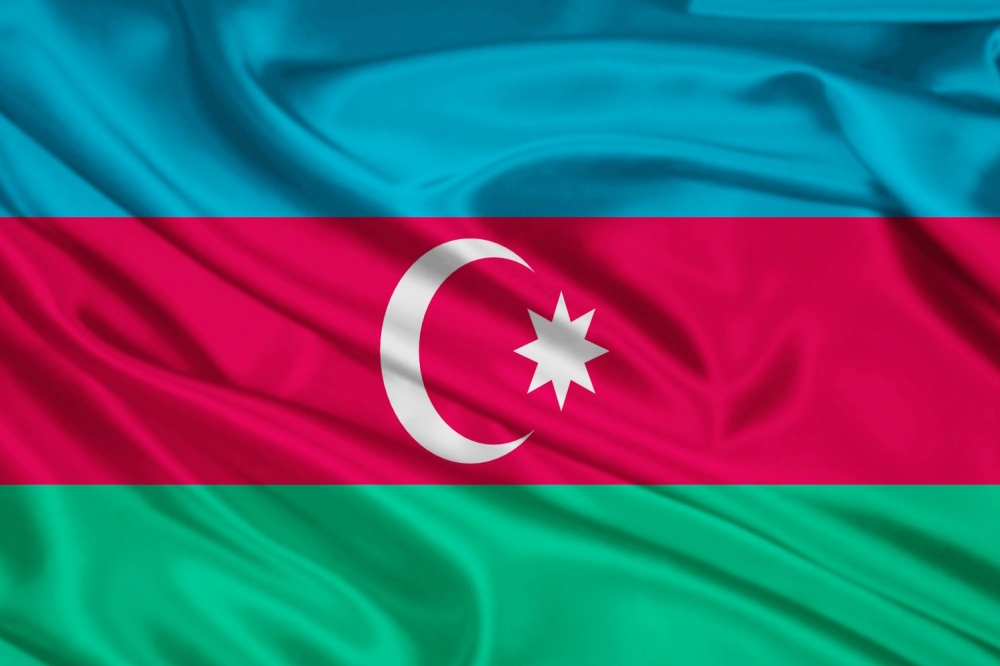
The ICJ today expressed concern at the disbarment proceedings against lawyer Muzaffar Bakhishov that are taking place before the Narimanov district court.
The ICJ calls for the disbarment proceedings to respect international standards on the role of lawyers and to ensure that no sanction is imposed contrary to the right to freedom of expression, as guaranteed under international law.
The ICJ understands that the proceedings against Mr Bakhishov, following a recommendation for disbarment by the Plenum of the Bar Association, are related to critical statements he made in a media interview with the news website moderator.az on the functioning of the Azeri judiciary with regard to judicial review of detention.
In the interview, he criticized the arrests of large number of persons by officers of the Ministry of National Security and the tendency of judges to approve orders of detention without proper scrutiny. He further raised concerns about lack of accountability of judges for failure to protect against arbitrary detention.
Under international law and standards, lawyers, like other individuals, enjoy the right to freedom of expression, including in regard to their professional role. Protection of lawyers’ right to freedom of expression is not only important to the individuals in question. It also serves to safeguard the important public function played by lawyers in a democratic society to comment on matters related to the rule of law and the administration of justice. Lawyers must be able to carry out these and their other professional functions without interference or intimidation.
The right to freedom of expression is protected in international human rights law, including by article 19 of the International Covenant on Civil and Political Rights (ICCPR) and article 10 of the European Convention on Human Rights (ECHR). Azerbaijan is party to both of these treaties.
The UN Basic Principles on the Role of Lawyers specify that lawyers “…shall have the right to take part in public discussion of matters concerning the law, the administration of justice and the promotion and protection of human rights …” The European Court of Human Rights has emphasized that lawyers are entitled to comment in public on the administration of justice, provided that their criticism does not overstep certain bounds, based on principles of dignity, honour, integrity, and respect for the fair administration of justice.
The ICJ considers that disciplinary proceedings against lawyers, solely for expressing criticism of the conduct or functioning of the judiciary, whether in the course of court hearings or elsewhere, constitute an unjustified interference with freedom of expression. As the European Court of Human Rights has noted in Maurice v. France, this is particularly the case where the allegations have been presented in good faith and are substantiated by evidence.
Azerbaijan-BakhishovDisbarment-Statement-2016-AZE (download statement in Azeri)
Contact:
Massimo Frigo, Legal Adviser of the ICJ Europe Programme, t: +41 22 9793805, e-mail: massimo.frigo(a)icj.org