Feb 5, 2015 | News
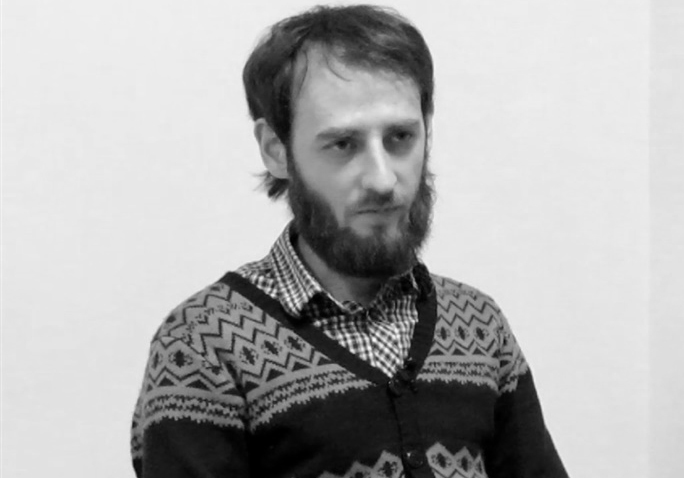
The ICJ is concerned by yesterday’s attack on lawyer Murad Magomedov in Makhachkala, near the Supreme Court of Dagestan building. The ICJ calls on the authorities to take effective measures to guarantee the security of lawyer Magomedov.
The attack took place during a break in a Supreme Court hearing in which Murad Magomedov was defending his client, Akhmed Israpilov, on charges of terrorism.
The lawyer was severely beaten by a group of five people, and sustained serious head injuries.
He was taken to the Republican Central Clinical Hospital, where he remains, recovering from concussion, multiple injuries and fractures of the jaw.
“This is yet another in a series of physical attacks against lawyers in Dagestan and shows the urgent need for the authorities to take effective measures to protect lawyers in the region,” Temur Shakirov, ICJ Legal Adviser, said today. “Both local and federal authorities in the Russian Federation must ensure a prompt investigation leading to those responsible for this violent act being brought to justice.”
The UN Basic Principles on the Role of Lawyer provide that “where the security of lawyers is threatened as a result of discharging their functions, they shall be adequately safeguarded by the authorities”.
Under international human rights law, the State must take steps to protect the security of persons who the authorities know or ought to know are under threat, and must ensure an independent, prompt, and thorough investigation of any attacks on the life or physical integrity of individuals.
Murad Magomedov has worked as a lawyer with “Memorial” Human Rights Centre since autumn 2014 and represents individuals affected by of a “special operation” in Dagestan’s Vremenyi village in September 2014. In this case Magomedov does not act as a Memorial representative.
The ICJ has previously highlighted cases of assault and killing of lawyers in Dagestan.
Contact:
Róisín Pillay, Director, Europe Programme, roisin.pillay(a)icj.org
Temur Shakirov, Legal Adviser, Europe Programme, temur.shakirov(a)icj.org

Feb 3, 2015 | News
On 2 February, the ICJ observed the trial of lawyer Kalid Baghirov, before the Nizami District Court of Baku.
In the case, the Azerbaijan Collegium of Lawyers seeks disbarment of the prominent lawyer (photo), who recently acted in a number of high profile cases in Azerbaijan, including on behalf of human rights defenders.
Following a letter of the Sheki Court of Appeal alleging misconduct by Khalid Baghirov during the trial against Ilgar Mammadov, leader of the “Republican Alternative” movement and former presidential candidate, on 10 December 2014 the Presidium of the Collegium of Lawyers suspended Khalid Baghirov’s practice.
At the same time, the Presidium applied to the Nizami District Court seeking complete termination of his right to practice law. The Court accepted the case for consideration.
The ICJ commissioned an international observer, Liliya Vigel, a lawyer practicing in the Republic of Uzbekistan, to observe the hearing in the case before the Nizami District Court.
The ICJ observer also met with the representative of the Collegium of Lawyers, with lawyer Baghirov, with members of the Presidium of the Collegium, and with a number of non-governmental organizations to collect information about the case.
The ICJ continues to monitor the case in relation to international standards on human rights and the rule of law, including as regards respect for the role of lawyers, and plans to publish a report on the proceedings in due course.
Contact:
Róisín Pillay, Director, Europe Programme, roisin.pillay(a)icj.org
Temur Shakirov, Legal Adviser, Europe Programme, temur.shakirov(a)icj.org

Jan 14, 2015 | News
The ICJ today expressed its concern at the prosecution and conviction of lawyer Shukhrat Kudratov by Dushanbe City Court on charges of fraud and bribery.

Jan 7, 2015 | News
The ICJ deplores today’s murderous attack against journalists and others by armed assailants at the offices of the weekly satirical magazine Charlie Hebdo.
Dec 2, 2014 | News
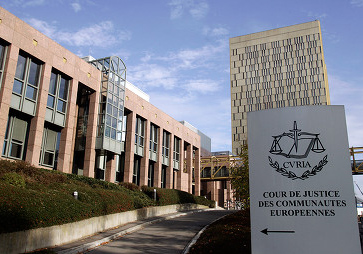
Today, the Court of Justice of the European Union (CJEU) delivered its judgment in the joint cases of A, B and C v. Staatssecretaris van Veiligheid en Justitie.
It affirms the need for national authorities to undertake individualized credibility assessments in asylum cases involving claims of persecution based on sexual orientation.
The ruling concerned a request for a preliminary ruling from the Netherlands, through its Council of State, to the CJEU.
The cases arose from three applications for asylum in the Netherlands by three men claiming a well-founded fear of persecution in their countries of origin based on their alleged same-sex sexual orientation.
The Dutch authorities rejected each asylum claim on the basis that each applicant had failed to prove his same-sex sexual orientation.
The Council of State asked the CJEU what limits the EU Qualification Directive and the Charter of Fundamental Rights, and in particular article 3 (right to the integrity of the person) and article 7 (respect for private and family life), impose on the method of assessing the credibility of a declared sexual orientation, and whether these limits are different from those applying to the assessment of credibility in asylum claims based on other grounds.
Interpreting the Qualification Directive in light of articles 3 and 7 of the Charter, as well as article 1, i.e. human dignity, the Court held that EU law does impose certain requirements on refugee status determination authorities.
The ICJ welcomes the Court’s determination that the competent domestic authorities must ensure that any credibility assessment method must allow for an individualized consideration of each applicant’s claim, having regard to its specific features, and that it is the duty of the State to cooperate with the applicant in the context of the assessment of all the relevant elements of her or his claim.
The ICJ welcomes a number of other aspects of the ruling, including:
- The emphasis on the Netherland’s need to comply with the Charter of Fundamental Rights;
- The fact that the Court firmly came down against seemingly intrusive and lewd questioning of an applicant’s sexual practices and proclivities, which it held to be contrary to respect for private and family life; and,
- The Court’s awareness of the particular challenges relating to the disclosure of one’s sexuality. The court noted that an applicant may be understandably reticent in revealing intimate aspects of his or her life and that therefore late disclosure of same-sex sexual orientation should not necessarily undermine the applicant’s credibility.
See also the ICJ’s commentary on the CJEU judgment in X, Y and Z v. Minister voor Immigratie en Asiel.