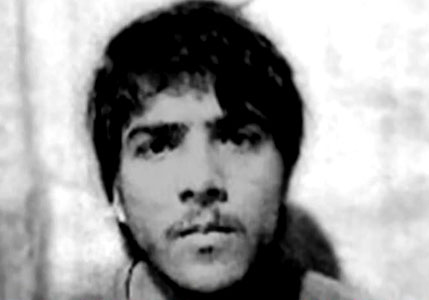
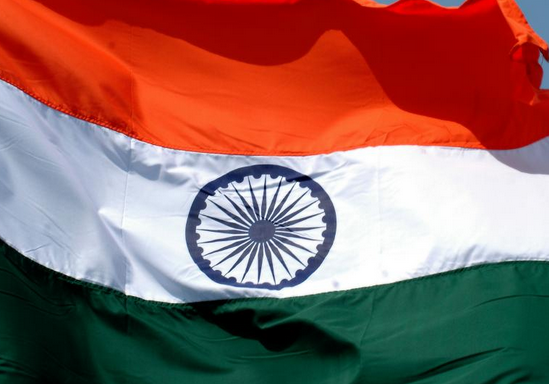
The ICJ condemned today the execution of Ajmal Amir Kasab and called on India to immediately reinstate a moratorium on the death penalty.
“This is the second execution in South Asia in less than a week, marking a resurgence of capital punishment in the region,” said Sam Zarifi, Asia Director for the ICJ.
The ICJ condemned Pakistan’s execution of soldier Muhammad Hussain on Wednesday 15 November 2012.
Ajmal Kasab was executed by hanging in the early hours on Wednesday morning amid great secrecy.
The execution comes just a day after India voted against a United Nations General Assembly (GA) draft resolution, adopted by the GA’s Third Committee, calling for a moratorium on the use of the death penalty.
Over one hundred United Nations member States supported the draft resolution, an increase from previous United Nations General Assembly Resolutions passed in 2007, 2008 and 2010. The resolution will be taken up by the GA in December.
“India is one of a dwindling number of States voting against the resolution and still retaining the death penalty,” Zarifi added. “The death penalty violates the right to life and the inherent dignity of the person.”
More than 150 of 192 United Nations member States have either abolished the death penalty or do not practice it.
“There is no doubt that Kasab’s crimes were heinous, causing immeasurable suffering, but putting him to death is a significant step backwards for India, ending its eight-year hiatus on executions,” Zarifi said.
CONTACT:
Sheila Varadan, ICJ Legal Advisor, South Asia Programme, t: +66 857200723; email: sheila.varadan(at)icj.org
Ajmal Kasab, a 25-year old Pakistani national, was sentenced to the death for his role in the Mumbai terrorist attack in 2008. The Supreme Court confirmed Ajmal Kasab’s death sentence on 29 August 2012, upholding the judgment of the Bombay High Court on 21 February 2011 and the sentence handed down by a lower court in May 2010.
On 18 September 2012, Kasab sent a four-line handwritten mercy plea to the President of India. The Maharashtra Home Ministry recommended rejecting the mercy plea on 24 September 2012 and Governor of Maharashtra, K Sankaranarayan, advised the same on 29 September 2012. The Union Government rejected the mercy plea on 23 October 2012. The President rejected the mercy plea in early November 2012.
On the tenth annual World Day against the Death Penalty, the ICJ urges the President of India to grant clemency to Mohammed Ajmal Amir Kasab.
“There is no doubt that Kasab’s crimes were heinous causing immeasurable suffering but execution is not the answer,” said Sam Zarifi, ICJ Asia Pacific Regional Director. “Putting him to death would be a significant step backwards for India. It would end the eight-year hiatus on executions and disregard the call in repeated UN General Assembly Resolutions that all States should observe an immediate moratorium on the death penalty with a view towards full abolition.”
October 10, 2012 is the World Day against the Death Penalty. The ICJ considers the death penalty to constitute a violation of the right to life and a form of cruel and inhuman punishment.
The ICJ calls on all countries to abolish the death penalty.
“The death penalty violates the inherent dignity of the person,” Zarifi added. “And as we have seen in India as well as all over the world, it is not possible to administer capital punishment without some degree of inconsistency, subjectivity and arbitrariness.”
More than 150 of 192 United Nations member states have either abolished the death penalty or do not practice it.
In South Asia, Nepal abolished the death penalty in its 1997 Constitution and Sri Lanka has not carried out an execution since 1976.
Kasab, a 25-year old Pakistani national, was sentenced to the death for his role in the Mumbai terrorist attack in 2008.
The Supreme Court confirmed Kasab’s death sentence on 29 August 2012, upholding the judgment of the Bombay High Court on 21 February 2011 and the sentence handed down by a lower court in May 2010. On 18 September 2012, Kasab sent a four-line handwritten mercy plea to the President of India.
The Maharashtra Home Ministry recommended rejecting the mercy plea on 24 September 2012 and Governor of Maharashtra, K Sankaranarayan, advised the same on 29 September 2012. The petition has now been forwarded to the Union Government.
In an interactive dialogue with representatives of its government, the ICJ called on India to accept recommendations to expedite the ratification of the UN Convention against Torture and its Optional Protocol. Watch the webcast.
The ICJ delivered its statement today during the adoption by the UN Human Rights Council of the Universal Periodic Review outcome document on India, during the course of the 21st regular session of the Council.
III. SITUATION OF HUMAN RIGHTS DEFENDERS F. Defenders working for the rights of marginalized people 109. The Special Rapporteur is particularly concerned at the plight of human rights defenders working for the rights of marginalized people, including Dalits, Adivasis...
🍪 We use cookies on our website to improve your experience. By clicking "Accept all", you consent to the use of all the cookies. If you'd like to control which cookies we use, please visit "Cookie settings". To find out more, read our privacy policy and cookie policy.
Functional
Always active
The technical storage or access is strictly necessary for the legitimate purpose of enabling the use of a specific service explicitly requested by the subscriber or user, or for the sole purpose of carrying out the transmission of a communication over an electronic communications network.
Preferences
The technical storage or access is necessary for the legitimate purpose of storing preferences that are not requested by the subscriber or user.
Statistics
The technical storage or access that is used exclusively for statistical purposes.The technical storage or access that is used exclusively for anonymous statistical purposes. Without a subpoena, voluntary compliance on the part of your Internet Service Provider, or additional records from a third party, information stored or retrieved for this purpose alone cannot usually be used to identify you.
Marketing
The technical storage or access is required to create user profiles to send advertising, or to track the user on a website or across several websites for similar marketing purposes.