Sep 25, 2017 | Events, News
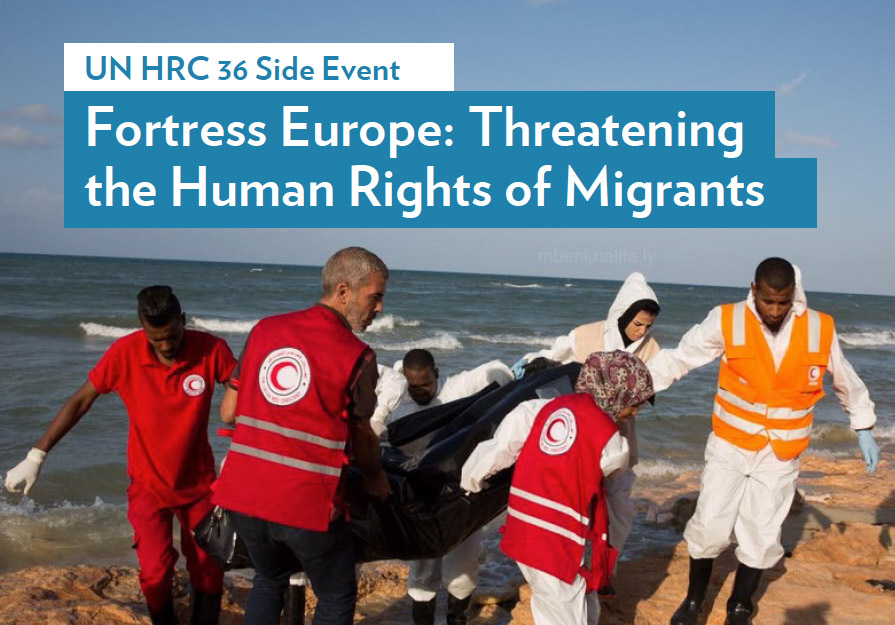
This side event at UN HRC 36 will take place on 26 September 2017, 11.00-12:30, Room XV, Palais des Nations, Geneva.
The side event, hosted by Lawyers for Justice in Libya and the Cairo Institute for Human Rights Studies, will discuss the role of European Union (EU) Member States in the migration crisis and how their policy on migration is threatening the human rights of migrants. The panel will discuss and make recommendations to EU Member States, Libya and the Human Rights Council to ensure accountability for human rights violations being committed against thousands of migrants.
Speakers:
Conor Kenny Doctors Without Borders
Elham Saudi Lawyers for Justice in Libya
Matteo De Bellis Amnesty International
Tareg Ben Ramadan Coalition of Libyan Human Rights Organisations
Chair:
Massimo Frigo International Commission of Jurists
Europe-Flyer side event-News-Event-2017-ENG (Flyer in PDF)
Jul 7, 2016 | News
Following reports that Saif al Islam Gadhafi has been released from prison in Libya, the ICJ today called for him to be promptly arrested and surrendered to the International Criminal Court (ICC).
Saif al Islam Gadhafi was convicted by the Tripoli Criminal Court in July 2015 and sentenced, along with eight other former officials of the Moammar Gadhafi regime, to the death penalty.
At the time, the ICJ expressed its concern that the trial had not been fair, expressed its opposition to the death penalty, and called on the Libyan authorities to surrender Saif al Islam Gadhafi to the ICC.
In 2011, the ICC issued an arrest warrant for Gadhafi, who faces two counts of Crimes against Humanity including murder and persecution of civilians, allegedly conducted as part of an orchestrated campaign against demonstrators during the uprising in Libya in 2011.
Gadhafi was reportedly released from a prison in Zintan in April 2016, following instructions from the Minister of Justice to the city’s chief prosecutor. The instructions were reportedly based on a general amnesty law that was promulgated by the Libyan House of Representatives in August 2015.[1]
“Granting amnesty for crimes such as those for which Saif al Islam Gadhafi was allegedly responsible is totally incompatible with the rule of law, the right of victims to justice, and Libya’s international human rights obligations”, said Said Benarbia, Director of the MENA programme at the International Commission of Jurists.
“Instead of shielding him from accountability, the Libyan authorities should ensure that all those responsible for past and ongoing gross violations of international human rights law and serious violations of international humanitarian law are brought to justice in fair and effective criminal trials. A first step in this direction would be for the Libyan authorities to arrest Saif al Islam Gadhafi and surrender him to the ICC as a matter of urgency.”
The ICJ believes that impunity for gross human rights violations and war crimes, including impunity resulting from amnesties, is not conducive to peace, political stability and national reconciliation in Libya.
Indeed, such impunity may be perceived by those who continue to systematically violate rights and freedoms as a signal that they may never be criminally held to account.
At the same time, the ICJ absolutely opposes the death penalty, which it considers inherently to violate the right to life and the right not to be subjected to cruel, inhuman or degrading punishment.
Gadhafi would not face the death penalty in any ICC trial.
Saif al Islam Gadhafi’s lawyer has reportedly indicated that he will argue to the ICC that it should drop its proceedings, on the basis of article 20 of the Statute of the ICC, which addresses the circumstances in which a person who has already been tried for certain conduct by another court, may subsequently be tried by the ICC.
The ICJ stresses that any hearing to consider such arguments should not in any way suspend Libya’s obligation immediately to implement the ICC arrest warrant and to surrender Saif al Islam Gadhafi to the ICC.
“Libya should comply with its obligations under international law and dismantle the structural impunity that continues to prevail in the country, including by putting an end to politicized judicial proceedings and ensuring that prosecutors carry out their functions independently, impartially, and in defence of human rights,” added Benarbia.
[1] Law No. 6 of 2015
Contact
Doireann Ansbro, Associate Legal Adviser, ICJ Middle East and North Africa Programme, t: +216 71 841 701, e: doireann.ansbro(a)icj.org
Libya-Saif al Islam Gadhafi-News-Press Releases-2016-ARA (full press release in Arabic, PDF)
Mar 23, 2016 | Advocacy, Non-legal submissions
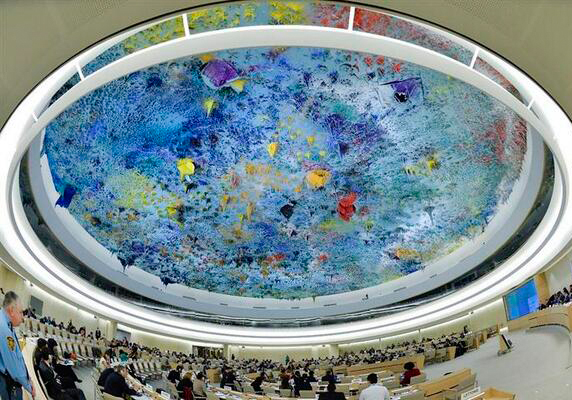
The ICJ today joined other NGOs in an oral statement to the UN Human Rights Council on the findings of the report of the OHCHR investigation mission on Libya.
It includes that violations of international law taking place throughout Libya “may amount to war crimes and other international crimes under international law.”
The statement continued as follows:
All sides to the conflict in Libya continue to perpetrate grave human rights violations and abuses. As highlighted by the UN High Commissioner for Human Rights, these violations continue to take place with “complete impunity” amid the collapse of the domestic justice system.
Unless genuine accountability is provided for these ongoing crimes the cycle of violence in Libya will continue, and the peace process will likely become no more than a well-intentioned piece of paper.
In this context, this Council has a duty to remain seized of the human rights situation in Libya, ensure continued monitoring of the situation and act to strengthen international accountability for crimes committed in Libya if the national system remains incapable of fulfilling this role. We are deeply concerned that the current resolution before this Council falls short of that standard.
Additionally, all UN member states should ensure that the International Criminal Court has the capacity to fulfill the mandate provided to it by the Security Council and begin fully fledged investigations into past and ongoing crimes committed in Libya.
As highlighted by civil society in a letter to this Council: “It is critical that all parties to the conflict are put on notice that their actions are being monitored and that accountability for serious crimes is a real prospect rather than an empty threat. Failure to do so will likely embolden those committing violations of international human rights and humanitarian law and will reinforce the endless cycle of impunity” in Libya.
The statement was on behalf of Cairo Institute for Human Rights Studies, CIVICUS, Human Rights Watch, International Commission of Jurists, FIDH, and OMCT.
Dec 17, 2015 | News, Publications, Reports
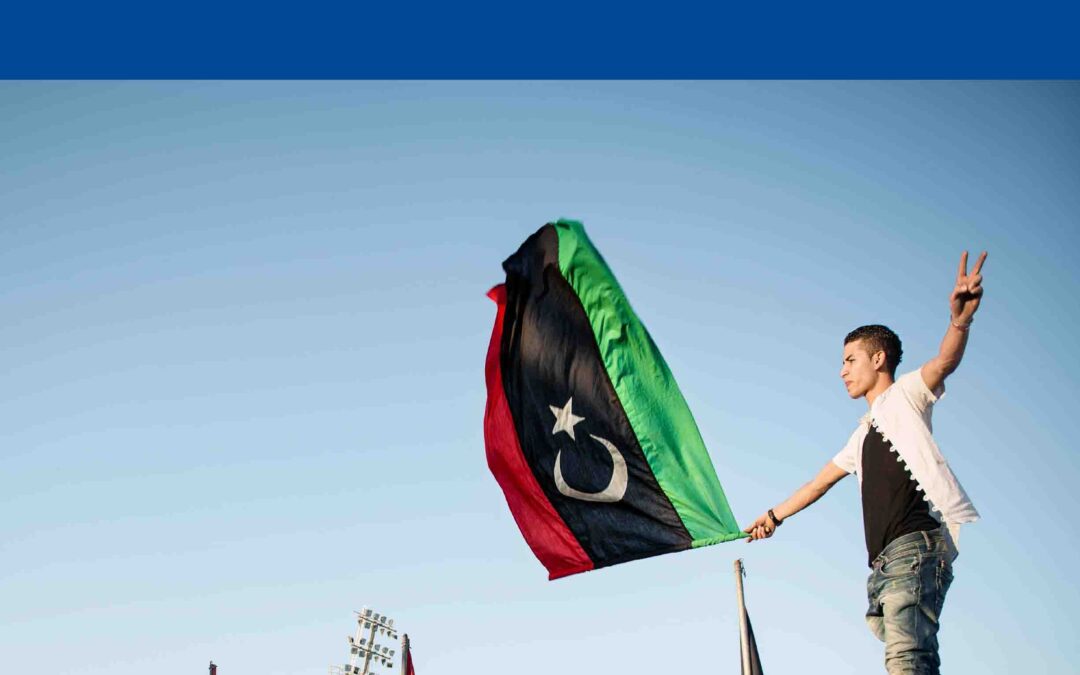
With the signing of the political agreement on a national unity government today, the next step in Libya’s transition will be to ensure that its new Constitution fully conforms to international rule of law and human rights standards, the ICJ said today.
The statement came as the ICJ released its new report The Draft Libyan Constitution: Procedural Deficiencies, Substantive Flaws.
In the report, the ICJ calls on the Libyan Constitution Drafting Assembly (CDA) to substantially revise the Draft Constitution published in October with a view to ensuring its full compliance with Libya’s obligations under international human rights law and international standards.
Libyan authorities, including the CDA, should also put in place effective mechanisms to ensure that the drafting process is inclusive, participatory, and fully reflects the views of a broad range of stakeholders, including civil society and minority groups.
The report concludes that the Draft Constitution, in many key respects, does not conform to Libya’s obligations under international human rights law or to international rule of law standards.
“The new Constitution provides a crucial opportunity to depart from decades of authoritarianism under Moammar Ghadafi’s regime. It must therefore provide for a strong foundation upon which the rule of law, including the separation of powers, the independence of the judiciary and civilian oversight over military and armed groups, can be established and upheld,” said Said Benarbia, Director of the ICJ MENA programme.
The Draft Constitution should also be amended to provide for a comprehensive set of human rights and protections that fully accord with international human rights law, including provisions relating to non-discrimination, the right to life, the right to liberty and security, the prohibition on torture and other cruel, inhuman or degrading treatment or punishment, protections for minorities, the right to freedom of thought, conscience and religion, fair trial rights, and a range of economic, social and cultural rights.
“The Libyan Constitution must at a minimum conform to the definition and scope of the rights contained within the human rights treaties to which Libya is a state party. Any scope for limitation of rights must conform to the criteria for such limitations under international law and, in particular, only as are provided for by law, are proportionate, and are demonstrably necessary in a free and democratic society,” Benarbia added.
Contact:
Doireann Ansbro, Associate Legal Advisor of the ICJ Middle East and North Africa Programme, tel: +216 71 841 701, email: doireann.ansbro(a)icj.org
Libya-Draft Constitution Flaws Deficiencies-Publications-Reports-2015-ENG (full report in PDF, English)
Libya-Constitution Flaws Report-News-Press releases-2015-ARA (full press release in Arabic, PDF)
Libya-Draft Constitution Flaws Deficiencies-Publications-Reports-2015-ARA (full report in PDF, Arabic)
Jul 28, 2015 | News
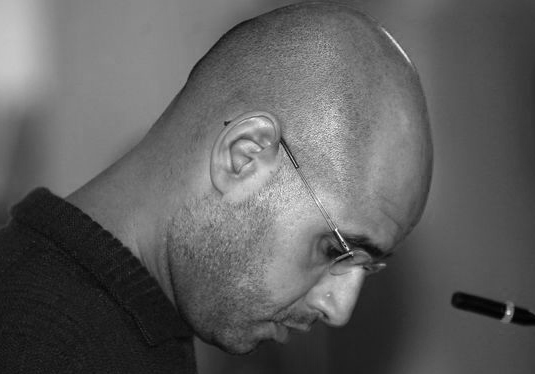
The ICJ today expressed its serious concerns about the trial, conviction and sentencing to death of Saif al Islam Gadhafi, Abdallah al Senussi, as well as seven officials of the Gadhafi regime by the Tripoli Criminal Court.
The ICJ is deeply concerned that the trial of the officials of the Gadhafi regime failed to scrupulously respect the guarantees of fair trial as required by Article 14 of the International Covenant on Civil and Political Rights, to which Libya is a state party.
The imposition of the death penalty following such an unfair trial violates the right to life.
The ICJ opposes the death penalty in all circumstances as a violation of the right to life and the right not to be subjected to cruel, inhuman or degrading punishment.
“Libyan authorities must comply with their obligations under international law, refrain from implementing the death sentences against Saif al Islam and 8 former Libyan officials, and ensure that all defendants are retried before an independent and impartial tribunal and in full compliance with international fair trial standards,” said Said Benarbia, Director of the MENA programme at the ICJ.
“The trial is a lost opportunity to make a break from decades of unfair trials in Libya. It is also a missed opportunity to establish the truth about the legacy of alleged gross human rights violations committed during the 40-year reign of Moammar Gadhafi, including summary executions, enforced disappearances, torture and other ill-treatment, and arbitrary detention,” Benarbia added.
Fair trial violations included severe limitations on the defendants’ rights to access a lawyer, to adequate time and facilities to prepare a defence, and to be represented and communicate with a lawyer of their own choosing, the ICJ says.
23 other defendants were sentenced to prison terms ranging from life imprisonment to 5 years.
The charges against the officials included: “murdering and bombarding civilians during the 2011 revolution,” “inciting, participating and assisting in the murder of Libyans,” “recruiting mercenaries and establishing brigades and then providing them with weapons, uniforms and money to fight the protesters.”
Some defendants, including Saif al Islam Gadhafi, who continues to be held in militia custody in Zintan, were not present during the trial, though were connected by video link at times.
The ICJ is also concerned that the defendants’ rights to appeal are limited in numerous ways.
Convictions by the Tripoli Criminal Court will be reviewed before the cassation chamber of the Supreme Court.
The chamber only examines the proper application of the law by the lower courts and does not review the merits of the case.
In accordance with Libya’s obligations under international law, including the ICCPR, the defendants have the right to have their convictions and sentences reviewed by an independent higher tribunal.
Such review must concern both the legal and material aspects of the defendants’ convictions and sentences.
The ICJ is concerned that political and security instability in Libya continues to undermine the ability of the judiciary to function and administer justice independently and impartially.
In reviewing the situation in the context of the Saif al Islam Gadhafi case, the International Criminal Court (ICC), expressed concern about the inability of the judicial and governmental authorities to obtain testimony or to provide witness protection.
It found that Libya was unable to conduct a fair prosecution and trial of Gadhafi.
The ICC issued a warrant for his arrest to answer allegation of crimes against humanity.
The ICJ calls on the Libyan authorities to annul the unfair proceedings; to fully cooperate with, and surrender Saif al Islam Gadhafi to the ICC; and to ensure the fair re-trial of the other accused.
Contact:
Doireann Ansbro, Associate Legal Adviser, ICJ Middle East and North Africa Programme, t: +216 71 841 701, e: doireann.ansbro(a)icj.org
Libya-Saif Gadhafi sentence-News-Press releases-2015-ARA (full text of press releases in Arabic, PDF)
Photo: Ahmed Jadallah / Reuters