Jul 17, 2020 | Advocacy, Non-legal submissions
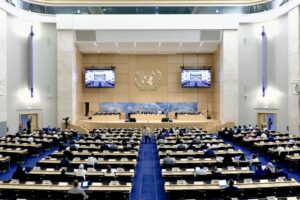
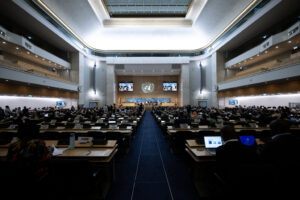
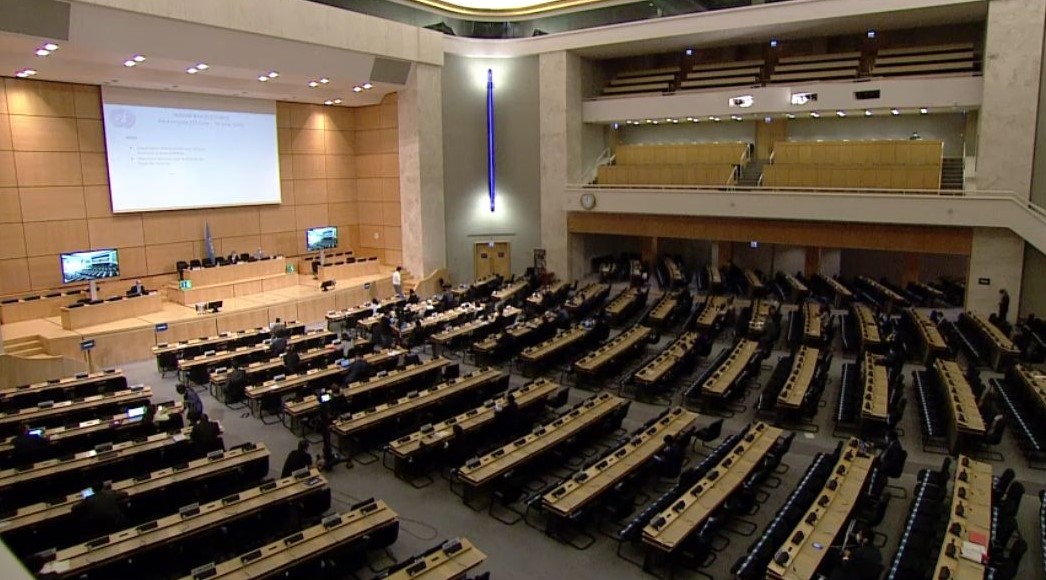
The ICJ today joined other NGOs in highlighting the achievements and omissions of the 44th regular session of the UN Human Rights Council in Geneva, 30 June – 17 July 2020.
The following statement was delivered, at the closing of the session, by the International Service for Human Rights (ISHR), on behalf of the group of leading human rights NGOs:
“Madame President,
The 44th session of the UN Human Rights Council began with China’s imposition of legislation severely undermining rights and freedoms in Hong Kong. Within days, there were reports of hundreds of arrests, some for crimes that didn’t even exist previously. We welcome efforts this session by a growing number of States to collectively address China’s sweeping rights abuses, but more is needed. An unprecedented 50 Special Procedures recently expressed concerns at China’s mass violations in Xinjiang, Hong Kong and Tibet, suppression of information in the context of Covid-19, and targeting of human rights defenders across the country. The Council should heed the call of these UN experts to hold a Special Session and create a mechanism to monitor and document rights violations in the country. No state is beyond international scrutiny. China’s turn has come.
The 44th session also marked an important opportunity to enable those affected directly by human rights violations to speak to the Council through NGO video statements.
Amnesty’s Laith Abu Zeyad addressed the Council remotely from the occupied West Bank where he has been trapped by a punitive travel ban imposed by Israel since October 2019. We call on the Israeli authorities to end all punitive or arbitrary travel bans.
During the interactive dialogue with the Commission of Inquiry on Syria, victims’ associations and families of victims highlighted the human rights violations occurring in detention centers in Syria. We welcome the efforts by some States to underline their demands and welcome the adoption of the Syria resolution on detainees and urge the Syrian government to take all feasible measures to release detainees and provide truth to the families, noting the important pressure needed by Member States to further call for accountability measures for crimes committed in Syria.
Collette Flanagan, Founder of Mothers against Police Brutality, also delivered a powerful video statement at the Council explaining the reality of racist policing in the United States of America. We fully support victims’ families’ appeals to the Council for accountability.
We hope that the High Commissioner’s report on systemic racism, police violence and government responses to antiracism peaceful protests will be the first step in a series of meaningful international accountability measures to fully and independently investigate police killings, to protect and facilitate Black Lives Matter and other protests, and to provide effective remedy and compensation to victims and their families in the United States of America and around the world.
We appreciate the efforts made by the Council Presidency and OHCHR to overcome the challenges of resuming the Council’s work while taking seriously health risks associated with COVID-19, including by increasing remote and online participation. We recommend that remote civil society participation continue and be strengthened for all future sessions of the Council.
Despite these efforts, delays in finalising the session dates and modalities, and subsequent changes in the programme of work, reduced the time CSOs had to prepare and engage meaningfully. This has a disproportionate impact on CSOs not based in Geneva, those based in different time zones and those with less capacity to monitor the live proceedings. Other barriers to civil society participation this session included difficulties to meet the strict technical requirements for uploading video statements, to access resolution drafts and follow informal negotiations remotely, especially from other time zones, as well as a decrease in the overall number of speaking slots available for NGO statements due to the cancellation of general debates this session as an ‘efficiency measure.’
We welcome the joint statement led by the core group on civil society space and endorsed by cross regional States and civil society, which calls on the High Commissioner to ensure that the essential role of civil society, and States’ efforts to protect and promote civil society space, are reflected in the report on impact of the COVID-19 pandemic presented to the 46th Session of the HRC. We urge all States at this Council to recognise and protect the key role that those who defend human rights play.
These last two years have seen unlawful use of force perpetrated by law enforcement against peaceful protesters, protest monitors, journalists worldwide, from the United States of America to Hong Kong, to Chile to France , Kenya to Iraq to Algeria, to India to Lebanon with impunity.
We therefore welcome that the resolution “the promotion and protection of human rights in the context of peaceful protests” was adopted by consensus, and that the Council stood strongly against some proposed amendments which would have weakened it. We also welcome the inclusion in the resolution of a panel during the 48th session to discuss such events and how States can strengthen protections. We urge States to ensure full accountability for such human rights violations as an essential element of the protection of human rights in the context of protests. The current context has accelerated the urgency of protecting online assembly, and we welcome that the resolution reaffirms that peaceful assembly rights guaranteed offline are also guaranteed online. In particular, we also commend the resolution for calling on States to refrain from internet shutdowns and website blocking during protests, while incorporating language on the effects of new and emerging technologies, particularly tools such as facial recognition, international mobile subscriber identity-catchers (“stingrays”) and closed-circuit television.
We welcome that the resolution on “freedom of opinion and expression” contains positive language including on obligations surrounding the right to information, emphasising the importance of measures for encryption and anonymity, and strongly condemning the use of internet shutdowns.. Following the High Commissioner’s statement raising alarm at the abuse of ‘false news’ laws to crackdown on free expression during the COVID-19 pandemic, we also welcome that the resolution stresses that responses to the spread of disinformation and misinformation must be grounded in international human rights law, including the principles of lawfulness, legitimacy, necessity and proportionality. At the same time, we are concerned by the last minute addition of language which focuses on restrictions to freedom of expression, detracting from the purpose of the resolution to promote and protect the right. As we look to the future, it is important that the core group builds on commitments contained in the resolution and elaborate on pressing freedom of expression concerns of the day, particularly for the digital age, such as the issue of surveillance or internet intermediary liability, while refocusing elements of the text.
The current context has not only accelerated the urgency of protecting assembly and access to information, but also the global recognition of the right to a safe, clean, healthy and sustainable environment. We welcome the timely discussions on ”realizing children’s right to a healthy environment” and the concrete suggestions for action from panelists, States, and civil society. The COVID-19 crisis, brought about by animal-to-human viral transmission, has clarified the interlinkages between the health of the planet and the health of all people. We therefore support the UN Secretary General’s call to action on human rights, as well as the High Commissioner’s statement advocating for the global recognition of the human right to a safe, clean, healthy and sustainable environment – already widely reflected at national and regional levels – and ask that the Council adopts a resolution in that sense. We also support the calls made by the Marshall Islands, Climate Vulnerable Forum, and other States of the Pacific particularly affected and threatened by climate change. We now urge the Council to strengthen its role in tackling the climate crisis and its adverse impacts on the realization of human rights by establishing a Special Rapporteur on Human Rights and Climate Change, which will help address the urgency of the situation and amplify the voices of affected communities.
The COVID crisis has also exacerbated discrimination against women and girls. We welcome the adoption by the Council of a strong resolution on multiple and intersecting forms of discrimination against women and girls, which are exacerbated in times of a global pandemic. The text, inter alia, reaffirms the rights to sexual and reproductive health and to bodily autonomy, and emphasizes legal obligations of States to review their legislative frameworks through an intersectional approach. We regret that such a timely topic has been questioned by certain States and that several amendments were put forward on previously agreed language.
The Council discussed several country-specific situations, and renewed the mandates in some situations.
We welcome the renewal of the Special Rapporteur’s mandate and ongoing scrutiny on Belarus. The unprecedented crackdown on human rights defenders, journalists, bloggers and members of the political opposition in recent weeks ahead of the Presidential election in August provide a clear justification for the continued focus, and the need to ensure accountability for Belarus’ actions. With concerns that the violations may increase further over the next few weeks, it is essential that the Council members and observers maintain scrutiny and pressure even after the session has finished.
We welcome the extension of the mandate of the Special Rapporteur on Eritrea. We urge the government to engage, in line with its Council membership obligations, as the Special Rapporteur’s ‘benchmarks for progress’ form a road map for human rights reform in the country.
We welcome the High Commissioner report on the human rights situation in the Philippines which concluded, among other things, that the ongoing killings appear to be widespread and systematic and that “the practical obstacles to accessing justice in the country are almost insurmountable.” We regret that even during this Council session, President Duterte signed an Anti Terrorism Law with broad and vague definition of terrorism and terrorists and other problematic provisions for human rights and rule of law, which we fear will be used to stifle and curtail the rights to freedom of opinion and expression, to freedom of peaceful assembly and of association. Also during this session, in a further attack on press freedom, Philippine Congress rejected the franchise renewal of independent media network ABS-CBN, while prominent journalist Maria Ressa and her news website Rappler continue to face court proceedings and attacks from President Duterte after Ressa’s cyber libel conviction in mid-June. We support the call from a group of Special Procedures to the Council to establish an independent, impartial investigation into human rights violations in the Philippines and urge the Council to establish it at the next session.
The two reports presented to the Council on Venezuela this session further document how lack of judicial independence and other factors perpetuate impunity and prevent access to justice for a wide range of violations of civil, cultural, economic, political, and social rights in the country. We also urge the Council to stand ready to extend, enhance and expand the mandate of the Independent International Fact-Finding Mission when it reports in September.
We also welcome the report of the Special rapporteur on the human rights situation in the Palestinian Territory occupied since 1967 and reiterate his call for States to ensure Israel puts an end to all forms of collective punishment. We also reiterate his call to ensure that the UN database of businesses involved with Israeli settlements becomes a living tool, through sufficient resourcing and annual updating.
We regret, however, that several States have escaped collective scrutiny this session.
We reiterate the UN Special Rapporteur Agnes Callamard’s call to pressure Saudi Arabia to release prisoners of conscience and women human rights defenders and call on all States to sustain the Council’s scrutiny over the situation at the September session.
Despite calls by the High Commissioner for prisoners’ release, Egypt has arrested defenders, journalists, doctors and medical workers for criticizing the government’s COVID-19 response. We recall that all of the defenders that the Special Procedures and the High Commissioner called for their release since September 2019 are still in pre-trial detention. The Supreme State Security Prosecution and ‘Terrorism Circuit courts’ in Egypt, are enabling pre-trial detention as a form of punishment including against human rights defenders and journalists and political opponents, such as Ibrahim Metwally, Mohamed El-Baqer and Esraa Abdel Fattah, Ramy Kamel, Alaa Abdel-Fattah, Patrick Zaky, Ramy Shaat, Eman Al-Helw, Solafa Magdy and Hossam El-Sayed. Once the terrorism circuit courts resumed after they were suspended due to COVID-19, they renewed their detention retroactively without their presence in court. It’s high time the Council holds Egypt accountable.
As highlighted in a joint statement of Special Procedures, we call on the Indian authorities to immediately release HRDs, who include students, activists and protest leaders, arrested for protesting against changes to India’s citizenship laws. Also eleven prominent HRDs continue to be imprisoned under false charges in the Bhima Koregaon case. These activists face unfounded terror charges under draconian laws such as sedition and under the Unlawful Activities (Prevention) Act. While we welcome that Safoora Zargar was granted bail on humanitarian grounds, the others remain at high risk during a COVID-19 pandemic in prisons with not only inadequate sanitary conditions but also limited to no access to legal counsel and family members. A number of activists have tested positive in prison, including Akhil Gogoi and 80-year-old activist Varavara Rao amid a larger wave of infections that have affected many more prisoners across the country. Such charges against protestors, who were exercising their rights to freedom of peaceful assembly must be dropped. We call on this Council to strengthen their demands to the government of India for accountability over the excessive use of force by the police and other State authorities against the demonstrators.
In Algeria, between 30 March and 16 April 2020, the Special rapporteur on freedom of opinion and expression, freedom of peaceful assembly and of association, human rights defenders, issued three urgent appeals in relation to cases involving arbitrary and violent arrests, unfair trials and reprisals against human rights defenders and peaceful activists Olaya Saadi, Karim Tabbou and Slimane Hamitouche. Yet, the Council has been silent with no mention of the crackdown on Algerian civil society, including journalists.
To conclude on a positive note, we welcome the progress in the establishment of the OHCHR country office in Sudan, and call on the international community to continue to provide support where needed to the transitional authorities. While also welcoming their latest reform announcements, we urge the transitional authorities to speed up the transitional process, including reforms within the judiciary and security sectors, in order to answer the renewed calls from protesters for the enjoyment of “freedom, peace and justice” of all in Sudan. We call on the Council to ensure continued monitoring and reporting on Sudan.”
Endorsements:
- International Service for Human Rights
- DefendDefenders (East and Horn of Africa Human Rights Defenders Project)
- Center for Reproductive Rights
- Franciscans International
- The Syrian Legal Development Programme
- Egyptian Front for Human Rights (EFHR)
- CIVICUS: World Alliance for Citizen Participation
- International Movement Against All Forms of Discrimination and Racism (IMADR)
- International Lesbian and Gay Association (ILGA World)
- Centro de Estudios Legales y Sociales (CELS)
- Asian Forum for Human Rights and Development (FORUM-ASIA)
- Commonwealth Human Rights Initiative (CHRI)
- ARTICLE 19
- International Federation for Human Rights (FIDH)
- Cairo Institute for Human Rights Studies (CIHRS)
- IFEX
- Association for Progressive Communications
- International Commission of Jurists (ICJ)
- Amnesty International
(an abbreviated version of the statement was read aloud at the Council session, due to the limited time available)
Jul 9, 2020 | Advocacy, Non-legal submissions
The ICJ filed a submission to the Human Rights Council’s Working Group on the Universal Periodic Review in advance of its review of Lebanon’s human rights record between January and February 2021.
Information provided in the submission was based on a number of recent ICJ publications, including on the independence of the judiciary; military courts; gender-based violence; and a forthcoming publication on the human rights of refugees and migrants in Lebanon.
In the submission, the ICJ drew the attention of the Working Group to the following concerns with respect to Lebanon:
- The independence of the judiciary and the use and jurisdiction of military courts;
- The obstacles that continue to impede women’s and girls’ access to justice for sexual and gender-based violence (SGBV); and
- The inadequate framework and practices undermining migrants’ and refugees’ rights.
The ICJ called on the Working Group and Human Rights Council to urge the Lebanese authorities to take the following actions:
With regard to the independence of the judiciary and the use and jurisdiction of military courts:
- End executive control and undue influence over the judiciary, including by divesting the Minister of Justice of any role in the selection, appointment, promotion, transfer, secondment or any other aspects of the management of the career of judges;
- Ensure that the High Judicial Council is independent from the executive, including by amending its composition to ensure that the majority of members are judges elected by their peers, and that it is pluralistic, gender and minority representative, competent to decide on all issues relating to the career of judges, and empowered to uphold the independence of the judiciary;
- Ensure that military courts have no jurisdiction to try civilians, and that such jurisdiction is restricted to military personnel over alleged breaches of military discipline or ordinary crimes not involving the commission of human rights violations, to the exclusion of human rights violations and crimes under international law.
With regard to women’s access to justice for SGBV:
- Repeal all discriminatory provisions against women, particularly those in the Criminal Code, the Nationality Code and Personal Status Laws;
- Adopt a unified civil Personal Status Law for all religious groups, where all customs discriminating against women and girls are overridden in accordance with article 2(f) of CEDAW; and ensure that issues related to divorce, inheritance and custody are adjudicated before ordinary courts consistent with international standards;
- Amend Law No. 293/2014 on the protection of women and other family members from domestic violence (Law No. 293/14) and the Criminal Code to ensure that it criminalizes all forms of SGBV, including by properly defining rape as a type of sexual assault characterized by a physical invasion of a sexual nature without consent or under coercive circumstances, and ensure that marital and all other acts of rape be criminalized; and, to this end, abolish provisions of Law No. 293/14 providing for a religion-based claim to marital rights;
- Amend the Criminal Code, the Code of Criminal Procedure and Law No. 293/14 to include gender-sensitive investigations and evidence-gathering procedures in order to enable women to report violence against them, and take effective steps to address the social and practical factors that continue to impede women’s access to justice, such as gender-based stereotypes and prejudices that operate in society and in the justice system;
- Remove obstacles related to gender stereotypes, economic and social realities that continue to impede access to justice in SGBV cases, including by ensuring that where law enforcement officers fail to ensure an effective investigation into an incident of SGBV, their omissions be actionable as a breach of their duties and subject to disciplinary measures as appropriate;
- Provide routine capacity building training to justice sector actors on the application of international human rights law, including CEDAW and related jurisprudence.
With regard to the treatment of refugees and migrants:
- Become a party to the 1951 UN Refugee Convention and its 1967 Protocol, and pass legislation to adequately protect the human rights of refugees, asylum seekers, stateless people and migrants, in compliance with Lebanon’s international obligations;
- Amend the 1962 Law on the Entry, Stay in and Exit from Lebanon (Law 1962) to ensure full compliance with these obligations, and that people entitled to international protection, chiefly refugees, asylum seekers, and stateless individuals, are not penalized, automatically arrested or deported for their “illegal” entry and stay in the country;
- Ensure that no individual is deprived of their liberty solely on the grounds of their immigration status, and, to this end, amend articles 32 and 36 of Law 1962; until then, provide automatic, periodic judicial review of the lawfulness, necessity and proportionality of any immigration-related detention;
- Strictly comply with Lebanon’s non-refoulement obligations, including by ensuring that no individual is transferred to a country where they face a real risk of persecution or other forms of serious harm; that nobody is forcibly returned without an individualized, fair and effective procedure guaranteeing due process; and by establishing a moratorium on all removals to Syria.
Lebanon-UPR Submission-Advocacy-Non Legal submission-2020-ENG (full submission, in PDF)
Jun 23, 2020 | News
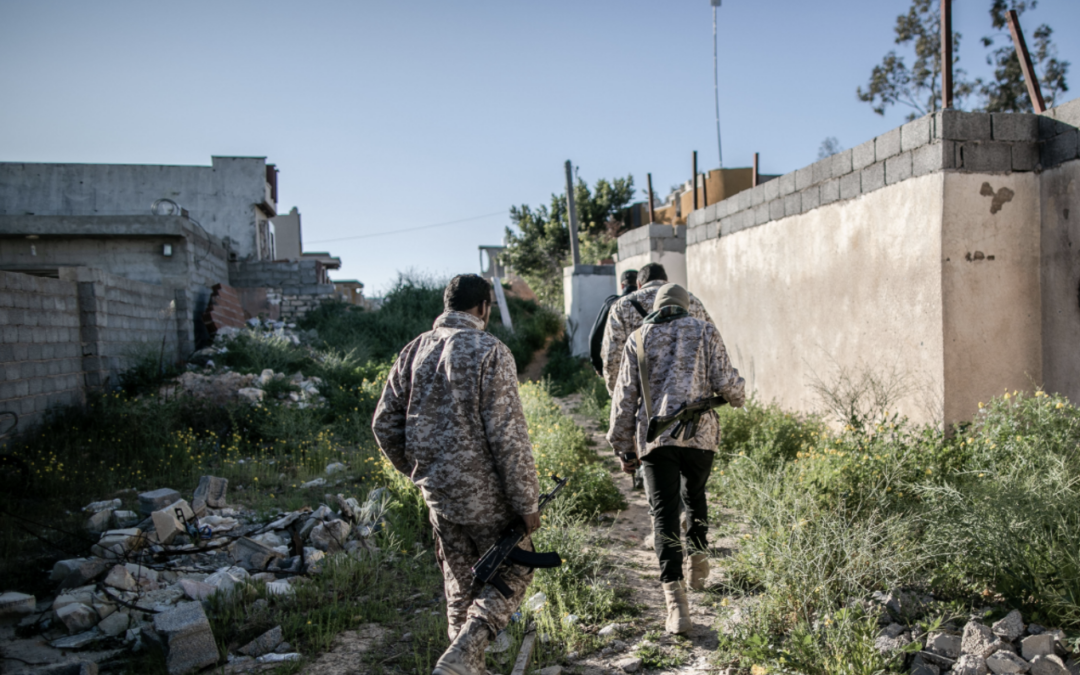
The ICJ welcomes the establishment of a Fact-Finding Mission (FFM) for Libya by the UN Human Rights Council (HRC) at its 43rd session yesterday.
The resolution, titled “Technical assistance and capacity-building to improve human rights in Libya,” mandates the FFM to investigate and preserve evidence of violations of international human rights law and international humanitarian law committed by all parties in Libya since the beginning of 2016, with a view to ensuring that perpetrators be held to account.
“This is a long overdue step in the pursuit of accountability in Libya,” said Said Benarbia, the ICJ’s MENA Programme Director.
“While parties to the conflict have escalated hostilities in recent years and Libyans have been increasingly subject to egregious violations of their rights, States have continued to prioritize politics over justice. The establishment of the FFM is a sign that international actors finally recognize accountability is necessary to end the scourge of violence in the country.”
The FFM is required to submit its written report to the HRC at the 46th session in February-March 2021, giving the FFM only nine months to carry out its work despite the ongoing imposition of COVID-19 measures that will impact its operations.
Given the FFM’s short operational period, the UN High Commissioner for Human Rights will have to move rapidly to appoint FFM experts and staff, allocate adequate resources and dispatch the mission. Staff appointed to the FFM should include experts in the investigation of sexual and gender-based violence crimes and the collection of evidence to a criminal standard.
“It’s imperative that the High Commissioner move quickly to dispatch this mission if it is to have any prospect of examining the full range of violations and abuses being committed across Libya,” said Kate Vigneswaran, the ICJ’s MENA Programme Senior Legal Adviser.
“The OHCHR should ensure the FFM has the full complement of skills and expertise to most effectively investigate crimes being committed in Libya, particularly the widespread sexual violence being perpetrated on women, girls, men and boys.”
The Government of National Accord, the Libyan Arab Armed Forces and all other parties to the conflict should fully cooperate with the FFM, including by granting access to the territories and population over which they have control, where possible in the context of COVID-19.
Other States, in particular those supporting Libyan actors in the ongoing conflict, should also provide full cooperation.
“The cooperation of both national and international actors is necessary for the FFM to engage with victims and preserve evidence, key components of its mandate,” Kate Vigneswaran added.
“While other international investigative mechanisms have shown it’s possible to carry out effective investigations without access to the affected territory, if Libyan actors are truly committed to the populations they assert they serve, they should be facilitating access to all forms of justice, whether national or international.”
The FFM will complement the work of the International Criminal Court in Libya, which has outstanding arrest warrants against Saif Al-Islam Gaddafi, Al-Tuhamy Mohamed Khaled and Mahmoud Mustafa Busayf Al-Werfalli.
The evidence preserved by the FFM may be used by the ICC, as well as States exercising universal jurisdiction, in their investigations and prosecutions.
Contact
Said Benarbia, Director of the ICJ Middle East and North Africa Programme, t: +41 22 979 3817; e: said.benarbia(a)icj.org
Kate Vigneswaran, ICJ Senior Legal Adviser, t: +31 62 489 4664, e: kate.vigneswaran(a)icj.org, twitter: @KateVigneswaran
Background
Violations and abuses of international law, including unlawful killings and attacks on civilian objects, have continued unabated in the last few months. Most recently, on 11 June 2020, the UN Support Mission to Libya reported the discovery of at least eight mass graves, mainly in Tarhuna, in which the bodies of women and children were found. Reports further indicate that the Libyan Arab Armed Forces (LAAF), and their foreign allies, have laid anti-personnel landmines and other booby-traps in buildings as they withdrew from Tripoli, leading to causalities including among civilians returning to their homes after long periods of displacement. Reports of incidents involving “retributive crimes”, including the parading of corpses and looting of perceived opponents’ houses and public property, by GNA-affiliated armed groups have also surfaced.
The ICJ has repeatedly called on States to support the establishment of an international investigative mechanism for Libya, including in the interactive dialogue on the oral update by the High Commissioner for Human Rights on the Situation in Libya.
The draft of the resolution adopted yesterday was numbered A/HRC/43/L.40. The official adopted version will be published by the UN in the coming weeks.
Jun 18, 2020 | Advocacy, Non-legal submissions
At the UN Human Rights Council, the ICJ today welcomed a pending resolution that would create an international Fact-Finding Mission on Libya.
The statement read as follows:
“The International Commission of Jurists welcomes the oral update by the High Commissioner for Human Rights on the situation in Libya.
The ICJ is seriously concerned by the escalation of conflict in Libya and the increasing number of violations and abuses of international law including unlawful killings and attacks on civilian objects committed since this session was suspended in March. Just last week, at least eight mass graves were found, mainly in Tarhuna, in which the bodies of women and children were found.
The ICJ welcomes the High Commissioner’s recommendation that the Human Rights Council establish an international investigative body and calls on the Council to adopt the resolution tabled by Libya establishing a Fact-Finding Mission to investigate and preserve evidence of violations of international human rights law and international humanitarian law committed by all parties in Libya.[1] The ICJ calls on States to ensure the Fact-Finding Mission has at least one full year to complete its work.
As the Berlin Conference conclusions stressed,[2] accountability for gross human rights violations must be a key component of the political process in Libya. States must increase efforts to guarantee accountability remains front and centre in all negotiations on the future of Libya and provide full support including cooperation and resources to the Fact-Finding Mission for Libya once established.”
[1] A/HRC/43/L.40.
[2] https://www.bundesregierung.de/breg-de/aktuelles/the-berlin-conference-on-libya-1713868.
Jun 15, 2020 | News
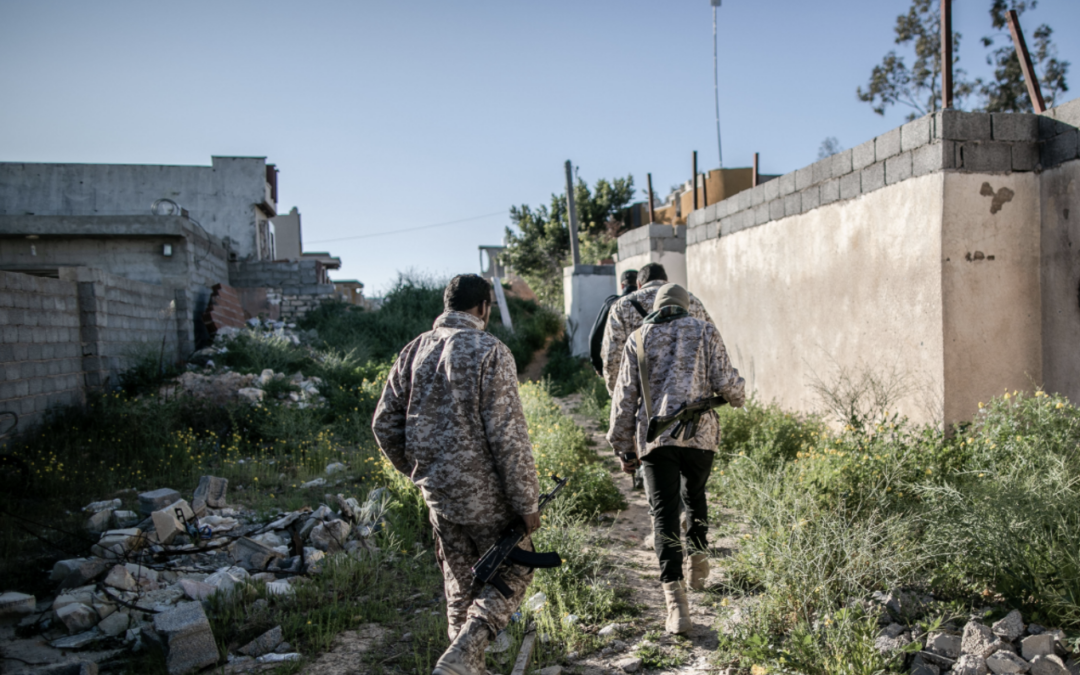
Member States convening today for the resumption of the 43rd session of the UN Human Rights Council should support the establishment of an international investigative mechanism to document and preserve evidence of violations of international human rights law and international humanitarian law (IHL) committed in Libya, said the ICJ and Lawyers for Justice in Libya.
The escalation in armed conflict in recent months and ongoing impunity for an increasing number of violations and abuses being committed in Libya lend particular urgency to the establishment of a mechanism for a period of at least one year to investigate all gross human rights violations and abuses and serious violations of IHL, with a view to preserving evidence and holding perpetrators accountable.
“Horrific reports documenting the discovery of mass graves are the latest addition to a long line of well-established atrocities perpetrated across Libya,” said Kate Vigneswaran, Senior Legal Adviser at the ICJ’s Middle East and North Africa Programme. “Impunity for these crimes has proven only to prompt further violence and prolong the conflict.”
On 11 June 2020, the United National Support Mission to Libya reported the discovery of at least eight mass graves, located predominantly in Tarhuna, a town located southeast of Tripoli.
Though exhumations have only just commenced, initial reports by the Government of National Accord (GNA) indicate that they could contain hundreds of bodies, including of women and children.
Reports further indicate that the Libyan Arab Armed Forces (LAAF), and their foreign allies, have laid anti-personnel landmines and other booby-traps in buildings as they withdrew from Tripoli, leading to causalities including among civilians returning to their homes after long periods of displacement.
Reports of incidents involving “retributive crimes”, including the parading of corpses and looting of perceived opponents’ houses and public property, by GNA-affiliated armed groups have also surfaced.
“The systematic and ubiquitous nature of these violations reinforces the need for States to urgently push for mechanisms designed to address accountability and fight prevailing impunity. The establishment of an international investigative mechanism would not only pave the way towards obtaining justice for the victims and preserving evidence necessary for doing so, but also send a strong and unequivocal message that those who commit crimes will be held accountable,” said Marwa Mohamed, Head of Advocacy and Outreach at Lawyers for Justice in Libya.
An international investigative mechanism would bolster accountability efforts in the country, which have, thus far, been impeded by cycles of violence, weak and ineffective law enforcement agencies, the arbitrary exercise of policing and detention powers by armed groups and an inadequate legal framework for holding perpetrators of crimes under international law accountable.
States will vote on the resolution on Libya (UN Doc A/HRC/43/L.40) following the interactive dialogue on the High Commissioner for Human Rights’ Report on Libya on 18 June 2020.
The 43rd session of the Human Rights Council commenced in February 2020, but was suspended due to the COVID-19 pandemic.
Contact
Kate Vigneswaran, Senior Legal Adviser, ICJ Middle East and North Africa Programme, t: +31624894664 ; e: kate.vigneswaran(a)icj.org;
Background
A variety of armed groups have been engaged in recurrent waves of armed conflict since the 2011 uprising. These include the forces of the GNA, established in 2016, which is the internationally recognized State governing authority and is supported by armed groups acting either under their control or in alignment or alliance with it, and the LAAF, which is headed by Khalifa Haftar, who was endorsed by the House of Representatives after launching his military campaign in 2014, and is composed of a mixture of military units and armed groups.
The GNA generally has control over territory in the west, and the LAAF exercises a significant degree of control over territories in the east and parts of the south. In April 2019, the LAAF marched on Tripoli gaining further territorial control in parts of the west, but such gains have been reduced over recent weeks following the escalation in hostilities with the GNA and the LAAF’s consequent retreat.
Reports by UNSMIL and other international bodies and non-government organizations document the gross human rights violations and abuses and serious violations of IHL being committed by all parties to the conflicts in Libya. These include unlawful killings resulting from direct, indiscriminate and disproportionate attacks against persons not engaged in hostilities; attacks on civilian objects including medical facilities and equipment; torture and ill-treatment, including acts of sexual violence and the crime of rape; arbitrary arrests and detention; forced displacement; enforced disappearances; and extrajudicial killings. These violations and abuses have led to mass internal displacement, including of over 200,000 people since April 2019 from Tripoli and its outskirts.
Libya-Atrocities need investigation-News-2020-ARA (story in Arabic, PDF)