Jun 1, 2018 | Events, News
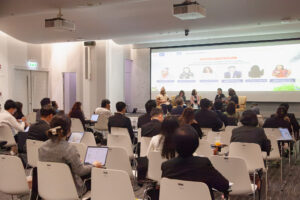
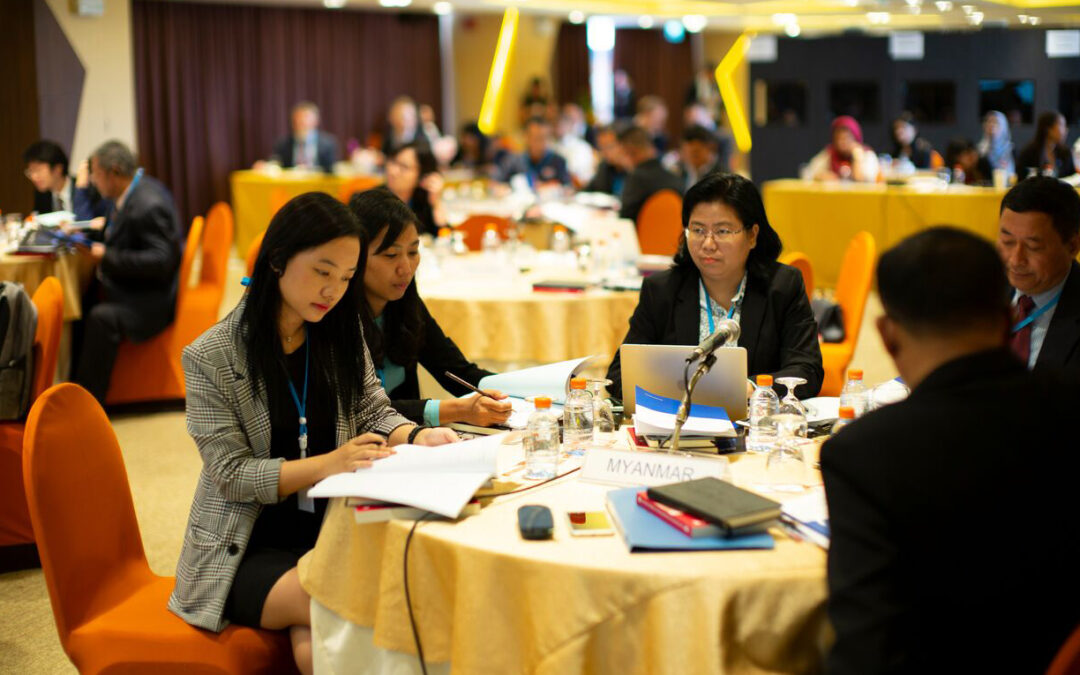
Between 30 May and 1 June 2018, the ICJ co-hosted a workshop for authorities from Thailand, Cambodia, Myanmar and Nepal on the investigation of potentially unlawful deaths and enforced disappearance in accordance with international human rights law and standards.
The workshop was co-hosted with Thailand’s Ministry of Justice and the United Nations Office of the High Commissioner for Human Rights (OHCHR) and took place as part of the ICJ’s Global Redress and Accountability Initiative, which has as one of its core objectives, “increasing the knowledge and capacity of lawyers, prosecutors and investigators to deal with challenges of impunity and access to redress.”
The participants included more than 30 criminal investigators, forensic doctors, forensic scientists, prosecutors, police trainers, senior judges and representatives of the Cambodian Ministry of Justice, the Myanmar Attorney General’s Office, the Thai Ministry of Justice and the Nepal Office of the Attorney General.
The event commenced with opening remarks by the Ambassador of Finland, Ms. Satu Suikkari-Kleven; the Ambassador of Germany, Mr. Peter Prügel; Adviser on the Promotion of the Rights and Freedom from Thailand’s Ministry of Justice, Mr. Pitaya Jinawat; and the Asia Director of the ICJ, Frederick Rawski.
Alex Conte, Senior Law and Policy Advisor, ICJ Global Redress and Accountability Initiative, gave an overview of the international human rights legal framework that applies to the investigation of unlawful deaths and enforced disappearance.
Kingsley Abbott, Senior Legal Adviser at the ICJ, then provided an overview of the revised Minnesota Protocol on the Investigation of Potentially Unlawful Death (2016), which was launched in Thailand on 25 May 2017 and which formed the core of the materials used at the workshop.
Other speakers included Ms. Jennifer Prestholdt, Deputy Director, the Advocates for Human Rights, who presented on the Rights of Victims and Families and witness interviews; Mr. Glenn Williams, Detective Inspector, Field Crime Manager, New Zealand Police National Headquarters, who presented on the investigation process including crime scene management;
Ms. Shivani Verma and Ms. Pratubjit Neelapaijit, of the Office of the High Commissioner for Human Rights who presented on Witness Protection; and Dr. Pornthip Rojanasunan, Adviser, Central Institute of Forensic Science (CIFS)/Member of the Advisory Panel who presented on forensic pathology.
This workshop followed two workshops the ICJ co-hosted between 5 to 8 December 2017 in Thailand on the investigation of potentially unlawful deaths and enforced disappearance for lawyers from Thailand and India, academics and the Thai authorities.
Contact
Alex Conte, ICJ Global Redress and Accountability Initiative, t: +41 79 957 2733; e: alex.conte(a)icj.org
Kingsley Abbott, Senior International Legal Adviser, ICJ Asia Pacific Regional Office, t: +66 94 470 1345, e: kingsley.abbott(a)icj.org
Apr 9, 2018 | News
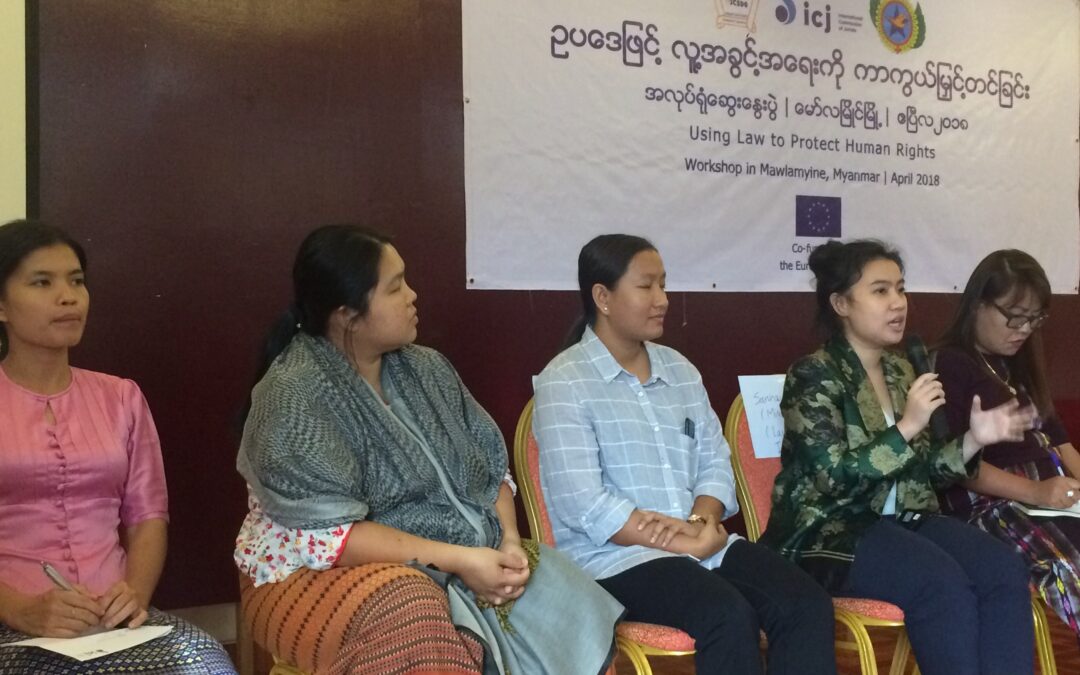
Prior to this workshop, on 6 April the ICJ met with the Mon State High Court, including its Chief Justice.
Legal advisers from the ICJ had a constructive discussion with the justices about judicial reform in Myanmar, including the role of lawyers and civil society, as well as jurists, in advancing accountability and access to justice.
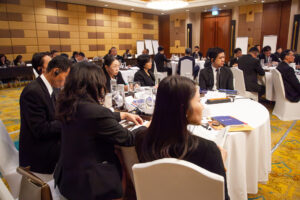
The two-day workshop aimed to identify challenges and opportunities for human rights advocacy using law, and to encourage the building of relationships and networks between lawyers and civil society.
The workshop considered strategic litigation concepts and case studies in the region. It also discussed the landscape of rule of law and justice in Myanmar, particularly the experiences regarding access to justice of some sixty participants from Mon State.
Mar 23, 2018 | Advocacy, Non-legal submissions
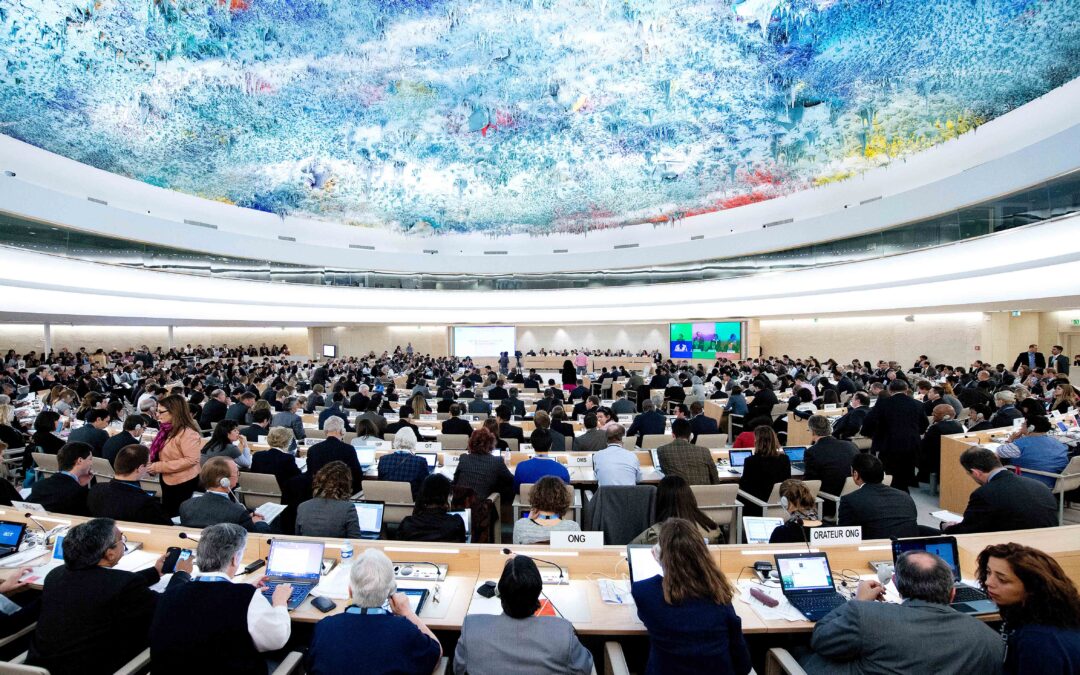
The ICJ today joined other NGOs in an end-of-session statement, reflecting on the 37th ordinary session of the UN Human Rights Council.
The statement was delivered by the International Service for Human Rights (ISHR) on behalf of:
- The East and Horn of Africa Human Rights Defenders Project (DefendDefenders)
- The Global Initiative for Economic, Social & Cultural Rights
- CIVICUS
- International Commission of Jurists
- International Federation for Human Rights Leagues
- Conectas Direitos Humanos
- Human Rights House Foundation
- Amnesty International
- International Lesbian and Gay Association
- Human Rights Watch
- Asian Forum for Human Rights and Development (FORUM-ASIA).
The statement read as follows (text in italics was not read aloud for lack of time):
“Our organisations welcome the adoption of the resolution on the promotion and protection of human rights and the implementation of the 2030 Agenda for Sustainable Development, particularly in reaffirming that all approaches to development must comply with the State’s international human rights obligations.
We agree that “cooperation and dialogue” are important for the promotion and protection of human rights, and that States should fully cooperate with the Council and its mechanisms, and ensure that all stakeholders are able to cooperate and engage with them without fear of reprisals.
However, we must now be vigilant to ensure that the resolution on Mutually Beneficial Cooperation, lacking in balance, does not undermine other important parts of the Council’s mandate: to address human rights violations and respond promptly to human rights emergencies in specific countries.
The Council has failed to take meaningful action to address the alarming situation on the ground in Cambodia. We welcome and echo the joint statement on Cambodia by over 40 states calling for further action if the situation does not improve in the lead up to the elections and for a briefing by the High Commissioner before the next Council session. We are concerned by Cambodia’s attempt to shut down criticism under item 10 debate on the worsening human rights situation in the country, as they are doing domestically.
We are disappointed by the weak outcome on Libya. Given the gravity of the human rights situation on the ground and the lack of accountability for crimes under international law, the Council cannot justify the lack of a dedicated monitoring and reporting mechanism.
We welcome the co-sponsorship of the Myanmar resolution by groups of States from all regions, making a joint commitment to address the continuing human rights violations and crimes against humanity in the country and support for the Special Rapporteur and Fact-Finding Mission to fulfil its mandate to establish truth and ensure accountability for perpetrators.
We also welcome the renewal of the mandate of the Commission on Human Rights in South Sudan allowing it to continue its vital investigations and identification of perpetrators. These developments acknowledge the importance of accountability for serious human rights violations and crimes under international law, which cannot be understated.
We welcome the adoption of the resolution on drugs and human rights as the OHCHR report will provide human rights indicators related to the drug issue that would help in future policies.
We welcome the resolution on Eastern Ghouta adopted after an urgent debate, demonstrating how this Council can respond in an agile manner to crises.
Having long supported the resolution on “protection of human rights while countering terrorism”, we appreciate the efforts that led to the end of the separate and deeply flawed initiative on “effects of terrorism on the enjoyment of human rights“. Future versions of the resolution must address the relevant issues exclusively and comprehensively from the perspective of the effective protection of human rights.
We welcome the Dutch-led joint statement on strengthening the Council, emphasising the importance of substantive civil society participation in any initiative or process and that the Council must be accessible, effective and protective for human rights defenders and rights holders on the ground.
Finally, we call on the Bureau co-facilitators on improving the efficiency and strengthening the Council to closely engage with all Members and Observers of the Council, human rights defenders and civil society organisations not based in Geneva.”
Mar 12, 2018 | Advocacy, Non-legal submissions
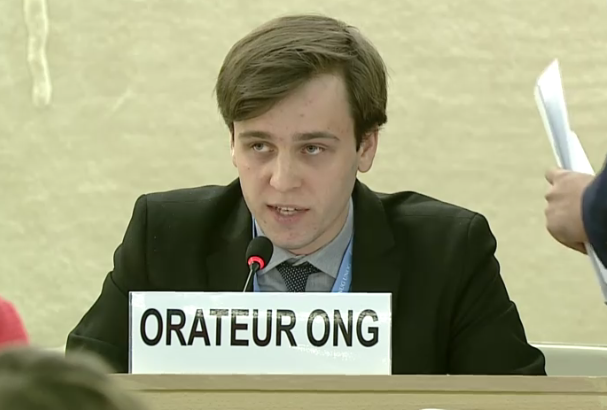
The ICJ today delivered a statement at the UN Human Rights Council calling on Myanmar to cooperate with UN mechanisms and for all UN agencies in the country to make human rights central to their approach.
The statement, made in the interactive dialogue with the international Fact Finding Mission on Myanmar, and the Special Rapporteur, read as follows:
“The International Commission of Jurists (ICJ) welcomes the update of the Independent International Fact Finding Mission. In relation to crimes under international law, the ICJ encourages the experts to continue to develop further specific recommendations for securing criminal accountability and providing redress.
The ICJ also welcomes the report of the Special Rapporteur, and strongly supports the renewal of her mandate and tenure.
As a UN Member State, the Government of Myanmar should fully cooperate with all the organs and mechanisms of the UN, in accordance with its obligations under the UN Charter.
At this session, the government asked for ‘concrete evidence’ of alleged human rights violations, and committed to taking action against perpetrators, but permission to enter the country is still refused to the Fact Finding Mission, to the Special Rapporteur and to the Office of the High Commissioner for Human Rights.
To demonstrate a genuine commitment to truth and accountability, the Government must allow them full access to areas of concern, particularly to Rakhine State and to conflict areas in Kachin State and Shan State.
Humanitarian actors and independent media must also be immediately allowed full and unimpeded access, particularly to Rakhine State, as recommended by the government’s own Advisory Commission.
The current situation in Rakhine State is incongruous to voluntary returns of Rohingya refugees. At the same time, the UN High Commissioner for Human Rights must be included in repatriation planning with a full mandate to protect refugees. This is contemplated in current repatriation arrangements with the Government of Bangladesh, and the Government of Myanmar must now formalize this relationship with UNHCR.
Experts, what can be done to ensure all UN agencies present in Myanmar actually put ‘human rights up front’ in the line with the mandate of every UN organ under the UN Charter?”
Mar 9, 2018 | Events, News
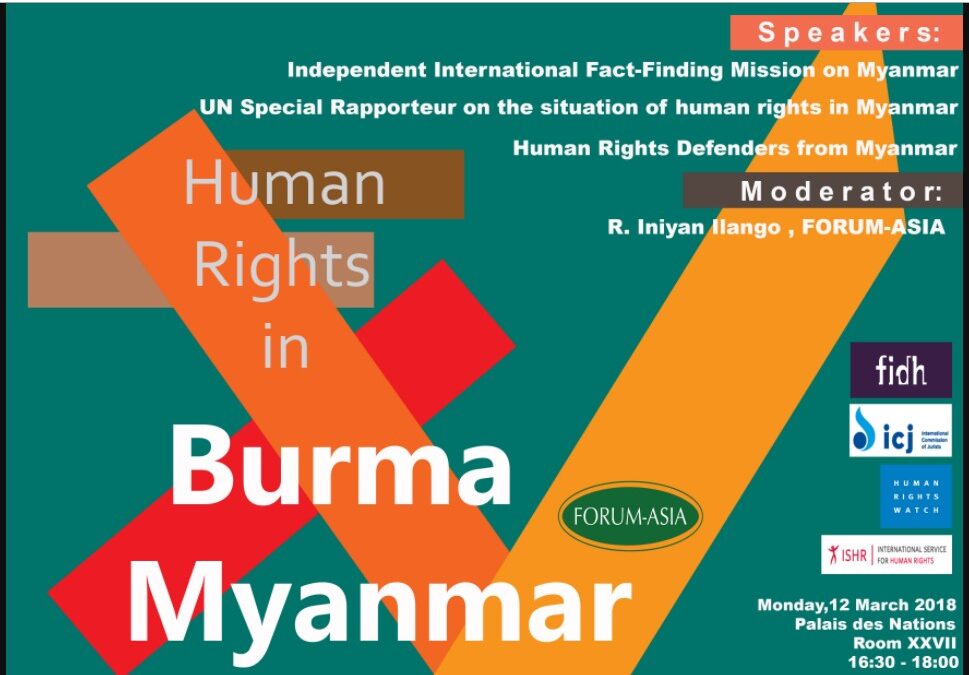
This side event at the Human Rights Council takes place on Monday, 12 March, 16:30-18:00, room XXVII of the Palais des Nations. It is organized by Forum-Asia, and co-sponsored by the ICJ.
Speakers:
Independent International Fact-Finding Mission on Myanmar
UN Special Rapporteur on the situation of human rights in Myanmar
Human Rights Defenders from Myanmar
Moderator:
R. Iniyan Ilango, Forum – Asia