Oct 3, 2018 | News
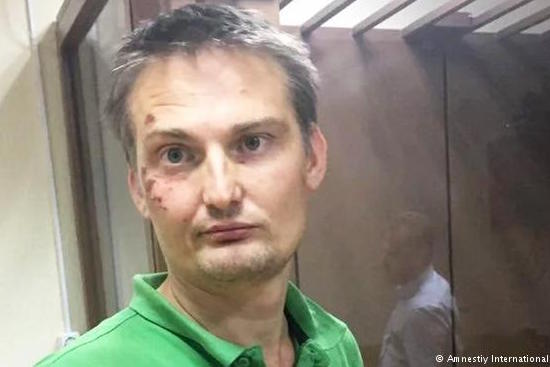
Today, the ICJ expressed concern at ongoing criminal proceedings against Mikhail Benyash, a lawyer practicing in Russia, who is charged with use of force against the police and impeding justice.
The lawyer has been detained until 23 November. The ICJ called on the responsible authorities to drop any criminal charge relating to his conduct of professional duties in the courtroom, and to ensure that the lawyer’s rights are protected and that allegations of his ill-treatment are fully investigated.
Benyash alleges that following his apprehension by the police on 9 September, the police beat him up in the car. According to the police report he inflicted the injuries on himself, contrary to demands of the police that he stop doing so.
He was charged with disobedience to the police, which according to the police report was due to “the fact that the police asked Benyash not to injure himself, but he continued self-beating”. Benyash was convicted and sentenced to 14 days of imprisonment and 40 hours of correctional works.
On 23 September, the day of his release, Benyash was arrested again. He was charged with two further offences: violence against a representative of authority (Criminal Code Article 318(1)) based on an allegation, seemingly not raised at the time of his earlier charge and conviction in relation to the same incident, that in the course of his arrest on 9 September he allegedly bit a police officer and hit another.
On 23 September he was also charged with obstruction of justice (Criminal Code Article 294(1)), reportedly on the basis of an allegation that in a court hearing on 6 May 2018, Benyash had “repeatedly interrupted, gave instructions and objections to the decisions of the judge” and after he had been removed from the courtroom “continued unlawful behaviour”.
According to the lawyer, he was taken out of the courtroom by force due to his motions to allow certain members of the public to be present at the open hearing.
The ICJ is concerned that the criminal obstruction charge against Mikhail Benyash appears to relate at least in part to statements he made in court in the course of carrying out his professional duties of representation of his clients.
The fact that this charge was only laid following his recent arrest, some five months after the alleged incident occurred, also raises questions as to the motivation for bringing the charge forward now.
“Benyash is currently charged on account of his alleged attack on a police officer and obstruction of justice. While the first charge requires an impartial and independent inquiry, the second charge should be of concern to the entire lawyers’ community”, said Karinna Moskalenko, ICJ honorary member. “We fear that this may lead to lawyers in Russia being charged with obstruction of justice simply for actively expressing their position and objections in accordance with the procedure prescribed by law”, she added.
Furthermore, the ICJ emphasises that under international human rights law, states have obligations to investigate allegations of treatment that may amount to torture or inhuman or degrading in violation of Article 3 of the European Convention on Human Rights, as well as other international law norms binding on the Russian Federation.
The investigative authorities have duty to investigate allegations of ill-treatment of the lawyer by police following his arrest on 9 September promptly, effectively and impartially and any persons responsible should be brought to justice.
Read the ICJ’s full statement here: Russia-Statement on Benyash-News-Web Story-2018-ENG
Sep 10, 2018 | Events, News
The legal profession plays a crucial role in ensuring access to justice for all, transparency and accountability of the state, Rule of law and the respect for human rights.
Yet, instead of being perceived as a vital player to the justice sector, today lawyers are often targeted by the governments in many OSCE countries for seeking truth and justice. As a result, lawyers often face high risks of persecution, harassment as well as severe sanctions for doing their job.
This side-event aims to specifically discuss the situation of lawyers in Belarus, Russia, Azerbaijan, Tajikistan and Kazakhstan. The discussion will extend to consider the latest developments related to the rights of lawyers and their independence in the respective countries, and what impact this has on the overall rule of law and human rights situation.
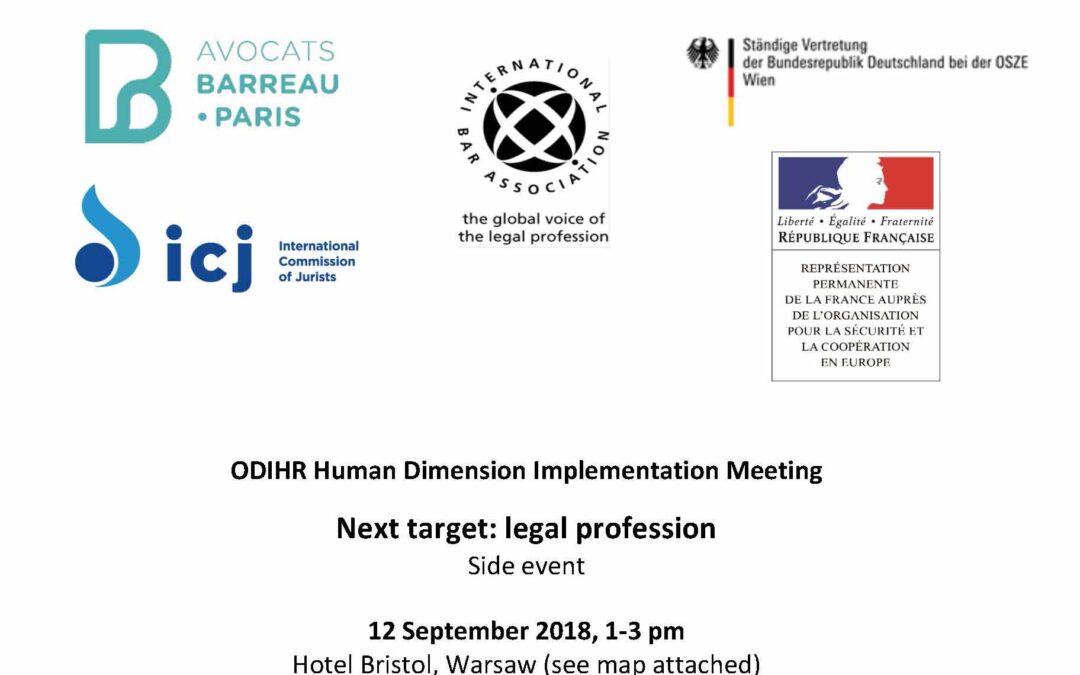
This side event will take place on 12 September 2018, from 13.00 -15.00 at Hotel Bristol, Warsaw
Moderator: Jurate Guzeviciute, Programme Lawyer, International Bar Association’s Human Rights Institute
Presentations and Discussions:
Independence of the legal profession and harassment of lawyers in Eastern Europe and Central Asia:
- Tajikistan: Dilrabo Samadova, lawyer, Tajikistan
- Azerbaijan: Nijat Mammadbayli, lawyer, Azerbaijan
- Kazakhstan: Snezhanna Kim, lawyer, Kazakhstan
- Russia: Róisín Pillay, Director of the Europe Regional Programme, International Commission of Jurists
- Belarus: Anne Souléliac, Head of the Human Rights section, Paris Bar Association
Organizers: Permanent Mission of the Federal Republic of Germany to the OSCE, Permanent Representation of France to the OSCE, International Bar Association’s Human Rights Institute, Paris Bar Association, International Commission of Jurists.
Poland-HDIM_Side event-News-event-2018-ENG (flyer of the event in PDF)
Mar 2, 2018 | Advocacy, Non-legal submissions
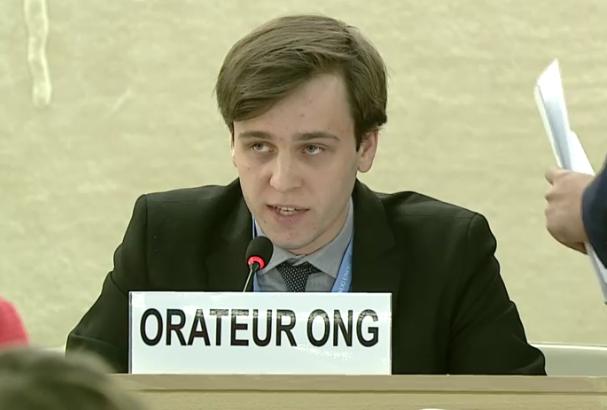
The ICJ today delivered an oral statement to the UN Human Rights Council urging it to take action on the situation in Eastern Ghouta in the Syrian Arab Republic.
The statement, which was made during an urgent debate at the UN Human Rights Council convened with a view to adoption of a resolution, read as follows:
“The International Commission of Jurists (ICJ) urges the Council to adopt a strong resolution today. The resolution should fully reflect the gravity, magnitude and character of the violations and abuses taking place, demand their immediate cessation, and set out specific measures for accountability of those responsible.
The ICJ highlighted these concerns in a statement one week ago. Every further day of delay costs lives. It is imperative that the Council act immediately and that the relevant forces move quickly to implement Security Council resolution 2401 and any resolution of the Human Rights Council. An immediate end to all attacks on civilians and civilian objects is paramount.
We welcome references to accountability, and urge the Council to explicitly call on States to make use of all means available in this regard, including in their national legal systems, as well as at the regional and international level.
All forces on the ground must respect international humanitarian law and human rights law and standards and be held accountable for failures in this regard. In particular, the Syrian Arab Republic and Russian Federation must comply with Security Council resolutions, ensure the effective protection of civilians, and create conditions in which rapid and unimpeded passage of humanitarian relief can actually take place.”
The Council did not complete the adoption of the resolution on 2 March, but ultimately did so on 5 March.
Feb 23, 2018 | News
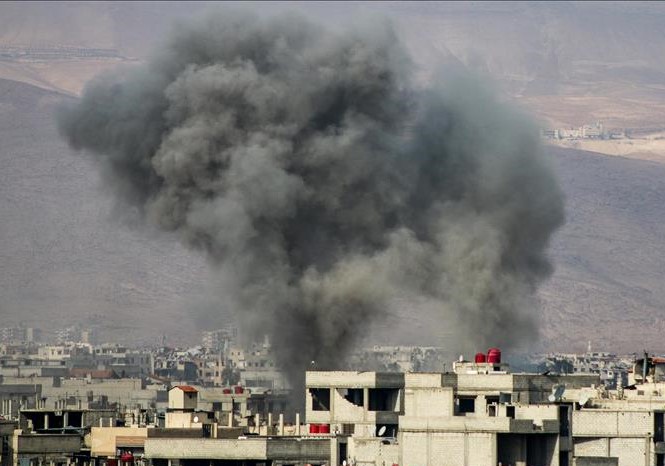
The ICJ today called on the governments of Syria and Russia to cease all attacks on the civilian population in Eastern Ghouta.
Intentionally directing attacks against the civilian population and civilian objects, including hospitals, constitutes a war crime.
All those responsible for such crimes must be held accountable.
“The UN Security Council is blatantly failing to discharge its primary responsibility for maintaining international peace and security. It’s so paralyzed by division that it cannot even enforce its own resolutions on protecting the civilian population in Syria and ensuring unimpeded humanitarian access,” said Said Benarbia, Director of the ICJ Middle East and North Africa Programme.
“After 7 years of shielding the Syrian regime from accountability for its egregious crimes, including the use of chemical weapons, Russia is joining forces with this regime’s cynical enterprise to murder and starve its own people,” he added.
The air and artillery bombing campaign conducted by the Syrian government, with the backing of Russia, have caused hundreds of victims since Sunday.
The destruction of hospitals and the lack of basic supplies and medicines are making the living conditions of the civilian population extremely dire.
Under international humanitarian law, the Syrian government and its ally Russia have obligations to protect the civilian population and to grant rapid and unimpeded passage to humanitarian relief for the residents of Eastern Ghouta.
The UN Security Council imposed a disarmament plan concerning the Syrian chemical arsenal, yet credible reports of government use of chemical weapons against civilians continued to emerge as late as January and February 2018, in particular in Eastern Ghouta and Saraqeb.
In its last report in October 2017, the OPCW-UN Joint Investigative Mechanism established the responsibility of the Syrian government for the use of chemical weapons.
In the same month, Russia vetoed a resolution to renew the Mechanism’s mandate.
“States must act individually and collectively to stop the escalation of horrors we are witnessing in Eastern Ghouta. They must also ensure, including through any means available in their national legal systems, as well as at the regional and international level, that all those responsible for the war crimes, crimes against humanity and other international crimes committed in Syria, irrespective of their nationality, rank or status, are brought to justice,” Benarbia added.
Contact
Said Benarbia, Director of the ICJ Middle East and North Africa Programme, tel: +41 798783546, e-mail: said.benarbia(a)icj.org
Syria – Ghouta Bombing – News – Webstory – 2018 – ARB (Arabic translation in PDF)
Jan 15, 2018 | News
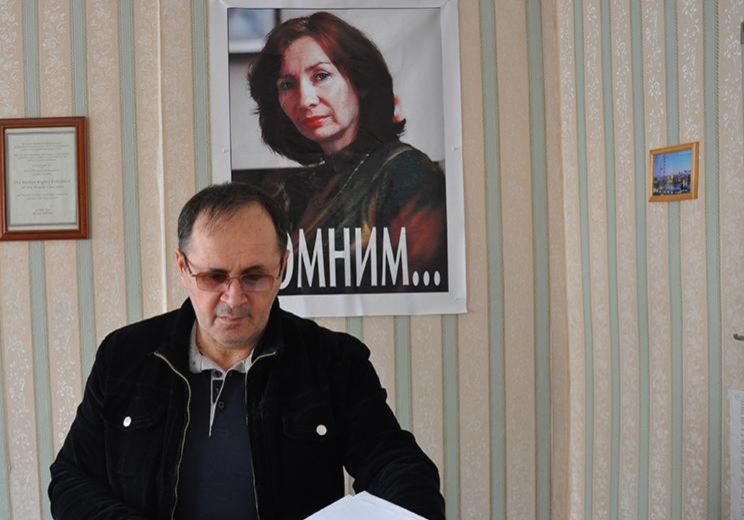
The ICJ is concerned at allegations that the recent arrest and detention of Oyub Titiev, the head of the Chechen branch of the Russian human rights organisation Memorial, were carried out as retaliation for his human rights activity.
The ICJ is particularly concerned at the more recent reports that family members of Oyub Titiev have had to leave Chechnya for security reasons following threats.
The ICJ calls on the Russian federal and local authorities to conduct a prompt, thorough and independent investigation into allegations that criminal charges against Oyub Titiev have been fabricated by police.
Oyub Titiev should be immediately released pending the outcome of this investigation, and measures should be taken to protect his security and that of his family.
On 9 January 2018, at 10.30, according to an official statement of the Ministry of Interior of Chechnya, Oyub Titiev’s car was stopped near Kurchaloy town to check his documents.
During a search of his car, a plastic bag with approximately 180 grams of a substance identified as marijuana was allegedly found.
Titiyev was charged with possession of a large quantity of narcotics under article 228 of the Criminal Code of the Russian Federation. However, he has stated that the narcotics were planted and has filed a complaint with the Prosecutor’s Office to initiate an investigation into these allegations.
Oyub Titiev, the head of Memorial in Chechnya, is one of very few human rights defenders who continue their work in Chechnya despite significant obstacles and threats.
He took over this position following the murder of the former head of Memorial in Chechnya, Natalya Estemirova in 2009.
In accordance with Article 2(a) of the Declaration on Human Rights Defenders (Declaration on the Right and Responsibility of Individuals, Groups and Organs of Society to Promote and Protect Universally Recognized Human Rights and Fundamental Freedoms), human rights defenders have a right to conduct human rights work individually and in association with others.
Under the same Declaration, States have a duty to take all necessary measures to ensure the protection of everyone against any violence, threats, retaliation, adverse discrimination, pressure or any other arbitrary action as a consequence of his or her legitimate activities as a human rights defender.
Threats of violence and the falsification of evidence by public officials constitute crimes under the Russian Criminal Code. Reliance in criminal proceedings on evidence falsely planted by the police or other State actors would violate international human rights law including fair trial guarantees under the UN Covenant on Civil and Political Rights and the European Convention of Human Rights.
Attacks on human rights defenders working in an extremely difficult human rights environment such as that of Chechnya, or attacks on their family members, have a chilling effect on work to defend human rights there. If further such attacks are to be prevented, individuals responsible for them must be brought to justice through a fair procedure, the ICJ stressed.