Mar 25, 2020 | News
The ICJ today called on the South African government to take urgent and immediate measures to ensure the full protection human rights, including economic, social and cultural rights, in the context of the COVID 19 epidemic.
The call comes as South Africa’s 21-day nationwide lockdown is poised to commence tomorrow, 26 March 2020. As it stands the human rights of the majority of South African residents are under serious threat.
“The ICJ is calling on the South African government to take effective measures ensure that addressing one human rights crisis does need lead to new human rights pressures” said Arnold Tsunga, Director of or the ICJ Africa Programme.
“We therefore call on the authorities to take three urgent steps: 1) Declare a moratorium on all evictions; 2) Ensure emergency provision of water to all; and 3) publically repudiate xenophobic statements made by Minister Khumbudzo Ntshavheni and affirm non-citizens rights to work”.
- Declaration of a moratorium on all evictions:
In the context of COVID-19, evictions are particularly dangerous and life-threatening. Evictions risk the further spread of COVID-19 and make it impossible to stay at home as the World Health Organization has advised.
The UN Special Rapporteur on the Right to Housing, has called for a global ban on evictions worldwide, stressing that: “The logical extension of a logical stay at home policy is a global ban on evictions. There must be no evictions of anyone, anywhere, for any reason. Simply put: a global ban on evictions will save lives”. In South Africa, local social movements and human rights organizations have called for a “moratorium” on evictions, as has Abahlali BaseMjondolo a movement of tens of thousands of “shack dwellers” across the country.
The ICJ calls on President Ramaphosa to declare a moratorium on evictions immediately before the commencement of the nationwide lockdown. South Africa must do so to meet its international legal obligations to protect the rights to housing and health.
- Provision of emergency access to water before the lockdown commences:
Many people in South Africa live in informal settlements and rural settings in which access to water, sanitation and basic services are inadequate or inconsistent. The simple instruction of washing one’s hands to prevent the spread of the virus is extremely difficult, if not impossible, for many.
The President announced on 23 March that “emergency water supplies” would be provided in “informal settlements and rural areas”. However, reports from around the country suggest that with lockdown beginning tomorrow many major informal settlements, including Khayelitsha in Cape Town, still do not have sufficient access to such emergency water.
The ICJ calls on President Ramaphosa to ensure that provision is made for all South Africans to have access to basic services, including water, before the commencement of national lockdown. South Africa must do so to meet its international legal obligations to protect the right to water.
- Protecting the right to work of “everyone” including non-citizens:
On 24 March 2020 speaking on national television, Minister of Small Business and Development in South Africa Khumbudzo Ntshavheni said that only spaza shops “owned by South Africans and managed and run by South Africans” will be allowed to continue operating during nationwide-lockdown, ostensibly to ensure the quality of goods and food.
This statement is discriminatory and in violation of South Africa’s commitments in terms of its own Constitution and international human rights law, to ensure non-discrimination and equal protection of the law. It risks a resurgence of existing xenophobic sentiment at a time of crisis which South Africa can ill afford and threatens the livelihood of foreign nationals.
The ICJ calls on President Ramaphosa to withdraw the statement immediately and reaffirm the internationally recognized right to equality of non-citizens including their right to work.
Contact:
Tim Fish Hodgson, ICJ Legal Adviser, e: tim.hodgson(a)icj.org ; c: +2782871990
Shaazia Ebrahim, ICJ Media Officer, e: shaazia.ebrahim(a)icj.org ; c: +27716706719
Background:
The global Covid-19 pandemic has led South African president Cyril Ramaphosa to announce a 21-day nationwide lockdown which will be effective on 26 March at midnight. This follows on from South Africa’s declaration of a “national disaster” on 15 March and the publication of disaster regulations governing the disaster response.
Global consensus on best practice to combat COVID-19, as recommended by the World Health Organization, is for people to stay at home, maintain social distance and intensify hygiene measures including through frequent washing of hands. However, South Africa has well-documented and extremely high levels of poverty and inequality. A number of problems in complying with global best practice in response to COVID-19.
The disaster regulations require that measures taken to combat COVID-19 are implemented “as far as possible, without affecting service delivery in relation to the realisation of the rights” including the rights to housing and basic services, healthcare, social security and education.
Feb 19, 2020 | News
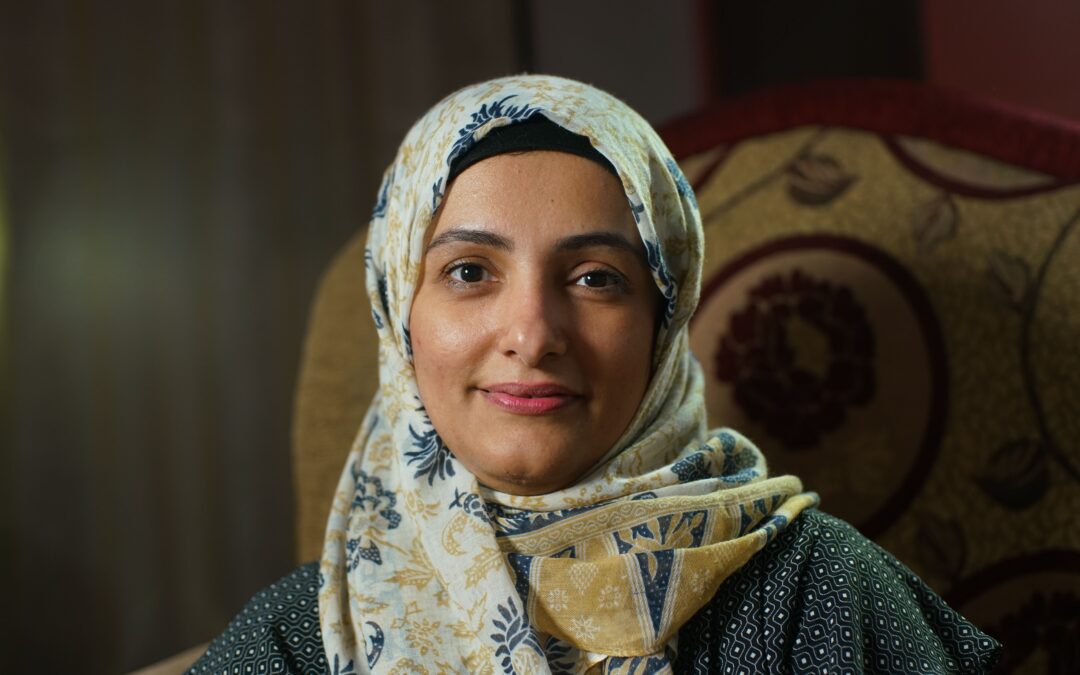
Huda Al- Sarari, Yemeni lawyer and human rights defender, is the 2020 Martin Ennals Award laureate. She was among three women selected as finalists by a jury of ten of the world’s leading human rights organizations, including the ICJ, along with Sizani Ngubane, South Africa, and Norma Librada Ledezma, Mexico.
The 2020 Martin Ennals Award ceremony, co-hosted by the Martin Ennals Foundation and the City of Geneva, was held today, and for the first time in the history of the Award, all three finalists are women.
“Women human rights defenders are subject to the same risks as every human rights defender, but as women, they also face certain forms of violence and violations due to their gender. They are often stigmatized and ostracized by community leaders, faith- based groups and even family members,” said the Mayor of the City of Geneva, Sandrine Salerno.
“The Martin Ennals Foundation is particularly proud to honour and support three resilient women human rights defenders this year, our laureate Huda Al-Sarari, as well as our two finalists Sizani Ngubane and Norma Librada Ledezma for their achievements. We hope that the award will shed a light on their achievements, and strengthen protection mechanisms around them,” said Philippe Currat, President of the Board of the Martin Ennals Foundation.
Huda Al-Sarari is a Yemeni lawyer and human rights defender who graduated in Sharia and Law from Aden University. She also holds a masters in Women’s Studies and Development from the Women’s Centre at Aden University. Over the last years, Huda investigated, exposed and challenged the enforced disappearances that occurred as a result of secret prisons run by foreign governments in Yemen where thousands of men and boys have suffered from arbitrary detention, torture and extrajudicial killings. She collected evidence on more than 250 cases of the abuse taking place within those prisons.
“Being a human rights defender in Yemen is extremely challenging, and being a woman makes this even more difficult. In a male-dominated society, I have to prove myself maybe ten times more than a man,” she said.
Despite the threats, defamation campaigns and sacrifices she and her family endured, Huda continues to stand alongside the families of those who have disappeared.
“Receiving the 2020 Martin Ennals Award for human rights defenders means the world to me. It gives me great strength and emboldens me to continue this fight for justice. I believe the Award will be incredibly important in drawing attention to the continual plight of victims of arbitrary detention, abuse and torture in Yemen,” she added.
“We commend Huda for the work that she conducted, not only against the backdrop of the ongoing Yemeni civil war, but also, in a country where women still struggle to express their political and civil rights. Huda’s legacy is crucial as her thorough investigations and search for accountability will serve to bring justice for human rights violations occurred during the conflict,” said Hans Thoolen, Chair of the Martin Ennals Award Jury.
The two finalists of the Martin Ennals Award this year are Sizani Ngubane (South Africa) and Norma Librada Ledezma (Mexico).
Sizani is a human rights defender who advocates for land rights for women in rural areas on South Africa. She also supports women to access education, and fights for the end of the traditional practice of Ukuthwala, which is the abduction and forced marriage of young girls and women.
Norma is the founder of Justicia para Nuestras Hijas. She has supported over 200 investigations into cases of feminicide, enforced disappearance and human trafficking in Chihuahua, Mexico.
Both were praised by the Martin Ennals Jury member organizations for their commitment and tremendous achievements in their respective countries.
Additional information
The City of Geneva has hosted the Award ceremony since 2008, together with the Martin Ennals Foundation, as part of its deep commitment to the defense of human rights. The support of the City, by means of its Service for International Solidarity, reflects its mission to promote human rights both internationally and
The Jury of the Martin Ennals Award is comprised of ten of the world’s leading human rights organizations: the ICJ, Amnesty International, FIDH, Human Rights First, HURIDOCS, International Service For Human Rights, Brot für die Welt (Bread for the World), Front Line Defenders, Human Rights Watch and the World Organization Against Torture.
Download
Universal-MEA2020bios-News-2019-ENG (full bios of finalists, in PDF)
Universal-MEA2020winner-News-Press releases-2019-ARA (full story in Arabic, PDF)
Universal-MEA2020bios-News-2019-ARA (full bios of finalists, in Arabic, PDF)
Contact
Olivier van Bogaert, Director Media & Communications, ICJ representative in the MEA Jury, t: +41 22 979 38 08 ; e: olivier.vanbogaert(a)icj.org
Watch the ceremony as it happened
https://www.facebook.com/MartinEnnals/videos/2552501445008021/

Dec 10, 2019 | Multimedia items, News, Video clips
Today, the ICJ launched the animated video titled “UN Committee Recommends Socio-Economic Rights Protections in South Africa” in commemoration of International Human Rights Day, at an event sponsored in collaboration with local partner Lawyers for Human Rights (LHR).
With support from the European Union (EU), the ICJ and LHR have been jointly implementing a project promoting the protection of Economic, Social and Cultural Rights (ESCR) over the last three years.
The project included workshops co-ordinated by the ICJ and LHR on the protection of ESCR with magistrates, lawyers, paralegals and civil society organizations. As part of the project published a detailed Guide for the Legal Enforcement and Adjudication of Economic, Social and Cultural Rights in South Africa to assist legal practitioners, including magistrates, lawyers, paralegals and civil society, in understanding and applying international and domestic legal standards relating to ESCR. The ICJ also joined other local and international organizations in making submissions to the UN Committee on ESCR, which ultimately informed the Committee’s recommendations to South Africa.
During the event 10 December event in Pretoria, the LHR launched the documentary “Everyone Lies to Popo Molefe”, which tells the true story of the community’s struggle to basic services. Members of the Popo Molefe community were guests of honour at the event, which was also attended by a representative of the South African Human Rights Commission.
“If we can have roads, water and electricity… We are struggling without electricity. This situation we are living in is not good. I wish the President could see this documentary,” Popo Molefe Community Leader Kgomotso Susan Nkolisa said.
The ICJ’s animation explains in simple terms the recommendations made by the UN Committee on Economic, Social and Cultural to the government on South Africa.
These recommendations are based on the international standards and protection of the rights contained within the International Covenant on ESCR ratified by South Africa in 2015.
The animation uses illustrative examples of South Africa’s obligations under the Covenant relating to housing, education and just and equitable wages, urging viewers to hold government accountable for the implementation of the UN Committee’s recommendations.
Watch the animation
Dec 6, 2019 | Events, News
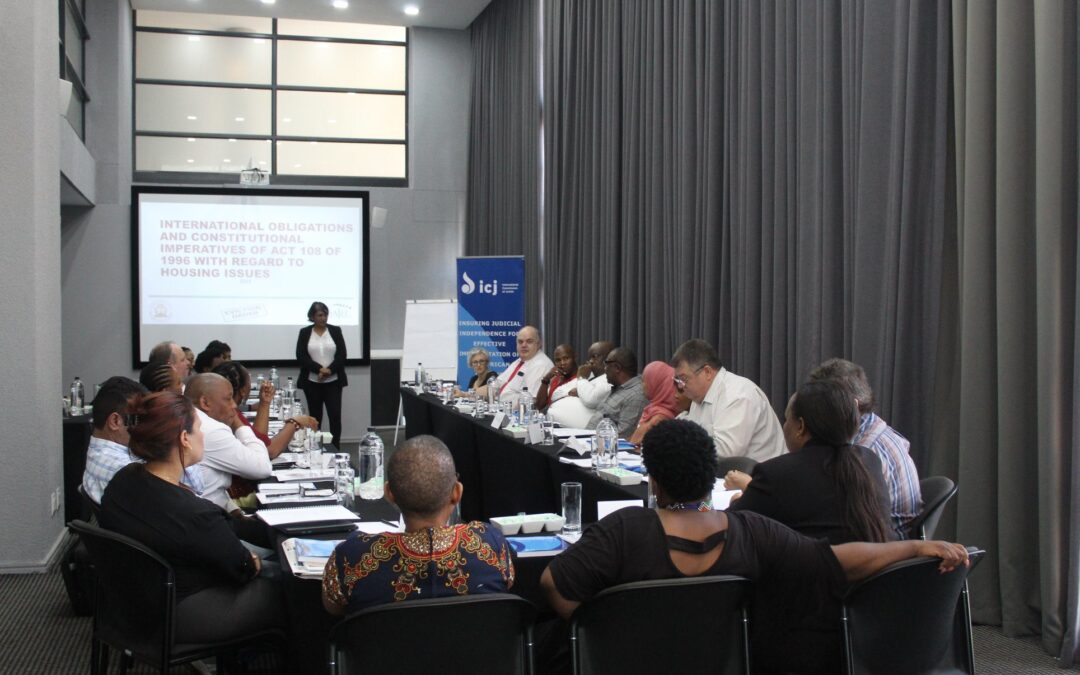
This year, the ICJ collaborated with the South African Judicial Education Institute (SAJEI) to conduct workshops aimed at strengthening the ability of judicial officers, including Magistrates, to deliver judgments in line with the Constitution and international law. The workshops focused on housing rights and informal traders’ rights.
Topics covered included the social and economic context of South Africa, the role of judicial officers in ensuring the protection of economic, social and cultural rights (ESCR) and the obligation to consider international law standards.
The workshops were conducted using the ICJ Practitioners’ Guide on ESCR and tailor-made training resources that the ICJ designed and produced with SAJEI, while the European Union and the German Institut für Auslandsbeziehungen’s Zivik programme supported the training financially.
Senior magistrate and judicial educator at SAJEI Jinx Bhoola and ICJ Legal Advisor Tim Fish Hodgson facilitated the workshops with the support of ICJ Associate Legal Advisor Khanyo Farisè.
Most of the judicial officers who participated were Magistrates.
“Ensuring effective access at a magistrates’ court level is crucial as Magistrates are the judicial officers concerned with delivering justice in the majority of cases at first instance level. Besides, the majority of people living in South Africa will rarely have the means or assistance to access justice in High Courts,” Hodgson said.
The workshops aimed to introduce the international human rights law and standards framework on social and economic rights to Magistrates.
“The hope is that Magistrates will be able to more effectively perform their functions, while drawing on international law, in cases relating to housing rights and the rights of informal traders if equipped with easily accessible resources to do so,” Hodgson added.
Adding to this, Farisè said: “There is sometimes an assumption that certain groups of individuals are excluded from the rights provided for in the Bill of Rights. It must be emphasized that international human rights law and the right to dignity in the South African Constitution apply to all”.
“When considering these cases, it’s important that judicial officers including Magistrates, have a human rights approach,” Farisè added.
The workshops were well-received. “The Magistrates engaged with energy and enthusiasm with the workshop material, confident that they will be able to ensure the enforcement of socio-economic rights and the securing of access to justice for all in South Africa,” Hodgson said.
Contact:
Khanyo Farisè, Legal Adviser, e: Nokukhanya.Farise(a)icj.org
Tim Fish Hodgson (Legal Adviser), e: Timothy.Hodgson(a)icj.org
Nov 26, 2019 | News
Three exceptional women – Huda Al-Sarari, Norma Ledezma and Sizani Ngubane – are the finalists for the 2020 Martin Ennals Award, a demonstration of the leading position now occupied by women in the defence of human rights. The ICJ is member of the MEA Jury.
In Yemen, Huda Al-Sarari has exposed and challenged the existence of secret prisons and many cases of torture.
In Mexico, Norma Ledezma is fighting against femicides and disappearances.
In South Africa, Sizani Ngubane is fighting for access for women to education and to land.
Three women nominated: a first
Each year, the Martin Ennals Award rewards human rights defenders from around the world who distinguish themselves by their strong commitment to promoting human rights – often at the risk of their own lives.
In 2020, for the first time the Jury nominated three women who defend the fundamental rights of their communities in sensitive contexts.
“The Martin Ennals Foundation is proud to recognize the courageous work of three women. For the 2020 edition, our Jury’s choice reflects the ever-greater global impetus of individuals – whatever their gender – who are committed to respect for human rights and women’s rights in particular,” said Isabel de Sola, Director of the Martin Ennals Foundation.
“The finalists for the 2020 Martin Ennals Award work on different continents, but all three have in common their resilience, determination, a tremendous rigour and, finally, the positive and concrete impact of their work,” added Hans Thoolen, Chairman of the Jury.
In Yemen, where the conflict has been ongoing since 2005, Huda Al-Sarari, a Yemeni lawyer, unveiled the existence of several secret detention centres where the worst violations of human rights were committed: torture, disappearances or even extrajudicial executions.
In South Africa, women face discrimination, the worst expression of which is widespread gender violence. In rural communities, they frequently have their land expropriated and are deprived of access to education and justice. Sizani Ngubane founded an organization of more than 50,000 women from rural areas in her country and has fought successfully for over 40 years for the recognition of their rights.
In Mexico, the civil population is paying a high price for the weakness of the rule of law which is underpins widespread violence and impunity. Women are the primary victims, with more than 3,500 femicides committed each year. Norma Ledezma, who is the mother of one of the victims, puts all her energy into supporting families seeking access to justice in the state of Chihuahua.
The finalists were selected by a jury made up of representatives of ten of the world’s leading human rights organizations: the ICJ, Amnesty International, Human Rights Watch, Human Rights First, International Federation for Human Rights, World Organisation Against Torture, Front Line Defenders, EWDE Germany, International Service for Human Rights and HURIDOCS.
The 2020 Martin Ennals Award will be given to one of the three finalists on 19 February 2020 at a livestreamed public ceremony. The event is hosted by the City of Geneva which, as part of its commitment to human rights, is a longstanding supporter of the Award.
Contact
Olivier van Bogaert, Director Media & Communications, ICJ representative in the MEA Jury, t: +41 22 979 38 08 ; e: olivier.vanbogaert(a)icj.org
Chloé Bitton, Communications Manager, Martin Ennals Foundation, t +41 22 809 49 25 e: cbitton(a)martinennalsaward.org
Universal-MEA2020bios-News-2019-ENG (full bios of finalists, in PDF)
Universal-MEA2020bios-News-2019-ARA (full story and bios of finalists in Arabic, PDF)