Mar 20, 2020 | News
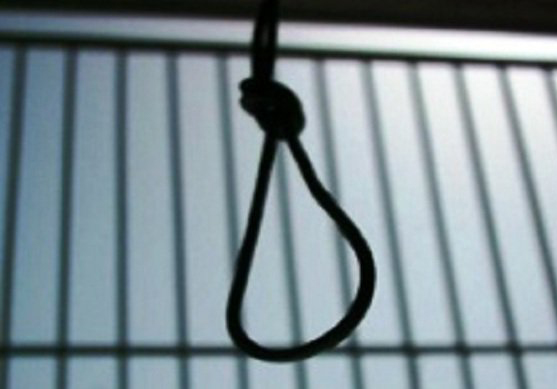
The ICJ condemned the execution today of four men who were convicted of raping and murdering a 23-year-old student in December 2012.
The ICJ denounced the executions, and urged the Indian Government to abolish the death penalty. It called on the Government to introduce systemic changes to the legal system that would deter violence and improve access to justice for women.
“State-sanctioned executions are little more than public theatre that risk celebrating and perpetuating violence at the expense of the rule of law,” said Frederick Rawski, ICJ Asia-Pacific Director. “As heinous as these crimes were, the imposition of the death penalty – the deterrent effect of which has been widely debunked – does nothing to improve the lives of women.”
According to senior lawyer Vrinda Grover, a renowned Indian human rights defender, “In 2013, the criminal laws were amended; however seven years later the graph of rapes has not diminished.”
Instead of compelling the state to invest in plugging the gaps in the investigation, prosecution and adjudication of sexual crimes and formulating victim oriented processes, the clamour for execution of the convicts has hijacked the discourse. Seven years later, the power of the state to extinguish life stands entrenched, while women and girls in India continue to struggle to live a life of freedom, safety and dignity, as equal persons, ” said Vrinda Grover.
The UN Human Rights Committee has stated that “[t]he death penalty cannot be reconciled with full respect for the right to life, and abolition of the death penalty is both desirable and necessary for the enhancement of human dignity and progressive development of human rights.”
The ICJ opposes capital punishment in all cases without exception as a violation of right to life and to freedom from cruel, inhuman or degrading punishment.
The ICJ called upon the Indian Government to join the large majority of States and take immediate steps to end the practice of capital punishment, as prescribed by repeated United Nations General Assembly Resolutions.
To download the full statement with background information, click here.
Contact
Maitreyi Gupta, ICJ India Legal Adviser, t: +91 77 560 28369 e: maitreyi.gupta(a)icj.org
Frederick Rawski, ICJ Asia-Pacific Director, t: +66 64 478 1121; e: frederick.rawski(a)icj.org
Read Also
ICJ, Press Release, September 2013 – India: Executing perpetrators of Delhi Gang Rape Case ‘counterproductive to preventing sexual violence’
Mar 11, 2020 | Advocacy, Non-legal submissions
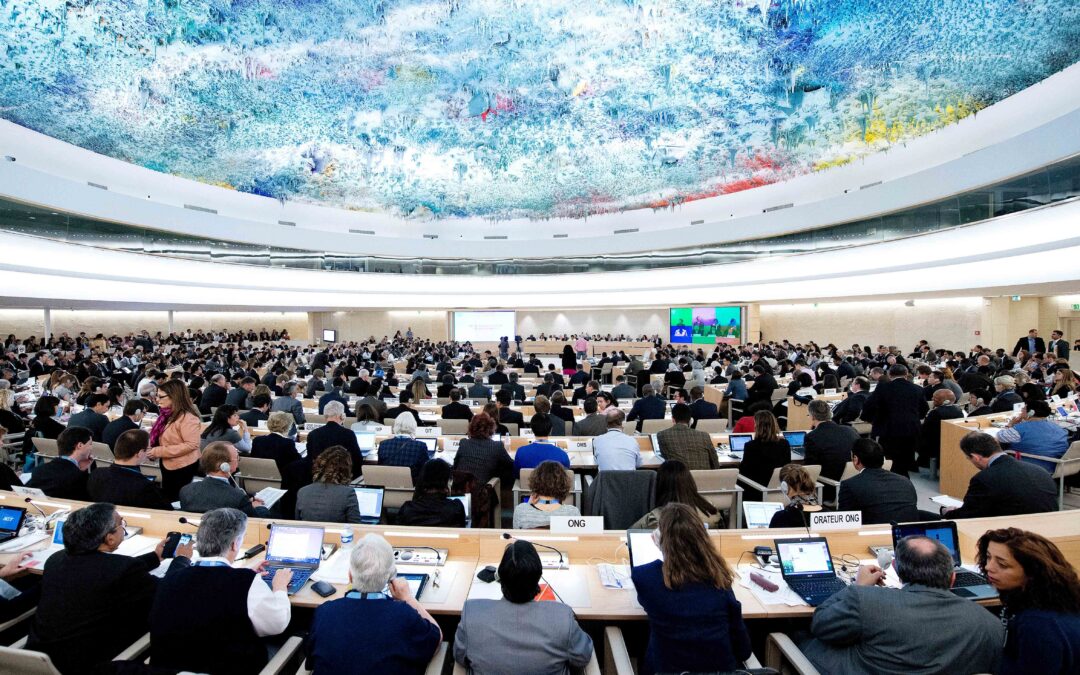
ICJ has joined other NGOs in urging India, Pakistan and the Human Rights Council, to take action to address the grave situation for human rights in Jammu & Kashmir.
The joint statement read as follows:
“Our organizations express grave concern over the human rights situation in Jammu & Kashmir, where the authorities imposed severe restrictions after a decision to revoke constitutional autonomy on 5 August 2019, including one of the world’s longest internet shutdowns, which the Indian Supreme Court has said violates the right to freedom of expression.
Hundreds were arbitrarily arrested, and there are some serious allegations of beatings and abusive treatment in custody, including alleged cases of torture. Three former chief ministers, other leading politicians, as well as separatist leaders and their alleged supporters, remain in detention under the Public Safety Act (PSA) and other abusive laws, many without charge and in undisclosed locations outside of Jammu & Kashmir. This violates fair trial safeguards of the criminal justice system and undermines accountability, transparency, and respect for human rights. Journalists and human rights defenders have been threatened for criticizing the clampdown. These violations, as those committed over the past decades, are met with chronic impunity.
We urge the government of India to ensure independent observers including all human rights defenders and foreign journalists are allowed proper access to carry out their work freely and without fear, release everyone detained without charge, and remove restrictions on the rights to freedom of expression and freedom of movement, including where they have been denied the right to leave the country by being placed on the ‘Exit Control List’.
We also call on the governments of India and Pakistan to grant unconditional access to OHCHR and other human rights mechanisms to Kashmir.
We further urge the Council to establish an independent international investigation mechanism into past and ongoing crimes under international law and human rights violations by all parties in Kashmir, as recommended by the UN High Commissioner for Human Rights.
Thank you.
- Amnesty International
- Asian Forum for Human Rights and Development (FORUM-ASIA)
- CIVICUS – World Alliance for Citizen Participation
- Human Rights Watch
- International Commission of Jurists
- International Federation for Human Rights Leagues (FIDH)
- International Service for Human Rights
- World Organisation Against Torture (OMCT)”
Mar 10, 2020 | Advocacy, Non-legal submissions
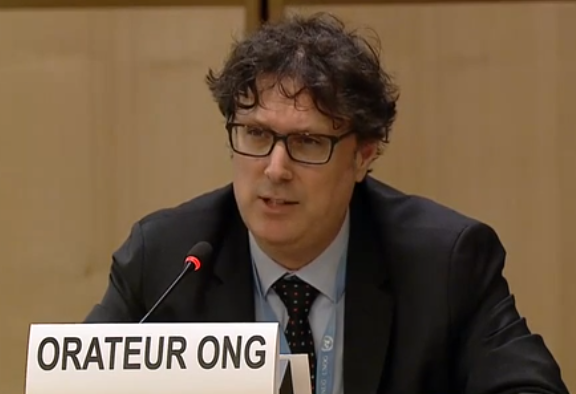
The ICJ and other NGOs today highlighted the discriminatory character of India’s Citizenship Amendment Act, and called for accountability for violence and excessive use of force in relation to protests against it, today at the Human Rights Council in Geneva.
The joint statement, delivered in a general debate, read as follows:
“India’s Citizenship (Amendment) Act, 2019 (CAA) arbitrarily excludes certain groups at risk of persecution, such as Muslims, from accessing an expedited path to citizenship, based on their religious affiliation.
The CAA is inconsistent with rule of law principles and international law, including the right to equality before the law and the right to non-discrimination, protected under human rights treaties such as the International Covenant on Civil and Political Rights and the International Convention on the Elimination of All Forms of Racial Discrimination, to which India is a party.
The implementation of the National Register of Citizens (NRC) in Assam risks making 1.9 million persons stateless. A nationwide NRC will put more people at risk.
Our organizations urge the Indian government to amend the CAA to ensure that any path to citizenship provides for equal protection for persecuted persons, and does not discriminate on grounds such as religion or national origin.
We also urge India to develop a comprehensive refugee law that addresses the plight of persecuted minorities in a non-discriminatory manner, and to accede to the 1951 Refugee Convention and its 1967 Protocol.
We further call on India to respect the right to peaceful assembly, and to ensure accountability for those alleged to have instigated violence or used excessive force in relation to the nationwide protests against the CAA.”
The statement was delivered by ICJ on behalf also of Asian Forum for Human Rights and Development (FORUM-ASIA), CIVICUS – World Alliance for Citizen Participation, Human Rights Watch, International Service for Human Rights (ISHR), Minority Rights Group International, and World Organization against Torture (OMCT).
The statement can be downloaded in PDF format here: ICJ statement GD item 4 India (10-03-2020)
Feb 28, 2020 | Advocacy, Non-legal submissions
At the UN Human Rights Council, the ICJ today urged renewed international action to ensure justice and accountability for crimes under international law in Sri Lanka.
The statement, delivered during a discussion of updates and reports from the High Commissioner for Human Rights, read as follows:
“The ICJ deeply regrets the Sri Lankan Government’s withdrawal of support for the process under resolutions 30/1 and 40/1. ICJ supports the joint statement read by IMADR.
The Sri Lankan legal system and judicial institutions have for decades demonstrated a chronic inability to address systemic and entrenched impunity for crimes under international law perpetrated by the military and security forces.[1] The new President’s promises to protect the military from accountability, and senior command appointments of individuals credibly accused of crimes under international law, only deepen the concern.
As the High Commissioner notes,[2] the failure to deal comprehensively with impunity and to reform institutions may lead to more human rights violations.
The Tamil population have consistently and rightly rejected any reconciliation process that ignores justice and accountability, and it is obvious that no justice or accountability process that is left to domestic Sri Lankan institutions alone can be credible. The compromise national-international “hybrid” judicial accountability mechanism foreseen by resolution 30/1 already fell far short of what the situation actually warrants.
If the Government seeks now to abandon even that compromise, purely international processes, whether before the ICC or through creation of another international accountability mechanism by the Council, and the exercise of universal jurisdiction by other States, are the only remaining options for securing the justice required by international law and indispensable to any credible reconciliation process for Sri Lanka.”
[1] International Commission of Jurists, Authority without Accountability: The Crisis of Impunity in Sri Lanka, 2012, https://www.icj.org/sri-lanka-new-icj-report-documents-crisis-of-impunity/; Human Rights Council must respond to ongoing failure of Sri Lankan justice system to ensure accountability for human rights violations, 2014, https://www.icj.org/human-rights-council-must-respond-to-ongoing-failure-of-sri-lankan-justice-system-to-ensure-accountability-for-human-rights-violations/; Sri Lanka: the need for an international inquiry, 2014, https://www.icj.org/sri-lanka-the-need-for-an-international-inquiry/; Sri Lanka: Joint Open Letter to the Ambassadors of UN Human Rights Council Member States, 2015, https://www.icj.org/wp-content/uploads/2015/07/SriLanka-JointOpenLetter-Accountability-Advocacy-2015.pdf; Sri Lanka’s victims demand and deserve credible justice, 2016, https://www.icj.org/sri-lankas-victims-demand-and-deserve-credible-justice/.
[2] UN Doc A/HRC/43/19, para 36.
Feb 27, 2020 | Events, News
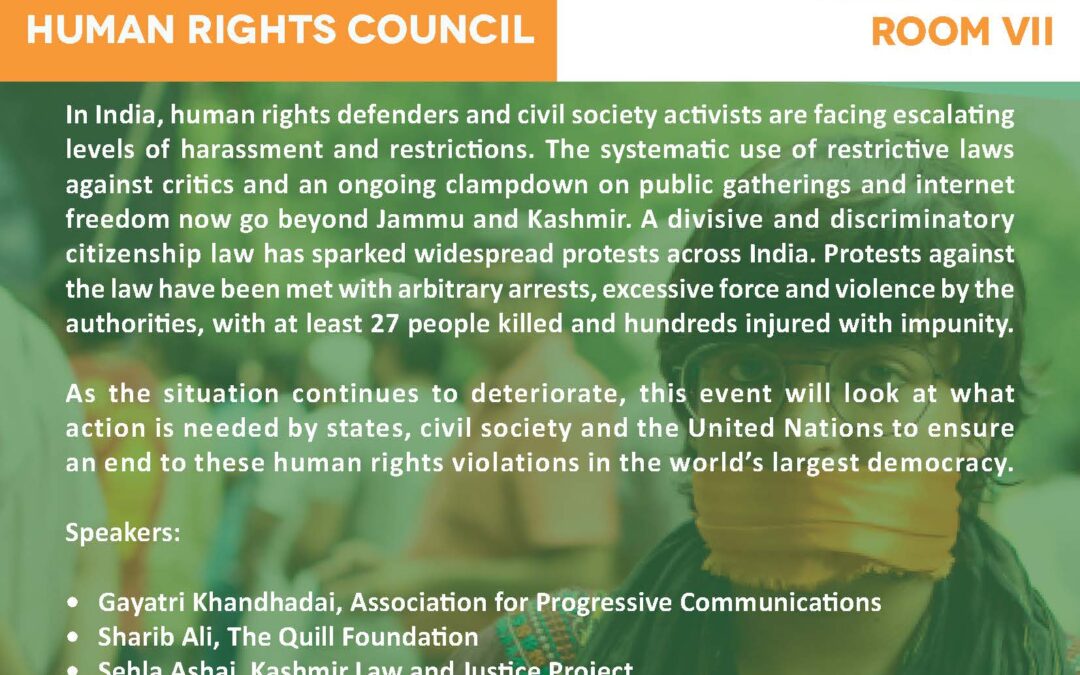
On 2 March, the ICJ and other NGOs will present discussion of the situation for human rights in India at a side event to the UN Human Rights Council in Geneva.
The event takes place Monday 2 March 2020, 14:00 – 15:00, in Room VII, Palais des Nations, Geneva.
In India, human rights defenders and civil society activists are facing escalating levels of harassment and restrictions. The systematic use of restrictive laws against critics and an ongoing clampdown on public gatherings and internet freedom now go beyond Jammu and Kashmir. A divisive and discriminatory citizenship law has sparked widespread protests across India. Protests against the law have been met with arbitrary arrests, excessive force and violence by the authorities, with at least 27 people killed and hundreds injured with impunity.
As the situation continues to deteriorate, this event will look at what action is needed by states, civil society and the United Nations to ensure an end to these human rights violations in the world’s largest democracy.
A flyer for the event can be downloaded here in PDF format: UN-Event-India-2019