Nov 2, 2020 | News
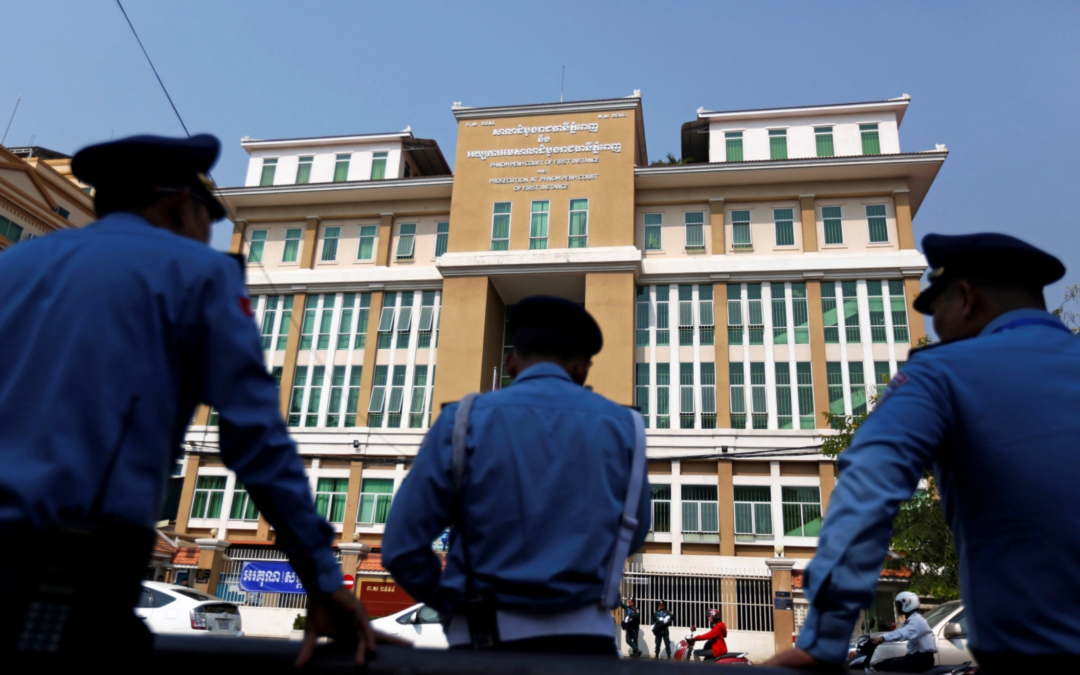
Today, the ICJ and 56 civil society organizations called for an end to attacks on independent media by the Royal Government of Cambodia (“RGC”).
Amidst an increasingly repressive landscape, the organizations called on the RGC to:
- End harassment of journalists and media outlets;
- Immediately drop apparently politically motivated charges against journalists and unconditionally release those held in detention for exercising their rights to freedom of expression and information;
- Repeal or significantly amend repressive laws that unjustifiably impede media freedom and freedom of expression, including media freedom, so as to allow for a vibrant and free media landscape in line with its international human rights obligations;
- Immediately reverse revocations of media licenses to facilitate media freedom and the right to freedom of expression and information; and refrain from similar revocations of media licenses in the future.
Download the joint statement in English and Khmer.
Contact
Kingsley Abbott, Senior Legal Adviser, ICJ Global Accountability Initiative e: kingsley.abbott(a)icj.org
See also
ICJ, ‘Cambodia: authorities must end increasing crackdown on human rights defenders’, 11 September 2020
ICJ, ‘Cambodia: ICJ and 64 organizations call for immediate withdrawal of Draft Law on Public Order’, 13 August 2020
ICJ, ‘ICJ and 31 organizations jointly urge Governments to call for respect of human rights in Cambodia’, 22 July 2020
ICJ, ‘Cambodia: State of Emergency bill violates the rule of law’, 8 April 2020
Oct 13, 2020 | Advocacy, News, Non-legal submissions
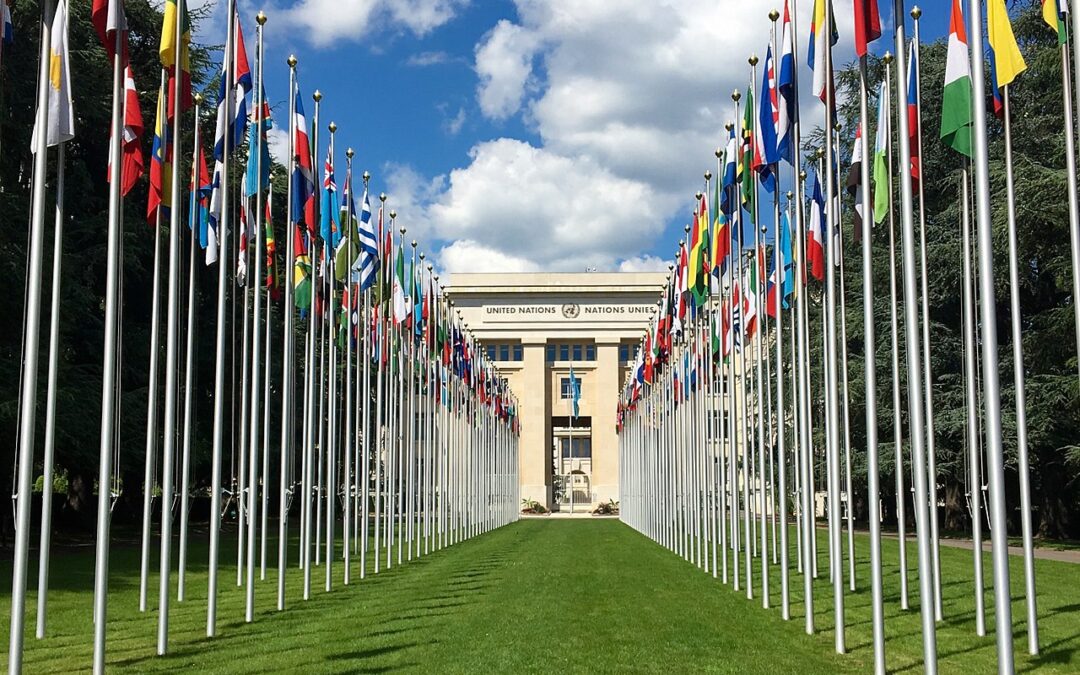
On 12 October 2020, the ICJ made a submission to the Human Rights Council’s Working Group on the Universal Periodic Review in advance of the Human Rights Council’s review of Singapore in May 2021.
In its submission, the ICJ expressed concern about the following issues:
(i) Freedom of expression online;
(ii) The death penalty;
(iii) Corporal punishment; and
(iv) International human rights instruments.
The ICJ further called upon the Human Rights Council and the Working Group on the Universal Periodic Review to recommend that Singapore ensure, in law and in practice, the right to freedom of expression online, the right to life and the absolute prohibition against cruel, inhuman or degrading treatment or punishment; and become a party to core international human rights instruments, including the International Covenant on Economic, Social and Cultural Rights, the International Covenant on Civil and Political Rights, the Convention Against Torture and Other Cruel, Inhuman or Degrading Treatment or Punishment, the International Convention on the Protection of the Rights of All Migrant Workers and Members of Their Families and the International Convention for the Protection of All Persons from Enforced Disappearance, as well as the existing Optional Protocols to some of these treaties.
The submission is available in PDF here.
Oct 5, 2020 | Advocacy, Non-legal submissions
The ICJ today joined other NGOs in expressing concern that the Human Rights Council is poised to fail to adequately respond to the human rights crisis in the Philippines, and urging stronger action.
The statement, which was delivered by the World Organization against Torture (OMCT) on behalf of the group of NGOs in a general debate on item 10, read as follows:
“On behalf of 15 organisations, including colleagues in the Philippines, we are deeply disappointed that the draft Item 10 resolution on the Philippines fails to reflect the gravity of the situation, including as documented in the OHCHR report.
Colleagues from the Philippines have tirelessly advocated for an international investigation, at great personal risk. The thousands of victims of killings and other violations and their families continue to be deprived of justice.
This is a collective failure by the States at this Council. We are shocked by the lack of support for a more robust response.
We acknowledge the rationale presented for constructive engagement with the Government of the Philippines. However, an approach based purely on technical cooperation and capacity-building has no realistic prospect of meaningful impact with a government that denies the true scale and severity of the human rights violations, has publicly endorsed the policy of killings, avoids independent investigations, and continues to crack down on civil society.
Despite the shortcomings of the resolution, it at least keeps the situation on the agenda for the next two years and allows for robust reporting by the OHCHR on the situation – including the implementation, or lack thereof, of OHCHR report recommendations. The Council must follow developments closely and be ready to launch an independent investigation if the killings and the crackdown on civil society do not immediately end and prosecution of perpetrators is not pursued.
I thank you.”
- Alyansa Tigil Mina (ATM)
- Amnesty International
- Asian Forum for Human Rights and Development (FORUM-ASIA)
- CIVICUS
- Ecumenical Voice for Human Rights and Peace in the Philippines (EcuVoice)
- Franciscans International
- Harm Reduction International
- Human Rights Watch
- iDefend
- International Commission of Jurists (ICJ)
- International Federation for Human Rights (FIDH)
- International Service for Human Rights (ISHR)
- KARAPATAN
- Philippine Alliance of Human Rights Advocate (PAHRA)
- World Organisation Against Torture (OMCT)
Sep 29, 2020 | Advocacy, News
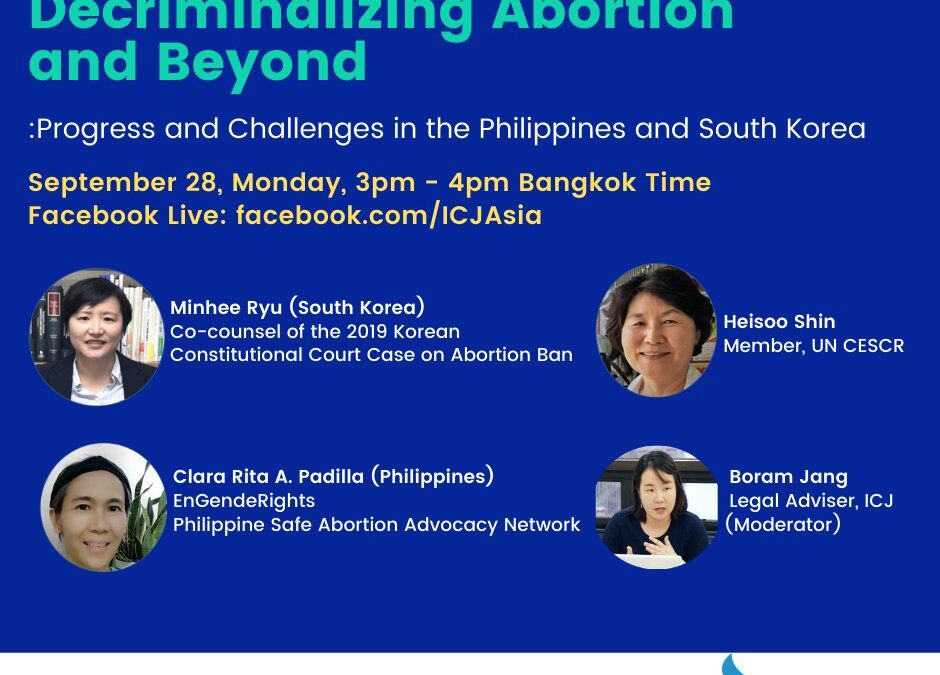
On the International Safe Abortion Day, the ICJ held a webinar on the decriminalization of abortion in the Philippines and the Republic of Korea.
The webinar focused on the legal provisions criminalizing abortion and on women human rights defenders’ struggle to decriminalize abortion in the Philippines and in the Republic of Korea. In addition, the participants highlighted States’ legal obligation to guarantee access to legal, safe and affordable abortion and post abortion care for all persons under international human rights law and standards.
Ms. Clara Rita A. Padilla from the Philippines’ Safe Abortion Advocacy Network; Ms. Minhee Ryu, Co-counsel in the 2019 Korean Constitutional Court case on the country’s criminal ban on abortion; and Dr. Heisoo Shin, member of the UN Committee on Economic, Social and Cultural Rights (CESCR) participated as speakers.
“The law imposing penalties on women who have an abortion and those assisting them only endangered the lives of women forced to seek unsafe abortion,” said Ms. Padilla. “Today, the Philippine Safe Abortion Advocacy Network introduced a draft bill, An Act Decriminalizing Induced Abortion to Save the Lives of Women, Girls, and Persons of Diverse Gender Identities, and we will continue advocating the repeal of the current discriminatory law against women and eliminate harmful stigma against women due to the restrictive abortion law and imposition of judgmental religious beliefs.”
Ms. Minhee Ryu talked about the women human rights defender’s movement in the Republic of Korea, including the work of the Joint Action for Reproductive Justice. She also highlighted the legal strategy to draw the Constitutional Court’s attention to the experience of girls, migrant women and women with disabilities in the context of the case that resulted in the Court holding that the criminalization of abortion was unconstitutional in April 2019.
“It is the core obligations of States to ensure the repeal of laws, policies and practices that criminalize, obstruct or undermine access by individuals or a particular group to sexual and reproductive health facilities and services,” said Dr. Heisoo Shin. “Denial of abortion often leads to maternal mortality and morbidity, which, in turn, constitute violations of the rights to life, dignity, autonomy, security, equality and non-discrimination, equality before the law and equal protection of the law without discrimination, privacy, physical and mental health, and the right to freedom from ill-treatment.”
The participants agreed that international human rights law and standards, such as the Human Rights Committee’s General Comment 36 on the right to life, and the CESCR’s General Comment 22 on the right to sexual and reproductive health, are instrumental in worldwide efforts to ensure access to legal, safe and affordable abortion and in advocating for its complete decriminalization.
Contact
Boram Jang, International Legal Adviser, e: boram.jang(a)icj.org
Sep 25, 2020 | Advocacy, Non-legal submissions
The ICJ has joined other NGOs in urging the UN Human Rights Council to respond effectively to the crisis for human rights in the Philippines.
The joint oral statement was delivered by the World Organization against Torture (OMCT) on behalf of the group of international and Philippino NGOs, during a general debate on country situations. It read as follows:
“Madam President,
I speak on behalf of 35 organisations, deeply concerned by the situation in the Philippines. We urge this Council to respond credibly to the grave findings and recommendations of the recent OHCHR report.
Developments since that report indicate further deterioration, with ongoing incitement to kill by the President, the promotion of an architect of the anti-drug strategy to police chief, the passing of an overbroad anti-terror law ripe for abuse, the conviction of journalist Maria Ressa and shutdown of media network ABS-CBN, the murder of activists and a journalist and a new spike in police killings.
In terms of cooperation, the Philippines refused access to OHCHR in the preparation of the report and continues to bar entry to Special Procedures. The Secretary-General and High Commissioner have raised significant concerns over reprisals. The Government does not acknowledge widespread and systematic killings as a problem, in fact it encourages them and rejects the OHCHR’s findings. Serious violations continue.
The Government’s announced Inter-Agency Panel lacks any transparency and directly involves branches of Government implicated in these abuses. As such, it clearly cannot satisfy international standards of independence,[1] nor can it be seen as credible or safe for victims to engage with.
Madam President,
Our organisations have urged and continue to urge this Council to launch an independent international investigation.
The High Commissioner has clearly asked the Council to renew her mandate to monitor and report on the wider situation, as well as to provide technical cooperation to “implement the report’s recommendations,” and “continue to pursue accountability”. We urge this Council – at absolute minimum – to ensure continued monitoring and reporting on all aspects of the situation as clearly recommended by the High Commissioner. Anything less would not only be an insult to victims and their families, but send a green light to perpetrators that they can continue with impunity, with disastrous consequences on the ground.
Thank you.”
Co-signatories:
- Action Network Human Rights Philippines (AMP)
- Amnesty International
- Article 19
- Child Alert Mindanao
- Children’s Legal Rights and Development Center (CLRDC)
- CIVICUS Alliance
- Coalition Against Summary Executions
- Families of Victims of Involuntary Disappearance (FIND)
- Franciscans International
- Franciscan Sisters of the Immaculate Conception
- Free Legal Assistance Group (FLAG)
- Freedom House
- Harm Reduction International
- Human Rights Watch
- In Defense of Human Rights and Dignity Movement (iDEFEND)
- International Coalition for Human Rights in the Philippines (ICHRP)
- International Commission of Jurists
- International Drug Policy Consortium
- International Federation for Human Rights (FIDH)
- International Service for Human Rights
- Karapatan Alliance Philippines
- Medical Action Group
- National Union of Journalists of the Philippines
- Network Against Killings in the Philippines (NakPhil)
- Partnership Mission for People’s Initiatives (PMPI)
- Philippine Alliance of Human Rights Advocates (PAHRA)
- Philippine Misereor Partnership Inc. (PMPI)
- Philippine Human Rights Information Center
- Salinlahi Alliance for Children’s Concerns
- Swiss Catholic Lenten Fund (SCLF)
- Tambayan
- The Asian Forum for Human Rights and Development (FORUM-ASIA)
- Task Force Detainees of the Philippines
- World Council of Churches
- World Organisation Against Torture (OMCT)
[1] See for instance the UN Principles on the Effective Prevention and Investigation of Extra-legal, Arbitrary and Summary Executions, adopted by the Economic and Social Council in its resolution 1989/65 of 24 May 1989; and Human Rights Committee, General Comment no. 36 on the right to life (article 6).