May 13, 2016 | News
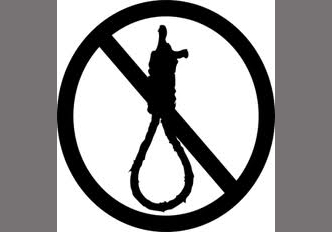
The ICJ and other human rights organizations condemn the imminent executions of Kho Jabing in Singapore and at least 15 individuals which apparently includes, 4 Chinese nationals, 2 Nigerians, 2 Zimbabweans, 1 Senegalese, 1 Pakistani and 5 Indonesian nationals in Indonesia.
The organizations call on the authorities of the two countries to halt the impending executions.
On 12 May 2016, the family of Kho Jabing, a Malaysian national on death row in Singapore, received a letter from the Singapore Prisons informing them that he would be executed on 20 May 2016. Kho Jabing was convicted of murder in 2011.
Of particular concern is the fact that there was a lack of unanimity in sentencing Kho Jabing to death, which demonstrates that reasonable doubt exists as to whether he deserved the death penalty.
As regards the imminent executions that will be taking place in Indonesia, Indonesia would contravene her own international obligations under the International Covenant on Civil and Political Right by executing these individuals.
The Association of South East Asian Nations Member States (“ASEAN”), including Singapore and Indonesia, have continuously emphasized the importance of the rule of law and the protection of rights.
The death penalty therefore stands out as an aberration.
In December 2014, the United Nations General Assembly adopted its latest resolutions calling on all States to adopt a moratorium on the use of the death penalty, with a view towards abolition.
A record number of 117 Member States supported the Resolution.
Regrettably, Indonesia abstained and Singapore voted against the Resolution.
The ASEAN Member States must use the opportunity presented by this Resolution to align themselves with the global movement towards abolition.
Singapore has recently undergone its second Universal Periodic Review in January 2016.
The continued use of the death penalty was one of the key highlights of the review, with Singapore receiving over 30 recommendations related to the death penalty, including recommendations to abolish the death penalty.
In 2015, Indonesia, a United Nations Human Rights Council Member until 2017, executed 14 individuals convicted of drug-related offences amid strong international opposition.
The imminent executions would further damage Indonesia’s human rights record and erode her standing in the international community.
The death penalty has no place in the 21st Century.
Not only is there a real possibility of wrongful executions, it deprives inmates of their life and dignity, and creates new classes of victims.
We strongly urge the governments of Singapore and Indonesia to halt the upcoming executions, immediately impose a moratorium on the use of the death penalty and take meaningful steps towards its eventual abolition.
List of signatories:
Anti-Death Penalty Network Asia (ADPAN)
Center for Prisoner’s Rights Japan (CPR)
Community Action Network (CAN, Singapore)
Free Community Church (Singapore)
Function 8 (Singapore)
MADPET (Malaysians Against Death Penalty and Torture)
Maruah (Singapore)
International Commission of Jurists (ICJ)
Journey of Hope
Legal Aid Community (LBH Masyarakat, Indonesia)
Murder Victims’ Families for Human Rights (MVFHR)
Ocean
Pusat Studi Hukum dan Kebijakan Indonesia (The Indonesian Center for Law and Policy Studies)
Reprieve Australia
Sayoni (Singapore)
Singapore Anti-Death Penalty Campaign (SADPC)
Suara Rakyat Malaysia (SUARAM)
Taiwan Alliance to End the Death Penalty (TAEDP)
The Commission for the Disappeared and Victims of Violence (KontraS, Indonesia)
The Indonesian Center for Law and Policy Studies (PSHK, Indonesia)
The Institute for Criminal Justice Reform (ICJR, Indonesia)
The Institute for Policy Research and Advocacy of Indonesia (ELSAM)
The National Human Rights Society, Malaysia (HAKAM)
Think Centre Singapore
We Believe in Second Chances (WBSC, Singapore)
Contact:
Sam Zarifi, ICJ Asia-Pacific Director, t: +66-807-819-002; e: sam.zarifi(a)icj.org

May 9, 2016 | News
The ICJ is deeply concerned at the recent legal harassment of several Cambodian human rights defenders and perceived political opponents, which raises serious questions as to the impartiality of the investigators, prosecutors and judges involved.
The ICJ calls on the Government to immediately conduct an independent review of the decision to pursue these cases, to end the prosecution of those who have been charged if the allegations are found to be groundless or the proceedings to have been unlawful or abusive, to cease the use of judicial and prosecutorial processes to harass and intimidate human rights defenders and perceived political opponents, and to respect its international obligations under the Convention on the Privileges and Immunities of the United Nations.
“The decision to proceed with these cases should be subject to a careful and independent review and any charges that have resulted must be dropped if the allegations are found to be without merit or have been carried through unlawful or abusive procedures,” said Kingsley Abbott, International Legal Adviser for Southeast Asia with the ICJ.
“The strong appearance of bias present in these cases flies in the face of the absolute right of all accused to have their case considered by independent and impartial prosecutors and judges at every stage of the process,” he added.
The different proceedings all stem from allegations centered on an alleged affair between Khom Chandaraty (also known as Srey Mom) and Kem Sokha, acting leader of the opposition Cambodia National Rescue Party (CNRP).
After a voice recording appeared on social media, allegedly of a conversation between them, the Cambodian Counter-Terrorism Directorate of the Government’s Central Directorate for Security “invited” Srey Mom for questioning, which prompted her to seek human rights assistance from a leading Cambodian NGO, the Cambodian Human Rights and Development Association (ADHOC).
On 11 March 2016, the Counter-Terrorism Directorate questioned Srey Mom. She denied the suggestions she had a relationship with Kem Sokha and that she was the female voice on the recording.
On 19 April 2016, after having met with ADHOC on a number of further occasions, Srey Mom was asked in a closed session with a prosecutor at the Phnom Penh Municipal Court to answer allegations of having provided false testimony and of having engaged in prostitution.
On this occasion, Srey Mom admitted to a relationship with Kem Sokha.
On 22 April 2016, Srey Mom alleged in an open letter that ADHOC staff had attempted to persuade her to lie to the authorities.
On 2 May 2016, an Investigating Judge in Phnom Penh charged four staff members of ADHOC, Nay Vanda, Ny Sokha, Yi Soksan, and Lem Mony, with “bribery of a witness”.
A former staff member of ADHOC, Ny Chakrya, and a staff member of the Cambodia Office of the High Commissioner for Human Rights (OHCHR), Sally Soen, were also charged with being accomplices, notwithstanding Sally Soen’s immunity from prosecution under the Convention on the Privileges and Immunities of the United Nations.
The allegation of bribery appears to relate to the fact that ADHOC reportedly provided Srey Mom with a small sum of money to cover food and transport costs, including to attend questioning by judicial authorities.
“While Cambodia has a positive legal duty under international law to protect human rights defenders from attacks arising out of their work, these proceedings appear to be aimed at intimidating and silencing Cambodian civil society and are the latest in a series of laws and actions directed against them,” said Abbott.
Last year, the Government passed the Law on Associations and NGOs (LANGO), which Abbott stated would “severely restrict the ability of members of civil society to exercise their rights to freedom of association and expression which Cambodia has a duty to protect under its international obligations.” Abbott further stated that the Governments intention was to “…weaken the impact of NGOs, including human rights defenders.”
Under Article 12 of the United Nations Declaration on Human Rights Defenders, States have an obligation to take all necessary measures to ensure the protection of human rights defenders, including against any threats, pressure, retaliation or arbitrary action as a consequence of the legitimate exercise of their rights under the Declaration.
In other proceedings, the Phnom Penh Municipal Court summoned Kem Sokha to answer allegations of criminal defamation and two other members of the CNRP, Pin Ratana and Tok Vanchan, have been questioned about allegations of prostitution.
Political commentator, Ou Virak, has been summoned to appear in the Phnom Penh Municipal Court on 12 May 2016 to answer allegations of criminal defamation for expressing the view that the ruling Cambodian Peoples Party (CPP) was exploiting the alleged affair between Kem Sokha and Srey Mom.
On 24 April 2016, a CNRP commune chief, Seang Chet, was arrested and detained on charges of bribery after Srey Mom alleged Seang Chet had attempted to pay her mother US $500 to encourage her to deny the affair.
Read also:
Cambodia: the ICJ condemns Senate’s approval of draft Law on Associations and NGOs
Cambodia: approved NGO law poised to hobble the work of civil society
Cambodia: withdraw draft law on associations and non-governmental organizations – joint letter
Cambodia: ICJ and other rights groups urge end to NGO law
Contact
Kingsley Abbott, ICJ’s International Legal Adviser, t: +66 94 470 1345, e: kingsley.abbott(a)icj.org
Apr 18, 2016 | Advocacy, Non-legal submissions
The ICJ and Thai Lawyers for Human Rights provided a joint submission to the UN Human Rights Committee for its consideration during the adoption of a list of issues for the examination of the Second Periodic Report of Thailand under the International Covenant on Civil and Political Rights.
During its 117th Session, from 30 June to 25 July 2016, the Committee will prepare and adopt a List of Issues on Thailand.
These issues will be put to the Government of Thailand for formal response ahead of the Committee’s full examination of Thailand’s Second Periodic Report during the Committee’s 119th Session, the exact dates of which have yet to be confirmed but which is expected to take place in March 2017.
The ICJ and Thai Lawyers for Human Rights’ joint submission raises matters and suggests concrete questions to be put to the Government of Thailand concerning the following issues:
– Thailand’s derogation under Article 4 of the Covenant;
– Torture and other ill-treatment, enforced disappearances and custodial deaths in disputed circumstances; and
– Thailand’s new institutional and legal framework since the coup d’état, which severely restricts the exercise of Covenant rights within the country and in particular the recent introduction of the National Council for Peace and Order’s (NCPO) Head Order 13/2016, which grants members of the military wide-ranging law enforcement powers to ‘prevent and suppress’ 27 ‘crimes’, together with blanket immunity from prosecution.
THAILAND-JOINT ICJ TLHR HRC LOI SUBMISSION-Advocacy-non legal submission-2016-ENG (full text in PDF)

Apr 7, 2016 | News
The Malaysian government should reject a proposal to make the Attorney General automatically the chair of the Bar Council of Malaysia, the ICJ said today.
The Malaysian Bar must remain independent and the government should not entertain this or any other measure that would compromise this independence, the ICJ says.
Yesterday, during the debate session at the Dewan Rakyat (Lower House of the Malaysian Parliament), parliamentarian Datuk Datu Nasrun Datu Mansur suggested that the Attorney General should be automatically appointed as the chairman of the Bar Council of Malaysia.
Datuk Datu Nasrun Datu Mansur made the suggestion while criticizing the Bar Council for its role in demanding greater government accountability.
“This latest proposal is just the most recent attempt by the government to silence all opposition and to weaken the rule of law,” said Emerlynne Gil, ICJ’s Senior Legal Adviser for Southeast Asia.
“First the government weakened the independence of the judiciary, and now it is going after the lawyers who are standing up for justice and accountability,” she added.
Responding to the suggestion, Law Minister Nancy Shukri said that the government will look into this, noting that amendments need to be made to the Legal Profession Act 1976 for this measure to be adopted.
“International standards on the independence of lawyers state very clearly that governments should not interfere with the work of professional associations of lawyers like the Malaysia Bar,” said Gil.
The United Nations Basic Principles on the Role of Lawyers stipulate that lawyers have the right “to form and join self-governing professional associations to represent their interests, promote their continuing education and training, and protect their professional integrity,” the ICJ reminds.
Furthermore, the Basic Principles distinctly state that “the executive body of the professional associations shall be elected by its members and shall exercise its functions without external interference.”
“An independent and self-regulated bar association is important to safeguard the professional interests and integrity of lawyers in Malaysia,” Gil said.
“It acquires specific importance especially now in Malaysia where there have been questions regarding the way justice is being administered in the country,” she added.
The Malaysia Bar is an essential agent in the administration of justice and hence, the lawyers belonging to it play a key role in supporting and calling for law and justice sector reform in the country, the ICJ further says.
Contact:
Emerlynne Gil, Senior International Legal Adviser for Southeast Asia, t: +66 840923575 ; e: emerlynne.gil(a)icj.org
Background:
The Malaysia Bar passed a motion last month during its 70th Annual General Assembly calling for the resignation of Attorney-General Tan Sri Mohamed Apandi Ali because he summarily ended the investigation of alleged corruption by Prime Minister Najib Razak.
The Prime Minister appointed Attorney-General Apandi on 27 July 2015, in the midst of the corruption investigation.
Attorney General Apandi subsequently cleared Prime Minister Najib Razak of any criminal wrongdoing and instructed the Malaysian Anti-Corruption Commission to close the investigations.
According to the ICJ, the motion passed by the Malaysia Bar calling for the resignation of the Attorney General was within its mandate as an independent professional association of lawyers, seeking as it did to draw attention to how administration of justice is being jeopardized right now.
The UN Basic Principles specifically recognize the right of lawyers to take part in public discussion of matters concerning the law, the administration of justice and the promotion and protection of human rights.
The UN Human Rights Council has unanimously affirmed that “an independent legal profession” is among the “essential prerequisites for the protection of human rights, the rule of law, good governance and democracy, and for ensuring that there is no discrimination in the administration of justice”. Such independence should be respected in all circumstances.
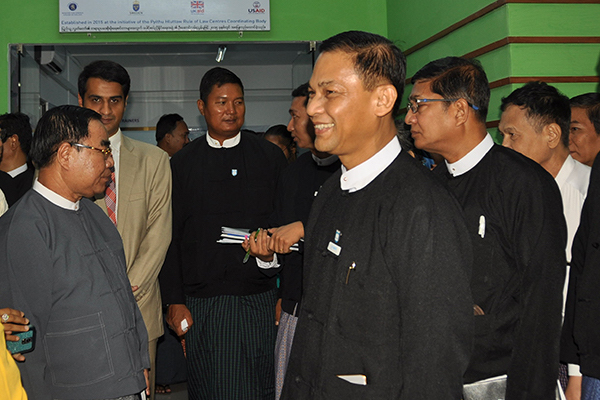
Apr 6, 2016 | News
Newly appointed Myanmar Attorney General U Tun Tun Oo must commit to strengthening the rule of law and respect for human rights in the country, said the ICJ today.
U Tun Tun Oo (photo) has been one of the Deputy Attorney-Generals in the Union Attorney General’s Office since 2006.
“U Tun Tun Oo is taking over a post that is Myanmar’s most powerful legal officer. He plays a complex role, at once a member of the Executive, adviser to the President and the Hluttaw, the authority drafting and amending laws,” said Sam Zarifi, ICJ’s Asia Director. “As an immediate matter, he should review all political cases and stop the harassment of human rights defenders.”
The Attorney General represents the government in judicial proceedings and advises the cabinet on the legality of its actions.
He also leads Prosecutors in the country, and thus has the authority to select, initiate and undertake investigations into criminal and politically sensitive cases.
The Attorney General is also the president of the country’s only officially recognized Bar Association.
The Attorney General is, in effect, the minister of justice, and as such has controlled much of the work of the judiciary, too.
The Union Attorney General’s Office has historically followed the interests of the military and impeded an independent judiciary, the ICJ notes.
It has been criticized for failing to tackle major problems such as corruption and human rights abuses while continuing to prosecute human rights defenders and political opponents.
“Within the Union Attorney General’s Office, prosecutors must act with integrity in an independent, impartial and objective manner and in the protection of the public interest”, said Zarifi.
“Prosecutors must exercise sound discretion in the performance of their functions. They must seek justice, without fear of favour, not merely convict.”
“The Attorney-General’s Office must not shy away from prosecutions that will combat impunity,” he added.
The Union Attorney General’s Office launched its Strategic Plan for 2015-2019, establishing important benchmarks for measuring the institution’s development.
The Strategic Plan acknowledges the public’s low confidence in the office and commits the office to the rule of law, human rights, fair trials, prosecutorial ethics and accountability, in accordance with international standards.
“The Union Attorney General’s Office must investigate and prosecute criminal offences, including gross human rights violations and abuses, with impartiality. The Union Attorney General’s Office must be free from unwarranted interference from the legislative and the executive branches of government. Likewise, it must not interfere with judges or lawyers in an independent judiciary,” Zarifi said.
Contact:
Sam Zarifi, ICJ Regional Director for Asia and the Pacific, t: +66807819002; e: sam.zarifi@icj.org
Vani Sathisan, ICJ International Legal Adviser for Myanmar, t: +95(0)9250800301; e: vani.sathisan@icj.org
Additional information:
Under international standards, prosecutors are required to “respect and protect human dignity and uphold human rights” and “give due attention to the prosecution of crimes committed by public officials, particularly corruption, abuse of power, grave violations of human rights and other crimes recognized by international law.” These principles are set out in the United Nations Guidelines on the Role of Prosecutors.
An exposition and analysis of international law and standards are available in English and Myanmar language in the ICJ’s authoritative Practitioners’ Guide on the Independence and Accountability of Judges, Lawyers and Prosecutors.