Mar 17, 2016 | News
The Indonesian House of Representatives should reject proposed amendments to the country’s Anti Terrorism Law that would actually contravene international law, said the ICJ and other human rights groups today.
“The horrific recent attacks in Jakarta highlight the Indonesian government’s obligation to protect people from acts of terrorism, but experience from around the world has shown that countering terrorism must occur along with protection of human rights, not in violation of Indonesia’s legal obligations,” said Sam Zarifi, ICJ’s Regional Director for Asia and the Pacific.
The ICJ, the Commission for the Disappeared and Victims of Violence (KontraS), and the Indonesian Human Rights Monitor (IMPARSIAL) noted that the proposed amendments would authorize unnecessarily prolonged detention of suspects, putting them at risk of torture, ill-treatment, enforced disappearance, and arbitrary detention.
The amendments also include a provision on administrative detention.
“This is generally forbidden in international law, save in the most exceptional circumstances far narrower than as contemplated under the amendments,” Zarifi added.
A letter sent by the organizations to the House of Representatives lays out recommendations on how this provision may be revised so that it would not violate the rights of detainees.
“There is no reference anywhere in the amendments how detainees may challenge the lawfulness of their detention. It has to be clear in the law that these remedies are available to them,” said Haris Azhar, National Executive Coordinator of KontraS.
The three organizations also underline the amendment proposing stripping Indonesian combatants abroad of their nationality would be contrary to international law, if this would render them stateless.
“Nationality is what legally binds an individual to a particular State. It is an essential prerequisite to the enjoyment and protection of the full range of human rights,” said Poengky Indarti, board member of IMPARSIAL.
They also said that the proposed provision on incitement to terrorism would unduly limit political speech, especially those that are contrary to the views of persons wielding power and authority, such as opinions on self-determination or changes to the legal and constitutional structures.
The proposed amendments impose the death penalty on particular offences.
The ICJ, IMPARSIAL, and KontraS oppose capital punishment in all cases without exception, as it is a violation of the right to life and the right not to be subjected to cruel, inhuman, and degrading treatment.
In the letter, they remind the government of Indonesia to immediately impose a moratorium on the use of the death penalty, with a view to moving towards its total abolition.
The ICJ, IMPARSIAL, and KontraS urged the members of Indonesia’s House of Representatives to keep in mind that whatever measures Indonesia uses to counter terrorism must comply with international law and protect human rights.
Contact:
Emerlynne Gil, ICJ’s Senior International Legal Adviser (Bangkok), t: +66 840923575 ; e: emerlynne.gil(a)icj.org
Fatia Maulidiyanti, S.IP, International Desk of KontraS (Jakarta), t: +62 21 391 9097/98 ; e: fatia(a)kontras.org
Poengky Indarti, Member of the Board of IMPARSIAL (Jakarta), t: +62 812 8362 8659 ; e: poengky1970(a)gmail.com
Indonesia-Letter to Gvt-Advocacy-Open letters-2016-ENG (full text of letter, in PDF)
Mar 15, 2016 | News
Today’s acquittal of the only person facing charges for the killing of lands rights activist Chai Bunthonglek, highlights the urgent need for the Thai Government to protect human rights defenders in the country, said the ICJ today.
In addition to Chai Bunthonglek, a member of the Southern Peasant Federation of Thailand (SPFT), three other SPFT activists have been killed since 2010: Montha Chukaew and Pranee Boonrat in 2012 and Somporn Pattanaphum in 2010.
No one has been prosecuted for these three killings, reportedly due to insufficient evidence obtained by the police.
“The result in this case underscores the pressing need for the Department of Special Investigations to investigate the pattern of killings of land rights activists in southern Thailand,” said Kingsley Abbott, ICJ International Legal Adviser for Southeast Asia.
Chai Bunthonglek was killed on 11 February 2015. All four SPFT activists killed since 2010 had been advocating for the land rights of poor farmers who are in a dispute with the Government and a palm oil company operated by Jiew Kang Jue Pattana Co. Ltd.
“Today’s acquittal means that no-one has been held accountable for the killing of Chai Bunthonglek, representing another failure to bring to justice those responsible for crimes against human rights defenders and, in particular, those trying to uphold social and economic rights in Thailand,” said Abbott.
“The ICJ calls on the Thai Government to ensure justice and effective remedies for human rights defenders.”
On 15 March, the Viangsra Provincial Court acquitted Santi Wanthong, who was accused of driving the motorcycle from which Chai Bunthonglek, 61-years-old, was shot six times and killed in front of his family in Klong Sai Pattana in Surat Thani Province.
Two other suspects initially arrested for the crime were not indicted.
The DSI has the power to assume jurisdiction over “special” criminal cases including complex cases that require special inquiry, crimes committed by organized criminal groups, and cases where the principal suspect is “an influential person.”
The trial court held today that prosecution witnesses could not properly identify the defendant, and that a cap and gun collected from his house could not be positively identified as belonging to the man who had been involved in attacking Chai Bunthonglek.
Chai Bunthonglek’s family intends to appeal the verdict, the ICJ has been told. They have 30 days to file an appeal.
Witnesses in the case, as well as members of SPFT, have expressed their fear of further attacks. Suraphon Songru, member of the Steering Group of the SPFT, told the ICJ: “the perpetrators – which the community believe may be linked to the local authorities in the area – are still out there, which means another killing could take place.”
The ICJ called on Thai authorities to ensure the safety of all witnesses and ensure the safety of all human rights defenders, including members of SPFT, in Surat Thani.
Background
Santi Wanthong was formally indicted on the following charges: murder of another person (section 288 of the Thai Criminal Code); jointly premeditated murder (section 289 of the Thai Criminal Code); possession of a firearm without a permit (section 371 of the Thai Criminal Code); and possession of ammunition for a firearm without a permit (sections 7, 8 and 72 of the Gun, Ammunition, Explosive Substance, Firework and Artificial Gun Weapon Act).
SPFT was formed in 2008 and campaigns for the right to agricultural land in the Khlong Sai Pattana and Permsub area, in Surat Thani Province and other areas in the region.
Thailand is a state party to the International Covenant on Economic, Social and Cultural Rights (ICESCR) and had its review before the Committee of the ICESCR in June 2015, where the killings of land rights defenders was particularly noted. The Committee urged Thailand to “adopt all measures necessary to protect human rights activists, including those working to defend economic, social and cultural rights, from any and all acts of intimidation, harassment and killings and to ensure that perpetrators of such acts are brought to justice.” The obligation to protect the right to life and other rights of human rights defenders working on economic, social and cultural rights, and to take effective criminal proceedings in response to such crimes, is also an obligation of Thailand under the International Covenant on Civil and Political Rights, and is recognized in numerous UN standards on protection of human rights defenders.
Contact
Kingsley Abbott, International Legal Adviser for Southeast Asia, t +66 94 470 1345 ; e: kingsley.abbott(a)icj.org
Thailand-Chai case-News-2016-THA (full text in Thai, PDF)
Mar 15, 2016 | Advocacy, Non-legal submissions
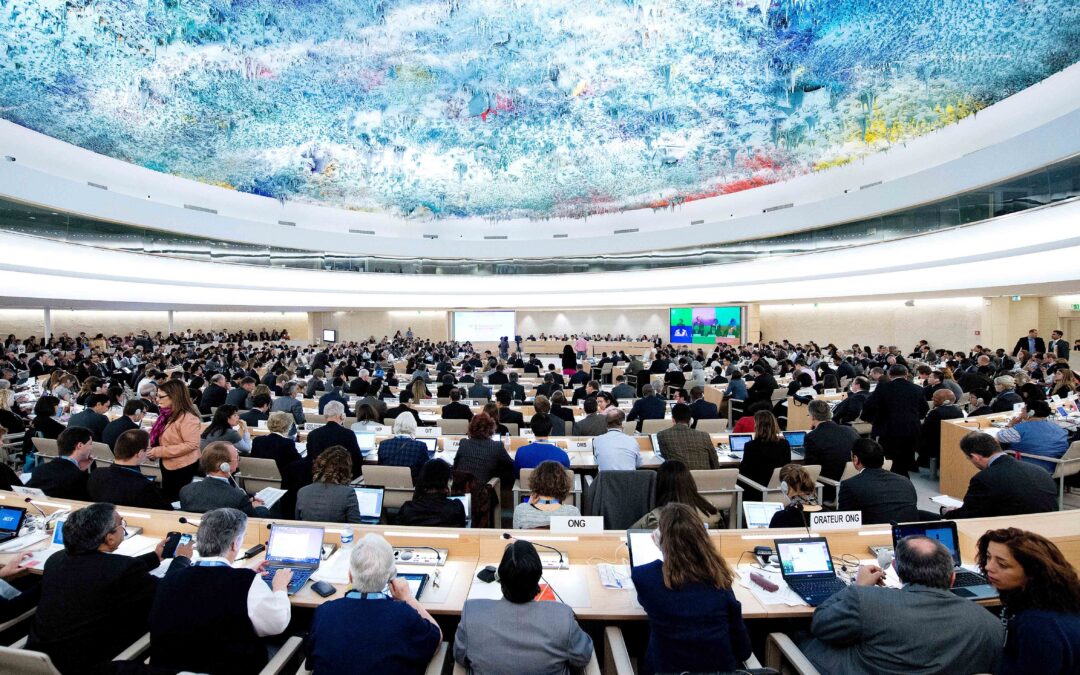
The ICJ today delivered an oral statement on the deteriorating situation for human rights in Thailand, to the UN Human Rights Council in Geneva.The statement may be downloaded in PDF format here: HRC31-Advocacy-OralStatement-Thailand-2016

Mar 14, 2016 | Advocacy, Non-legal submissions
The ICJ today joined the International Bar Association’s Human Rights Institute in an oral statement during the interactive dialogue with the UN Special Rapporteur on the situation for human rights in Myanmar.The statement focussed on the situation of the legal profession and judiciary.
It is available to download in PDF format here: HRC31-Advocacy-OralStatement-SRMyanmar-2016

Mar 10, 2016 | News
The ICJ welcomes the decision of the Magistrate Court to dismiss the charges against Lena Hendry for her involvement in 2013 screening of No Fire Zone: The Killing Fields of Sri Lanka, an award-winning human rights documentary on the civil war in Sri Lanka.
Magistrate Mohamad Rehab Mohd Aris determined that the prosecution failed to prove a prima facie case against Lena Hendry (photo).
As a consequence, she did not have to enter her defense.
“We welcome the decision of the Magistrate’s Court to clear Lena Hendry from all charges,” said Emerlynne Gil, ICJ’s Senior International Legal Adviser.
“We must emphasize though that subjecting Lena Hendry in the first place to criminal prosecution simply for screening this documentary violated her human rights and contravenes Malaysia’s obligations to uphold freedom of expression,” she added.
“We should remember that the provision in the Film Censorship Act 2002 used against Lena Hendry remains on the books and still operative. It can still be used to stifle the voices of other human rights defenders in Malaysia,” Gil further said.
Lena Hendry was charged under section 6(1)(b) of the Film Censorship Act 2002 for allegedly showing the film without prior authorization by the Board of Censors.
The said provision prohibits any person to circulate, exhibit, distribute, display, manufacture, produce, sell, or hire any film or film publicity material that has not been approved by the Board of Censors.
If Lena Hendry had been found guilty, she could have faced a fine of up to RM30,000 (approximately US$6,900) and/or a sentence of up to three years imprisonment.
The ICJ reiterates its call to the Government of Malaysia to safeguard freedom of expression and uphold the right of individuals to elaborate and disseminate information, including on questions of public import and the documentation of human rights abuses.
Contact:
Emerlynne Gil, Senior International Legal Adviser for Southeast Asia, t: +66 840923575 ; e: emerlynne.gil@icj.org