Mar 31, 2019 | News
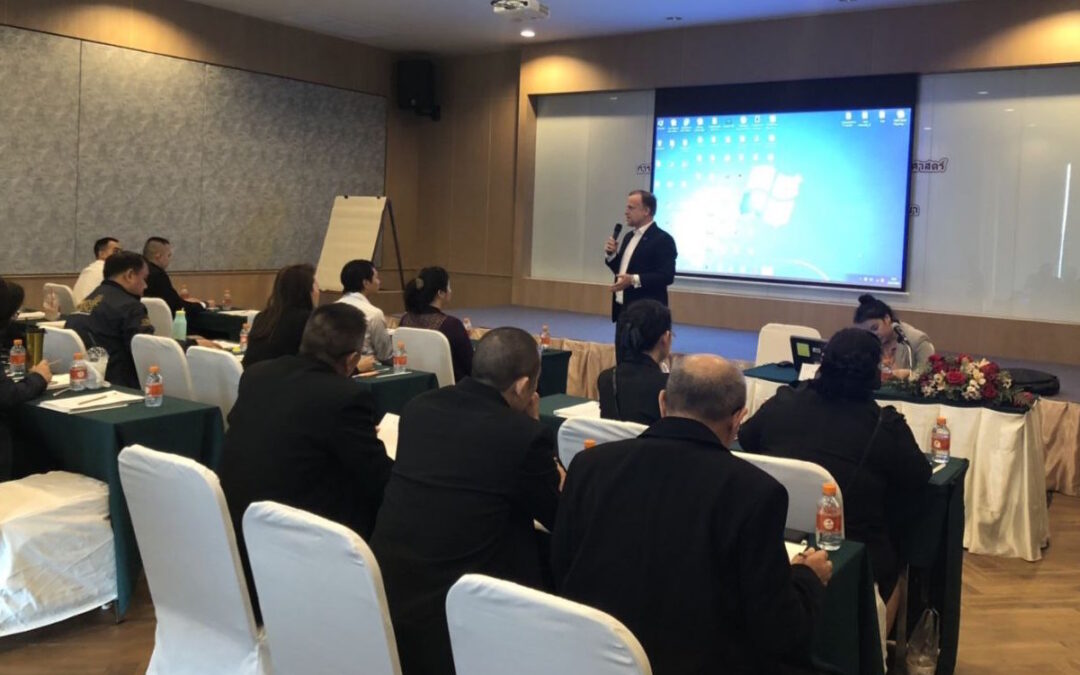
From 29 to 31 March 2019, the ICJ co-hosted a workshop in Ayutthaya province for authorities from Thailand on Human Rights, Investigation Techniques and Forensic Examination of Evidence. The event focused on how such investigations should be conducted in accordance with international human rights law and standards.
The workshop was co-hosted with Thailand’s Ministry of Justice and the United Nations Office of the High Commissioner for Human Rights (OHCHR).
The participants included 35 criminal investigators, public prosecutors, representatives of the Ministry of Justice’s Department of Special Investigation (DSI), the Central Institute of Forensic Science (CIFS), the Ministry of Defense, the National Anti-Corruption Commission and the Office of the Narcotics Control Board.
Kingsley Abbott, Senior Legal Adviser for Global Redress and Accountability at the ICJ and a member of the Working Group in revising the Minnesota Protocol, presented a summary of the international human rights legal framework applicable to the investigation of unlawful deaths and enforced disappearance.
He also introduced an outline of the revised Minnesota Protocol on the Investigation of Potentially Unlawful Death (2016), which was launched in Thailand on 25 May 2017.
The Protocol formed the core of the materials used at the workshop. He also addressed the use of telecommunication evidence as evidence at trial.
Other speakers included:
- Amornrat Lekwichai, Senior Professional Level Forensic Scientist from the CIFS, who addressed the use of telecommunication and digital evidence in criminal cases towards establishing the identity of suspects;
- Pornthip Rojanasunan, Adviser with the CIFS and a member of the Advisory Panel in revising the Minnesota Protocol, who spoke on forensic pathology and the need for independent autopsies in an independent and impartial investigative process;
- Badar Farrukh, Human Rights Officer from OHCHR, who addressed witness interviews and witness protection;
- Angkhana Neelapaijit, National Human Rights Commissioner and spouse of lawyer Somchai Neelapaijit, a victim of enforced disappearance; and
- Somchai Homlaor, a leading Thai human rights lawyer and member of several independent fact-finding commissions, who raised concerns about challenges for accountability for human rights abuses in Thailand’s criminal justice.
This workshop is part of the ICJ’s ongoing efforts to ensure the domestic implementation of international law and standards on the investigation of potentially unlawful deaths and enforced disappearances.
The ICJ has held several Workshops on the same topic including:
Regional Workshops
National Workshops
Contact
Kingsley Abbott, Senior Legal Adviser for Global Redress and Accountability, ICJ Asia Pacific Regional Office, t: +66 94 470 1345, e: kingsley.abbott@icj.org
Mar 12, 2019 | News
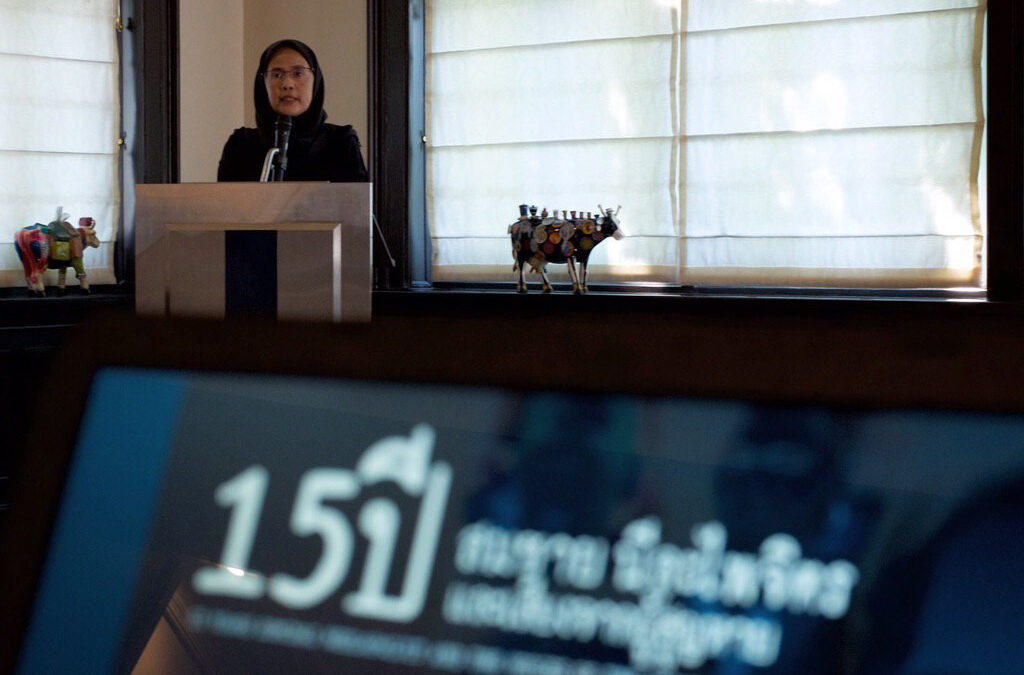
Today, the ICJ co-hosted an art exhibition and public forum titled 15th Year of Somchai’s Disappearance and the Voices of the Disappeared at the Embassy of the Netherlands in Bangkok.
The event was held to commemorate 15 years since the enforced disappearance of Somchai Neelapaijit, a prominent human rights lawyer, whose case has never been adequately by the Thai authorities.
Somchai was abducted after being stopped on a road in Bangkok on 12 March 2004 and taken from his car by a group of police officers. He has not been seen since. Fifteen years after his disappearance, Somchai’s fate and whereabouts remain unknown and no one has been held accountable for the crime against him.
More than 100 participants attended the event, including family victims of alleged disappearance cases, students, lawyers, members of civil society, diplomats, and members of the Thai authorities and media.
Opening remarks were delivered by Angkhana Neelapaijit, wife of Somchai Neelapaijit, and Kenza Tarqaât, First Secretary of the Embassy of the Netherlands in Bangkok.
The opening session included remarks by the victims who spoke about their challenges and about the progress and development regarding investigations into the alleged disappearance cases of their relatives. The session included the following speakers:
Sanhawan Srisod, the ICJ’s National Legal Adviser, spoke during the second session on recent amendments to the Draft Prevention and Suppression of Torture and Enforced Disappearance Act.
She highlighted concerns that the recent amendments would, if adopted, fail to bring the law into full compliance with Thailand’s international human rights obligations.
Sanhawan further expressed concern that the fate of the Draft Act was uncertain as Thailand’s National Legislative Assembly (NLA) that is considering the bill, while it may also continue their work in case of the necessity, will stop considering laws on 15 March, prior to the scheduled elections of 24 March 2019.
She stressed that it is crucial the Thai Government continues to consider and amend the bill, and pass it without delay in line with Thailand’s international human rights obligations.
The panel was moderated by Chanatip Tatiyakaroonwong from Cross-Cultural Foundation and also included the following panelists:
- Nongporn Roongpetchwong, Human Rights Expert, Rights and Liberties Protection Department, Ministry of Justice
- Badar Farrukh, Thailand Team Leader, United Nations’ Office of the High Commissioner for Human Rights (OHCHR) Regional Office for South East Asia
Closing remarks was delivered by Pratubjit Neelapaijit, daughter of Somchai Neelapaijit.
The forum was co-organized with the Neelapaijit family, Amnesty International – Thailand, Cross Cultural Foundation (CrCF), the Embassy of the Netherlands in Bangkok, Human Rights Lawyers’ Association and the United Nations’ Office of the High Commissioner for Human Rights (OHCHR) Regional Office for South East Asia.
Read Also:
Thailand-Summary ICJ analysis Draft Act-Advocacy-2019-ENG (Summary of the ICJ analysis of the Draft Act, in PDF)
Ten Years Without Truth: Somchai Neelapaijit and Enforced Disappearances in Thailand
Missed Opportunities: Recommendations for Investigating the Disappearance of Sombath Somphone
Thailand: ICJ submits recommendations on draft law on torture and enforced disappearance amendments
Thailand: ICJ, Amnesty advise changes to proposed legislation on torture and enforced disappearances
Jan 3, 2019 | Advocacy, News, Non-legal submissions
On 30 December 2018, the ICJ and the International Service for Human Rights (ISHR) jointly submitted a communication to the Committee on the Elimination of Discrimination against Women (CEDAW Committee) directed against Thailand.
They did this as a State Party to the Optional Protocol to the UN Convention on the Elimination of All Forms of Discrimination against Women (the CEDAW Convention) on behalf and with the consent of Angkhana Neelapaijit, regarding the alleged enforced disappearance of her husband, Somchai Neelapaijit.
Somchai Neelapaijit, a prominent lawyer and human rights defender, disappeared after being stopped on a road in Bangkok on 12 March 2004 and pulled from his car by a group of men. He has not been seen since. More than 14 years after his alleged enforced disappearance, Somchai’s fate and whereabouts remain unknown.
Prior to his disappearance, Somchai had been defending clients from Thailand’s southern border provinces and had been doing extensive work to advocate for the rights of persons accused of terrorism, and to highlight the treatment of Malay-Muslims in the region.
The joint communication by ICJ and ISHR to the CEDAW Committee submits that Thailand has breached Articles 2(b)(c)(f), 5(a)(b), 15(1) and 16(1)(c)(d) of the CEDAW Convention, which relate to the rights of women to substantive equality and protection from all forms of discrimination, including in all matters relating to marriage and family relations, as well as to their right to an effective remedy for violations of the abovementioned provisions.
The communication further highlights the impact of enforced disappearance on family members of a disappeared person, noting its disproportionate impact on wives and female relatives, as most cases of enforced disappearance in Thailand involve male victims.
In addition to the CEDAW Convention and its Optional Protocol, Thailand is a party to a number of other international human rights instruments, including the International Covenant on Civil and Political Rights and the Convention against Torture and Other Cruel, Inhuman or Degrading Treatment or Punishment. In January 2012, Thailand also signed the International Convention for the Protection of All Persons from Enforced Disappearance (ICPPED), thereby committing itself to refrain from acts that would defeat the object and purpose of that treaty, namely the prevention and prohibition of the crime of enforced disappearance.
The ICJ has consistently called upon the Thai authorities to comply with their obligations under international human rights law to independently, impartially and effectively investigate the case of Somchai Neelapaijit and all other reported cases of enforced disappearance, and provide the families of the victims in such cases with access to effective remedies and reparations, including regular updates on the status of the investigations.
The ICJ has also submitted recommendations to the Thai authorities on the current Draft Prevention and Suppression of Torture and Enforced Disappearances Act, highlighting the crucial need for a domestic law to define and criminalize enforced disappearance and torture in line with Thailand’s international obligations.
Thailand-Communication to CEDAW-Advocacy-2019-ENG (full submission, in PDF)
Contact
Livio Zilli, ICJ Senior Legal Adviser & UN Representative, email: livio.zilli(a)icj.org
Read also
Thailand: ICJ submits recommendations on draft law on torture and enforced disappearance amendments
Thailand: ICJ marks 14th year anniversary of the enforced disappearance of Somchai Neelapaijit’
Thailand: ICJ, Amnesty advise changes to proposed legislation on torture and enforced disappearances
Thailand: pass legislation criminalizing enforced disappearance, torture without further delay
On the 10th anniversary of Somchai Neelapaijit’s alleged disappearance, the ICJ released a report ‘Ten Years Without Truth: Somchai Neelapaijit and Enforced Disappearances in Thailand’ documenting the legal history of the case.
Dec 13, 2018 | Advocacy, News, Non-legal submissions
The ICJ and Thai Lawyers for Human Rights (TLHR) welcome the decision of Prime Minister Gen. Prayut Chan-o-cha, acting as the Head of the National Council for Peace and Order (NCPO), to lift certain restrictions on political activities.
The organizations highlight, however, that much more is needed to fully reinstate protection of human rights and fundamental freedoms in Thailand ahead of elections scheduled to be held on 24 February 2019.
This order repealed Article 12 of HNCPO Order No. 3/2558, which prohibited the gathering of five or more persons for a “political purpose”, lifting a ban which had carried a punishment of imprisonment not exceeding six months and/or a fine not exceeding 10,000 Baht.
“The lifting of the ban on political gatherings is welcome – however, the new order only lifts one specific restriction imposed by HNCPO Order 3. Restrictions on fundamental freedoms imposed by other articles of HNCPO Order 3, such as the granting of broad, unchecked powers to military officers to investigate, arrest and detain persons for up to seven days, remain in force,” said Kingsley Abbott, ICJ’s Senior International Legal Adviser.
“We reiterate our call for the Thai government to immediately amend and repeal all laws, HNCPO Orders, NCPO orders and announcements inconsistent with Thailand’s international human rights obligations.”
ICJ and TLHR also express serious concern that even as nine orders and announcements have been repealed by HNCPO Order No. 22/2561, Article 2 of the order clarifies that “prosecutions, actions or operations” already in effect by virtue of those orders will not be affected by the coming into force of the Order.
Cases brought before 11 December 2018 under HNCPO Order No. 3/2558 to penalize persons exercising their rights to free expression, assembly and association can therefore legally continue to be prosecuted in courts.
“Cases brought under the now-repealed section of HNCPO Order 3 should be dropped or withdrawn. They should have never been brought before the courts in the first place,” said Abbott.
“In the lead up to elections next year, the Thai government must take further steps to expand space for free expression, assembly and association. This new order is welcome, but it is certainly not enough.”
Further information is available in the full statement below
Thailand-Lifting political ban-Advocacy-Joint Statement-2018-ENG (full statement in English, PDF)
Thailand-Lifting Political Ban-Advocacy-Joint Statement-2018-THA (full statement in Thai, PDF)
See also
ICJ, ‘Thailand: Lift ban on political gatherings and fully reinstate all fundamental freedoms in Thailand’, 1 October 2018
Further reading
ICJ, TLHR and Cross-Cultural Foundation (CrCF), Joint Follow-up Submission to UN Human Rights Committee, 27 March 2018
ICJ and TLHR, Joint submission to the UN Human Rights Committee, 13 February 2017
Contact
Kingsley Abbott, ICJ Senior Legal Adviser, email: kingsley.abbott(a)icj.org
Dec 7, 2018 | Events, News
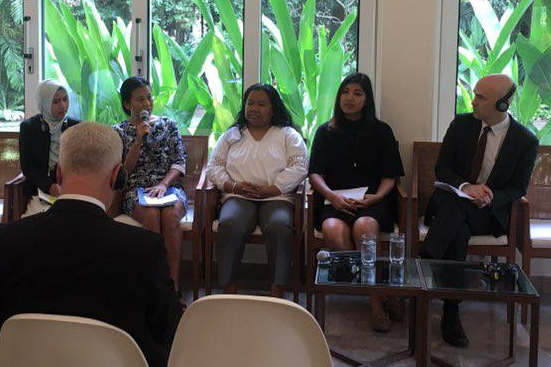
On 7 December 2018, the ICJ, together with the Embassy of the Federal Republic of Germany to Thailand, held an event at the German Ambassador’s Residence in Bangkok to mark Human Rights Day.
This was the fourth event co-hosted annually by the ICJ and the German Embassy as an early commemoration of International Human Rights Day, which falls on 10 December every year on the anniversary of the adoption of the Universal Declaration of Human Rights in 1948.
Ambassador-Designate H.E. Georg Schmidt delivered the opening address for the event, highlighting the importance of the principle of universality of human rights and noting the 70th anniversary of the Universal Declaration of Human Rights where that principle was enshrined.
ICJ’s Asia and the Pacific Director Frederick Rawski then delivered opening remarks, welcoming Germany’s long-standing support of the work of ICJ and its partners in Thailand in advancing the rule of law and human rights. He highlighted some positive developments in the human rights situation and stressed upon continuing challenges, in the context of potential upcoming elections in February 2019. He also recognized the crucial work of human rights defenders in Thailand.
Yaowalak Anuphan, Head of Thai Lawyers for Human Rights (TLHR), opened the discussion on the current human rights situation in Thailand, particularly focusing on challenges in the legal landscape and fundamental freedoms in the context of potential upcoming elections.
A panel discussion on prevailing human rights concerns then followed, moderated by ICJ’s Frederick Rawski. The discussion touched on a range of themes including land rights and the rights of indigenous peoples; human rights violations in the Deep South; Business and Human Rights and Thailand’s National Action Plan on Business and Human Rights; and refugee and migrants’ rights.
The panelists were:
- Pornpen Khongkachonkiet, Director, Cross Cultural Foundation;
- Waesonk Baneng, Lawyer, Muslim Attorney Centre Foundation;
- Sor Rattanamanee Polkla, Coordinator and Lawyer, Community Resource Centre Foundation;
- Yuhanee Jehka, Legal Officer, Asylum Access Thailand.
Approximately 80 individuals from Thai civil society, the diplomatic community, affected communities, academia, and Thailand’s Ministry of Justice and Ministry of Foreign Affairs attended the event.