Sep 4, 2019 | News
The announcement that the remains of Pholachi “Billy” Rakchongcharoen, a Karen rights activist, have been located, brings a sad end to years of uncertainty for his family, said the ICJ and Amnesty International today.
This development should lead to a renewed focus on identifying the perpetrator(s) of his apparent enforced disappearance and bringing them to justice.
On 3 September 2019, the Thai Ministry of Justice’s Department of Special Investigations (DSI) announced it had located bone fragments, which they had identified as likely belonging to Billy inside an oil tank submerged in water near a suspension bridge inside Kaeng Krachan National Park in Phetchaburi province.
“The DSI should redouble its efforts to identify the perpetrator(s) of Billy’s killing and bring them to justice,” said Frederick Rawski, Asia Regional Director of the ICJ. “If, based on an assessment of the evidence, it is found that Billy was the victim of enforced disappearance, then the perpetrators, including those with command responsibility, should be charged with the appropriate, serious offences in accordance with Thailand’s obligations under international law – not only with lesser crimes that do not reflect the gravity of the offense.”
Billy was last seen on 17 April 2014 in the custody of Kaeng Krachan National Park officials.
“This case highlights the serious risks activists and human rights defenders face in Thailand, including assaults, enforced disappearance and killings,” said Nicholas Bequelin, Amnesty International’s interim Regional Director of Southeast Asia and the Pacific. “It underscores the long-overdue need for the Thai government to make enforced disappearance a crime under national law. A failure to do so results in the lack of an independent, impartial and effective mechanism to investigate the cases, exacerbating the current climate of impunity.”
The DSI stated that the recovered bones contain DNA inherited from Billy’s mother, which suggests they belong to a person who was related to her. However, the DSI declined to disclose the name of any suspect(s) and requested more time to investigate the case and examine the remains.
Background
Thailand is a state party to the International Covenant on Civil and Political Rights (ICCPR) and the Convention against Torture and other Cruel, Inhuman or Degrading Treatment or Punishment (CAT). Freedom from enforced disappearance is protected under both these treaties, as enforced disappearance will always constitute violations of some or more of the following rights: the right to life; freedom from torture and other cruel, inhuman, or degrading treatment or punishment; the right to liberty; and the right to recognition as a person under the law. These are in addition to violations of the rights of members of the disappeared person’s family through suffering deliberately inflicted on them through the imposition on them of uncertainty about their love one’s fate and whereabouts.
Thailand has also signed, but not yet ratified, the International Convention for the Protection of All Persons from Enforced Disappearance (ICPPED). The ICPPED affirms the absolute right not to be subject to enforced disappearance and places an obligation on states to investigate acts of enforced disappearance, to make it a criminal offence punishable by appropriate penalties that take into account its “extreme seriousness” and to take necessary measures to bring those responsible to justice.
The Government has stated it will not ratify the Convention until its provisions are incorporated in domestic law. However, efforts to pass the Draft Prevention and Suppression of Torture and Enforced Disappearance Act (draft Act) stalled after it was dropped by the National Legislative Assembly (NLA) prior to the 2019 national election. The draft Act is currently pending the consideration of the President of the National Assembly. Under international law of treaties, as signatory to the ICPPED, still is bound to desist from any acts which would defeat its object and purpose.
Thailand has a binding obligation under international law to conduct prompt, effective and thorough, independent and impartial, and transparent investigations into all suspected cases of unlawful death and enforced disappearance.
According to the ICPPED and the revised Minnesota Protocol (2016), which contains the international standards on the conduct of investigations into unlawful death and enforced disappearance – and which Thailand launched in May 2017 – records that investigations “must seek to identify not only direct perpetrators but also all others who were responsible for the death, including, for example, officials in the chain of command who were complicit in the death.” (para 26)
Download
Thailand-Discovery of Billy remains-news-webstory-2019-THA (full story in PDF)
Further reading
Thailand: special investigation into apparent enforced disappearance of “Billy” welcome, but much more is needed
Thailand: ICJ submits recommendations on draft law on torture and enforced disappearance amendments
Justice for Billy: Time for Thailand to Account for Activist’s Disappearance
Contact
For ICJ: Frederick Rawski, ICJ Asia-Pacific Director, t: +66 64 478 1121; e: frederick.rawski(a)icj.org
Sep 2, 2019 | News
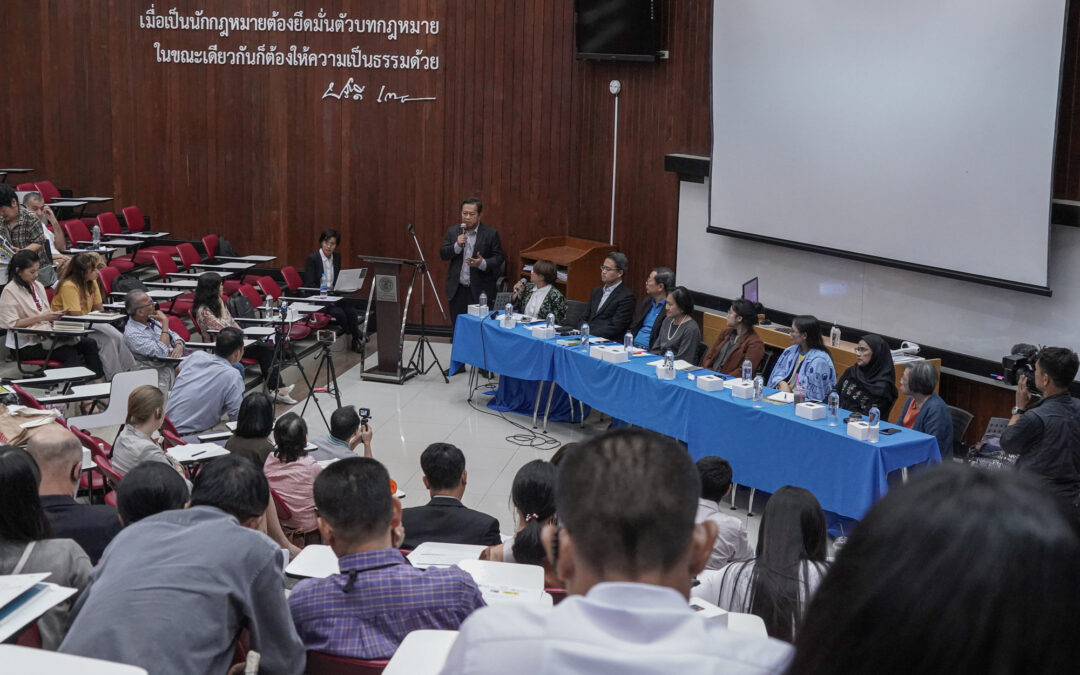
On 30 August 2019, on the occasion of the International Day of the Disappeared, the ICJ co-hosted an art exhibition, a closed-door round table discussion and a public forum titled “Enforced Disappearance and the Absence of a Law” to commemorate individuals who were subject to apparent enforced disappearance and whose fates remains unknown.
The closed-door round table discussion provided an opportunity for victims’ voices to be heard on challenges faced in gaining access to justice and redress. Relatives spoke about the challenges they face, mostly about the poor progress of investigations into the allegations of enforced disappearance against their relatives.
Sanhawan Srisod, the ICJ’s Legal Adviser, during the closed-door round table discussion, gave a briefing about the latest developments on the Draft Prevention and Suppression of Torture and Enforced Disappearance Act. The legislation had been dropped by the National Legislative Assembly (NLA) prior to the 2019 national elections, but is currently before the President of the National Assembly, pending his consideration to bring it before the House of Representative.
The public forum focused on the development and progress of the investigations into enforced disappearances and evaluated the progress in developing legislation in Thailand to address this critical issue.
During the public forum, Sanhawan Srisod highlighted that the Draft Act would, if adopted, fail to bring the law into full compliance with Thailand’s international human rights obligations. The key concerns include:
- Incomplete definitions of the crimes of enforced disappearance;
- The continuous nature of the crime of enforced disappearance that was not recognized in the Draft Act;
- Inadequacy of provisions on the command responsibility;
- Possibility that the military court may have power to try and adjudicate enforced disappearance cases; and
- Insufficient safeguards against enforced disappearances.
Background
Thailand has signed but has yet to ratify the International Convention for the Protection of All Persons from Enforced Disappearance.
According to their 2018 annual report, the UN Working Group on Enforced or Involuntary Disappearances has recorded 86 outstanding cases of alleged enforced disappearance in Thailand.
The Thai government, through the recently set up Committee Managing Complaints for Torture and Enforced Disappearance Cases, says it is currently conducting investigations in connection with this list.
Closed-door round table discussion session included the following speakers: Ms. Phinnapha Phrueksaphan, wife of Mr. Porlajee Billy Rakchongcharoen; Ms. Angkhana Neelapaijit, wife of Mr. Somchai Neelapaijit; Ms. Pranee Danwattananusorn, wife of Mr. Surachai Danwattananusorn; Mr. Adisorn Pho-Arn, son of Mr. Thanong Pho-Arn; Ms. Kanya Theerawut, mother of Mr. Siam Theerawut; Ms. Suphab Kamlae, wife of Mr. Den Kamlae; Mr. Prasert Laosophapan, brother of Mr. Kamon Laosophapan; Ms. Shui-Meng Ng, wife of Mr. Sombath Somphone from Lao PDR; Mr. Truong Son Nguyen, Regional Campaigner, Amnesty International Vietnam; Representatives, indigenous Lahu Community, Chiang Mai province; and Ms. Sanhawan Srisod, Legal Adviser, International Commission of Jurists
Public forum session included the following speakers: Ms. Shui-Meng Ng, representative of Asian Federation Against Involuntary Disappearances; Ms. Angkhana Neelapaijit, wife of Mr. Somchai Neelapaijit; Ms. Phinnapha Phrueksaphan, wife of Mr. Porlajee Billy Rakchongcharoen; Mr. Angsukate Wisutwattanasak, Director of Security Cases Department 1, Department of Special Investigation (DSI); Ms. Nongporn Roongpetchwong, Human Rights Expert, Rights and Liberties Protection Department, Ministry of Justice; and Ms. Sanhawan Srisod, Legal Adviser, International Commission of Jurists. The opening session included remarks from Mr. Giuseppe Busini, Deputy Head of Mission of the Delegation of the European Union to Thailand, and Mr. Surapong Kongchantuk, President of the Cross-Cultural Foundation. The closing session included remarks from Mr. Badar Farrukh, Human Rights Officer, OHCHR Regional Representative for South East Asia.
See Also:
Summary of the ICJ analysis of the Draft Act (PDF)
Thailand: ICJ submits recommendations on draft law on torture and enforced disappearance amendments
Jul 21, 2019 | News
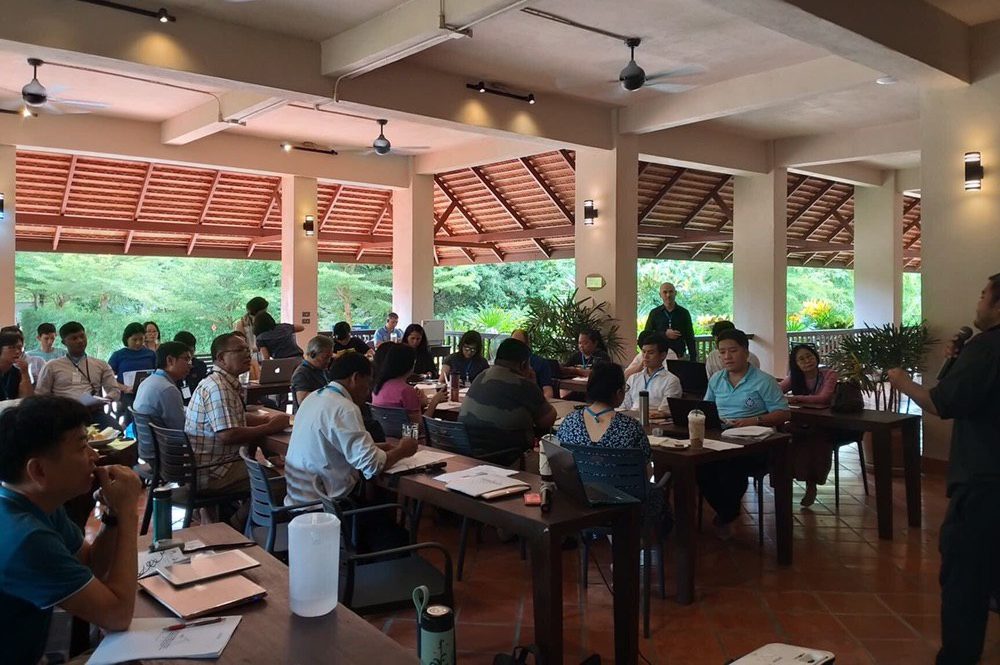
Today, the ICJ hosted a discussion on Thailand’s legal frameworks on corporate accountability for outbound investments in Chiang Mai, Thailand. The forum was co-organized with Earth Rights International.
Lawyers, members of civil society organizations and academics from Cambodia, Laos, Myanmar, and Thailand attended the discussion.
Participants discussed:
- corporate civil, criminal and administrative liability and in particular, the applicable laws governing the prosecution and adjudication of human rights abuses committed by Thai corporations and gaps in Thailand’s legal frameworks. The meeting also looked into recommendations to strengthen Thailand’s domestic laws to increase access to justice for victims of human rights abuses committed by Thai corporations in the context of their business activities abroad, particularly on issues such as: limited liability of shareholders and the “corporate veil” in relation to the responsibilities of Thai corporations, the complexity of laws governing joint ventures, and challenges in bringing state-owned enterprises to justice;
- jurisdiction of Thai courts in civil, criminal and administrative cases where de facto and de jure foreign subsidiaries of a Thai corporation were involved in wrongful acts or omissions abroad, and problems posed by statutes of limitation;
- tools for preventing human rights abuses by corporations such as Human Rights Due Diligence (HRDD), Transboundary environmental impact assessments (EIA), Corporate Social Responsibility (CSR) measures, and the Duty of Care principle under tort law; and
- the role of other related actors to prevent and mitigate human rights risks, including the National Human Rights Commission of Thailand (NHRCT), National Contact Points (NCPs), financial institutions and securities institutions, and provided recommendations to strengthen mandates of such organizations which would allow them to provide better protection for individuals and communities who may be affected by outbound investments.
This discussion will provide the foundation for further work and analysis by the ICJ regarding Thailand’s legal frameworks on corporate accountability for outbound investments. It will also provide the basis for ICJ strategic advocacy at the national level.
Jul 15, 2019 | News
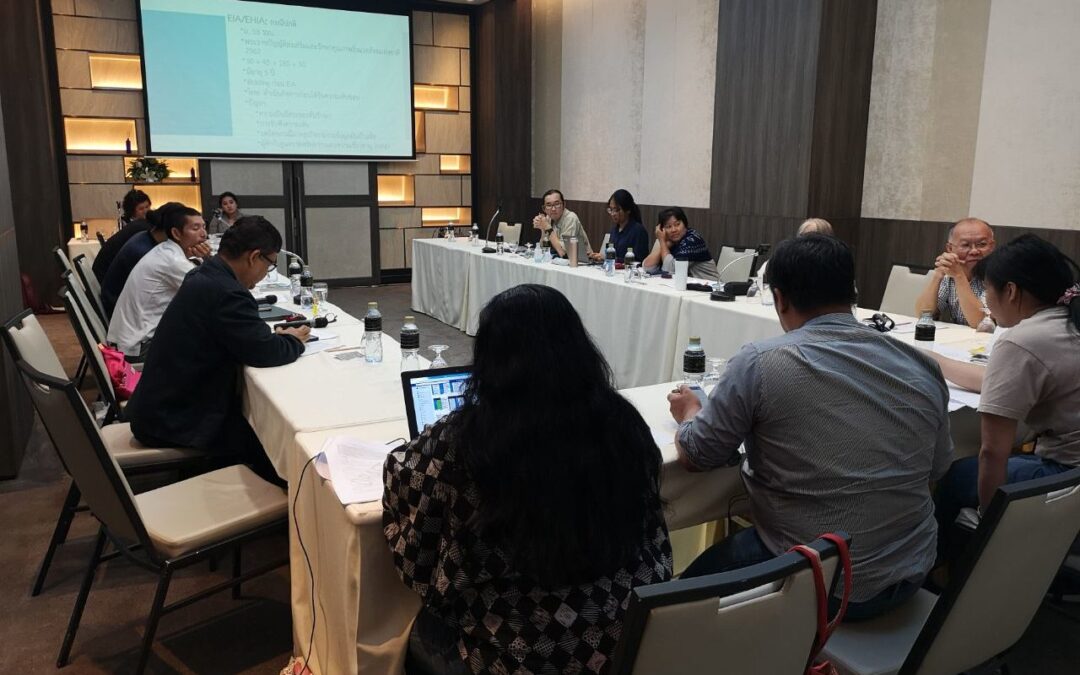
On 13 July 2019, the ICJ hosted a discussion on the human rights consequences of Special Investment Zones in Thailand particularly focusing on the legislative frameworks of Thailand’s Special Economic Zones (SEZs) and the Eastern Economic Corridor (EEC).
Lawyers, members of civil society organizations and academics from across Thailand attended the discussion.
The participants explored existing adverse impacts and potential future impacts on human rights arising from the implementation of the current EEC and SEZ legal frameworks.
The discussion focused on: (i) governing authorities of the SEZs and EEC; (ii) designation of target areas and land acquisition; (iii) environment, health and well-being of the local communities; (iv) other rights of affected individuals and communities; (v) issues pertaining to workers and labour rights and (vi) roles of other stakeholders, including financial institutions, the National Human Rights Commission of Thailand, and the corporate sector.
The participants considered concerns with respect to Thailand’s duty to protect human rights under international human rights standards and identified key issues of concern relating to the legal frameworks of the EEC and SEZs.
During their discussion, the participants highlighted the lack of meaningful participation of affected individuals or communities at the policy and law-making levels and the absence of a formalized way for such individuals and communities to voice their concerns regarding their inability to exercise their rights connected to economic, cultural and social development and international human rights law.
The participants highlighted that the processes of land acquisition and classification of State-owned lands in the areas of SEZs and the EEC were allegedly not carried out in a human rights-compliant manner, and were not in line with the UN Basic Principles and Guidelines on Development-Based Evictions and Displacement.
Key concerns were raised regarding people and communities who has been living on lands upon which they depend for their livelihoods but to which they do not hold land title deeds.
Some participants also stressed the importance of strengthening Environmental Impact Assessment (EIA) and Environmental & Health Impact Assessment (EHIA) procedures.
Proposed improvements included the hiring of independent consultants to carry out EIA and EHIA assessments, effective review by an independent body to ensure the credibility of assessment reports, and other mechanisms to ensure effective monitoring and follow-up on assessments.
Participants also called for the following rights to be respected in the implementation of development-based policy:(i) the right to genuinely and meaningfully take part in public affairs; (ii) the right to take part in cultural life; (iii) the right to secure one’s livelihood; (iv) the right to enjoyment of the highest attainable standard of physical and mental health; (v) the right to water and sanitation; and (vi) the right of access to justice, which encompasses the right to effective remedy and guarantees of the due process of law.
They also urged financial institutions which fund the development of the EEC and SEZs to take a more active role to prevent and mitigate human rights risks.
This discussion will provide the foundation for further work and analysis by the ICJ in detailing the human rights consequences of special investment zones frameworks in Thailand, focusing on the implementation of SEZs and EEC policies. It will also provide the basis for ICJ strategic advocacy at the national level.
Background
The Eastern Economic Corridor (EEC) and Special Economic Zones (SEZs) are flagship economic schemes of the Thai government to boost Thailand’s economy after the military coup in 2014 through large-scale investments into special investment zones covering areas in 13 provinces of Thailand.
In 2015, 10 SEZs were established in 10 different provinces of Thailand as a means to create economically-productive areas in border cities linked to other countries in Southeast Asia.
The SEZs were established towards enhancing growth in 13 target industries. Each SEZ will have different targets depending on each location development and province strategy.
Launched in 2016, the EEC builds upon the former Eastern Seaboard project and is being developed in the eastern coastal provinces of Rayong, Chonburi, and Chachoengsao purportedly to encourage investment into 10 next-generation industries that use innovation and high technology.
The EEC is also designated to be a pilot model in developing other SEZ areas in the future.
The EEC is currently already in operation in part. Most of the SEZs are currently in the process of land acquisition or classification.
Criticisms raised during the discussion noted that (i) the SEZs and EEC had been established without carrying out assessments with the full participation of affected persons, groups and communities; (ii) local residents had been forced off their land without fair or adequate compensation; and (iii) allowing fast-track environmental impact assessments (EIA) could result in undermining the overall objective and effectiveness of EIA.
Apr 22, 2019 | Advocacy, News, Non-legal submissions
Today, the ICJ submitted recommendations to the Council of the State calling for the repeal or amendment of National Council for Peace and Order (NCPO) and Head of the NCPO (HNCPO) orders and announcements in line with Thailand’s international human rights law obligations.
The ICJ was informed by the Ministry of Foreign Affairs that the Council of the State had been tasked to review the necessity and relevance of announcements, orders, and acts of the NCPO and of the HNCPO in February 2019.
The review process is in line with Thailand’s declaration to the UN Human Rights Committee in its Follow-Up to the Concluding Observations of the Committee, submitted on 18 July and published on 10 August 2018.
In its submission to the Council of the State, the ICJ has called for the review process of HNCPO and NCPO announcements and orders to be carried out with increased public participation, openness, and transparency.
The ICJ has also made recommendations on the repeal and amendment of the following HNCPO and NCPO orders and announcements since they are clearly inconsistent with Thailand’s international human rights law obligations and the 2017 Constitution, and are neither necessary, nor proportionate, nor relevant to the current situation:
- Orders that provide the military with superior powers beyond civilian authorities;
- Orders that allow military courts to prosecute civilians;
- Orders that infringe on the rights to freedom of expression and assembly, restrict media freedom and the right to information; and
- Orders that infringe on community and environmental rights.
As main priorities, the ICJ has recommended that:
a) the exercising of law enforcement powers by military personnel to arrest and detain suspects in places not formally recognized as places of detention without judicial review should end;
b) all cases of civilians facing proceedings before military courts be transferred to civilian courts, and all civilians convicted of an offence in military courts be guaranteed a re-trial in civilian courts; and
c) all other HNCPO and NCPO orders and announcements should be repealed or amended to bring Thailand in compliance with its international human rights law obligations, and to ensure that the rights to freedom of expression, opinion and assembly, and environmental rights, among others, be respected.
Thailand-civilian prosecutions military courts-Advocacy-Non-legal submissions-2019-ENG (PDF in English)
Thailand-civilian prosecutions military courts-Advocacy-Non-legal submissions-2019-THAI (PDF in Thailand)
Further readings:
Post coup’s legal frameworks
Thailand: ICJ alarmed at increasing use of arbitrary powers under Article 44
Joint submission to the UN Human Rights Committee by the ICJ and Thai Lawyers for Human Rights
The ICJ and other groups made a joint follow-up submission to the UN Human Rights Committee
Thailand: statement to UN on situation for human rights
ICJ and Thai Lawyers for Human RIghts’ submission to the Universal Periodic Review (UPR) of Thailand
Military officers in law enforcement missions
Thailand: immediately end the practice of arbitrarily detaining persons in unofficial places of detention
Thailand: The ICJ and Human Rights Watch express concerns over detentions
The Use of Military Court
Thailand: transfer all civilians to civilian courts
Thailand: End prosecution of civilians in military tribunals
Thailand: ICJ welcomes Order phasing out prosecution of civilians in military courts but government must do much more
Freedom of expression and assembly
Thailand: lifting of the ban on political activities is welcome but more is needed
Thailand: Lift ban on political gatherings and fully reinstate all fundamental freedoms in Thailand
Thailand: misuse of laws restricts fundamental freedoms (UN statement)
Community and environmental rights
“Development” and its discontents in Thailand
Thailand: ICJ submission to the UN Committee on Economic, Social and Cultural Rights