Dec 3, 2018 | Advocacy, News, Non-legal submissions
Today, the ICJ joined fifteen other organizations to call on the Thai authorities and Thammakaset Company Limited to ensure that criminal and civil defamation complaints brought by the company against human rights defenders Nan Win and Sutharee Wannasiri do not proceed.
The charges have been leveled in connection with work by the two defenders to bring attention to labour rights violations at a Thammakaset-owned chicken farm in Thailand.
The organizations further called on the Thai authorities to act to ensure that no person is held criminally liable for defamation, including by decriminalizing defamation in Thai law and protecting individuals from abusive litigation aimed at curtailing the rights to freedom of expression and access to information and other activities of human rights defenders.
Today, the Bangkok Criminal Court will hold preliminary hearings on the criminal defamation complaints filed by Thammakaset Co. Ltd. against the two human rights defenders.
“This is the most recent in a series of spurious legal cases brought by companies in Thailand aimed at intimidating human rights defenders and curtailing their important work in defence of human rights,” said Ian Seiderman, ICJ’s Legal and Policy Director.
“Thai authorities must take all necessary measures in law and in practice to ensure that private business entities do not misuse the law to interfere with human rights such as freedom of expression and access to information.”
On 12 and 26 October 2018, Thammakaset Co. Ltd. filed criminal and civil defamation complaints against Nan Win, a migrant worker from Myanmar, and Sutharee Wannasiri, a woman human rights defender and a former Human Rights Specialist with Fortify Rights.
The complaints related to a 107-second film published by non-governmental organization Fortify Rights on 4 October 2017 that called on Thai authorities to drop criminal defamation charges against 14 migrant workers at a Thammakaset-operated chicken farm and to decriminalize defamation in Thailand.
Nan Win was one of the above-mentioned 14 migrant workers and faces a criminal defamation suit for reportedly testifying about alleged labour rights violations he faced in the Thammakaset-operated farm. Sutharee Wannasiri faces criminal and civil defamation suits for reportedly sharing information about the Fortify Rights film on Twitter.
If convicted of criminal defamation, Nan Win faces up to four years’ imprisonment and/or a fine of up to 400,000 Thai Baht (more than US$12,150) and Sutharee Wannasiri faces up to six years’ imprisonment and/or a fine of up to 600,000 Thai Baht (more than US$18,200). Thammakaset Co. Ltd. is also seeking five million Thai Baht (US$151,400) in compensation for alleged damage to the company’s reputation in its civil defamation suit against Sutharee Wannasiri.
“We urge the Thai government not only to uphold their own legal obligations, but also to remind business enterprises in Thailand that they are also responsible for upholding human rights under international standards and domestic law,” said Seiderman.
Thailand-Drop defamation Nan Win Sutharee Wannasiri-Advocacy-Joint Statement-2018-ENG (Joint Statement, English, PDF)
Thailand-Drop defamation Nan Win Sutharee Wannasiri-Advocacy-Joint Statement-2018-THA (Joint Statement, Thai, PDF)
Background
On 12 October 2018, Thammakaset Co. Ltd. filed a criminal defamation suit under sections 326 and 328 of Thailand’s Criminal Code against Sutharee Wannasiri, a former Thailand Human Rights Specialist with Fortify Rights, for three comments she was alleged to have made on Twitter related to the Fortify Rights film.
On 26 October 2018, Thammakaset Co. Ltd. filed a criminal defamation suit under sections 326 and 328 of Thailand’s Criminal Code against Nan Win, one of the 14 migrant workers from Myanmar, for two interviews he gave in a Fortify Rights film and during a Fortify Rights press conference on 6 October 2017.
On the same day, Thammakaset Co. Ltd. also filed a civil defamation suit against Sutharee Wannasiri citing the above mentioned alleged Twitter comments and demanding five million Thai Baht (more than USD 142,000) in compensation for alleged damage to the company’s reputation.
The UN Human Rights Committee has clarified that defamation laws must ensure they do not serve, in practice, to contravene the rights to freedom of expression and information protected under article 19 of the International Covenant on Civil and Political Rights (ICCPR) and enshrined under articles 34, 35 and 36 of the 2017 Constitution of Thailand. While civil penalties are appropriate to achieve a lawful aim of protection of reputation, the imposition of such penalties must be proportionate and strictly necessary to achieve a legitimate purpose.
Thailand has an obligation under international human rights law, including the ICCPR, to protect persons against the action of businesses that impair the exercise of human rights. The U.N. Guiding Principles on Business and Human Rights also clarify that business entities have a responsibility to uphold human rights. In August 2018, Thailand launched a revised draft National Action Plan on Business and Human Rights in order to implement the U.N. Guiding Principles.
Contact
Ian Seiderman, ICJ Legal and Policy Director, email: ian.seiderman(a)icj.org
Other reading
For recent ICJ advocacy on similar criminal defamation proceedings launched against labour rights defender Andy Hall, see:
ICJ, Lawyers Rights Watch Canada, ‘Thailand: amicus in criminal defamation proceedings against human rights defender Andy Hall’, 26 July 2016
ICJ, ‘Thailand: verdict in Andy Hall case underscores need for defamation to be decriminalized’, 20 September 2016
For recent ICJ advocacy on the misuse of defamation laws in Thailand against human rights defenders, see:
ICJ, ‘Thailand: immediately stop criminal defamation complaint against torture victim’, 15 February 2018
ICJ, ‘Thailand: ICJ welcomes decision to end proceedings against human rights defenders who raised allegations of torture’, 1 November 2017
ICJ, ‘Thailand: stop use of defamation charges against human rights defenders seeking accountability for torture’, 27 July 2016
Dec 2, 2018 | Events, News
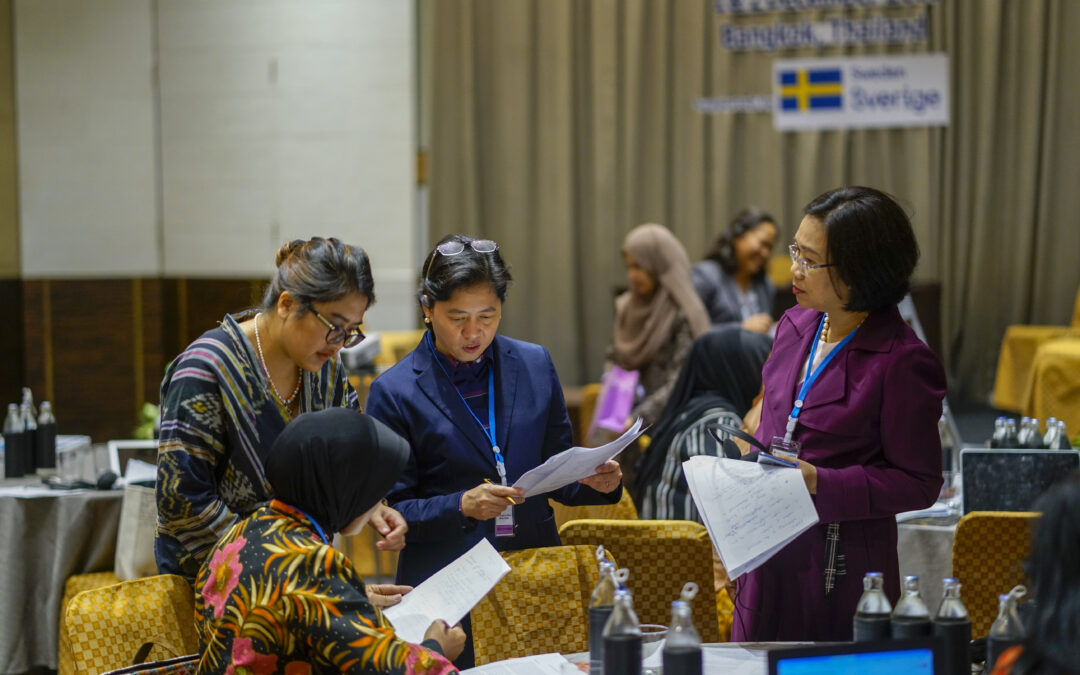
On 1-2 December 2018, the International Commission of Jurists (ICJ) held its 2018 Southeast Asia Regional Judicial Dialogue on enhancing access to justice for women in the region.
Participants included judges from Cambodia, Indonesia, Nepal, Pakistan, Philippines, Sri Lanka and Thailand.
The discussions, held in Bangkok, were focused around resources important for judges to aid in enhancing the capacity of their peers in eliminating gender discriminatory attitudes and behaviours towards women in their work. These resources include a training manual on the use of the Bangkok General Guidance for Judges in Applying a Gender Perspective, and a draft reference manual on women’s human rights and the right to a clean, healthy, safe and sustainable environment.
Frederick Rawski, ICJ’s Director of the Asia and the Pacific Programme, opened the dialogue by emphasizing how important it is for judges to be gender sensitive in their delivery of justice. This could only be done by applying a framework that gives primary attention on ensuring recognition of the applicable human rights, institutional support for the promotion of these rights, and accountability mechanisms for their implementation.
Roberta Clarke, Commissioner of the ICJ and Chair of the organization’s Executive Committee, noted that this judicial dialogue demonstrates the ICJ’s commitment to have a sustainable contribution to the implementation of international human rights standards at the domestic level. She hoped that the judges could contextualize the resources presented and bring these back to their countries for trainings of their peers.
This judicial dialogue is part of a joint project on access to justice for women that ICJ is implementing with UN Women.
Anna Karin Jatfors, UN Women-Asia Pacific’s Interim Regional Director shared that gender stereotypes and social norms which discriminate women are not unique in each country. She pointed out the importance of the ICJ and UN Women collaborating in this project to deconstruct this image to bring better access to justice to women in the region.
Overall, the dialogue was rich and substantive, with the full and active participation from all participating judges who shared their views and experiences on countering gender discrimination in cases before them. At the end of the judicial dialogue, the participating judges expressed strong interest to use the resources for capacity building initiatives of their peers in their own countries.
Contact
Emerlynne Gil, Senior International Legal Adviser, t: +662 619 8477 (ext. 206), email: Emelynne.gil(a)icj.org
Oct 26, 2018 | News
At a media event in Bangkok, Thailand, today, the ICJ reiterated its call for Turkey to work with the United Nations to establish a special independent mechanism to carry out an investigation into the killing of Khashoggi with a view to identifying the perpetrators.
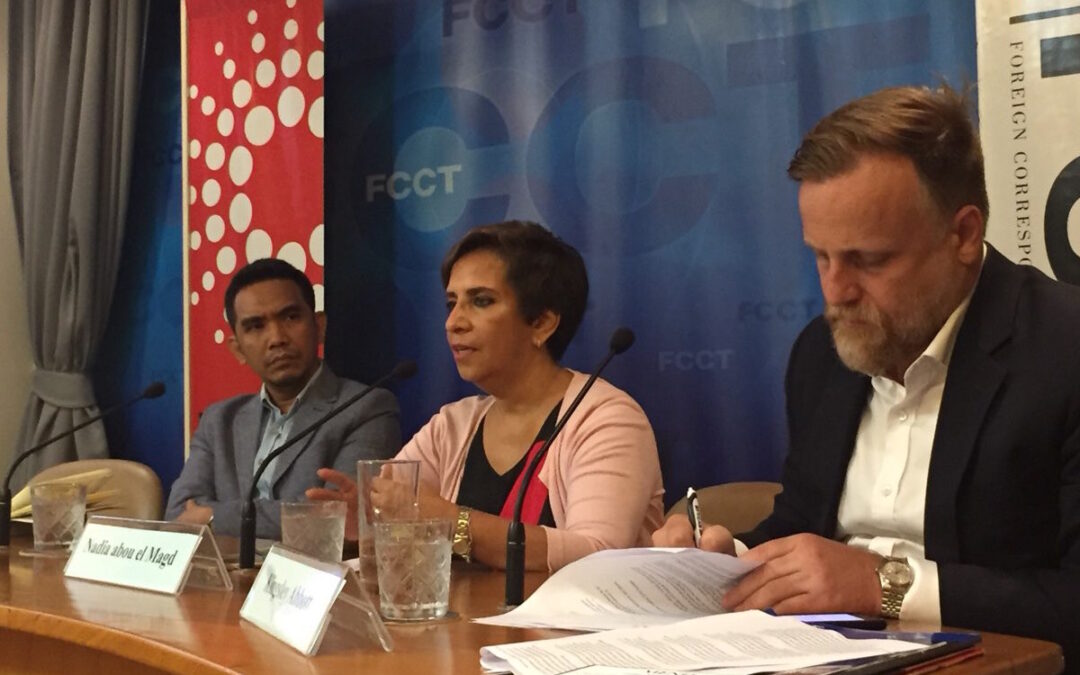
The Foreign Correspondents Club of Thailand (FFCT) in Bangkok hosted a special panel discussion entitled Death of a journalist – Fallout from the killing of Jamal Khashoggi, which was attended by approximately eighty journalists, diplomats and club members.
On the panel, Kingsley Abbott, ICJ Senior Legal Advisor for Global Accountability, began by making two positive observations, namely that there exists a clear international legal framework which applies to cases of suspected unlawful deaths including extra-judicial executions and enforced disappearance; and that a considerable amount of information about Khashoggi’s fate appears to be available.
He set out the international legal framework that applies to violations of the right to life noting the state duty to conduct a prompt independent, impartial, effective and transparent investigation consistent with the UN Principles on the Effective Prevention and Investigation of Extra-legal, Arbitrary and Summary Executions and the revised 2016 Minnesota Protocol on the Investigation of Potentially Unlawful Death.
Kingsley Abbott noted that in nearly all cases where there is reasonable suspicion of unlawful death, an autopsy should be performed and called for Khashoggi’s body or remains to be produced.
Kate Vigneswaran, ICJ Senior Legal Adviser, Middle East and North Africa (MENA) Programme, discussed options for accountability in the MENA region, in particular in Saudi Arabia, Turkey, Egypt and the United Arab Emirates.
She noted that Saudi Arabia provided little to no opportunity for meaningful justice given executive and Royal Court control over the judiciary and prosecutors. She further highlighted Saudi Arabia’s targeting of critics exercising their right to freedom of expression through criminal prosecutions, abductions and enforced disappearances, and egregious fair trial rights violations in the criminal justice system. She went on to state that similar human rights violations in Egypt and the United Arab Emirates make them unlikely credible options for accountability.
She also noted some concerns about aspects of the justice system in Turkey and in that regard said it was too early to determine whether the conduct of investigation and prosecution of the perpetrators in that country would meet international standards.
Other speakers included Nadia abou el Magd, who has 30 years’ experience as a journalist and commentator covering the Middle East, working mainly for the Associated Press, and Dr. Muhammad Ilyas Yahprung from the Faculty of Political Science, Ramkhamheang University, who focuses on Muslim World Issues.
The panel was moderated by Anneliese Mcauliffe who has worked as a journalist across Asia and the Middle East for over two decades.
Contact:
Kingsley Abbott
Kate Vigneswaran
Senior Legal Adviser
Middle East and North Africa Programme
Phone: +31624894664
Email: kate.vigneswaran(a)icj.org
Twitter: @KateVigneswaran
Oct 21, 2018 | News
On 21 October, the ICJ, together with Cross Cultural Foundation (CrCF), organized a lawyers’ meeting in Bangkok on the admissibility of evidence in the context of application of special security laws in Thailand.
Attendees included 30 human rights lawyers, paralegal officers, documentation officers, human rights defenders and journalists from Bangkok and other regions in Thailand.
The objectives of the meeting were:
- To discuss about the challenges that lawyers currently face regarding the admissibility of evidence in criminal proceedings, both in law and in practice, in the context of existing special security laws. These laws include the Martial Law, Emergency Decree, and the Internal Security Act that are applied in the southern border provinces, and certain repressive National Council for Peace and Order (NCPO) Orders that are applied nationwide;
- To discuss how to address the adverse effects on human rights and the administration of justice as a consequence of the implementation of these laws and how lawyers, members of civil society, and other stakeholders, at national and international levels, may work together to address such challenges; and
- To gather recommendations from participants and discuss future advocacy strategies to tackle identified challenges.
The ICJ’s Legal Memorandum on Hearsay Evidence and International Fair Trial Standards was used as one of the main reference materials during the meeting.
A main recommendation of the Workshop, echoed the ICJ’s assessment in the Legal Memorandum, namely that Thailand should review existing standards in all special security laws and relevant articles in the Criminal Procedure Code regarding the admissibility of evidence that are not compatible with international fair trial standards to ensure safeguards required to protect individuals from unfair trials.
Read also
Thailand : legal memorandum – hearsay evidence and international fair trial standards
Oct 1, 2018 | News
The ICJ expressed disappointment regarding Friday’s ruling by Thailand’s Administrative Court dismissing a case filed against the Royal Thai Police (RTP) for unjustified restriction of the freedom of peaceful assembly and freedom of expression, and again called on Thailand to lift its ban on political gatherings and fully reinstate fundamental freedoms in Thailand.
On 28 September 2018, the Administrative Court dismissed a case filed by the organizers of a “We Walk Friendship March” (‘We Walk march’) against the RTP and six policemen for restricting the march on the basis that it was in violation of Head of NCPO Order No. 3/2558 (2015) (‘HNCPO Order 3’).
The Administrative Court referred to the Thai Constitution, the Public Assembly Act B.E. 2558 (2015), the International Covenant on Civil and Political Rights (ICCPR) to which Thailand is a State party, and HNCPO Order 3, in deciding that the march was a public assembly. Its decision clarified that the case had to be dismissed as the RTP’s actions had complied with the Public Assembly Act.
“It is astonishing that more than four years after the coup, HNCPO Order 3 and other repressive laws, orders and announcements which restrict fundamental freedoms remain in place,” said Kingsley Abbott, Senior Legal Adviser at the ICJ.
“The Administrative Court missed a critical opportunity to deliver an opinion that the ban on political gatherings should be lifted and that all laws, orders and announcements that are inconsistent with Thailand’s international human rights obligations should be amended or revoked immediately to reinstate all fundamental freedoms in Thailand,” added Abbott.
The march, which went ahead peacefully, aimed to bring attention to the need in Thailand for universal healthcare services, policies guaranteeing food security, laws that would not violate human rights, and public participation in the development of the Constitution.
Contact
Kingsley Abbott, ICJ Senior Legal Adviser, email: kingsley.abbott(a)icj.org
The ICJ’s full statement in English is available here: Thailand-Ban on Political Gatherings-News-Web Story-2018-ENG
The ICJ’s full statement in Thai is available here: Thailand-Ban on Political Gatherings-News-Web- Story-2018-THA