Sep 2, 2018 | News
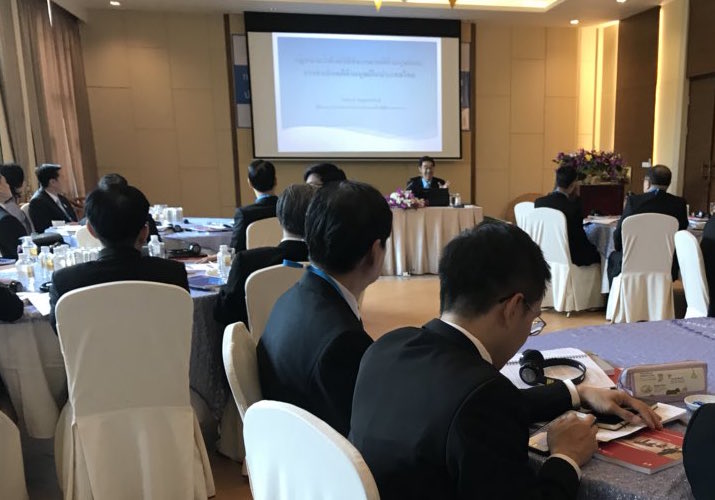
On 1 and 2 September, the ICJ held a “Workshop on the Independence of the Judiciary in the Context of the Inquisitorial Judicial System in Thailand” for members of the Thai judiciary in the north of the country.
Some 31 judges from 21 courts and the Administrative Office of the Court of Justice, Region V, attended the workshop, which was held in Chiang Mai.
The objective of the workshop was to discuss the role of judges and exercise of judicial power within the inquisitorial system, particularly in the context of adjudicating cases of human trafficking.
In an effort to combat human trafficking in Thailand, the Procedures for Human Trafficking Cases Act B.E. 2559 (2016) established inquisitorial system procedures for adjudication of cases of human trafficking.
With an increasing number of cases of human trafficking in Northern Thailand, judges in Northern Thailand are increasingly required to utilize inquisitorial processes in human trafficking cases.
Courts in Thailand generally adjudicate cases based on the adversarial judicial system.
In this context, the ICJ held the workshop in collaboration with the Administrative Office of the Court of Justice, Region V, in the North of Thailand, to share information and expand collaboration between Thai and international judges about inquisitorial processes.
Justice Aree Thecharuwichit, Chief Justice of the Office of the Chief Justice, Region V, Frederick Rawski, Regional Director of ICJ Asia and the Pacific, and Justice Radmila Dragicevic-Dicic, Vice-President of the ICJ, ICJ Commissioner, Acting President of the Belgrade Court of Appeals and Judge of the Supreme Court of Serbia delivered opening statements at the Workshop.
Justice Sittipong Tanyaponprach, Chief Judge of the Office of the Chief Justice, Region I, spoke about existing procedures in Thailand’s justice system to deal with human trafficking cases under the Procedures for Human Trafficking Cases Act 2016.
Justice Marcel Lemonde, Honorary President of Chamber in France’s Court of Appeal and an International Consultant in Judicial Matters, delivered an introduction to the inquisitorial system based on the French judicial system and spoke about existing challenges in inquisitorial processes.
Justice Radmila Dragicevic-Dicic, of the Supreme Court of Serbia and ICJ Vice-President spoke about judicial practice in cases involving human trafficking and shared her experience in adjudicating human trafficking cases in Serbia.
ICJ’s Senior Legal Adviser Kingsley Abbott moderated the workshop and provided an introduction to the ICJ’s resource materials on the independence of the judiciary and judicial accountability, including the ICJ’s Practitioners’ Guide No. 13 on Judicial Accountability.
The ICJ ended the Workshop with a statement reiterating its commitment towards working with Thailand’s judiciary to strengthen the rule of law and administration of justice in Thailand.
This Workshop is the second workshop held by the ICJ for Thailand’s judiciary in the North of Thailand.
Aug 30, 2018 | News
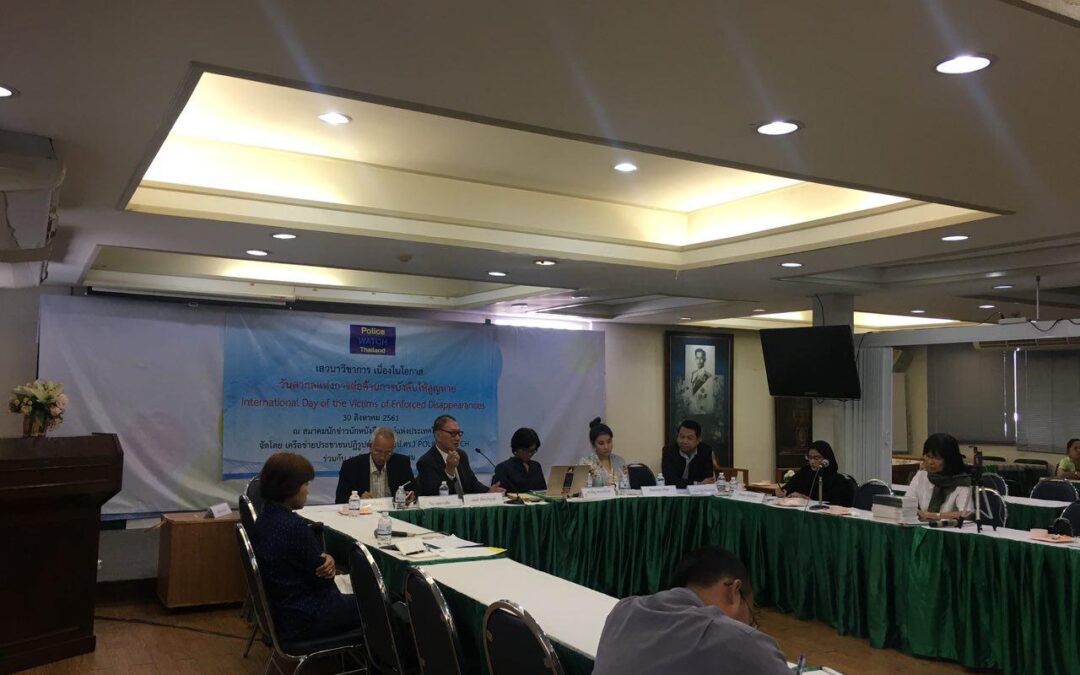
The ICJ participated in a panel discussion to commemorate International Day of the Victims of Enforced Disappearances, organized by Police Watch Thailand and Cross Cultural Foundation.
The discussion was held at the premises of the Thai Journalists’ Association.
The event began with opening remarks by Surapong Kongchantuk, Chairperson of the Cross Cultural Foundation, who called on the Thai Government to ratify the International Convention for the Protection of All Persons from Enforced Disappearance (ICPPED) and for the existing Draft Prevention and Suppression of Torture and Enforced Disappearance Act (‘Draft Act’) to come into force without undue delay.
He also emphasized that perpetrators of the crime of enforced disappearance needed to be brought to justice, and victims and relatives of victims of enforced disappearance must be provided with effective remedies and reparation.
A panel discussion followed the opening remarks, moderated by Pornpen Khongkachonkiet, Director of Cross Cultural Foundation. Panelists included Sanhawan Srisod, ICJ’s National Legal Adviser, Veera Somkomkid, from People Anti-Corruption Network, Pol.Col. Wirut Sirisawadibuth, Columnist and police reform activist, and Adul Kiewboribon, Chair of a committee of persons whose relatives disappeared during May 1992 protests against the government of General Suchinda Kraprayoon.
In her remarks, Sanhawan Srisod expressed concern at the absence of domestic legislation making torture and enforced disappearance specific crimes in Thai law and gaps in the existing Draft Act.
She also called for prompt, independent, impartial and effective investigations into the fate and whereabouts of disappeared persons consistent with international law and standards.
Human Rights Commissioner, and wife of disappeared lawyer and human rights defender Somchai Neelapaijit, Angkhana Neelapaijit, made closing remarks for the event.
The panel discussion followed a forum the ICJ co-hosted in March this year, commemorating the 14th year anniversary of the enforced disappearance of Somchai Neelapaijit, which also raised awareness about amendments to the Draft Act.
During the forum, the ICJ raised concerns about the independence of the ‘Committee managing complaints of torture and enforced disappearance cases’, which was established in May 2017, and expressed the need for further clarification on the legal framework – domestic and/or international – that will ground the Committee’s operation.
Background
The International Day of the Victims of Enforced Disappearances falls on 30 August every year.
Thailand is bound by international legal obligations under the International Covenant on Civil and Political Rights (ICCPR) and Convention against Torture and Other Cruel, Inhuman or Degrading Treatment or Punishment (CAT) – both of which it has acceded to – to investigate, prosecute, punish and provide remedies and reparation for the crimes of torture, other acts of ill-treatment, and enforced disappearance.
However, Thailand has not enacted domestic legislation recognizing enforced disappearance as a criminal offence. Thailand is also yet to ratify the ICPPED, despite signing the Convention in January 2012.
Thailand’s Ministry of Justice concluded a second round of public consultation on the Draft Act and is now reportedly in the process of evaluating the results of the consultation.
On 30 August 2017, 23 November 2017 and 12 March 2018, civil society organizations, including the ICJ, Amnesty International and Human Rights Watch, sent open letters to the Government, including to Thailand’s Minister of Justice, outlining amendments that would be necessary to bring the Draft Act in line with Thailand’s international human rights obligations.
In the absence of domestic legislation criminalizing torture and enforced disappearance, on 23 May 2017, a ‘Committee managing complaints for torture and enforced disappearance cases’ was established by the Prime Minister, pursuant to Prime Minister’s Office Order No. 131/2560 (2017).
The Committee, chaired by the Minister of Justice, consists of 15 officials drawn from different ministries,including the Ministry of Defence, the Royal Thai Police and the Internal Security Operations Command (ISOC).
Aug 23, 2018 | News
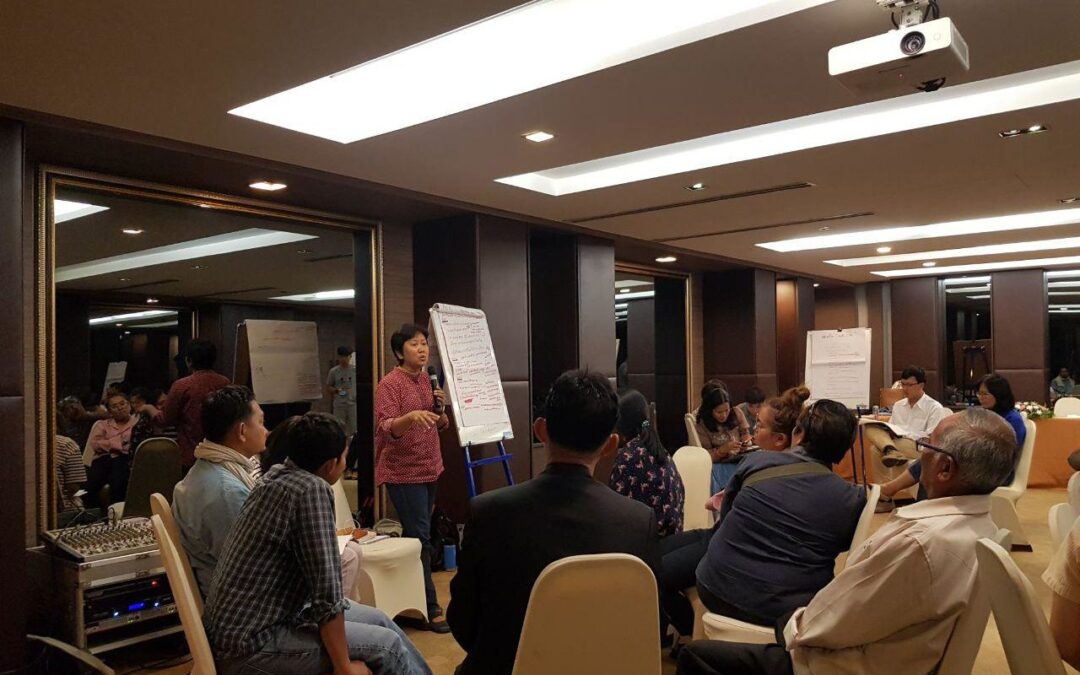
On 22 August, the ICJ co-organized a preparatory discussion in Bangkok for civil society organizations on Thailand’s National Action Plan on Business and Human Rights (NAP).
This event was organized one day in preparation for a formal NGO consultation event on the NAP held today.
The formal NGO consultation event was organized by the National Human Rights Commission of Thailand (NHRCT) to consider the draft NAP released by Thailand’s Ministry of Justice’s Rights and Liberties Protection Department (RLPD) in August 2018.
The ICJ hosted the preparatory discussion jointly with Community Resource Centre Foundation (CRC), Amnesty International Thailand (AI Thailand), Protection International (PI), Fortify Rights and the United Nations’ Office of the High Commissioner for Human Rights (OHCHR).
Thirty members of civil society organizations from all across Thailand attended the preparatory discussion.
Of these participants, four persons from the North of Thailand were supported by the ICJ to attend the discussion, including Ms. Arisara Lekkam, Lecturer of Law at Mae Fah Luang University in Chiang Rai, who was also a speaker at the event.
The event began with a presentation about the NAP and business and human rights issues in Thailand, during which Arisara Lekkam provided an overview of the business and human rights situation in Thailand.
Following the presentation, participants divided into groups to discuss four prioritized areas covered by the NAP: Labour, Land and Natural Resources, Human Rights Defenders and Cross-Border Investment.
At the end of the discussion, each group presented a set of recommendations on the draft NAP pertaining to each prioritized area. These recommendations will be provided to the Ministry of Justice’s RLPD.
This is the third event the ICJ has held on business and human rights in collaboration with partners from the North of Thailand.
On 22 November 2017, the ICJ, in collaboration with Chiang Mai University’s Faculty of Law, held a roundtable discussion on human rights litigation concerning special economic zones in Myanmar and Thailand.
Between 29 and 31 July 2017, the ICJ, in collaboration with Chiang Mai University’s Faculty of Law, held a workshop on ‘Introduction to Business and Human Rights & Basic Principles on Documenting Human Rights Violations” for 25 academics, NGO representatives and lawyers in Chiang Mai.
Background
During the second Universal Periodic Review of Thailand in May 2016, the Royal Thai Government accepted a recommendation to develop, enact and implement a national action plan on business and human rights in order to implement the UN Guiding Principles on Business and Human Rights.
In August 2018, Thailand’s Ministry of Justice’s RLPD, which is currently leading the development of the NAP, released a revised ‘zero draft’ of the NAP.
In line with the release of the revised ‘zero draft’, the NHRCT led the organization of a formal NGO consultation event on 23 August 2018, jointly with Thailand’s Ministry of Justice, Thailand’s Ministry of Foreign Affairs, United Nations Development Programme (UNDP) and OHCHR.
The Royal Thai Government reportedly plans to launch the NAP in September 2018.
Jul 26, 2018 | News
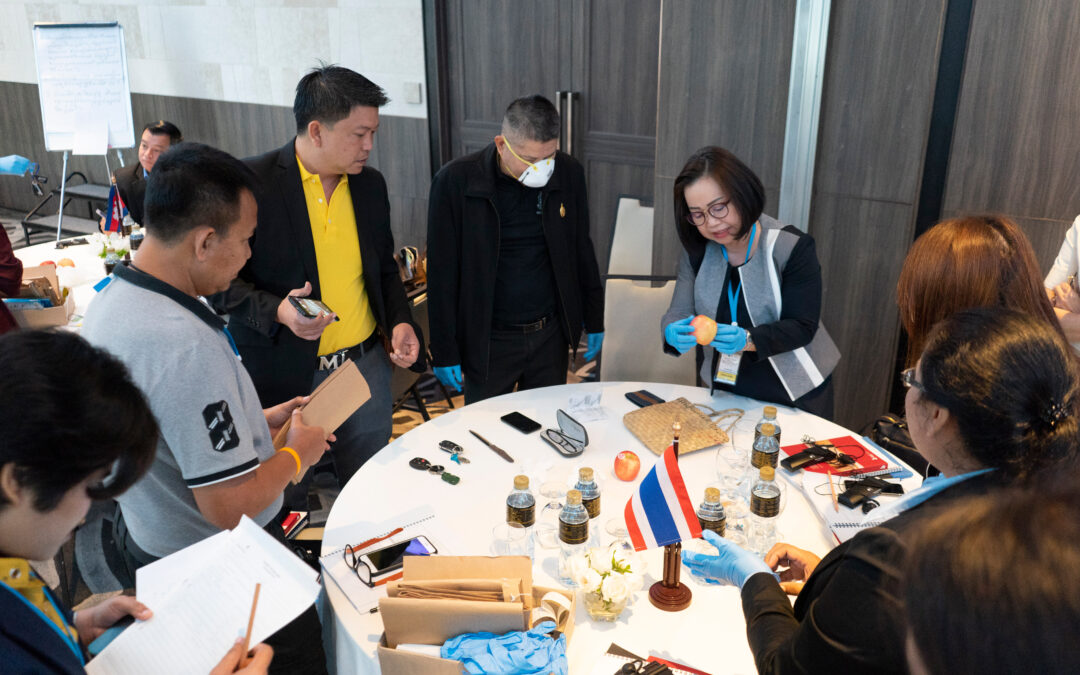
From 24 to 26 July 2018, the ICJ co-hosted a workshop for authorities from Thailand, Cambodia, and Myanmar.
The theme of the workshop was on conducting investigations of potentially unlawful deaths and enforced disappearance in accordance with international human rights law and standards.
The workshop was co-hosted with Thailand’s Ministry of Justice, the United Nations Office of the High Commissioner for Human Rights (OHCHR) and the New Zealand Embassy in Bangkok.
The participants included 25 criminal investigators, public prosecutors and representatives of the Cambodian Ministry of Justice and the Thai Ministry of Justice.
The event commenced with opening remarks by James Andersen, Deputy Head of Mission, Embassy of New Zealand in Bangkok; Aim-orn Siangyai, Deputy Director General of Thailand’s Rights and Liberties Protection Department, Ministry of Justice; Frederick Rawski, Asia Pacific Regional Director, ICJ; and Shivani Verma, Human Rights Officer, OHCHR Regional Office for South-East Asia.
Kingsley Abbott, Senior Legal Adviser at the ICJ, gave a summary of the international human rights legal framework that applies to the investigation of unlawful deaths and enforced disappearance.
He then provided an outline of the revised Minnesota Protocol on the Investigation of Potentially Unlawful Death (2016), which was launched in Thailand on 25 May 2017 and which formed the core of the materials used at the workshop.
Other speakers included Glenn Williams, Detective Inspector, Field Crime Manager, New Zealand Police National Headquarters, who addressed the investigation process including crime scene management; Sean Buckley, International Investigator, who addressed witness interviews; Shivani Verma of the Office of the High Commissioner for Human Rights who addressed Witness Protection; and Dr. Pornthip Rojanasunan, Adviser of Thailand’s Central Institute of Forensic Science (CIFS), who addressed the issue of forensic pathology.
This workshop followed three workshops the ICJ co-hosted between 5 to 8 December 2017 and 30 May to 1 June 2018 in Thailand on the investigation of potentially unlawful deaths and enforced disappearance for lawyers from Thailand and India, academics and State authorities from Thailand, Cambodia, Myanmar and Nepal.
Contact
Kingsley Abbott, Senior International Legal Adviser, ICJ Asia Pacific Regional Office, t: +66 94 470 1345, e: kingsley.abbott(a)icj.org
Jul 24, 2018 | Advocacy, Open letters
The ICJ has submitted recommendations to Thailand’s Criminal Justice Reform Committee concerning the Draft Amending Criminal Procedure Code Act and the Draft Act On Judicial Process Timeframe, which were scheduled for public consultation today.
The ICJ welcomed the Criminal Justice Reform Committee’s efforts to enhance the effectiveness and fairness of the criminal justice system in Thailand, through proposed amendments to Thailand’s Criminal Procedure Code B.E. 2551 (2008) and the Judicial Process Timeframe Act.
The ICJ noted, however, that modifications would be necessary to some of these amendments to ensure they optimally served the ends of justice and were in conformity with international standards.
In particular, the ICJ commended the Committee’s inclusion within the Draft Amending Criminal Procedure Code Act of the following provisions and made recommendations as to how these provisions could be further strengthened:
- Section 13/1. Video and audio recordings of arrests and/or searches
- Section 13/2. Prohibitions against violation of the presumption of innocence
- Sections 121/2, 123 and 124/2. Lodging of criminal complaint with the public prosecutor, at any location and through email or other online medium
- Section 136. Video and audio recordings of inquiry or interrogation
- Section 161/1. Right of the court to dismiss a case where it is filed in bad faith or with misrepresentation of facts in order to harass or take advantage of a defendant
- Section 165/1. Allowing the defendant to submit a defence plea and produce supporting evidence in court
- Section 179/1. Trial in absentia
Contact
Kingsley Abbott, ICJ Senior Legal Adviser, e: kingsley.abbott(a)icj.org
Full letter in English (PDF): Thailand-CPC-Amendments-Advocacy-Open-letters-2018-ENG
Full letter in Thai (PDF): Thailand-CPC-Amendments-Advocacy-Open-letters-2018-THA.pdf