Dec 8, 2017 | News
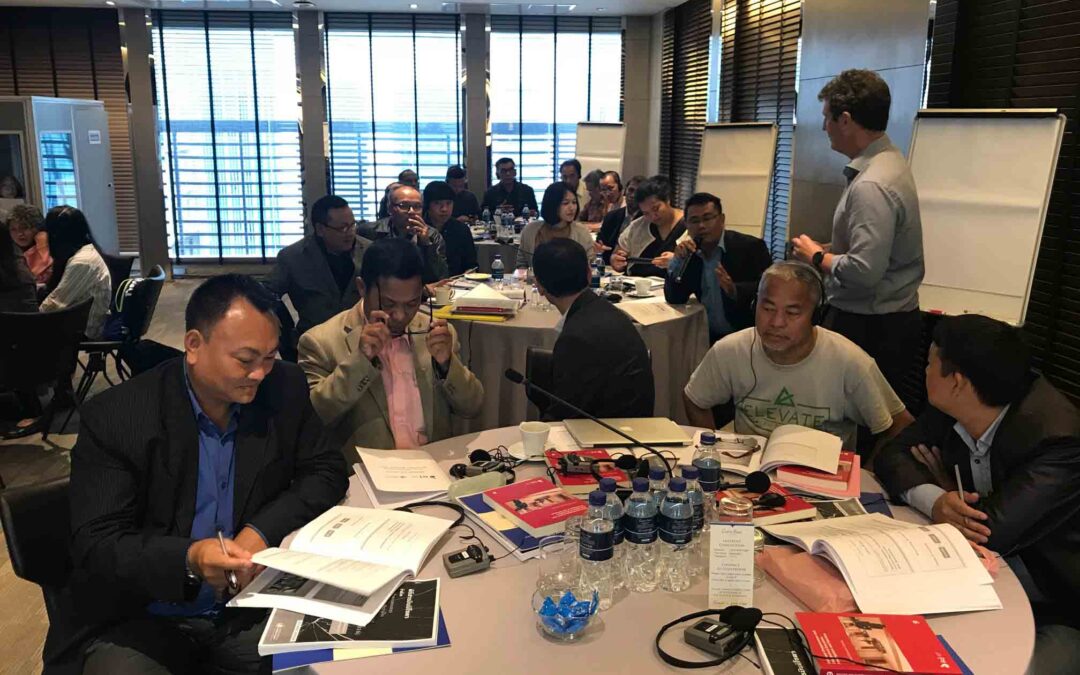
From 5 to 8 December 2017, the ICJ co-hosted two workshops – the first one for lawyers with the UN Office of the High Commissioner for Human Rights (OHCHR) and the second one for authorities in Thailand – on the investigation of potentially unlawful deaths and enforced disappearance.
The first workshop’s attendees included 17 lawyers and academics from Thailand and eight lawyers from India.
Participants in the second workshop included 26 participants from Thailand’s Ministry of Justice, Department of Special Investigation (DSI), Royal Thai Police, Office of the Attorney-General, Ministry of Defence, Ministry of Interior, Southern Border Province Administration Centre and the National Human Rights Commission of Thailand.
The first event commenced with opening remarks by OHCHR Human Rights Officer and Thailand team coordinator, Imesh Pokharel, and Frederick Rawski, the ICJ’s Regional Director for Asia and the Pacific.
Aem-on Siang-Yai, Director of the Office of Rights and Freedoms Protection from the Rights and Liberties Protection Department of Thailand’s Ministry of Justice made additional opening remarks in the second event.
In both workshops, Kingsley Abbott, Senior International Legal Adviser for Southeast Asia at the ICJ provided an introduction to the revised Minnesota Protocol on the Investigation of Potentially Unlawful Death (2016), which was launched in Thailand on 25 May 2017; ICJ Practitioners Guide No 9 – Enforced Disappearance and Extrajudicial Execution: Investigation and Sanction (2015, in English, Spanish and Thai); and the international legal framework governing investigations into unlawful deaths, noting that Thailand has legal obligations including under its Constitution and the International Covenant on Civil and Political Rights (ICCPR), to which it is a State Party, to respect, protect and fulfil the right to life.
These obligations entail a duty to ensure investigations into potentially unlawful deaths are independent, impartial, effective, thorough and transparent.
Sean Buckley of OSACO Group, former New Zealand Police Detective and now an independent, international, investigative specialist with more than 20 years of investigations experience including more than seven years with the United Nations (including at the Special Tribunal for Lebanon and the United Nations High Commissioner for Refugees), provided in both events a technical training on a range of topics relevant to investigations using the revised Minnesota Protocol as a guide.
Kingsley Abbott was a member of the Forensics and Legal Working Groups which assisted with the revision of the Minnesota Protocol, while Sean Buckley was a member of the Advisory Panel.
The workshops focused on investigation techniques of potentially unlawful deaths, including controlling the crime scene, preserving the security of evidence and ensuring the safety of all parties involved in investigations, including witnesses, investigators and family members of victims.
The workshops also covered witness identification and interview techniques, collection of DNA evidence, drafting of investigation reports and crime file management.
Sean Buckley shared with participants different means of international assistance available for investigations of potentially unlawful deaths.
The Workshop also covered the collection and potential use of telecommunications evidence.
Sean Buckley and Imesh Pokharel presented on the interview and protection of witnesses.
Thailand and India are both state parties to the ICCPR.
Contact
Kingsley Abbott, ICJ Senior International Legal Adviser for Southeast Asia, kingsley.abbott(a)icj.org
Nov 23, 2017 | News
Today, the ICJ and Amnesty International submitted recommendations to the Ministry of Justice that changes be made to a new law under consideration by the Cabinet, in order to bring it in line with Thailand’s international legal obligations.
The submission came in response to a request by the Ministry for feedback on the Draft Prevention and Suppression of Torture and Enforced Disappearances Act (‘Draft Act’).
The ICJ and Amnesty International welcome the Thai government’s commitment to criminalize torture and enforced disappearances.
The Draft Act currently addresses many existing gaps in Thailand’s current legal framework.
However, the organizations consider that further amendments are needed to address significant shortcomings in the Draft Act and ensure Thailand’s compliance with international treaties on torture and enforced disappearance and international standards.
Recommendations by the ICJ and Amnesty International addressed the following concerns:
- The absence within the Draft Act of key elements of the crimes of torture and enforced disappearance, as defined by international law;
- The absence of provisions concerning cruel, inhuman and degrading treatment or punishment (CIDT/P);
- The inadequacy of provisions establishing the inadmissibility of statements and other information obtained by torture, CIDT/P and enforced disappearance as evidence in legal proceedings;
- The inadequacy of provisions relating to modes of liability for crimes described in the Draft Act; and
- The shortcoming of provisions concerning safeguards against torture, CIDT/P and enforced disappearances.
The ICJ and Amnesty International urge Thailand to make it a top priority to address these and other concerns, and once they are addressed, to enact the law as soon as possible.
The urgent need to amend and enact the Draft Act is underscored by several NGO reports documenting the persistent use of torture and other ill-treatment by state security forces and the continued failure of the Thai authorities to hold accountable perpetrators of torture, other ill-treatment and enforced disappearances.
The ICJ and Amnesty International remain committed to providing any necessary assistance to the Thai government in amending the Draft Act or otherwise acting to prevent torture and enforced disappearances in Thailand.
In a letter accompanying the submission, the ICJ and Amnesty International also emphasized the crucial importance of maintaining sections within the current Draft Act providing that the prohibitions on torture and enforced disappearances apply in all circumstances, including states of emergency, and prohibiting the forcible transfer of persons to territories where they would face a real risk of torture or enforced disappearances (refoulement).
Background
Thailand is a state party to the International Covenant on Civil and Political Rights and the Convention against Torture and other Cruel, Inhuman or Degrading Treatment or Punishment, and has signed, but not yet ratified, the International Convention for the Protection of All Persons from Enforced Disappearance.
The UN expert bodies overseeing the implementation of these treaties have consistently called upon states parties to criminalize torture and enforced disappearance as specific crimes.
On 15 November 2016, Thailand replied to a List of Issues, identified by the UN Human Rights Committee’s noting that it was in the process of passing the Draft Act which would “provide clear definition and set up specific offence on torture to be in line with the terms set forth under CAT” and “serve as an implementing legislation for ICPPED.”
It also asserted that the Draft Act “aims to strengthen the prevention, suppression, and prosecution mechanism and to ensure remedy for victims as well as address the problem of misuse, and abuses of power by government authorities with regard to torture and enforced disappearances.”
In February 2017, the National Legislative Assembly (NLA) announced it would not enact the Draft Act, which was produced by the Ministry of Justice in consultation with non-governmental organizations and other civil society actors.
In March 2017, at the UN Human Rights Committee’s review of Thailand’s compliance with the ICCPR, Thailand confirmed that the Draft Act “had been submitted to the National Legislative Assembly, which had requested the Cabinet to further review the bill, with a view to introducing amendments and launching a public consultation process.”
Contact:
Kingsley Abbott, ICJ Senior International Legal Adviser for Southeast Asia, t: +66 94 470 1345 e: kingsley.abbott@icj.org
Read also
Joint Letter to the Thai Government
Download
Thailand-Torture and ED-Advocacy-nonlegal submission-ENG (Submission in English, pdf)
Thailand-Torture ED Bill-News-THA (statement in Thai, pdf)
Thailand-Torture and ED-Advocacy-nonlegal submission-THA (Submission in Thai, pdf)
Nov 22, 2017 | News
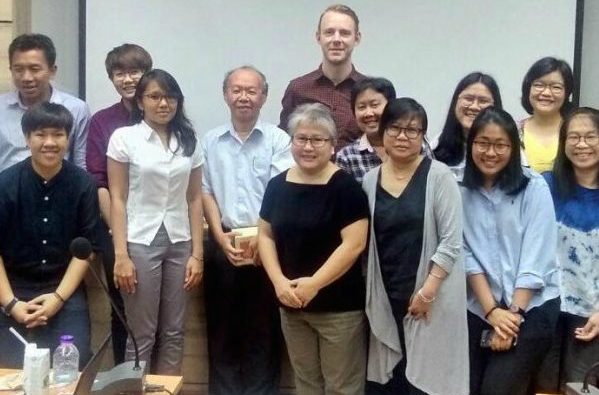
On 22 November, the ICJ, in collaboration with the Legal Research and Development Center under Chiang Mai University’s Faculty of Law, held a roundtable discussion on “Human Rights Litigation concerning the Special Economic Zones in Myanmar and Thailand”.
The objective of the discussion, held on campus at Chiang Mai University, was to identify legal issues and to share experiences regarding strategic litigation and advocacy strategies concerning human rights violations associated with the development of Special Economic Zones (SEZs) in Thailand and Myanmar.
In recent years, both the Thai and Myanmar governments have been trying to attract foreign direct investment into their countries by demarcating specific areas where special regulations concerning, inter alia, public administration, the environment, land or labour rights might be applied.
Proponents of SEZs tend to link their development with jobs and economic growth, however, there is generally limited publicly available information about their economic or public purpose rationale.
The development of SEZs, which requires a lot of land, can undermine the protection of human rights and the rule of law by creating governance structures and permitting processes less stringent than that required under national and international law.
Participants at the discussion included postgraduate students and lecturers from Chiang Mai University’s Faculty of Law, lawyers and representatives from Thai civil society organisations.
The ICJ shared with participants its report analysing the legal framework of SEZs in Myanmar and human rights concerns arising from a case study of Kyauk Phyu SEZ, ‘Special Economic Zones in Myanmar and the State Duty to Protect Human Rights’, during the discussion.
The speakers at the discussion were:
· Sean Bain, ICJ International Legal Advisor, Myanmar
· Sumitchai Hattasan, Director, Center for Protection and Revival of Local Community Rights
· Supaporn Malailoy, EEC Watch, Human Rights and Environmental Lawyer
Nov 8, 2017 | News
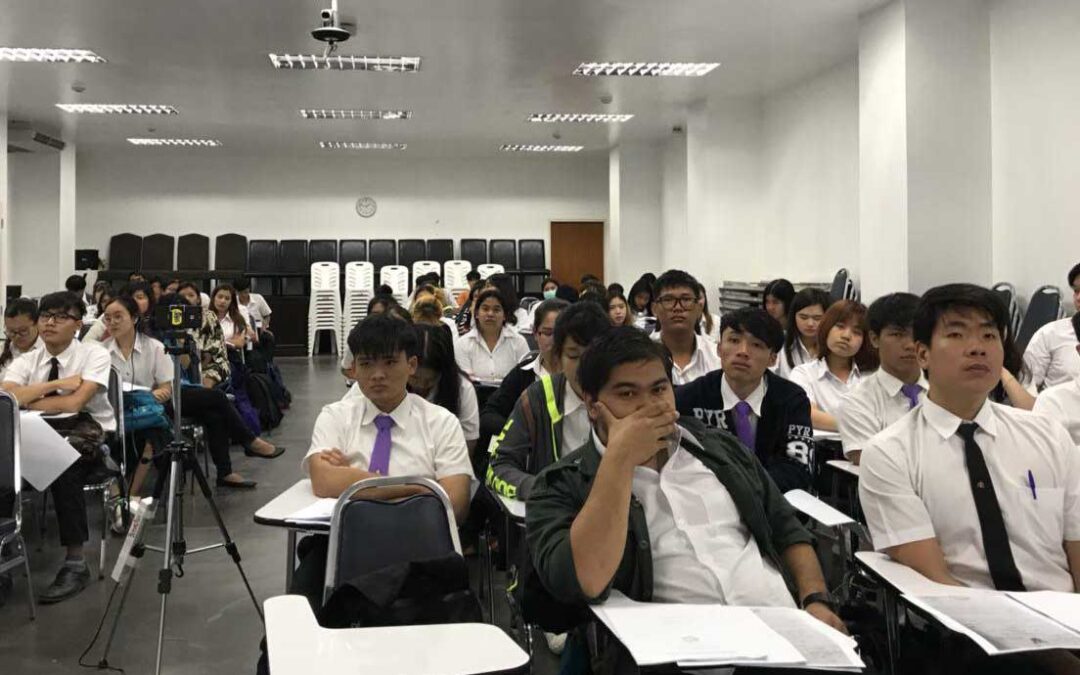
Today, the ICJ addressed an academic seminar on the topic of “Post-mortem Examinations and Inquires”, organized by Chiang Mai University’s Faculty of Law, in collaboration with the Cross Cultural Foundation, a partner of the ICJ.
Participants in the seminar, which was held at Chiang Mai University’s Faculty of Law campus, included undergraduate students and lecturers from Chiang Mai University.
The ICJ’s speakers at the workshop were Sanhawan Srisod, ICJ National Legal Adviser, who delivered an introduction to International Human Rights Law, and Kingsley Abbott, ICJ Senior International Legal Adviser, who addressed the right to life, and the international law and standards as they relate to investigations including the rights of victims and family members.
Other speakers at the Workshop were Preeda Nakphew a lawyer with the Cross Cultural Foundation, and Sarawut Pratoomraj, a Law Reform Officer with the Law Reform Commission of Thailand.
The seminar was part of an ongoing engagement between the ICJ and Chiang Mai University’s Faculty of Law.

Nov 1, 2017 | News
The ICJ welcomes the Pattani Provincial Prosecutor’s decision to end the criminal prosecution of three prominent human rights defenders who raised allegations of torture in Thailand’s restive deep South: Ms Pornpen Khongkachonkiet, Mr Somchai Homlaor, and Ms Anchana Heemmina.
On 24 October 2017, the Region 9 Senior Expert Public Prosecutor, on behalf of the Pattani Provincial Prosecutor, informed the Superintendent of the Muang District Pattani Police Station of the decision to end the prosecution of the three defenders for criminal defamation and violation of the Computer Crime Act.
The ICJ has previously expressed concern that the prosecutions were unwarranted and abusive and were aimed at chilling the exercise of critical human rights work in Thailand.
“While we welcome the decision to end these prosecutions, they have already caused a tremendous amount of damage to complainants of serious human rights violations like torture and ill-treatment, civil society, and the local community in the deep South that must now be repaired,” said Kingsley Abbott, the ICJ’s Senior International Legal Adviser for Southeast Asia.
“An important first step would be to pass legislation which criminalizes torture and ill-treatment and provides meaningful protections for those who wish to come forward with allegations of violations,” he added.
On 28 February 2017, the UN Office of the High Commissioner for Human Rights announced that it had been informed that the Thai National Legislative Assembly (NLA) would not enact legislation then under consideration criminalizing torture and enforced disappearance, the Draft Prevention and Suppression of Torture and Enforced Disappearance Act (Draft Act).
The following day, an NLA official speaking to BBC Thai confirmed that the Draft Act would be “returned [to the Thai Cabinet] for more consultations… with Interior officials, police authorities, the national security sector, military authorities and prosecutors.”
The Draft Act remains with the Thai Cabinet.
“It is long past time for Thailand to make good on its repeated commitments on the international stage to pass this essential piece of legislation in accordance with its international human rights obligations,” added Abbott.
Contact
Kingsley Abbott, Senior International Legal Adviser, ICJ Asia Pacific Regional Office, t: +66 94 470 1345, e: kingsley.abbott(a)icj.org
Background
On 10 February 2016, three Thai organizations, the Cross Cultural Foundation (CrCF), Duay Jai Group (Hearty Support Group), and the Patani Human Rights Organization (HAP), issued a report that documented 54 cases of alleged torture and ill-treatment by the Thai security forces in the deep South since 2004.
In response, the Internal Security Operations Command (ISOC) Region 4 (Forward Command) – created to resolve the situation in the deep South – made complaints of criminal defamation against the three co-editors, Pornpen Khongkachonkiet (Director of the CrCF), Somchai Homlaor (Senior legal advisor to CrCF and Hearty Support Group), and Anchana Heemmina (founder and Director of the Hearty Support Group).
On 26 July 2016, the Thai police charged the three defenders with criminal defamation by means of publication under Article 326 and 328 of the Penal Code, and importing false information to a computer system under Article 14 (1) of the Computer-Related Crime Act B.E. 2550 (2007).
On 7 March 2017, the ISOC 4 Forward Command announced its intention to drop the complaints at a press conference in Bangkok.
Thailand is a State party to the International Covenant on Civil and Political Rights (ICCPR), the Convention against Torture and other Cruel, Inhuman or Degrading Treatment or Punishment (CAT) and has signed, but not yet ratified, the International Convention for the Protection of All Persons from Enforced Disappearance (ICPPED).
Further reading on these criminal proceedings
Thailand: ICJ welcomes dropping of complaints against human rights defenders but calls for investigation into torture
Thailand: stop use of defamation charges against human rights defenders seeking accountability for torture
Thailand: immediately withdraw criminal complaints against human rights defenders
Further reading on the Draft Prevention and Suppression of Torture and Enforced Disappearance Act
Thailand: ICJ commemorates international day in support of victims of enforced disappearances
Thailand: pass legislation criminalizing enforced disappearance, torture without further delay
Thailand-News-Pressreleases-humanrightsdefenders-2017-THAI (full press release in Thai, pdf)