Nov 25, 2017 | Multimedia items, News, Video clips
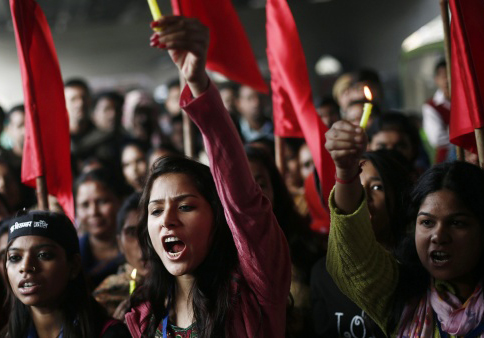
Over the last year, since 25 November 2016, the ICJ has published a series of (video) profiles introducing the remarkable work of ICJ women Commissioners and Honorary Members.
“The ICJ has a strong focus on the struggle to eliminate violence against women. It is supporting the judiciary, independent civil society organizations and women’s rights defenders, in their work to promote international standards, ensure that victims are made visible and that States understand their responsibilities and obligations. At the same time, the ICJ provides much-needed judicial education on gender-based violence,” said Justice Radmila Dragicevic-Dicic, ICJ Commissioner, member of ICJ’s Executive Committee, and Justice of the Supreme Court of Serbia, on the occasion of 25 November, International Day for the Elimination of Violence against Women.
ICJ Commissioners have been at the forefront of the work to reform justice systems to make it easier for women to take cases of domestic violence to the courts, to punish perpetrators of rape and sexual assault as a war crime, to challenge discriminatory religious and family laws and to support victims of human trafficking and forced prostitution.
The ICJ has also supported judicial training programmes on access to justice for women. In 2016, the ICJ, in collaboration with UN Women, hosted a workshop for representatives from the judiciaries of Indonesia, Philippines, Timor Leste, and Thailand.
The participants of the workshop developed and adopted the Bangkok General Guidance for Judges in Applying a Gender Perspective.
In follow up, for example, the Supreme Court of Indonesia has now issued a Regulation based on the General Guidance, requiring judges to apply a gender perspective as they consider cases before them that involve women’s human rights.
Working in partnership with other organizations and the UN, the ICJ and its Commissioners will continue to work to ensure justice for women and to end gender-based violence.
The video interviews of ICJ women Commissioners and Honorary Members can be accessed here:
Justice Radmila Dragicevic-Dicic has worked on issues of organized crime and human trafficking. In the Serbian Constitution, human trafficking is now categorized as a crime against humanity and is taken very seriously. Radmila highlights the importance of ensuring the non-punishment, safety and protection of victims as well as their right to access compensation.
Prof Jenny Goldschmidt is a former President of the Equal Treatment Commission of the Netherlands and has combined academic research with practical work, with a particular focus on non-discrimination and the concepts of equality. She considers it is vital to take cases to the Treaty Bodies and courts everywhere to establish severe measures against discrimination and domestic violence.
Asma Jahangir is an Honorary Member of the ICJ, and the co-founder of Pakistan’s first all female law firm. She worked on a number of landmark cases including on issues such as whether women could get married without their father’s permission, be entitled to family maintenance or whether women should be judged according to religious law.
Imrana Jalal is a human rights lawyer and gender specialist in the Asian Development Bank in Manila. Imrana helped draft and negotiate the passage of the ground-breaking Fiji Family Law Act, which took twelve years to pass. She considers that in the area of family law, some progress has been made but it is hard because it is based on the premise that women have an equal right to property and this directly confronts social norms.
Hina Jilani is an advocate of the Supreme Court of Pakistan and served as the first UN Special Representative on Human Rights Defenders. She considers domestic violence in Pakistan as a major problem. Although the Pakistani judiciary is traditionally very conservative, Ms Jilani considers there has been progress because women’s rights advocates present cases in such a way as to make the social inequalities and injustices apparent.
Justice Sanji Monageng is a member of the International Criminal Court. She considers that the ICC has not done very well in prosecuting sexual and gender-based violence so far. The new Chief Prosecutor, Fatou Bensouda, has created a policy on sexual violence and gender issues, establishing a dedicated unit. She says is it evident in the cases that now come before her, there is a lot more attention being paid to sexual violence.
Karinna Moskalenko is a Russian lawyer and a founder of the International Protection Centre in the 1990s after Russia had ratified the Optional Protocol to the ICCPR. She explains her work to support women who are much more vulnerable than men, particularly because of the problem of domestic violence.
The former ICJ Vice-President Michèle Rivet was the first President of the Quebec Human Rights Tribunal from 1990 and until 2010. For Michèle, those who work in the field of human rights form a global village and have a duty to help women victims of violence: “we must all walk together on the long march to equality.”
Prof. Leila Zerrougui is Algerian and has served at the Algerian Supreme Court. She worked in the DRC as part of the UN Stabilization Mission and was Special Representative of the Secretary General for Children and Armed Conflict. In the DRC, she established mobile criminal justice system, with an investigator, prosecutor and a mobile court and prison in every Province. In this context, she explained how rewarding it was to see a colonel taken to the village where he and his soldiers had raped women to face justice there.

Oct 24, 2017 | Advocacy, Non-legal submissions
Human rights NGOs call for a treaty to cover all business enterprises and not only those of transnational character.
Universal-Oral Statement Business Treaty-Advocacy-Non legal submission-2017-ENG (full statement in PDF)

Oct 10, 2017 | News
At UN General Assembly First Committee, over 40 organisations from across the world endorsed a statement calling on states to take concerted action to address harm from armed drones and work towards agreement on the limits of the acceptable use of these technologies.
Few states have raised this issue at the First Committee recently, despite the urgent need to address the peace and security implications of armed drones.
Universal-dronesstatement-advocacy-2017-ENG (full pdf)
Oct 6, 2017 | Advocacy, Non-legal submissions
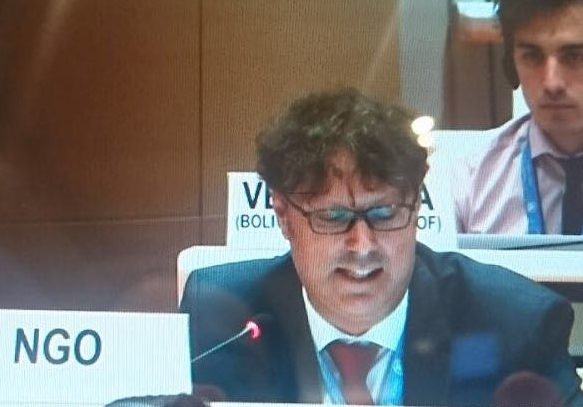
The ICJ today highlighted the role of judges, lawyers, and prosecutors at a UN seminar on prevention of torture in police custody and pre-trial detention.
The ICJ made the interventions during the “Seminar on the implementation of effective safeguards to prevent torture and other cruel, inhuman or degrading treatment or punishment during police custody and pre-trial detention” organized by the Office of the High Commissioner for Human Rights pursuant to a mandate from Human Rights Council resolution 31/31 (2016). A report of the seminar will be delivered and discussed at the March 2017 session of the Council.
The ICJ stated as follows in the first session:
The ICJ’s Commissioners are 60 senior judges and lawyers from all parts of the world. The ICJ works extensively with judges and absolutely agrees that their role is key to prevention of torture and ill-treatment in police custody and pre-trial detention.
Some of the key aspects of the role of judges include:
Judges should rigorously pursue all allegations. They should inquire when there are signs of abuse even if the detainee does not specifically allege abuse. They should demand that detainees be physically brought before them. Judges should be prepared to hold authorities in contempt of court when the authorities do not comply. The ICJ was very interested in what the Panelist Judge Dias Toffoli from Brazil said during the session about developments for custody hearings there, and how the judiciary can take practical systematic measures to fulfil their role even when legislators and other authorities may hesitate to act.
Judges should recognise and balance for evidentiary issues faced by detainees and their lawyers given the control authorities exercise over the place of detention
Judges should ensure that authorities respect rights of access to the outside world (including lawyers, family, friends, doctors, letters, and so on), both as safeguard but also to ensure detainees are not subjected to isolation that in its cumulative impact can itself amount to ill-treatment or even torture. The ICJ was pleased that Special Rapporteur Melzer highlighted the importance of such access.
Judges should ensure that confessions, other information and evidence obtained by torture and similar abuse is not allowed to be part of proceedings before them. The ICJ was interested in what justice Donoso from Chile said about relevant developments there.
In many places, judicial authorities are responsible for supervision of places of pre-trial detention. Where this is the case, judges should visit regularly, and at times without prior notice, such places of detention.
Judges should ensure accountability of perpetrators.
Judges should ensure rigorous constitutional review of relevant laws and practices, and maintain knowledge of and apply in practice international law against torture and ill-treatment. Even non-legally-binding international standards (such as the UN Standard Minimum Rules for the Treatment of Prisoners or “Mandela Rules”, and the UN Body of Principles for the protection of all persons under any form of detention or imprisonment) should be seen by judges as a useful and persuasive source of guidance in interpreting national laws.
To effectively fulfil their role, the judiciary must enjoy all necessary guarantees of independence from other authorities and other powerful interests in society. At the same time, at the ICJ we have also more recently been concerned to ensure accountability of judges when they fail to fulfil their duties to prevent and respond to torture, or are indeed intentionally complicit in mistreatment of prisoners.
Judges acting to protect human rights of criminal detainees are often subject to public criticism, and are often unable for reasons of impartiality and dignity of the court to defend themselves. It is therefore incumbent on members of the Executive, Legislature, legal profession, and others to defend such judges, and certainly not to pile on further unjustified criticism.
Finally, the ICJ would note that recent resolutions of the Human Rights Council on the independence of judges and lawyers, and on the administration of justice, stress the role of continuing professional education of judges on human rights issues (best organised by judicial institutions themselves, but involving other actors). Continuing education on prevention of torture and ill-treatment is a key area needed by all judiciaries in all countries.”
The ICJ continued as follows in the second session:
“A common thread that has already emerged from the first two panels is the role that pressure on police to obtain confessions plays in the incidence of torture and abuse in police custody. Thank you to the Panelists for their insights on this issue.
Values and signales from superiors and political leadership, including for instance in relation to practical aspects like career progression of police officials, is very important. Having clear rules is also very important in this regard. As is the perception of police that they lack alternatives to confessions as form of proof. Training on interviewing techniques, having an adequate number of officers, access to materials like fingerprinting kits and means of assuring chain-of-custody for physical evidence, are all also important.
The Seminar has addressed judges and police already, and will discuss lawyers later; the ICJ would also like to highlight the role of prosecutors in removing incentives on police to focus on obtaining confessions by any means.
The UN Guidelines on the Role of Prosecutors (Article 16) provide that prosecutors shall refuse to use evidence that they believe to have been obtained by torture.
A similar provision is incorporated in the professional standards adopted by the International Association of Prosecutors (which have also been endorsed by the UN Crime Commission). This also is an example of how international and regional professional associations can play an important role with their members in practical measures for prevention of torture and ill-treatment in police custody and pre-trial detention.”
In the third Session, the ICJ expressed its agreement with points made by Ms Miti-Drummond, the representative of the International Bar Association Human Rights Institute regarding the role of the legal profession in the prevention of torture, particularly regarding the importance of access to and presence of a competent and independent lawyer prior to and during any interview.
The ICJ also pointed out that some States have period of delay or even preclusion of access of detainee to the lawyer of his or her choosing, for instance in counter-terrorism, national security or similar cases. Often these are cases where there is a particular risk of abuse, and also may involve delay in bringing the person before a judge. In some places the independent bar association assigns a lawyer who has immediate access, if the access to the person’s lawyer of choice is denied or delayed. The ICJ invited comments or recommendations about this practice or other means to ensure lawyers can effectively prevent torture in such circumstances.
Oct 2, 2017 | Advocacy, Non-legal submissions
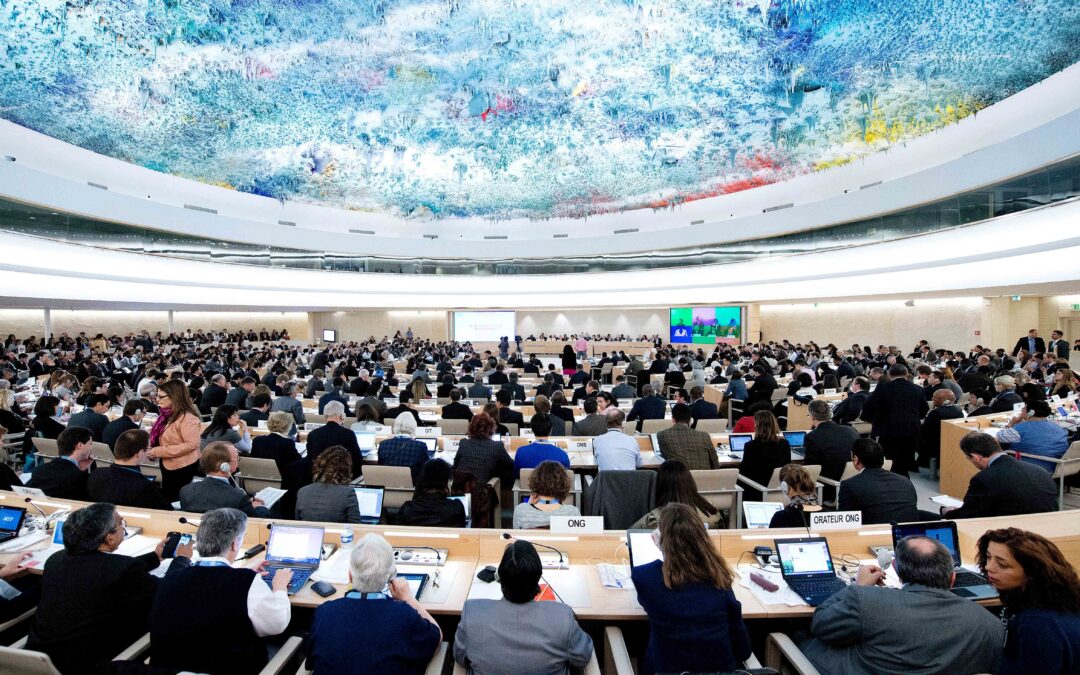
The ICJ has joined other NGOs in welcoming action by the HRC on Yemen, Burundi, and DRC, as well as on reprisals and intimidation against civil society and human rights defenders, and the death penalty, while expressing disappointment about lack of adequate action on other matters.
The full statement is as follows:
Joint statement by International Service for Human Rights on behalf of Amnesty International, Asian Forum on Human Rights and Development (Forum Asia), Cairo Institute for Human Rights Studies (CIHRS), CIVICUS, Human Rights House Foundation, International Commission of Jurists and the International Lesbian, Gay, Bisexual, Trans and Intersex Association (ILGA).
We welcome the adoption of the resolution intended to end acts of intimidation or reprisals. However, we regret that a small group of States – most of them regular perpetrators of acts of intimidation or reprisals – have tried to undermine the Council’s efforts to end reprisals. We thank the majority of the Council members for resisting these efforts.
We are concerned that there were attempts to dilute several resolutions at this Council with the insertion of so-called “sovereignty” clauses. While we welcome the fact that they were ultimately defeated, we are concerned that a significant number members seek to use the concept of Sovereignty to shield themselves and other States from international scrutiny.
We also welcome that the resolution on the death penalty urges States to not impose it as a sanction for specific forms of conduct such as apostasy, blasphemy, adultery and consensual same-sex relations.
We applaud the creation by consensus of an international investigative body on Yemen, and the broad State leadership on this issue. It sends a message that the people of Yemen have not been abandoned, and that accountability for international crimes is urgently required. We call on all parties to the conflict to fully cooperate with this mandate.
On Burundi, we welcome the extension of the mandate of the Commission of Inquiry (COI). This was the only credible response to the CoI’s concerns that crimes against humanity may have been committed, and the persistent non-cooperation of Burundi with both the COI and the OHCHR presence in the country. We urge Burundi to follow through on its promises to start cooperating with the UN system, in line with duties as HRC member, and – failing that – call on the General Assembly to take appropriate action.
On Myanmar, while we welcome the extension of the fact-finding mission’s mandate, we are disappointed that the Council did not do more to address the gravity of the situation on the ground, in particular acknowledging the disproportionate campaign of violence by Myanmar’s security forces in Rakhine State, which have forced around half a million Rohingya to flee to Bangladesh since 25 August. We urge States to use the ongoing UN General Assembly session to address what the High Commissioner for Human Rights described to the Council as a “textbook example of ethnic cleansing.”
On Cambodia, while the Council missed an opportunity for robust scrutiny of the worsening situation, the pre-election reporting in March should put authorities on notice.
On the Democratic Republic of the Congo (DRC), we welcome the Council’s decision to boost scrutiny of the human rights crisis for another year, which shows how horrific the situation has become. The DRC must now cooperate with all Council mechanisms, and the Council needs to keep its eyes on the country until all actors stop committing violations and abuses, and justice for victims has been obtained.
Finally, we regret the increasing effort spent on procedural tricks and manoeuvers by States in an attempt avoid scrutiny – including by abusing the privilege of being a member to seek to avoid scrutiny of their own situation – instead of spending diplomatic time and capital on ending human rights violations, which is the Council’s core mandate. A renewed commitment to addressing situations based on objective criteria is now more urgent than ever.