Mar 8, 2018 | Multimedia items, News, Video clips
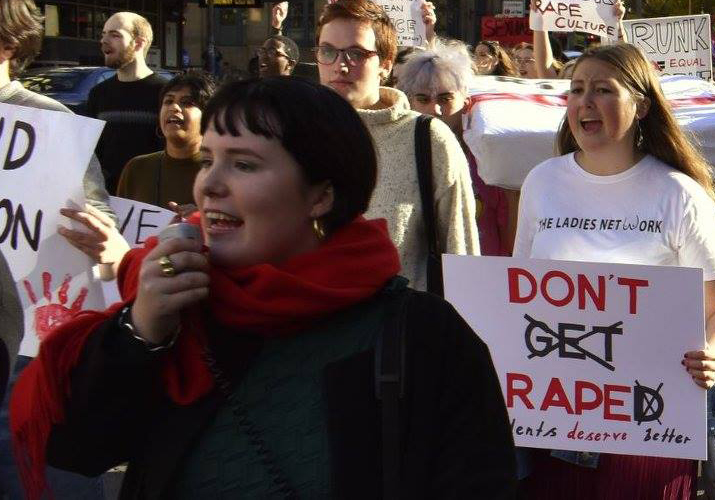
Today on International Women’s Day the world looks to celebrate the achievements of women and advances made towards the realization of women’s human rights but the day is also an opportunity to address the issues that continue to disadvantage women.
In the 70th anniversary year of the Universal Declaration of Human Rights many women around the world have seen States failing to live up to their obligations to ensure that they are able to exercise their human rights.
Where women’s human rights are violated many women face discrimination, denial of equal protection of the law and other impediments in accessing the justice that they deserve.
“The ICJ has a strong commitment to addressing the obstacles women face in accessing justice,” said ICJ Acting Vice-President, Justice Radmila Dragicevic-Dicic.
“The judiciary has an important role in protecting the rights of women, but in many States there is a lack of proper awareness and understanding of issues such as gender based-violence. Many judges would benefit from judicial education on specific gender-based issues to ensure that women victims are made visible and their rights protected by domestic laws and relevant international standards,” she added.
For several years the ICJ has worked on women’s access to justice issues in different countries in all regions with a variety of stakeholders, including human rights defenders, lawyers, judges, governmental authorities and international rights experts and mechanisms.
For example, in Tunisia, the ICJ issued a memorandum calling on authorities to remove the obstacles women face in accessing justice.
The ICJ has held regional dialogues in Africa and Asia with judges and lawyers.
In Asia, one outcome of this was The Bangkok General Guidance for Judges in Applying a Gender Perspective, designed to assist judges in employing a gender perspective in deciding cases before them, which has since been adopted for use by judiciaries in Indonesia and the Philippines.
In Africa, the need for gendered perspectives in judicial decision-making was also raised in a regional report evaluating sexual and gender based violence (SGBV) and fair trial rights.
The ICJ has undertaken substantial work on women’s access to justice in the context of SGBV, including a report calling for an eradication of harmful gender stereotypes and assumptions and a Practitioners’ Guide on Women’s Access to Justice for Gender-Based Violence.
Both have been used as training tools in Asia, Africa and MENA, most recently at a workshop on SGBV in Swaziland.
Last year the ICJ released a memorandum on effective investigation and prosecution of SGBV in Morocco.
The ICJ has also undertaken trial observations during hearings in the landmark Sepur Zarco case, the first case that resulted in a conviction for sexual crimes that had occurred during Guatemala’s internal conflict in the early 1980s.
The ICJ regularly engages with the UN Human Rights Council and the UN Committee on the Elimination of all Forms of Discrimination against Women to highlight issues around women’s access to justice and call on the international community to be vigilant in upholding women’s rights protections.
“The ICJ is lucky to count among its number some very impressive women human rights defenders, who bring a great deal of expertise to the work of the organization,” said Dragicevic-Dicic.
“The five most recent additions to the ICJ have further strengthened the organization’s ability to speak authoritatively on women’s rights, and I look forward to working with my new colleagues to enhance women’s access to justice,” she added.
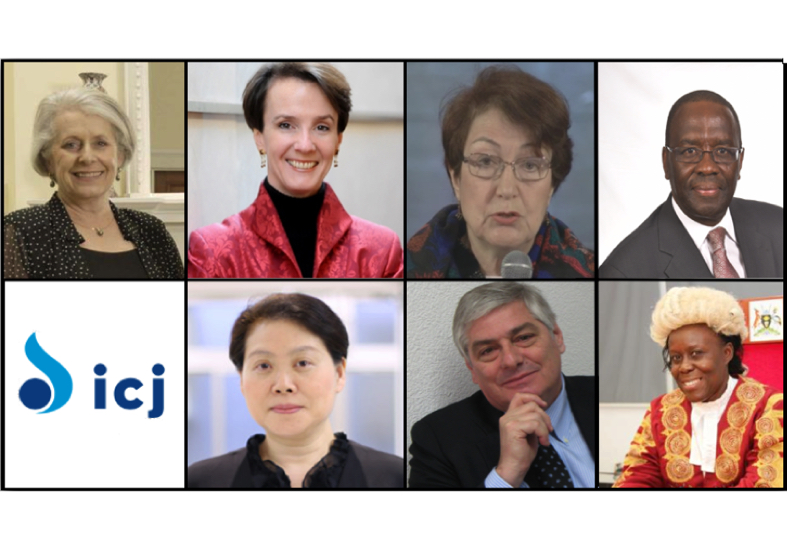
The new additions to the ICJ include Dame Silvia Cartwright, Former Governor of New Zealand; Professor Sarah Cleveland, Constitutional and Human Rights Professor at Columbia Law School in the USA; Justice Martine Comte who has over 30 years judicial experience in France; Mikiko Otani, member of the UN Committee on the Rights of the Child from Japan; and Justice Lillian Tibatemwa-Ekirikubinza from the Supreme Court of Uganda.
In an interview with the ICJ, Commissioner Justice Elizabeth Evatt, a distinguished Australian lawyer, jurist and trailblazer for women in the legal profession in her country, spoke about the importance of women being able to access justice.
One of the architects of Australia’s Family Law Act of 1975, Justic Evatt told the ICJ how the Act made divorce more accessible and abolished the Common Law relics that gave men greater rights over women, however new problems have emerged since then.
Justice Evatt explained that “(the Act) was an extremely important reform for women. It made it far easier for men and women to access divorce and have their matters dealt with because the court had conciliation and counselling services and also legal aid was more readily available. But I am afraid that since those days, thing have changed. The Family Court is now beset with delays and obstacles and it is impossible for people to get legal aid. People have to take their case on their own or face huge legal costs, so having begun well, it hasn’t continued well. More resources are needed.”
Justice Evatt also considers that there is a need for the government and the judiciary to take more action to address domestic violence.
However, she noted, “there has been a change over the years with a growing awareness of both the police and the local courts, which are the main ones dealing with violence. They have become far more aware of the need to take action to protect women and prevent violence but the cure for domestic violence does not lie just with the courts but also with the whole of society.”
Watch the interview:
Mar 6, 2018 | News
The ICJ is pleased to announce the addition of seven new members to the Commission.
They are Dame Silvia Cartwright (New Zealand), Professor Sarah Cleveland (USA), Justice Martine Comte (France), Justice Willy Mutunga (Kenya), Ms Mikiko Otani (Japan), Mr Wilder Tayler (Uruguay) and Justice Lillian Tibatemwa-Ekirikubinza (Uganda).
“The ICJ is pleased to welcome seven new Commissioners, five of whom are women, whose wealth of experience and expertise from a diverse range of legal backgrounds will greatly add to the Commission,” said the ICJ’s Acting President, Professor Robert Goldman.
“The addition of such strong new Commissioners helps ensure that we can carry out our fundamental work in defence of the rule of law and universal human rights at a time when we are witnessing a worldwide attack on respect for human rights and dignity,” he added.
The ICJ is also pleased to announce the appointment of Professor Carlos Ayala (Venezuela) as a new Vice-President.
Professor Ayala has shown a great deal of dedication to the ICJ since his initial election to the Commission in 2012.
Amongst other roles, he has served as chairman of the Inter-American Commission of Human Rights and taught constitutional, administrative and human rights law at a number of universities around the world.
“The ICJ’s ability to promote and protect human rights through the rule of law would not be possible without the dedicated Commissioners that make this organization what it is. The newly-appointed Commissioners and Vice-President will greatly enhance the ICJ and I look forward to working with them,” said Goldman.
In addition to the new appointments, Commissioners Roberta Clarke and Justice Sanji Monageng were elected to serve on the Executive Committee.
Eight Commissioners were also re-elected to serve second terms: Justice Radmila Dragicevic-Dicic (Serbia), Mr Shawan Jabarin (Palestine), Justice Egbert Myjer (Netherlands), Justice Qinisile Mabuza (Swaziland), Professor Victor Rodriguez Rescia (Costa Rica), Professor Marco Sassoli (Switzerland), Justice Stefan Trechsel (Switzerland) and Professor Rodrigo Uprimny Yepes (Colombia).
Further information on the new Commissioners
Dame Silvia Cartwright (New Zealand) was Governor-General of New Zealand from 2001-2006 and the first woman appointed to the High Court in New Zealand. She was also a judge on the Extraordinary Chambers in the Courts of Cambodia. Amongst others, she has the following honours: Dame Commander of the British Empire (DBE) and Principal Companion of the New Zealand Order of Merit (PCNZM). Dame Cartwright has served on the Committee on the Elimination of Discrimination against Women and played a role in drafting the optional protocol to the Convention on the Elimination of Discrimination against Women (CEDAW).
Professor Sarah Cleveland (USA) is the Louis Henkin Professor of Human and Constitutional Rights and faculty director of the Human Rights Institute at Columbia Law School. She is currently a member of the UN Human Rights Committee, the US member of the Venice Commission, and former counsel to the US State Department legal adviser. She also serves as coordinating reporter of the American Law Institute’s project on the Restatement (Fourth) of the Foreign Relations Law of the United States.
Justice Martine Comte (France) has been a judge in France for more than 30 years, including having served as President of the Orléans Court of Appeal from 2011-2014. Prior to this her judicial career has been extensive and amongst other roles she has served as President of the Pontoise Tribunal of First Instance, President of the Bourgoin-Jallieu Court of First Instance and as Head of the Regional Administrative Department of Paris. She has also served as an Inspector of Judicial Services. Justice Comte is an Officer of the National Order of Merit and Knight of the Légion d’Honneur.
Justice Willly Mutunga (Kenya) served as Chief Justice & President of the Supreme Court, Republic of Kenya, 2011- 2016. He was the Commonwealth Secretary-General’s Special Envoy to the Maldives, 2016-17. He is an active member of the Justice Leadership Group. He has a previous career as an academic and in human rights movements in East Africa and Canada, and served as Executive Director of the Eastern Office of the Ford Foundation, 2004-2011.
Ms Mikiko Otani (Japan) Mikiko Otani is a member of the United Nations Committee on the Rights of the Child (CRC) (2017-) and a former Chair of the Committee on International Human Rights of the Japan Federation of Bar Associations. Prior to being elected as a member of the CRC, she was actively involved in the reporting process for Japan under the CRC and the CEDAW, representing NGOs.
Mr Wilder Tayler (Uruguay) is a Director of the National Institution of Human Rights and Ombudsman’s Office in Uruguay. He was Secretary-General of the International Commission of Jurists from 2008-2017. Between 2007 and 2014 he was a member and Vice-Chairperson of the UN Sub-Committee on the Prevention of Torture. Mr Tayler was Legal Director of Human Rights Watch from 1997 to March 2007 and before that he worked with Amnesty International as Director of the Americas Programme and a Legal Advisor.
Justice Lillian Tibatemwa-Ekirikubinza (Uganda) is a Justice of the Supreme Court of Uganda. Prior to joining the Court, she served on Uganda’s Constitutional Court for two years. Before joining the Judiciary, Tibatemwa-Ekirikubinza served as Deputy Vice-Chancellor in charge of Academic Affairs at Makerere University, Uganda, where she was also a Professor of Law. She is an author of law textbooks currently in use as reference texts in East African Law Schools.
More information about all the Commissioners can be found on the Commission page.
Mar 5, 2018 | Advocacy, Non-legal submissions
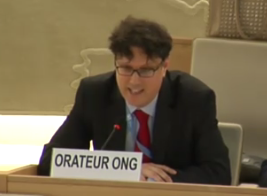
The ICJ today delivered an oral statement to the UN Human Rights Council, on transitional justice, prevention and impunity, highlighting the continuing problem of impunity in Nepal.
The statement, which was made during a clustered interactive dialogue with the Special Rapporteur on the promotion of truth, justice, reparation and guarantees of non-recurrence and the Special Adviser of the Secretary-General on the Prevention of Genocide, read as follows:
“The International Commission of Jurists (ICJ) remains deeply concerned by continuing impunity for gross human rights violations in many parts of the world, which undermines the potential for transitional justice to contribute to prevention as outlined in the Joint Study (A/HRC/37/65).
For example, in Nepal, more than ten years after the civil war, political expediency has trumped calls for justice and accountability. There has been near absolute impunity for those responsible for serious crimes under international law.
Transitional justice mechanisms – the Truth and Reconciliation Commission (TRC) and Commission on Investigation of Disappeared Persons (CoID) – have fallen short of international standards, both in their constitution and their operation, despite repeated orders by the Supreme Court of Nepal to enforce the standards.
The Commissions’ deeply flawed mandates, among other problems, allow them to recommend amnesties for gross human rights violations. In addition, their non-consultative, uncoordinated and opaque approach to their work has also created distrust with all major stakeholders, including conflict victims and members of civil society.
The Government continues to flout its obligation, both pursuant to the Supreme Court’s orders and under international law, to enact domestic legislation to criminalize serious crimes in accordance with international standards.
As highlighted by in the Joint study, turning a blind eye on past atrocities signals that some perpetrators are above the law, which further discredits State institutions and “breeds a (long-standing) culture of impunity in which atrocities may become ‘normalized’, rendering prevention significantly more difficult.” (para 43)
That, indeed, is the experience in Nepal: continuing impunity for gross human rights violations perpetrated during the conflict is one of the major obstacles to the creation of a stable and legitimate democratic government and lies at the heart of the rule of law crisis in the country. Ending impunity is essential to preventing further violations.”
Video of the statement is available here:
The delegation of Nepal exercised its right to reply later in the day. Its reply is here:
The ICJ oral statement complements a related written statement by the ICJ at the session.
Mar 1, 2018 | Events, News
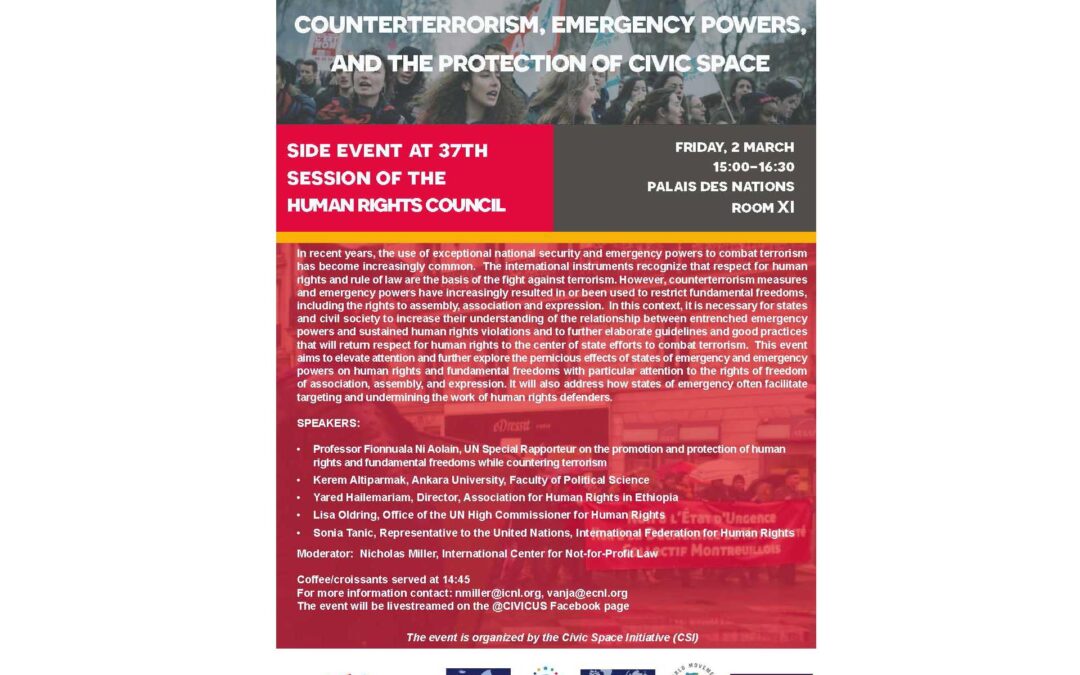
This side event at the 37th session of the Human Rights Council takes place on Friday, 2 march, 15:00-16:30, room XI of the Palais des Nations. It is organized by the Civic Space Initiative (CSI) and co-sponsored by the ICJ.
In recent years, the use of exceptional national security and emergency powers to combat terrorism has become increasingly common.
The international instruments recognize that respect for human rights and rule of law are the basis of the fight against terrorism.
However, counterterrorism measures and emergency powers have increasingly resulted in or been used to restrict fundamental freedoms, including the rights to assembly, association and expression.
In this context, it is necessary for states and civil society to increase their understanding of the relationship between entrenched emergency powers and sustained human rights violations and to further elaborate guidelines and good practices that will return respect for human rights to the center of state efforts to combat terrorism.
This event aims to elevate attention and further explore the pernicious effects of states of emergency and emergency powers on human rights and fundamental freedoms with particular attention to the rights of freedom of association, assembly, and expression. It will also address how states of emergency often facilitate targeting and undermining the work of human rights defenders.
Speakers:
- Professor Fionnuala Ni Aolain, UN Special Rapporteur on the promotion and protection of human
rights and fundamental freedoms while countering terrorism
- Kerem Altiparmak, Ankara University, Faculty of Political Science
- Yared Hailemariam, Director, Association for Human Rights in Ethiopia
- Lisa Oldring, Office of the UN High Commissioner for Human Rights
- Sonia Tanic, Representative to the United Nations, International Federation for Human Rights
Moderator:
- Nicholas Miller, International Center for Not-for-Profit Law
Coffee/croissants served at 14:45
For more information contact: nmiller@icnl.org, vanja@ecnl.org
The event will be livestreamed on the @CIVICUS Facebook page
Universal – Counterrorism and Civic Space – News – Events – 2018 – News (Event flyer in PDF)
Feb 27, 2018 | Advocacy, News, Non-legal submissions
The head of the ICJ’s Centre for the Independence of Judges and Lawyers, Matt Pollard, highlighted the role of judges, lawyers and prosecutors in preventing human rights abuses, at a UN expert workshop in Geneva.The Office of the UN High Commissioner for Human Rights (OHCHR) organised the expert workshop, 21 to 22 February 2018, to discuss the role and contribution of civil society organizations, academia, national human rights institutions and other relevant stakeholders in the prevention of human rights abuses, drawing on the conclusions and recommendations of OHCHR’s study on the prevention of human rights violations.
The workshop, mandated by the Human Rights Council resolution 33/6, covered topics such as: a framework approach to prevention; human rights education; abuses by private actors, national and regional practices, planning and monitoring tools; human rights impact assessments; and the role of UN institutions.
The presentation on the role of judges and lawyers can be downloaded in PDF format here: UN-ExpertMeeting-JudgesLawyersPrevention-2018
More information about the expert workshop is available by clicking here.