Mar 17, 2021 | Advocacy, Non-legal submissions
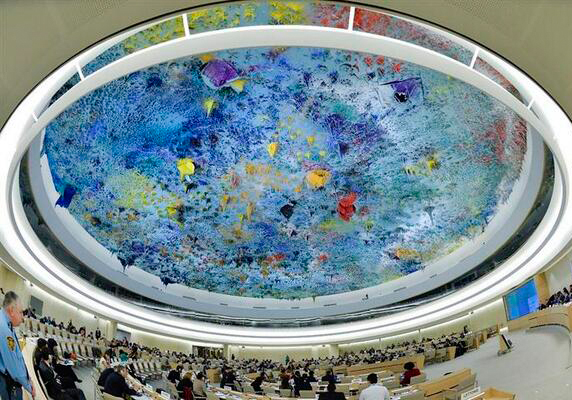
Today, the ICJ joined Amnesty International and other 14 NGOs to express concern at continued attacks on the Special Procedures of the UN Human Rights Council by some States and at efforts to undermine their independence.
The joint statement reads as follows:
“Madame President,
Amnesty International delivers this statement on behalf of 15 NGOs.
We are deeply concerned by continued attacks on the Special Procedures and efforts to undermine their independence. We urge all states to affirm their commitment to human rights and the effectiveness of the international human rights system, by rejecting and condemning these efforts.
We welcome the continued efforts of the Coordination Committee to address objective non-compliance of mandate holders under the Internal Advisory Procedure, including in response to the failure of the Special Rapporteur on the right to privacy to submit his reports to the Council in time for their consideration at this session. We urge all states to support the Coordination Committee in their efforts to respond to concerns related to the working methods of the Special Procedures, as well as complaints against individual mandate holders.
At the same time, we deplore the efforts of some states to use this process as a cover to undermine the independence and effectiveness of the Special Procedures for political reasons. As on numerous previous occasions, certain states repeatedly accuse the Special Procedures of politicization but fail to substantively address the human rights concerns they raise.
We particularly regret the Russian Federation’s efforts, on 5 March, to suspend the HRC session altogether and their continued attempts, together with other states, to introduce unwarranted state oversight on the Special Procedures.
We were also alarmed to witness personal attacks on the Special Procedures, most worryingly against the Special Rapporteur on freedom of religion or belief, by the Chinese delegation, who during the interactive dialogue accused the mandate holder of ‘spread[ing] false information’ and ‘lack[ing] minimum professional ethics.” Such ad hominem attacks are unacceptable, and the Council must respond in the strongest terms to condemn such incidents. They also reveal a broader rejection of dialogue on human rights challenges – despite repeated statements urging the Council to privilege ‘dialogue and cooperation’ – and a lack of willingness on the part of the state concerned to take action to protect human rights.
It is time for states at this Council to take a strong proactive stand for its independent mechanisms, ensuring that they have the support and resources needed to fulfil their mandates and to hold states accountable when they commit human rights violations.
Thank you.”
The signatories of the statement are:
- Amnesty International
- ARTICLE 19
- Asian Forum for Human Rights and Development (FORUM-ASIA)
- Center for Reproductive Rights
- CIVICUS: World Alliance for Citizen Participation
- DefendDefenders (East and Horn of Africa Human Rights Defenders Project)
- Forum Menschenrechte e.V.
- Human Rights House Foundation
- Human Rights Watch
- International Commission of Jurists
- International Federation for Human Rights (FIDH)
- International Movement Against All Forms of Discrimination and Racism (IMADR)
- International Service for Human Rights (ISHR)
- Privacy International
- Women’s International League for Peace and Freedom
Contact:
Massimo Frigo, ICJ UN Representative, e: massimo.frigo(a)icj.org, t: +41797499949

Jan 15, 2021 | Advocacy, Cases, Legal submissions
The ICJ and Amnesty International have submitted today to the European Court of Human Rights their intervention in the case of Judge Igor Tuleya who alleges that the seven disciplinary proceedings brought against him have affected his reputation as a judge and undermine the authority of the judiciary.
Judge Igor Tuleya contests that the disciplinary proceedings brought against him were in violation of his right to respect for private life and of his right to an effective remedy against violation of human rights.
The case takes place in the context of the “reform” of the judiciary in Poland, involving policy measures and legislative changes approved between late 2015 and 2020, which have seriously compromised the independence of the judiciary.
The intervention focuses on three main issues:
- The scope of application of Article 8 and Article 13 in cases relating to disciplinary proceedings against judges, in light of international standards on disciplinary proceedings and measures and effective domestic remedies; of the Court’s Convention jurisprudence; and of general principles on the rule of law and the role and independence of the judiciary.
- The situation of the independence of the judiciary in Poland as the context in which to assess the application of Articles 8 and 13.
- The scope of Article 10 as applied to judges, including those engaged in the administration of the judiciary.
ECtHR-AmicusBrief-Tuleya_v_Poland-Advocacy-Legal-Submission-2020-ENG (download the third party intervention)
Oct 27, 2020 | Advocacy, Cases, Legal submissions
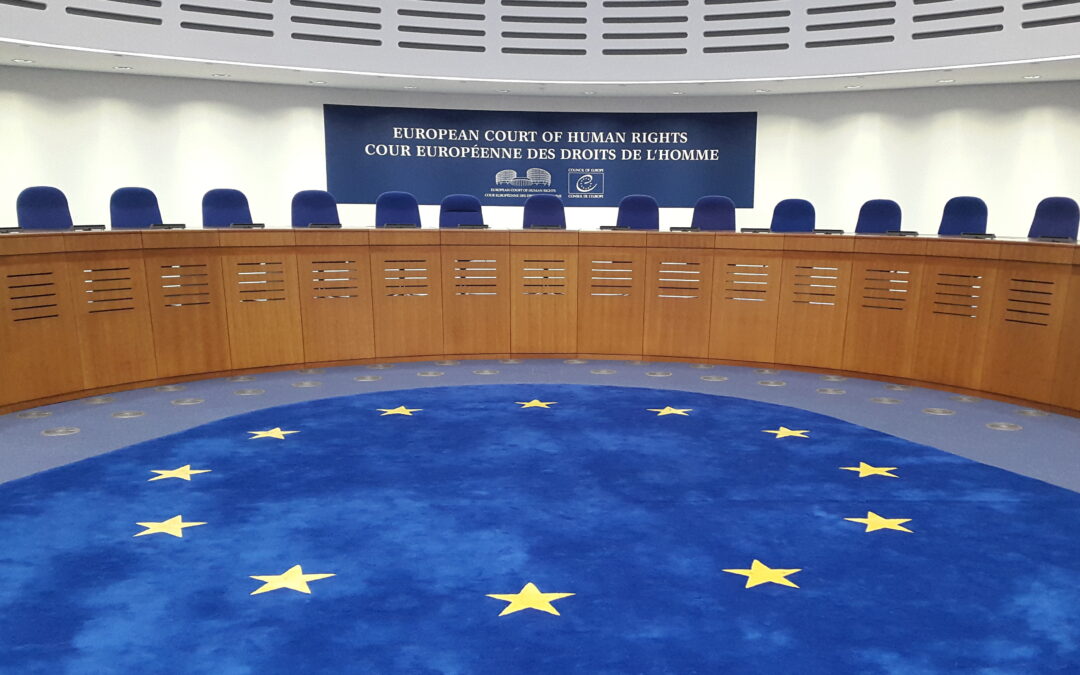
The ICJ and Amnesty International have presented today a third party intervention before the European Court of Human Rights in the case of the premature dismissal of Judge Waldemar Zurek from his position in the National Judicial Council.
In the case Zurek v. Poland, the ICJ and Amnesty International presented submissions on the scope of application of the right to a fair trial under Article 6.1 of the European Convention on Human Rights (ECHR) in cases relating to the role of an independent judiciary and its members through self-governance mechanisms (such as the National Council of the Judiciary) in light of international standards on judicial councils, judicial appointments, the judicial career and security of tenure; of the Court’s Convention jurisprudence; and of general principles on the rule of law and the role and independence of the judiciary.
They further submitted obervations on the scope of the right to freedom of expression under Article 10 ECHR as applied to judges, including those engaged in the administration of the judiciary.
ECtHR-AmicusBrief-Zurek_v_Poland-Advocacy-Legal-Submission-2020-ENG (download the third party intervention)
Jul 22, 2020 | Advocacy, Cases, Legal submissions, News
The ICJ and Amnesty International have submitted a joint third party intervention before the European Court of Human Rights in the case of Judges Mariusz Broda and Alina Bojara.
The case concerns the premature termination of their mandates as vice-presidents of the regional tribunal of Kielce in Poland. The two judges, that had been appointed to six-year terms in 2014, had their position revoked by the Minister of Justice in 2018.
The revocation was based on article 17.1 of the Law of 12 July 2017 modifying the Law on the Judicial System. This provision, presented and approved by the ruling Law and Justice Party (PiS), gave the Minister of Justice the power to revoke courts’ presidents and vice-presidents without justified grounds and with no possibility of appeal.
The two judges applied to the European Court of Human Rights alleging that they had been denied access to a tribunal to challenge the termination of their mandate .
In their third party intervention, the ICJ and Amnesty International analyze international standards on judicial independence, including as regards the role court presidents and vice-presidents, and the consequences of these standards for the right of access to court under Article 6.1 ECHR. The intervention also analyses the recent legislative and policy developments that have seriously undermined the independence of the Polish judiciary.
Read the full intervention here: Broda_v_Poland-AmicusCuriae-ICJ&AI-Cases-2020-ENG.
Apr 22, 2020 | News
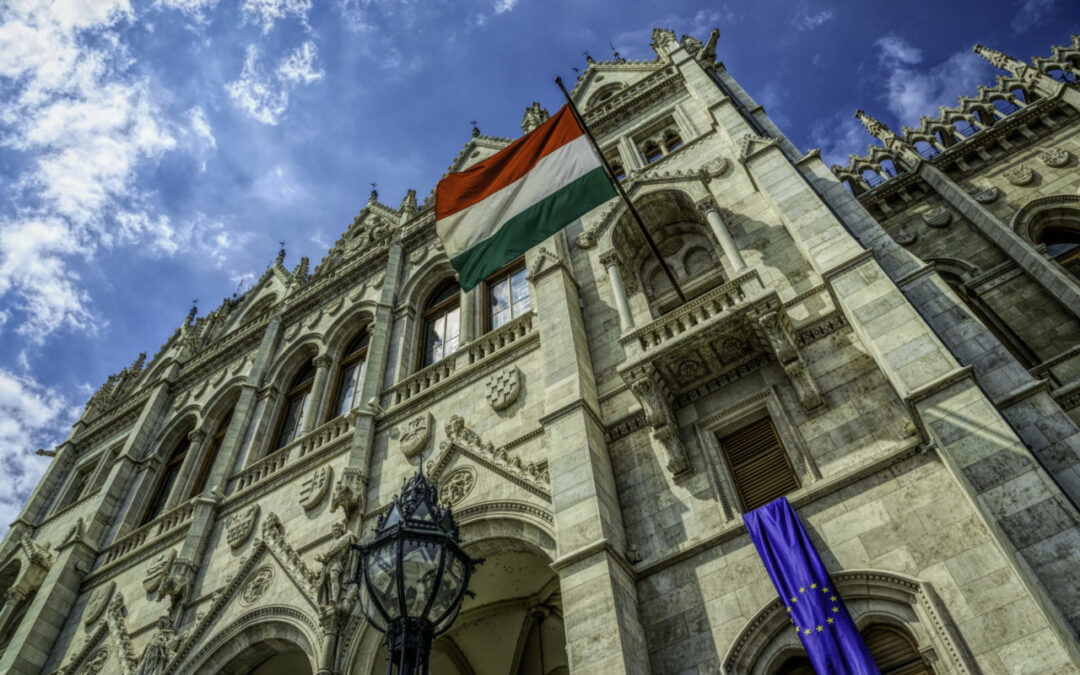
In a joint letter to EU Member States, the ICJ and other human rights NGOs have urged them to recognize the grave implications for human rights and the rule of law, of the Hungarian government’s recent emergency measures.
Ahead of the Council of the EU videoconference of EU Affairs Ministers to discuss the response to COVID-19, Amnesty International, International Federation for Human Rights (FIDH), Human Rights Watch, the ICJ, Open Society European Policy Institute and Reporters Without Borders (RSF) urged the Council to take immediate steps to protect the principles enshrined in Article 2 of the Treaty on European Union (TEU), and the rights enshrined in the EU Charter of Fundamental Rights. This is particularly needed in light of the already deteriorated state of the rule of law and human rights in Hungary, which warranted the activation, in September 2018, of the procedure laid down in Article 7.1 TEU.
The organisations urged the member states of the European Union to:
- include in the agenda of the upcoming session of the EU General Affairs Council an Article 7.1 TEU hearing on the situation in Hungary, including recent developments in relation to the COVID-19 outbreak, and address to the government of Hungary, as a matter of urgency, concrete recommendations to safeguard respect for the rule of law and human rights in the country, that the Hungarian government must implement by a set deadline;
- commit to assessing the implementation of the recommendations in a timely manner in order to reach a determination under Article 7.1 TEU and, should conditions warrant it, move forward under Article 7.2 TEU.
- ensure enhanced monitoring of the Hungarian government’s use of EU funding, including funds aimed at supporting member states during the public health crisis.
The organisations urged both the Council and the Commission to cooperate with each other, and with the European Parliament and national parliaments, to ensure a coordinated, consistent and effective response to the situation.
The full letter is available here: CSO Letter to GAC -rule of law in Hungary April 2020