Oct 5, 2017 | News
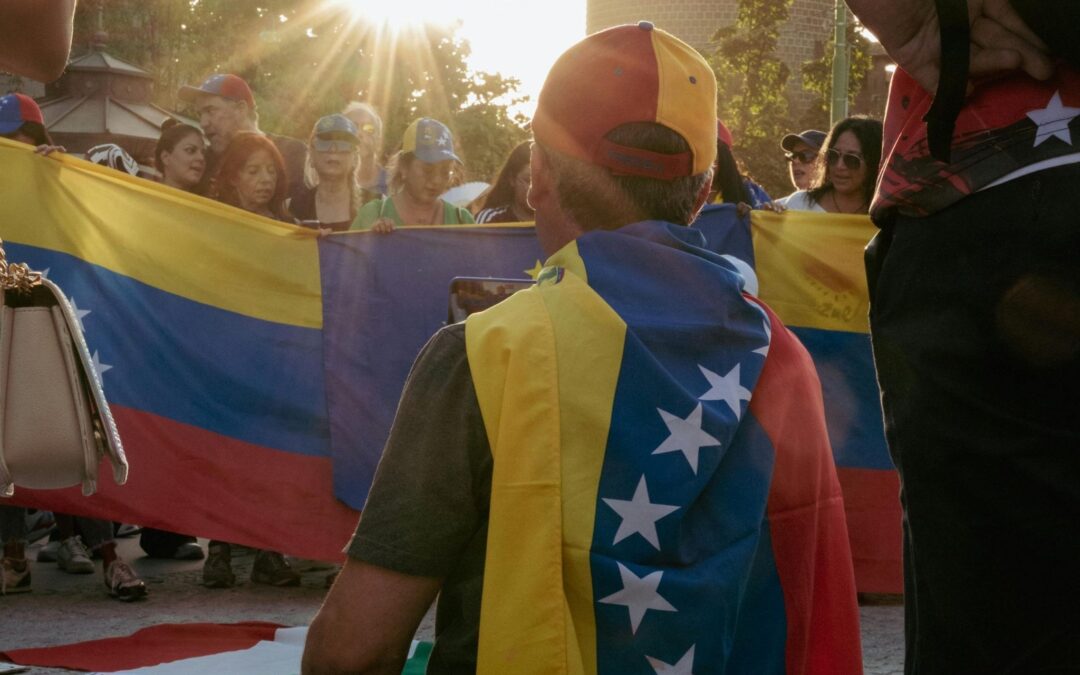
The ICJ calls for Venezuela to accept long-standing requests for country visits by UN Special Procedures whose mandates are most relevant to the rule of law and human rights crisis in the country.
The ICJ takes note of the announcement by the Venezuelan Government that it is inviting the UN Independent Expert on the promotion of a democratic and equitable international order, Mr. Alfred de Zayas, to visit the country.
This announcement, together with a recent invitation to the Special Rapporteur on the right to development is significant. For more than a decade, the Venezuelan Government has denied or left unanswered requests for visits to the country by numerous other of the independent experts (known as “Special Procedures”) of the United Nations. The last mission to Venezuela by a special procedure was the Special Rapporteur on Torture in 1996.
However, the breakdown of the rule of law and the extremely serious human rights situation in Venezuela make visits by other United Nations Special Procedures of urgent relevance.
“In the course of this year, extrajudicial and arbitrary executions, torture and ill-treatment of detainees, arbitrary detention, trial of civilians by military tribunals, and persecutions and attacks against opponents, dissidents and human rights defenders have become systematic and generalized practices in Venezuela, said Federico Andreu Guzman, ICJ South America Representative.
“It is therefore difficult to see why the Government of Venezuela would not respond to long-standing requests from Special Procedure mandates relevant to these violations in favour of proactively inviting other UN experts”, Andreu Guzman added.
The ICJ therefore calls on the Government of Venezuela to invite to visit the country the Working Group on Arbitrary Detention and the Special Rapporteurs on extrajudicial, summary or arbitrary executions; the independence of judges and lawyers; torture and other cruel, inhuman or degrading treatment or punishment; the rights to freedom of peaceful assembly and association; the promotion and protection of the right to freedom of opinion and expression; and on the situation of human rights defenders. All of these UN experts have long-standing requests to visit Venezuela, some for many years, which the Venezuelan Government has failed so far to accept.
“Under the Charter of the United Nations, Member States have the obligation to cooperate with the UN Special Procedures on human rights. This duty is of particular importance when the State is a member of the Human Rights Council, as is the case with Venezuela”, said Andreu Guzman.
The ICJ also calls on the Government of Venezuela to accept the request for a visit to the country that, since 2004, has been repeatedly issued by the Inter-American Commission on Human Rights.
Background
For several years, the following Special Procedures of the UN Human Rights Council have made requests to visit Venezuela: the Special Rapporteur on extrajudicial, summary or arbitrary executions; the Special Rapporteur on the situation of human rights defenders; the Working Group on Arbitrary Detention; the Special Rapporteur on the independence of judges and lawyers; the Special Rapporteur on the rights to freedom of peaceful assembly and association; the Special Rapporteur on violence against women, its causes and consequences; the Special Rapporteur on torture and other cruel, inhuman or degrading punishment; the Special Rapporteur on the promotion and protection of the right to freedom of opinion and expression; the Working Group on the issue of human rights and transnational corporations and other business enterprises; the Special Rapporteur on adequate housing as a component of the right to an adequate standard of living; and the Special Rapporteur on the right to food.
At the regional level, although it denounced the American Convention on Human Rights in September 2012, Venezuela is still a State party to three Inter-American human rights treaties (Inter-American Convention to Prevent and Punish Torture; Inter-American Convention on Forced Disappearance of Persons; and Inter-American Convention on the Prevention, Punishment and Eradication of Violence Against Women). However, Venezuela has systematically ignored recommendations of the Inter-American Commission on Human Rights (IACHR) and has also denied IACHR requests to visit the country, made since 2004.
Contacts
Federico Andreu-Guzmán, ICJ South America Representative, tel: +57 311 481 8094; email: federico.andreu(a)icj.org
Carlos Ayala Corao, ICJ Commissioner (Venezuela), tel: +57 414 243 4872; email: cayala(a)cjlegal.net
Alex Conte, ICJ Global Redress and Accountability Initiative, tel: +22 979 3802; email: alex.conte(a)icj.org
Sep 28, 2017 | Advocacy, Uncategorized
The ICJ today called on the UN Human Rights Committee and a group of UN Special Procedure mandates to take urgent follow up action on Venezuela in light of the grave and ever deteriorating human rights situation in the country.
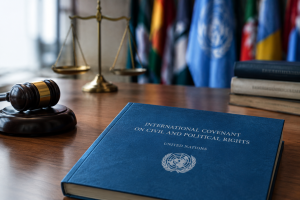
In a letter to the UN Human Rights Committee, the treaty body responsible for monitoring implementation by States parties to the International Covenant on Civil and Political Rights (ICCPR), the ICJ called for urgent action by the Committee, either through its established follow-up procedure and/or through requesting a special interim report. The Committee’s follow-up procedure was referenced in the Committee’s Concluding Observations on Venezuela’s fourth periodic report under the ICCPR. Special interim reports may be requested by the Committee under Article 40(1)(b) of the ICCPR.
The ICJ also called for urgent action to be taken by the following UN Special Procedure mandates: the Working Group on Arbitrary Detention, the Special Rapporteur on freedom of opinion and expression, the Special Rapporteur on freedom of assembly and of association, the Special Rapporteur on the independence of judges and lawyers and the Special Rapporteur on torture and other cruel, inhuman or degrading treatment. This group of Special Procedure mandates had on 4 August 2017 issued a joint statement on the human rights situation in Venezuela.
The ICJ’s letters draw attention to several critical areas of concern:
- The rapidly deteriorating human rights situation;
- The lack of accountability of perpetrators of human rights violations;
- The lack of effective remedies and reparation for victims of human rights violations;
- The lack of independence of the judiciary;
- The institutional crisis arising from decisions of the Supreme Court of Justice;
- The unconstitutional election of the new National Constituent Assembly;
- The dismissal of the former Attorney General;
- The recent establishment of a ‘Truth Commission’;
- The intended revision of Venezuela’s Constitution; and
- Venezuela’s failure to notify its state of emergency under the ICCPR.
ICJ-Correspondence-VenezuelaFollowUp-HRCttee-2017-09-28 (download letter to the Human Rights Committee, in PDF)
ICJ-Correspondence-VenezuelaFollowUp-SPs-2017-09-28 (download letter to the Special Procedure mandates, in PDF)
ICJ reports:
Venezuela: the Supreme Court of Justice has become an arm of an authoritarian executive
Venezuela: rule of law and impunity crisis deepens
Venezuela: dismissal of Attorney General a further blow to the rule of law and accountability
Venezuela: Human rights and Rule of Law in deep crisis
Strengthening the Rule of Law in Venezuela
Sep 25, 2017 | Events, News
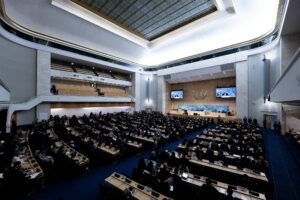
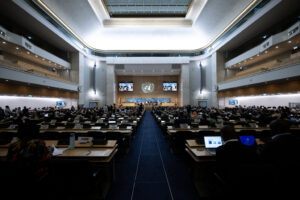
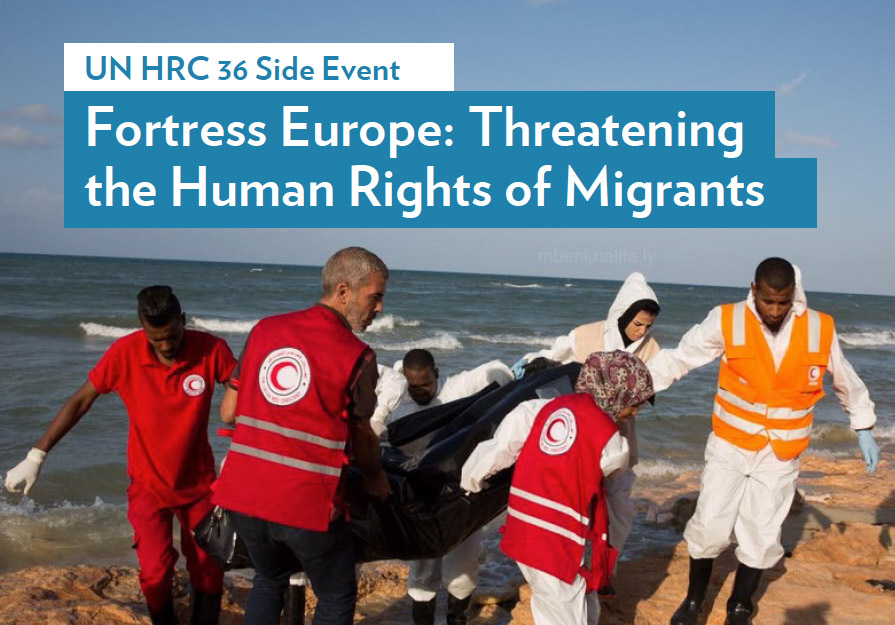
This side event at UN HRC 36 will take place on 26 September 2017, 11.00-12:30, Room XV, Palais des Nations, Geneva.
The side event, hosted by Lawyers for Justice in Libya and the Cairo Institute for Human Rights Studies, will discuss the role of European Union (EU) Member States in the migration crisis and how their policy on migration is threatening the human rights of migrants. The panel will discuss and make recommendations to EU Member States, Libya and the Human Rights Council to ensure accountability for human rights violations being committed against thousands of migrants.
Speakers:
Conor Kenny Doctors Without Borders
Elham Saudi Lawyers for Justice in Libya
Matteo De Bellis Amnesty International
Tareg Ben Ramadan Coalition of Libyan Human Rights Organisations
Chair:
Massimo Frigo International Commission of Jurists
Europe-Flyer side event-News-Event-2017-ENG (Flyer in PDF)
Sep 14, 2017 | Advocacy, Cases, Legal submissions, News
On 13 September, the European Committee of Social Rights decided on the admissibility of the collective complaint submitted by the ICJ and Forum for Human Rights, against the Czech Republic.
The Committee assessed the admissibility conditions set out in the Protocol and the Committee’s Rules and the Government’s objections on admissibility and declared the complaint admissible. The Czech Government has now two months to make written submissions on the merits of the complaint.
The complaint argues that the Czech Republic fails to ensure equal legal protection and participation of children below the age of criminal responsibility in the pre-trial stage of juvenile justice procedures.
The ICJ and FORUM submit that serious systemic flaws in the Czech juvenile justice system deprive a specific group of particularly vulnerable individuals – children below the age of criminal responsibility – of an adequate level of social protection and leave them at risk of inappropriate or unfair procedures leading to arbitrary punitive measures, in violation of Article 17 of the European Social Charter, both alone and read in conjunction with the principle of equality in the preamble to the Charter.
Europe-ECSR-ICJvCzechRepublic-ChildrenJustice-AdmissibilityDecision-2017 (download the Committee’s decision)
Sep 1, 2017 | News
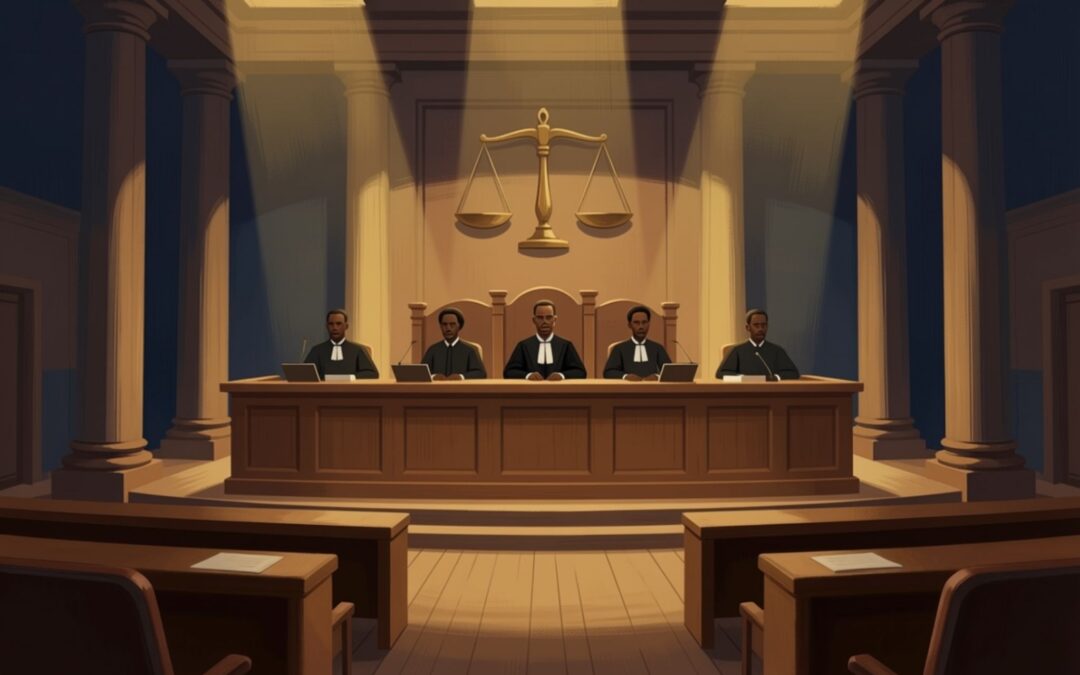
Today the Supreme Court of Kenya took the unprecedented step of voiding the presidential elections held on 8 August 2017 citing the failure by the Independent Electoral and Boundaries Commission (IEBC) to adhere to constitutionally mandated processes.
The ICJ commends the Supreme Court of Kenya for adjudication of a sensitive case at a high professional standards amidst a charged political atmosphere.
The ICJ in partnership with the Africa Judges and Jurists Forum (AJJF) sent a mission of three distinguished judges to observe the proceedings during the presidential petition in Kenya.
The delegation consisted of Retired Chief Justice Earnest Sakala (Zambia), Justice Dingake (Botswana) and Justice Chinhengo (Zimbabwe).
The mission’s observations will be publicized in due course.
Kenya held national elections on 8 August 2017 administered by the IEBC.
The IEBC subsequently announced that Uhuru Kenyatta had won the elections with a 54% majority.
The opposition National Super Alliance Coalition led by Raila Odinga filed an election petition alleging serious irregularities in the tabulation and transmission of the results of the elections and asking the court to nullify the results and order fresh elections.
The Supreme Court heard the election petitition culminating in the decision that was handed down today.
According to the observers, the court conducted the hearing in a manner consistent with the rule of law and that adhered to the Kenyan Constitution and international principles of a fair trial.
The Court gave acted fully as a competent, independent and impartial judicial body.
“The decision taken by the Supreme Court today is precedent setting. It places a cost on the election management body for apparently failing to adhere to constitutional imperatives and the normative framework governing the conduct of elections,” said Arnold Tsunga, Africa Director of the ICJ.
“Elections are a high stakes subject in Kenya, as elsewhere in the world. Previous elections have shown that violence and multiple human rights violations increase during the election period. We therefore encourage the political leaders in Kenya to accept the court’s verdict and to encourage their supporters to exercise maximum restraint and tolerance as the country braces itself for fresh elections,” he added.
Finally the ICJ urges the authorities in Kenya and the IEBC to quickly comply with and implement the court’s judgement.
Contact
Arnold Tsunga, ICJ Director for Africa, t: +27716405926 ; e: arnold.tsunga@icj.org