Nov 19, 2019 | News
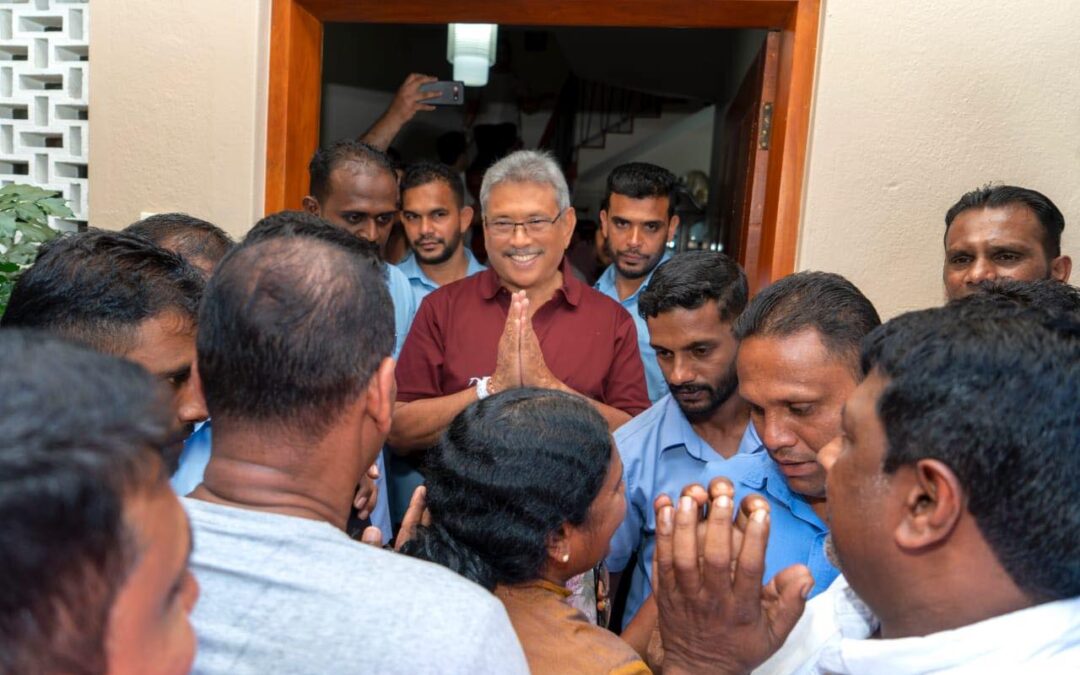
Sri Lanka’s newly elected president, Gotabaya Rajapaksa and his government must demonstrate that they will uphold human rights and rule of law, and ensure that Sri Lanka sustains its international obligations and commitments to justice and accountability, said the ICJ today.
Gotabaya Rajapaksa faces credible allegations of involvement in war crimes and crimes against humanity that took place during the country’s armed conflict.
“The election of Gotabaya Rajapaksa, after a highly polarizing campaign, has alarmed human rights defenders in Sri Lanka and abroad, who have little reason to believe that someone facing such serious allegations of perpetrating human rights violations can be relied upon to meet the country’s obligations under international law,” said Frederick Rawski, ICJ Asia Pacific Director.
Gotabaya Rajapaksa, who won the presidency with 52.25% of votes, served as Sri Lanka’s Secretary of the Ministry of Defence from 2005 to 2015 during the tenure of his brother Mahinda Rajapaksa, at the height of the armed conflict against the Liberation Tigers of Tamil Eelam (LTTE).
Both the military and LTTE perpetrated war crimes and gross human rights violations during the conflict, and particularly during its bloody final stages. As Defence Secretary, Gotabaya was accused of ordering the killing of surrendering LTTE fighters, ordering strikes on civilians and hospitals, and authorizing attacks on human rights defenders.
International condemnation of atrocities committed during the conflict led to the UN Human Rights Council demanding that the Sri Lankan government commit to a process of transitional justice, in view of the systematic failures of accountability mechanisms in Sri Lanka in the past, as documented by the ICJ in its submission to the Human Rights Council, and others. Despite commitments from the Sri Lankan government, the transitional justice process has effectively stalled and impunity has prevailed.
“The ICJ is deeply concerned that even the limited strides made over the past five years in Sri Lanka on transitional justice, positive constitutional amendments and institutional reform will be reversed,” said Rawski.
The ICJ urged the Government to deliver on its commitment to the transitional justice process, including by holding those responsible for human rights violations and abuses accountable, and complying with the obligations set out in United Nations Human Rights Council Resolutions 30/1, 34/1 and 40/1.
Contact:
Frederick Rawski, ICJ’s Asia Director, t +66 644781121; e: frederick.rawski(a)icj.org
Oct 24, 2019 | News
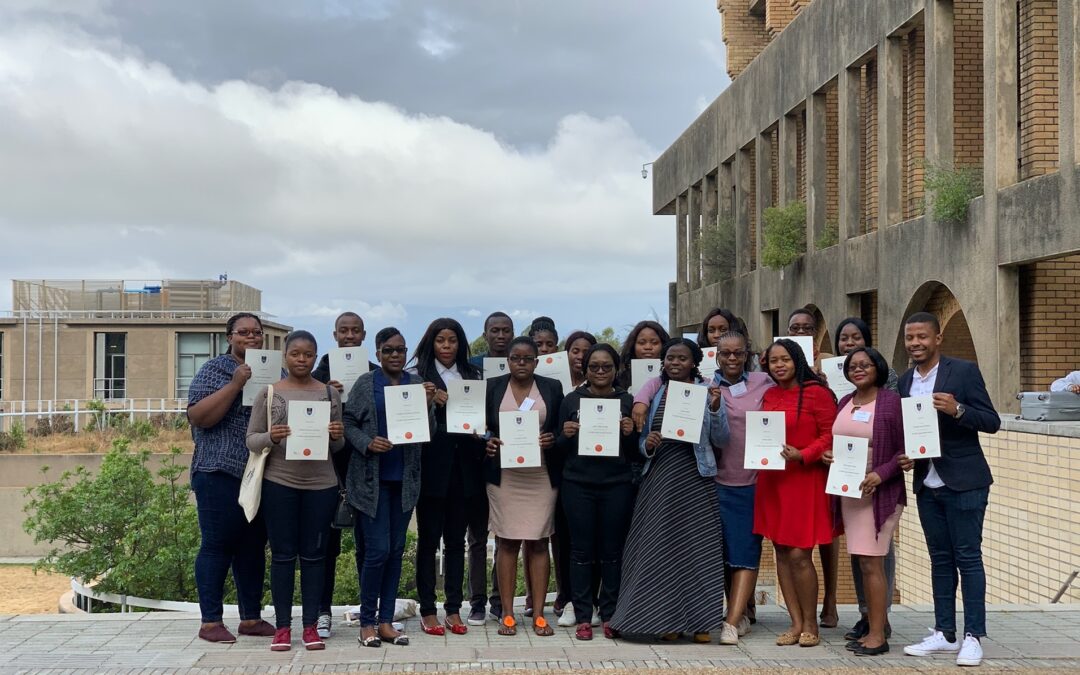
The ICJ in collaboration with the Judicial Institute of Africa (JIFA) and Democratic Governance and Rights Unit (DGRU) convened a three-day training workshop for Zimbabwe court researchers.
The training workshop was held from the 21 to 23 October 2019 at the University of Cape Town, South Africa.
The judicial research programme is an initiative that was established to increase the research capabilities of the researchers, which would in turn improve the jurisprudence emerging from the courts.
Court researchers play a crucial role in the development of Zimbabwean jurisprudence through the work they undertake on behalf of the judges.
Furthermore, the increased efficiency that they bring to the courts allows judges to expend more of their efforts on well-informed analysis and administration of cases.
This brings a better quality of justice and reduces waiting periods for judgments and case backlog.
Arnold Tsunga the Director of the Africa Regional Programme of the ICJ remarked that “given the importance of the space that these researchers occupy, it is important to ensure that their legal knowledge and skills continue to be relevant and comprehensive so that they can provide a service of quality that adequately responds to the needs of judges. This in turn will also contribute to attainment of the UN Strategic Develop Goal (SDG) 16 and 5 on access to justice for all as well as SDG 5 on leaving no one behind.”
The areas of discussion for the three-day training workshop focused on judicial ethics, accessing judgments, accessing research materials, judgment writing and memo writing.
The training workshop was facilitated by judges, university teaching staff, and external resources. Twenty researchers are took part in the training workshop, including 17 women.
Contact
Arnold Tsunga, t: +26377728 3248; e: arnold.tsunga(a)icj.org
Rumbidzai Muyendesi, t: +263771666579; e: rumbidzai.muyendesi(a)icj.org
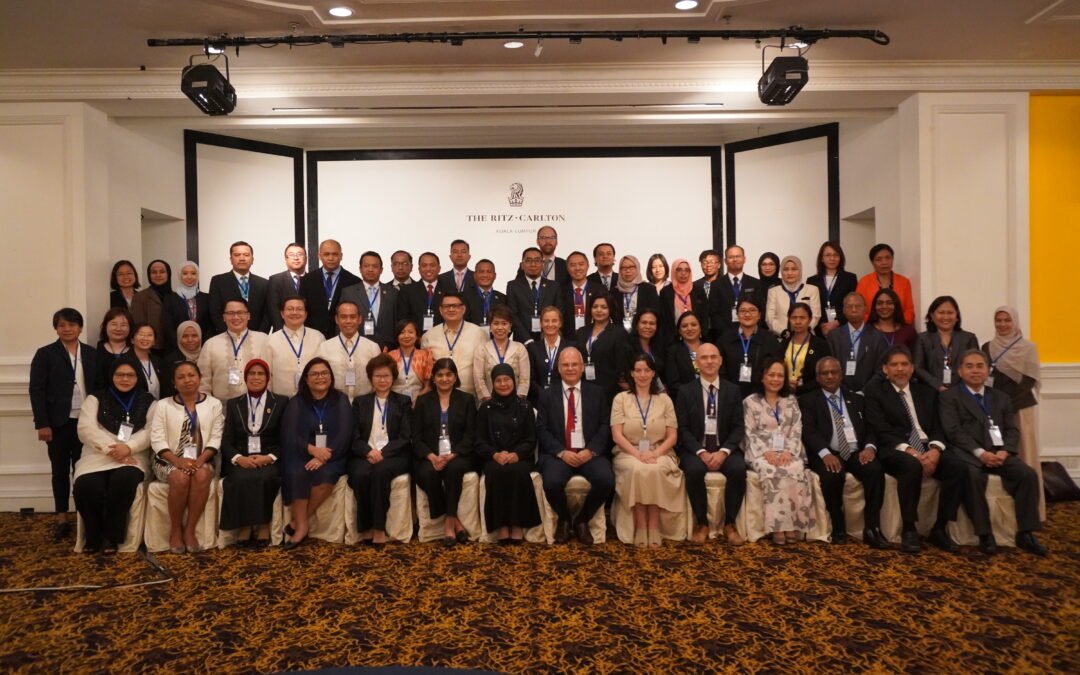
Oct 20, 2019 | Advocacy, News
From 18 and 19 October 2019, the ICJ, in collaboration with UN Women and the Federal Court of Malaysia, convened the 2019 Southeast Asia Regional Judicial Dialogue in Kuala Lumpur, Malaysia.
The judges from Malaysia, Philippines, Indonesia, and Timor-Leste discussed how to apply the Convention on the Elimination of All Forms of Discrimination against Women (CEDAW) and other international legal instruments in their work at the domestic level to eliminate the negative impact of stereotyping and gender bias in the judiciary.
“We need to ensure that CEDAW and international human rights obligations are fully applied by national authorities, and not just taken as aspiration or long-term goal,” said Frederick Rawski, ICJ Regional Director for Asia and the Pacific.
“These standards need to have the force of law and made real, in workplace and in domestic settings, to ensure that women are free from violence and that there is access to justice when violence does occur.”
The judicial dialogue was opened by Malaysia’s first female Chief Justice, The Right Honourable Tan Sri Tengku Maimun binti Tuan Mat. The Chief Justice emphasized during her keynote speech the need for regular capacity strengthening initiatives for judges to be aware of gender-related issues. She emphasized further that “Judicial stereotyping can undermine the ability of women to exercise and enforce other rights guaranteed by law.”
This message was echoed by Carla Silbert of UN Women who said: “We see that women are often impacted disproportionately and thus judges should uphold women’s rights as human rights. It is a crucial role for the court to deliver justice with gender sensitivity.”
ICJ Commissioner Dato Ambiga Sreenavasan and the Ambassador of Sweden to Malaysia, Dag Juhlin-Dannfelt addressed the ongoing reforms in Malaysia and gender equality.
“Malaysia has its first female Chief Justice and has shown a remarkable growth of female leaders in influential positions. However, the participation of women in the labor workforce is still very low and it remains a challenge for us,” said Dato Ambiga Sreenavasan, Commissioner of the ICJ.
“The drive for democracy is to support and strengthen gender equality and the rule of law,” said Ambassador Dag Juhlin-Dannfelt. “ICJ’s Bangkok General Guidance for Judges on Applying a Gender Perspective in Southeast Asia is an important tool to address gender equality in judiciary.”
The dialogue included discussion on the topics of equality & non-discrimination, access to justice under international human rights law, gender stereotyping and gender discriminatory practices in cases involving women who are victims of trafficking.
Many participating judges said that they would be applying in their judicial work the tools introduced to them in the dialogue, including the Bangkok General Guidance. These could be used in decision-making, assessing evidence presented before them, and handling witnesses in their courts. Some also said that they plan to disseminate the information and tools to their colleagues in the judiciary.
Contact
Boram Jang, International Legal Adviser, Asia & the Pacific Programme, e: boram.jang(a)icj.org
Resources:
To access pictures from the event, click here.

Oct 18, 2019 | News
The ICJ and the International Bar Association’s Human Rights Institute (IBAHRI) have jointly sent an international observer to attend the third hearing of the criminal trial on the “Gezi Park” protest at the Silivri Prison Courthouse in Istanbul, scheduled to take place on 18 October 2019.
The ICJ and IBAHRI observer will be monitoring a trial hearing before İstanbul 30th Assize Court with prinicipal defendant Osman Kavala, and 15 others; Ali Hakan Altınay, Ayşe Mücella Yapıcı, Ayşe Pınar Alabora, Can Dündar, Çiğdem Mater Utku, Gökçe Yılmaz, Handan Meltem Arıkan, Hanzade Hikmet Germiyanoğlu, İnanç Ekmekci, Memet Ali Alabora, Mine Özerden, Şerafettin Can Atalay, Tayfun Kahraman, Yiğit Aksakoğlu and Yiğit Ali Ekmekçi.
The observer will report directly to the IBAHRI and ICJ Secretariats on the proceedings following the mission.
The Gezi Park protests began in May 2013 as an effort by a group of environmentalists to save a park in central Istanbul from being rezoned, but soon turned into nationwide demonstrations.
The protest was quelled by police with the use of tear gas and water cannons against the protesters in Taksim Square. Following a six-year investigation into the events, the 657-page indictment issued by the Istanbul Chief Public Prosecutor’s Office was accepted by the 30th A Court in Istanbul on 4 March 2019.
The defendants are to be charged under Turkish Criminal Code Article 312 (attempt to overthrow the Turkish Government or attempt to prevent it from fulfilling its duties), Article 151 (damage to property), Article 152 (qualified damage to property), Article 174 (possession or exchange of hazardous substances without permission), Article 153 (damaging places of worship and cemeteries), Article 149 (qualified robbery), Article 86 (intentional injury); crimes under the Law on Firearms, Knives and Other Tools no. 6136, and crimes under the Law on Protection of Cultural and Natural Assets no. 2863.
Contact:
Massimo Frigo, Senior Legal Adviser, t: +41 22 979 38 05 – e: massimo.frigo(a)icj.org

Oct 16, 2019 | Multimedia items, News, Video clips
ICJ’s first ever fundraising gala took place on 14 October at the iconic setting of the Palais Eynard in Geneva.
Sami Kanaan, Counselor and former Mayor of the City of Geneva, which provided its generous support, opened the event by speaking of the importance of the ICJ cooperation with the local legal community.
Next, several speakers offered a few answers to the theme of the evening: ‘Geneva, the defense of the Rule of Law: what can I do?’.
Pierre de Preux, former Bâtonnier, explained the great value that can be brought to defending rule of law in the world by supporting the ICJ through missions, as he himself did in Tunisia in the 80s.
He was followed by ICJ Commissioners Sir Nicolas Bratza (former President of the European Court of Human Rights), who discussed backsliding on human rights in contemporary Europe; lawyer Reed Brody, who discussed his work in bringing powerful dictators to account for human rights atrocities; and Justice Martine Comte of France, who described her experience in leading ICJ missions in Central Asia.
The ICJ President Prof. Robert Goldman and ICJ Secretary General Sam Zarifi also addressed the attendees.
The exchange was then followed by an inspiring concert by the young virtuosi of the Menuhin Academy and a delicious Buffet cocktail provided by refugee Chefs Jena Hamza (Syrian Kurd) and Sritharan Tambithurai (Sri Lanka). All in all, a wonderful evening combining substance, beauty and friendship.
Watch the video here: