Dec 18, 2019 | Advocacy, News
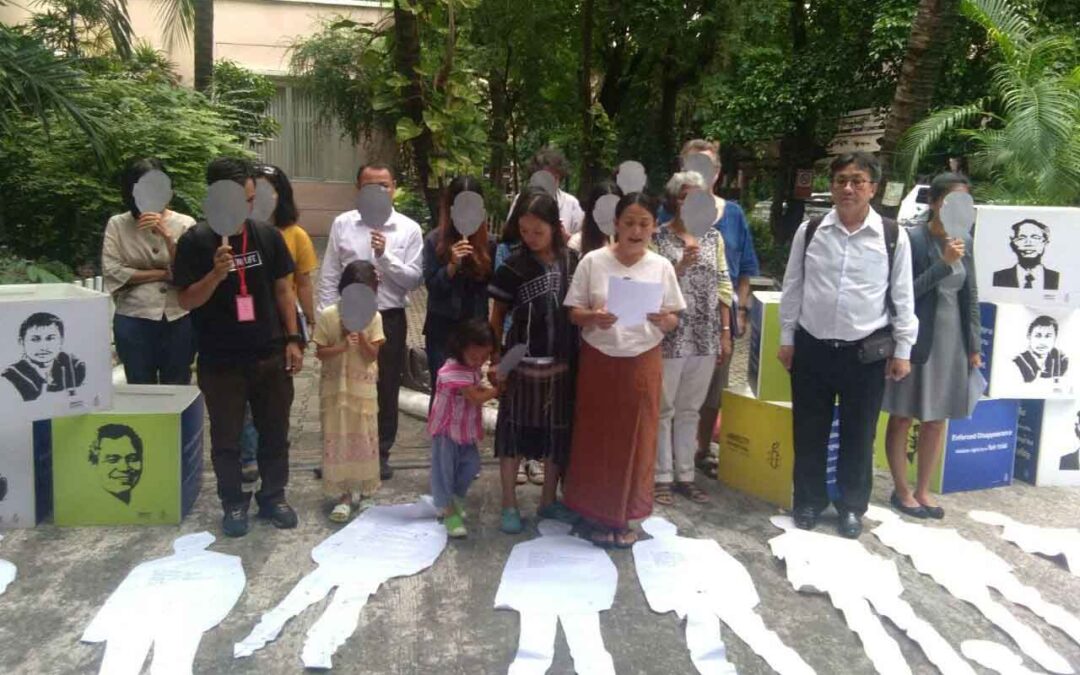
On 17 December 2019, the ICJ co-hosted a discussion on extrajudicial killings in Thailand and the lack of progress in investigations of these killings, with an emphasis on the killings of ethnic, racial, or linguistic minorities or indigenous persons, including indigenous persons in Northern Thailand and ethnic Malays in Southern Thailand.
The discussion was held at the Faculty of Law of Chiang Mai University. The event bought together participants from the North and Deep South of Thailand who considered developing joint advocacy strategy to address the troubling practices.
The event commenced with panel discussions on extrajudicial killings in Thailand and obstacles in access to justice faced by minority communities. Panelists included family members of victims, civil society organizations, lawyers and academics. Affected persons shared their experience as victims of attempted extrajudicial killings or relatives of victims of extrajudicial killings. Other panelists shared information on the dire trend of killings in their regions; concerns regarding extra-judicial killings of unarmed suspects; barriers to access to justice, including financial barriers due to poverty, lack of legal information, lack of trust in the authorities, and language barriers for indigenous speakers. Several panelists expressed concerns that family members of the victims could not participate in the investigation process. Others spoke on the objection of authorities to carry out autopsies of suspected extrajudicial killings in the Deep South.
ICJ’s Legal Adviser Sanhawan Srisod highlighted that investigators and law enforcement officials need to take into account international law and standards. These include the revised Minnesota Protocol on the Investigation of Potentially Unlawful Death (2016), which was launched in Thailand on 25 May 2017; and the 1990 UN Basic Principles on the Use of Force and Firearms by Law Enforcement Officials. Different standards of operation between the police and the military to make arrests, which make military officers prone to violate the UN Basic Principles on the Use of Force and Firearms by Law Enforcement Officials. She also spoke on the different types of firearms that security personnel use and how they affect the proportionality of force; and the lack of guidelines on the use of firearms in arrest operations that is in compliance with international laws and standards.
A theater performance by Lanyim Theatre took place after the discussion.
The first panel was moderated by Pranom Somwong, Thailand’s Representative for Protection International. The panel included affected persons of an alleged extra-judicial killing from Thailand’s Deep South; Maitree Chamroensuksakul, from Rak Lahu Group and relative of a victim of an alleged extra-judicial killing in Northern Thailand; Prof. Somchai Preechasinlapakun, Head of Law Research and Development Center, Chiang Mai University; and Yureesa Samah, Officer of Duay Jai Foundation.
The second panel was moderated by Nadthasiri Bergman, Director of Human Rights Lawyers’ Association. The panel included Preeda Nakpiew, Lawyer of Cross-Cultural Foundation; Anukul Awaeputeh, Lawyer and Head of the Pattani branch, Muslim Attorney Center Foundation; Sumitchai Hattasarn, Lawyer and Director of Centre for the Protection and Revival of Local Community Rights; and Sanhawan Srisod, Legal Adviser of the ICJ.
The event was conducted in collaboration with Amnesty International Thailand; Cross Cultural Foundation; Human Rights Lawyers’ Association; Inter Mountain Peoples’ Education and Culture in Thailand Association (IMPECT); Legal Research and Development Center, Chiang Mai University; Office of the High Commissioner for Human Rights (OHCHR) Regional Office for South-East Asia; and Protection International.
Further reading
Thailand: ICJ co-hosts discussion on addressing extrajudicial killings
ICJ holds seminar at Chiang Mai University Thailand on the right to life and the duty to investigate

Dec 16, 2019 | Agendas, Events, News
Today begins in Ankara (Turkey) a one-day workshop for lawyers and CSO practitioners to discuss and brainstorm on an alternative Justice Reform Strategy.
This event is organized by ICJ, in cooperation with its partners Kapasite Geliştirme Derneği and Human Rights Joint Platform, as part of a EU co-financed project Rebuilding and Ensuring Access to justice with civil society in Turkey.
The workshop aims at discussing the key reforms proposed by the Government of Turkey in its Judicial Reform Strategy and provide with an assessment and an alternative plan for reform based on international standards and jurisprudence on access to justice and the independence of the judiciary.
The workshop will provide presentations on international standards on the judiciary as well as on access to justice for human rights violations. It will produce a ten point strategy document to propose reforms that will uphold the independence of the judiciary and access to justice in Turkey.
The project is funded by the European Instrument for Democracy and Human Rights (EIDHR) of the European Union.
Turkey-Workshop-Agenda-AltJRS-Ankara-2019-eng (download the agenda)
Dec 11, 2019 | News
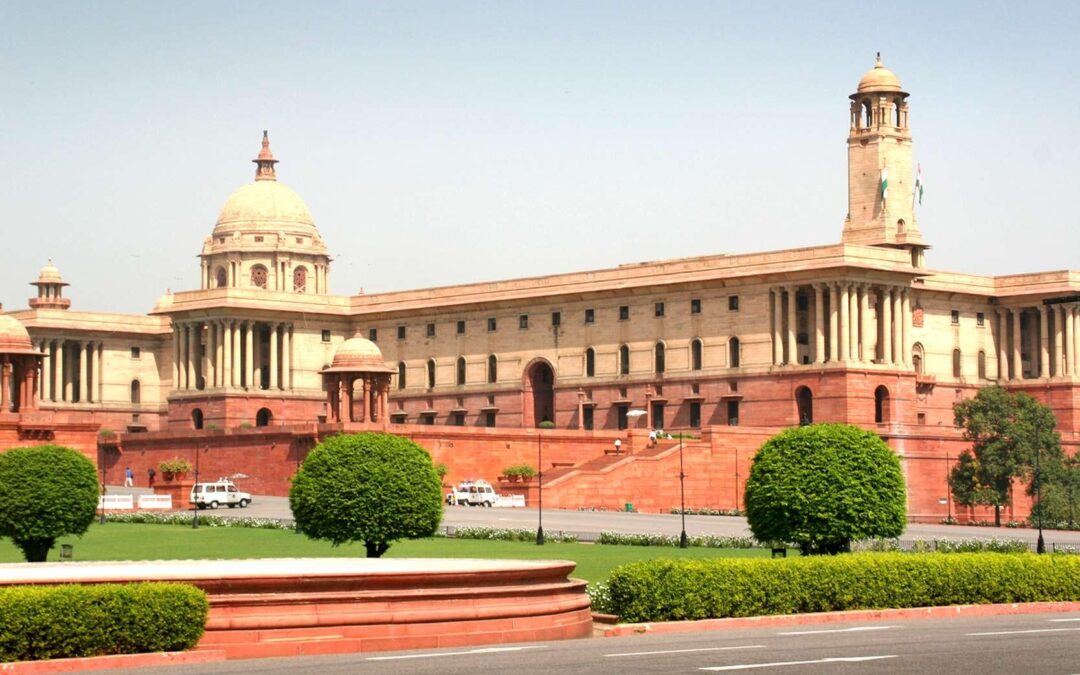
The ICJ today condemned The Citizenship (Amendment) Bill 2019 passed by the Rajya Sabha (upper house of the Indian Parliament) on 11 December 2019, after the Lok Sabha (lower house of the Parliament) adopted it on 9 December.
The ICJ calls on India to reconsider and repeal, or substantially amend, the Bill to bring it in line with international legal obligations and Indian Constitutional principles.
“The implementation of this proposed legislation would violate core principles of non-discrimination, equal protection of the law and freedom of religion, guaranteed under international law and the Indian Constitution,” said Frederick Rawski, ICJ’s Asia Director.
The Bill amends the Citizenship Act, 1955, which governs questions of citizenship and aspects of lawfulness of migration status in India. While it purports to provide protection and shelter to religious groups such as Hindus and provides them paths to citizenship, it excludes from its ambit certain religious groups such as Muslims.
The Bill gives protected status to Hindu, Sikh, Jain, Parsi, Buddhist and Christian migrants from Pakistan, Afghanistan and Bangladesh, all Muslim-majority countries, who entered India on or before 31 December 2014. Similarly situated Muslims are categorized as “illegal migrants”.
Furthermore, the Bill provides to the above-mentioned religious communities and countries an expedited route of citizenship giving them the opportunity to be eligible for citizenship by naturalization if they have lived or worked in India for six years, as opposed to twelve years, as otherwise required.
“The Citizenship (Amendment) Bill creates two tiers of citizenship and migration status in India based on religion, with Muslims relegated to the lower end,” added Rawski. “This Bill, which entrenches discriminatory practices into law, must not be implemented unless substantially amended to provide for equal protection for persons of all religions or other status.”
The legal framework for citizenship identified by this Bill is incompatible with bedrock rule of law and democratic principles. It is highly discriminatory and arbitrary, and manifestly fails to satisfy the State’s obligations under international human rights law, including the International Covenant on Civil and Political Rights (ICCPR), to which India is a party.
The arbitrary inclusion of some groups while excluding others violates Article 14 of the Indian Constitution and Article 26 of the ICCPR. India’s international obligations require that its regulation of citizenship under domestic law be compliant with the principle of non-discrimination, equality before the law, and equal protection of the law without discrimination on the grounds of, inter alia, race, religion, or ethnic or national origin. This Bill, which provides for differentiated criteria for citizenship and other legal protection based on membership of religious group, complies neither with international law nor Indian constitutional law.
The arbitrary inclusion of some groups while excluding others would only be permissible under Article 14 of the Indian Constitution and Article 26 of the ICCPR if the classification is founded on an intelligible differentia between the group excluded and the group that is included, and (ii) the differentia has a rational relation to the objects sought to be achieved by the Act.
The Bill claims religious persecution as the ground of reasonable classification, but then arbitrarily excludes several similarly situated and widely persecuted religious minorities such as Ahmediya Muslims and Shia Muslims from Pakistan and Bangladesh, Rohingyas from Myanmar, Hazaras from Afghanistan from its protective ambit. It therefore does not meet these criteria under the Indian Constitution and international law.
The adoption of the Bill comes as the Ministry of Home Affairs of the Indian Government issued a directive on August 8, 2017 to state governments to “identify and deport” 40,000 Rohingya refugees from Myanmar, which has led to deportation of 7 Rohingya men to Myanmar already.
In addition, the Indian Government has indicated that it will pursue nationwide National Register of Indian Citizens, which will likely exclude numerous people, many also Muslim, who should be recognized as Indian Nationals. A similar exercise undertaken in Assam earlier this year was an arbitrary and discriminatory process that rendered some 1.9 million people stateless. This violates international law and standards which protects the right to nationality and safeguards against statelessness.
Contact
Frederick Rawski, ICJ Asia-Pacific Director, t: +66 64 478 1121; e: frederick.rawski(a)icj.org
Maitreyi Gupta, ICJ India Legal Adviser, t: +91 77 560 28369 e: maitreyi.gupta(a)icj.org
Dec 10, 2019 | News
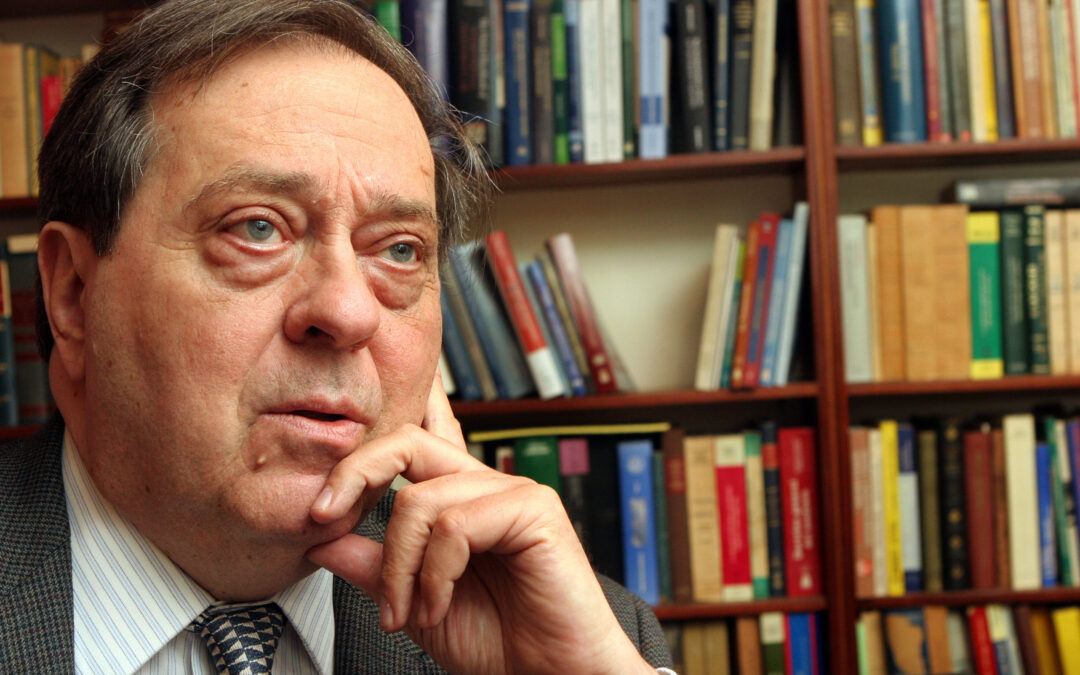
The ICJ mourns the loss of Professor Pedro Nikken, former President and Commissioner of the ICJ. Prof Nikken was elected ICJ President in January 2011, succeeding Mary Robinson (2008-2010) and followed by Nigel Rodley (2012-2017).
“Pedro Nikken left a tremendous legacy of respect for the rule of law and defense of human rights in his homeland of Venezuela, across Latin America and around the world,” said Prof Robert Goldman, the ICJ’s President.
“ Like so many others, I have lost a cherished friend and mentor whose company I will greatly miss,” he added.
Prof Nikken was a former Judge (1979-1989) and President (1983-1985) of the Inter-American Court of Human Rights. He served as UN Independent Expert on El Salvador from 1992 to 1995 and from 1990-1992 he served as Legal Adviser to the UN Secretary-General on El Salvador’s peace process.
In 1995 he served as Special Envoy of the UN Secretary-General to Burundi. He is former Dean and Professor (emeritus) at the Law School of the Universidad Central de Venezuela.
He was also former President and Permanent Counselor of the InterAmerican Institute of Human Rights. He was a Member (Chair N° 9) of the Venezuelan National Academy of Political and Social Sciences.
“Prof Nikken helped drive the ICJ’s work in pursuit of justice and accountability, particularly through regional human rights systems such as the Inter American Court of Human Rights, even as various governments tried to weaken the process and evade responsibility,” said Sam Zarifi, ICJ Secretary General.
“Pedro was indefatigable as a human rights defender and unsurpassed in the quality of his legal analysis, a rare combination of qualities that made him a role model for several generations of human rights lawyers around the world,” he added.
Pedro Nikken was born in Caracas, Venezuela in 1945. He graduated in 1968 from the Andres Bello Catholic University and obtained a diploma of higher studies in law at the Pentheon-Assas University (Paris II) and a doctorate in law from the University of Carabobo.
Dec 2, 2019 | Advocacy, News
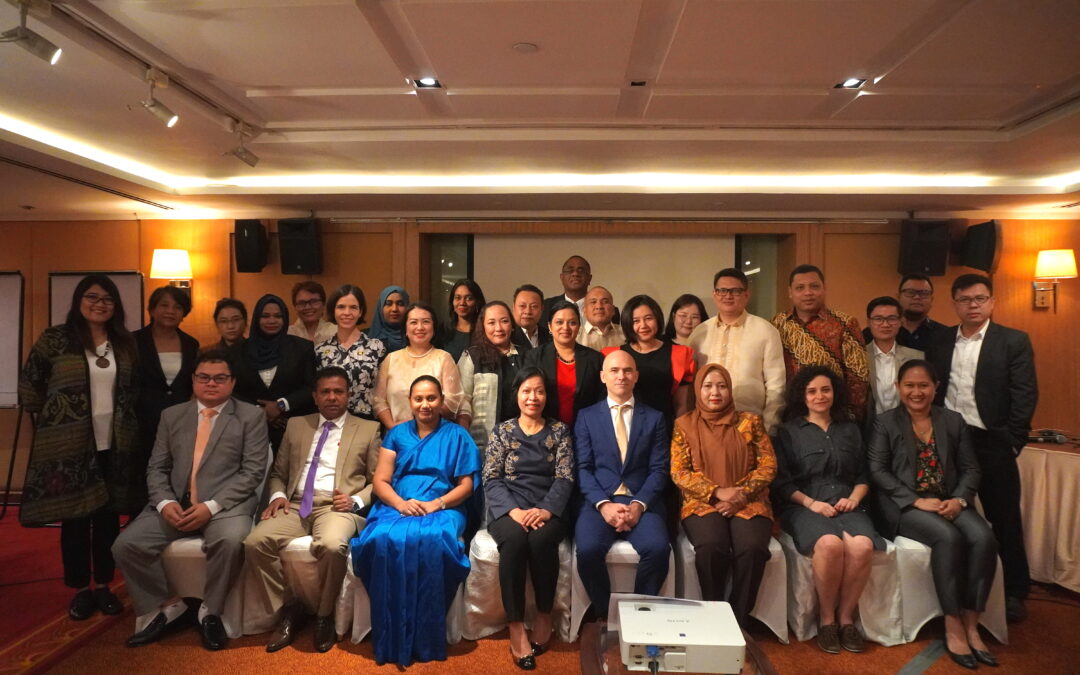
From 30 November to 1 December 2019, the ICJ and the Raoul Wallenberg Institute of Human Rights and Humanitarian Law (RWI) held the Judges’ Workshop on Adjudicating Environmental Cases with a Gender Perspective, in Bangkok, Thailand.
Judges from Fiji, Maldives, Indonesia, Philippines, Sri Lanka and Cambodia participated in the workshop. The discussions aimed at strengthening judges’ understanding of the relationship between women’s human rights and the right to a healthy environment. Throughout the two-day event, judges exchanged views on and considered cases showing how environmental degradation and climate change have a disproportionately detrimental impact on women, and how these phenomena affect them in a significantly different way as compared to men.
“It is through these gatherings that we learn from each other’s experiences and strengthen each other’s knowledge on this area,” said Frederick Rawski, ICJ’s Regional Director for Asia and the Pacific.
He continued, “We hope that this is the beginning of a greater body of work from judges in this region with a view to ensuring equality before the law and non-discrimination in environmental cases.”
During the workshop, the judges referred to the reference manual, Women’s Human Rights and the Right to a Clean, Safe, Healthy, and Sustainable Environment, which was developed by RWI with ICJ’s expert input. At the end of the workshop, judges agreed they would use this manual as a guide when faced with cases involving women and the right to a clean, safe, healthy and sustainable environment.
Contact:
Boram Jang, International Legal Advisor, International Commission of Jurists, t: +66 63 665 5315, e: boram.jang(a)icj.org
Resources:
To access pictures from the event, click here.