Sep 4, 2019 | News
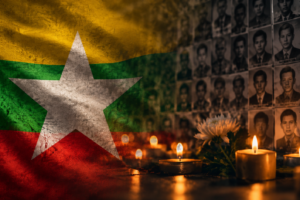
The announcement that the remains of Pholachi “Billy” Rakchongcharoen, a Karen rights activist, have been located, brings a sad end to years of uncertainty for his family, said the ICJ and Amnesty International today.
This development should lead to a renewed focus on identifying the perpetrator(s) of his apparent enforced disappearance and bringing them to justice.
On 3 September 2019, the Thai Ministry of Justice’s Department of Special Investigations (DSI) announced it had located bone fragments, which they had identified as likely belonging to Billy inside an oil tank submerged in water near a suspension bridge inside Kaeng Krachan National Park in Phetchaburi province.
“The DSI should redouble its efforts to identify the perpetrator(s) of Billy’s killing and bring them to justice,” said Frederick Rawski, Asia Regional Director of the ICJ. “If, based on an assessment of the evidence, it is found that Billy was the victim of enforced disappearance, then the perpetrators, including those with command responsibility, should be charged with the appropriate, serious offences in accordance with Thailand’s obligations under international law – not only with lesser crimes that do not reflect the gravity of the offense.”
Billy was last seen on 17 April 2014 in the custody of Kaeng Krachan National Park officials.
“This case highlights the serious risks activists and human rights defenders face in Thailand, including assaults, enforced disappearance and killings,” said Nicholas Bequelin, Amnesty International’s interim Regional Director of Southeast Asia and the Pacific. “It underscores the long-overdue need for the Thai government to make enforced disappearance a crime under national law. A failure to do so results in the lack of an independent, impartial and effective mechanism to investigate the cases, exacerbating the current climate of impunity.”
The DSI stated that the recovered bones contain DNA inherited from Billy’s mother, which suggests they belong to a person who was related to her. However, the DSI declined to disclose the name of any suspect(s) and requested more time to investigate the case and examine the remains.
Background
Thailand is a state party to the International Covenant on Civil and Political Rights (ICCPR) and the Convention against Torture and other Cruel, Inhuman or Degrading Treatment or Punishment (CAT). Freedom from enforced disappearance is protected under both these treaties, as enforced disappearance will always constitute violations of some or more of the following rights: the right to life; freedom from torture and other cruel, inhuman, or degrading treatment or punishment; the right to liberty; and the right to recognition as a person under the law. These are in addition to violations of the rights of members of the disappeared person’s family through suffering deliberately inflicted on them through the imposition on them of uncertainty about their love one’s fate and whereabouts.
Thailand has also signed, but not yet ratified, the International Convention for the Protection of All Persons from Enforced Disappearance (ICPPED). The ICPPED affirms the absolute right not to be subject to enforced disappearance and places an obligation on states to investigate acts of enforced disappearance, to make it a criminal offence punishable by appropriate penalties that take into account its “extreme seriousness” and to take necessary measures to bring those responsible to justice.
The Government has stated it will not ratify the Convention until its provisions are incorporated in domestic law. However, efforts to pass the Draft Prevention and Suppression of Torture and Enforced Disappearance Act (draft Act) stalled after it was dropped by the National Legislative Assembly (NLA) prior to the 2019 national election. The draft Act is currently pending the consideration of the President of the National Assembly. Under international law of treaties, as signatory to the ICPPED, still is bound to desist from any acts which would defeat its object and purpose.
Thailand has a binding obligation under international law to conduct prompt, effective and thorough, independent and impartial, and transparent investigations into all suspected cases of unlawful death and enforced disappearance.
According to the ICPPED and the revised Minnesota Protocol (2016), which contains the international standards on the conduct of investigations into unlawful death and enforced disappearance – and which Thailand launched in May 2017 – records that investigations “must seek to identify not only direct perpetrators but also all others who were responsible for the death, including, for example, officials in the chain of command who were complicit in the death.” (para 26)
Download
Thailand-Discovery of Billy remains-news-webstory-2019-THA (full story in PDF)
Further reading
Thailand: special investigation into apparent enforced disappearance of “Billy” welcome, but much more is needed
Thailand: ICJ submits recommendations on draft law on torture and enforced disappearance amendments
Justice for Billy: Time for Thailand to Account for Activist’s Disappearance
Contact
For ICJ: Frederick Rawski, ICJ Asia-Pacific Director, t: +66 64 478 1121; e: frederick.rawski(a)icj.org

Jul 18, 2019 | News
The ICJ and the International Bar Association’s Human Rights Institute (IBAHRI) have jointly sent international observers to attend the second hearing of the criminal trial on the “Gezi Park” protest at the Silivri Prison Courthouse in Istanbul, scheduled to take place on 18 and 19 July 2019.
The ICJ and IBAHRI observers will be monitoring a trial hearing before İstanbul 30th Assize Court with prinicipal defendant Osman Kavala, and 15 others; Ali Hakan Altınay, Ayşe Mücella Yapıcı, Ayşe Pınar Alabora, Can Dündar, Çiğdem Mater Utku, Gökçe Yılmaz, Handan Meltem Arıkan, Hanzade Hikmet Germiyanoğlu, İnanç Ekmekci, Memet Ali Alabora, Mine Özerden, Şerafettin Can Atalay, Tayfun Kahraman, Yiğit Aksakoğlu and Yiğit Ali Ekmekçi.
The observers will report directly to the IBAHRI and ICJ Secretariats on the proceedings following the mission.
The Gezi Park protests began in May 2013 as an effort by a group of environmentalists to save a park in central Istanbul from being rezoned, but soon turned into nationwide demonstrations.
The protest was quelled by police with the use of tear gas and water cannons against the protesters in Taksim Square. Following a six-year investigation into the events, the 657-page indictment issued by the Istanbul Chief Public Prosecutor’s Office was accepted by the 30th A Court in Istanbul on 4 March 2019.
The defendants are to be charged under Turkish Criminal Code Article 312 (attempt to overthrow the Turkish Government or attempt to prevent it from fulfilling its duties), Article 151 (damage to property), Article 152 (qualified damage to property), Article 174 (possession or exchange of hazardous substances without permission), Article 153 (damaging places of worship and cemeteries), Article 149 (qualified robbery), Article 86 (intentional injury); crimes under the Law on Firearms, Knives and Other Tools no. 6136, and crimes under the Law on Protection of Cultural and Natural Assets no. 2863.
The total sentence asked for by the prosecution for these offences amounts to approximately 47,520 years imprisonment.
Contact:
Massimo Frigo, Senior Legal Adviser, t: +41 22 979 38 05 – e: massimo.frigo(a)icj.org

Jul 4, 2019 | News, Publications, Reports, Trial observation reports
In a legal opinion issued today analyzing the retrial of the Kyrgyz human rights defender Azimjan Askarov, which followed the UN Human Rights Committee finding of multiple human rights violations in his first trial, the ICJ concludes that these violations have not been remedied by the retrial.
In particular, the ICJ finds that the retrial did not effectively examine allegations of the torture of Askarov in detention. It failed to conduct new investigations, hear new witnesses or question the elements on which the initial conviction was based. As a result, the retrial did not respect the presumption of innocence or comply with the requirements of a fair trial.
As a consequence, Azimjan Askarov’s conviction should be quashed and he should be released, the ICJ said.
“This analysis shows that despite years of court hearings, Azimjan Askarov has never been afforded a fair trial or an effective investigation into his allegations that he was tortured. We call on the Kyrgyz authorities to act on these findings and to quash his conviction and release him from detention. Without this, the decision of the UN Human Rights Committee will remain unimplemented ” said Róisín Pillay, ICJ Europe and Central Asia Director.
An investigation into allegations of torture and other violations of Askarov’s human rights should be launched, the ICJ concluded, and he should be accorded full reparations for violations of his human rights.
Background
Azimjan Askarov, a prominent human rights defender in the Kyrgyz Republic, was convicted on 15 September 2010 of complicity in the murder of a law enforcement officer, attempted complicity in hostage-taking, illegal possession of firearms, incitement of interethnic hatred, and organization of riots.
The ICJ has followed his case since the initial trial and Askarov’s eventual conviction – and identified multiple violations of his human rights in detention, trial and conviction in 2010.
In 2016, the UN Human Rights Committee (HRC) adopted Views in which it found violations of Askarov’s rights under the International Covenant on Civil and Political Rights (ICCPR). The HRC decided that Kyrgyzstan was to make full reparation to Askarov; take appropriate steps to immediately release him; quash his conviction and, if necessary, conduct a new trial in due compliance with fair trial guarantees.
Following the HRC decision, the Supreme Court of the Kyrgyz Republic remanded the case of Azimjan Askarov for retrial to the Chuy Regional Court due to new circumstances. The retrial took place from 4 October 2016 to 24 January 2017. The retrial proceeded without quashing the defendant’s conviction but with “resumption” of the proceedings in the case.
The ICJ legal opinion is based on the findings from the observation of a number of hearings before the Chuy Regional Court and analysis of documents in the case. It assesses the proceedings in light of Kyrgyzstan’s domestic law as well as relevant international law and standards. The opinoin is signed on behalf of the ICJ by ICJ Commissioners Justice Azhar Cachalia, Judge of the Supreme Court of Appeal of South Africa; Justice Nicolas Bratza, former President of the European Court of Human Rights, Professor Juan Mendez, former UN Special Rapporteur on Torture and Other Cruel, Inhuman and Degrading Treatment or Punishment.
The full text of the legal opinion is available below.
In English: Kyrgyzstan-Askarov report II-Publications-Reports-Trial observation report-2019-ENG
In Russian: Kyrgyzstan-Askarov report II-Publications-Reports-Trial observation reports-2019-RUS

Jun 24, 2019 | News
The ICJ and the International Bar Association’s Human Rights Institute (IBAHRI) have jointly sent international observers to attend the first hearing of the criminal trial on the “Gezi Park” protest at the Silivri Prison Courthouse in Istanbul, scheduled to take place on 24 and 25 June 2019.
The International Observers who will be attending are Justice Ketil Lund, former judge of the Supreme Court of Norway and ICJ Commissioner, and Dr Mark Ellis, Executive Director of the International Bar Association.
Justice Lund and Dr Ellis will be observing a trial hearing before İstanbul 30th Assize Court with principal defendant Osman Kavala and 15 others: Ali Hakan Altınay, Ayşe Mücella Yapıcı, Ayşe Pınar Alabora, Can Dündar, Çiğdem Mater Utku, Gökçe Yılmaz, Handan Meltem Arıkan, Hanzade Hikmet Germiyanoğlu, İnanç Ekmekci, Memet Ali Alabora, Mine Özerden, Şerafettin Can Atalay, Tayfun Kahraman, Yiğit Aksakoğlu and Yiğit Ali Ekmekçi.
The observers will report directly to the IBAHRI and ICJ Secretariats on the proceedings following the mission.
The Gezi Park protests began in May 2013 as an effort by a group of environmentalists to save a park in central Istanbul from being rezoned, but soon turned into nationwide demonstrations. The protest was quelled by police with the use of tear gas and water cannons against the protesters in Taksim Square.
Following a six-year investigation into the events, the 657-page indictment issued by the Istanbul Chief Public Prosecutor’s Office was accepted by the 30th A Court in Istanbul on 4 March 2019.
The defendants are to be charged under Turkish Criminal Code Article 312 (attempt to overthrow the Turkish Government or attempt to prevent it from fulfilling its duties), Article 151 (damage to property), Article 152 (qualified damage to property), Article 174 (possession or exchange of hazardous substances without permission), Article 153 (damaging places of worship and cemeteries), Article 149 (qualified robbery), Article 86 (intentional injury); crimes under the Law on Firearms, Knives and Other Tools no. 6136, and crimes under the Law on Protection of Cultural and Natural Assets no. 2863. The total sentence asked for by the prosecution for these offences amounts to approximately 47,520 years imprisonment.
Contact:
Massimo Frigo, Senior Legal Adviser, t: +41 22 979 38 05 – e: massimo.frigo(a)icj.org
Jun 15, 2019 | News
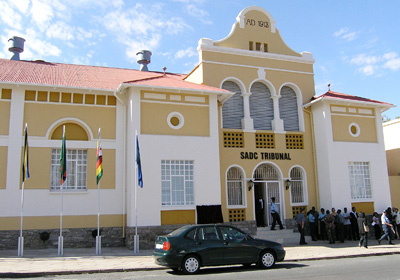
The ICJ welcomes the recent judgment of the Tanzanian High Court condemning the Tanzanian government’s actions leading to the suspension of the SADC Tribunal and the denuding of its crucial role in maintaining the rule of law and protecting human rights in the Southern African region.
Following on a decision of the South African Constitutional Court in December 2018, the decision brings increased scrutiny to the legality and legitimacy of the decision of the SADC Summit to effectively disband the SADC Tribunal in 2010 and thereby “eviscerate the possibility of the States ever being held to account for perceived human rights violations, non-adherence to the rule of law or undemocratic practices”.
“The Tanzanian court’s decision once again raises fundamental questions about the legality and legitimacy of the SADC Summit’s attempt to strip the SADC Tribunal of its powers, following on decisions relating to land reform in Zimbabwe that upset leaders of SADC states. The ICJ endorses the views of the Tanzanian and South African courts that all decisions taken by SADC States must comply with the SADC Treaty, the right of victims of human rights abuses to access justice and the rule of law,” said Arnold Tsunga, the ICJ’s Africa Director.
The Tanzanian Court’s decision is premised on the finding that the SADC Treaty is, in terms of the Vienna Convention on the Law of Treaties, binding on all SADC member States and obligations in terms of it must be performed in good faith by all executive officials.
Having set up and empowered the SADC Tribunal to adjudicate disputes in terms of the Treaty, the Court held that “State parties including Tanzania are obliged to give effect to the Tribunal, without which the existence of the Community itself remains doubtful”.
The Court likened the system of governance set out in the Treaty to a domestic doctrine of separation of powers, noting that the Tribunal is part of an intricate set of checks and balances set out in the Treaty.
The case was brought to Court by the Tanganyika Law Society in order to hold the Tanzanian government accountable to the Constitution, the SADC Treaty and “other international law human rights norms”.
The Law Society alleged that the Tanzanian government’s actions violate the right to access to justice and are therefore “inimical to the rule of law”.
The Court’s decision makes repeated reference to international human rights law norms including United Nations Basic Principles and Guidelines on the Right to a Remedy and Reparation, the Universal Declaration on Human Rights and the African Charter concluding that crucial commitments in terms of the standards set out in these documents were violated by the Tanzanian government.
The Court reasoned that in terms of international law the State is obliged to “ensure observance of [international human rights law principles] in the conduct of its international relations”.
This, crucially, meant that State parties to the SADC Treaty must, in their conduct pertaining to international relations “ensure protection of fundamental human rights of the individual” (emphasis in original).
The SADC Summit’s attempts to protect individuals from accessing the SADC Tribunal for the purposes of vindicating their rights therefore amounted to an unlawful encroachment on individuals’ rights in terms of domestic and international human rights law.
“The Court’s decision is a strong endorsement of the universality of international human rights principles as well as the need for strong checks and balances on power in all domestic, regional and international platforms established to ensure access to remedies for rights violations. The ICJ encourages the SADC leaders to individually and collectively take note of the decisions of the Tanzanian and South African courts and take immediate action to ensure full and effective operation of an independent SADC Tribunal capable of receiving and adjudicating individual complaints,” Tsunga added.
Contact:
Arnold Tsunga, ICJ Africa Director, t: +263777283249 ; e: arnold.tsunga(a)icj.org
Timothy Fish Hodgson, ICJ Legal Adviser, t: +27828719905 ; e: timothy.hodgson(a)icj.org