Jun 12, 2019 | News
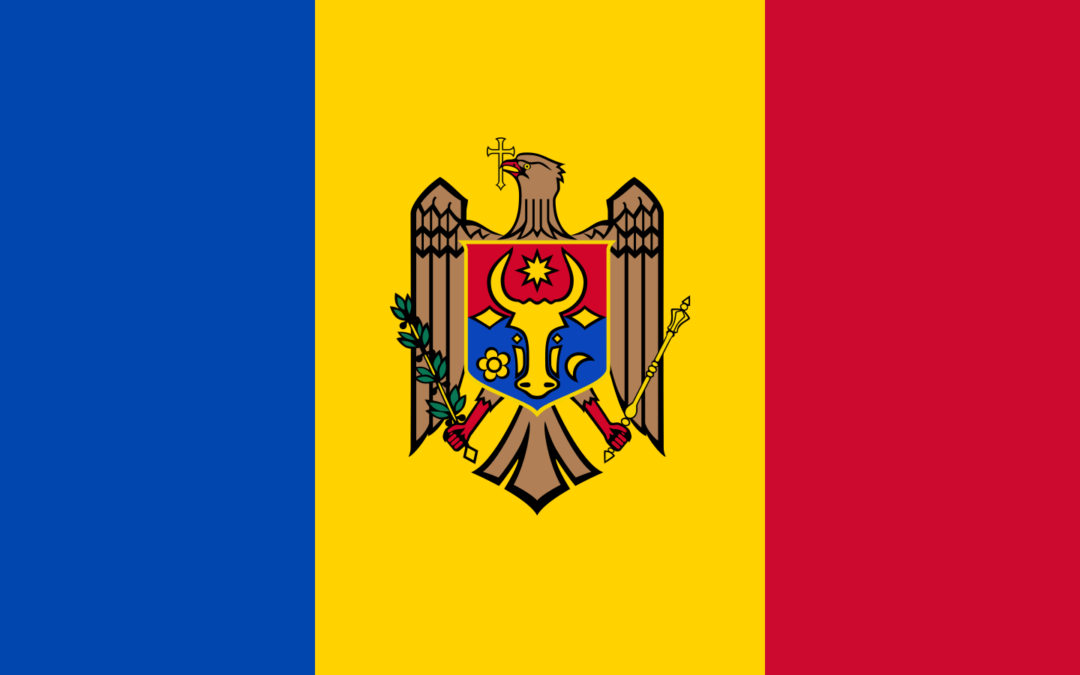
The ICJ today expressed concern at recent developments in Moldova, which are effectively paralyzing governance in the country.
During the past week, the Constitutional Court has ordered the dissolution of Parliament, suspended its functioning and invalidated its subsequent acts, including the appointment of a government and speaker, and has triggered the removal of the President.
The ICJ is particularly concerned at the excessively swift procedure through which the Constitutional Court reached its decisions to dissolve Parliament, remove a sitting President of the Republic and replace him with the Prime Minister. The ICJ calls attention to the unhelpful timing of the Constitutional Court ruling that was issued on the very day it identified as the end of the Parliamentary term, depriving Parliament of the clarity needed to exercise its powers.
These developments occur against the background of the manifest deficiencies in the institutional independence of the Moldova judiciary which were documented in a recent ICJ report.
In the report issued in March 2019, the ICJ highlighted the problematic appointment in 2018 of three judges of the Constitutional Court in circumstances that did not ensure a sufficient level of transparency, during an electoral campaign and without an open competition process. The report noted that the three appointed judges have previously been Prosecutor General, director of the intelligence service and chair of the legal committee of Parliament, part of the then ruling political majority.
The ICJ welcomes the announcement by the Secretary General of the Council of Europe that the Venice Commission has been asked to issue an urgent opinion on the constitutional crisis.
“The rule of law is the common ground on which constitutional conflicts must be solved”, said Massimo Frigo, Senior Legal Adviser of the Europe Programme of the ICJ. “We call on all institutions and parties in Moldova to seek a solution that squarely complies with the rule of law and the international law and standards to which Moldova has subscribed. In this regard, we urge all parties concerned to wait for the opinion by the Council of Europe Venice Commission in this matter and to reconsider the situation in light of its findings.”
Background
The Constitutional Court, in decisions issued on 7, 8 and 9 June 2019, held that Parliament should be dissolved for having been unable to establish a government within three months of the end of the previous Government’s term of office.
The decisions triggered the removal from office of the President of the Republic, Igor Dodon, for having refused to dissolve Parliament. This led to the interim appointment of Pavel Filip, as acting President of the Republic.
The Court also declared unconstitutional and void any act issued by Parliament after 7 June.
Neither Parliament nor President Dodon have accepted the decisions of the Constitutional Court on their removal or on the validity of their acts, nor do they consider as legitimate the appointment of Pavel Filip as acting President.
Parliamentary factions constituting the current majority in Parliament had reached a deal to form a coalition government and appointed a speaker and Prime Minister.
According to the Constitutional Court’s interpretation of article 85 of the Constitution, these agreements failed to respect the three-month deadline.
Others have put forward different interpretations of when the deadline of the three months period to appoint a Government would elapse, and of the obligation of the President of the Republic to dissolve Parliament.
Article 85 of the Constitution states:
(1) In the event of impossibility to form the Government or in case of blocking up the procedure of adopting the laws for a period of three months, the President of the Republic of Moldova, following consultations with parliamentary fractions, may dissolve the Parliament.
(2) The Parliament may be dissolved, if it has not accepted the vote of confidence for setting up of the new Government within 45 days following the first request and only upon declining at least two requests of investiture.
(3) The Parliament may be dissolved only once in the course of one year.
(4) The Parliament may not be dissolved within the last six months of the term of office of the President of the Republic of Moldova nor during a state of emergency, martial law or war.
Contact:
Massimo Frigo, ICJ Senior Legal Adviser: t: +41 22 979 3805; e: massimo.frigo(a)icj.org

Jun 6, 2019 | News
The ICJ today called on the Zimbabwe government to stop using the highly criticized offence of “subverting a constitutional government” to punish human rights defenders for the exercise of fundamental freedoms protected under international and Zimbabwe Law.
George Makoni, Tatenda Mombeyarara, Gamuchirai Mukura Nyasha Mpahlo, Farirai Gumbonzvanda, Rita Nyamupinga, and Stabile Dewa, referred to by the media as the “Zimbabwe 7”, have been charged under section 22 of the Criminal Law (Codification and Reform) Act [Chapter 9:23] and will face a bail hearing, due to be heard at the High Court in Harare on 6 and 7 June 2019.
“The Zimbabwean authorities need to desist from the growing practice of abusing the offence of subverting a constitutional government as an instrument to persecute human rights defenders through abuse of the legal system,” said Arnold Tsunga, ICJ’s Africa Director.
“The oppressive and retaliatory use of law by government violates the rule of law and human rights as guaranteed in the Zimbabwean Constitution as well as in regional and global human rights treaties to which Zimbabwe is a State party,” he added.
The ICJ has previously shown that the law of subversion in Zimbabwe has been used often against HRDs who peacefully exercise their fundamental freedoms, with no single conviction to date.
The law violates the African Charter on Human and Peoples Rights and the International Covenant on Civil and Political Rights (both of which Zimbabwe is a party to), including the rights of persons to freedom of opinion and expression (Article 9 African Charter on Human and People’s Rights; article 19 ICCPR), freedom of assembly (article 11 ACHPR; 21 ICCPR) article, freedom of association (article 10 ACHPR; article 22 ICCPR), and the right to political participation (article 25 ICCPR).
The UN Declaration on Human Rights defenders, adopted by the UN General Assembly, requires that States afford particular protection to human rights defenders (HRDs) who exercise these rights.
HRDs charged with this offence can face a sentence of up to 20 years in prison and have often been denied bail for some periods, in contravention of international law, which provides that charged persons should generally not be held in pre-trial detention. Such prolonged pretrial detention effectively serves as pre-trial punishment of suspects.
“Criminal law must never be used as a means to silence opposition or persecute human rights defenders, which also necessarily has a chilling on others who perform critical human rights work. It is important that the police do not arrest to investigate but they must investigate before they arrest,” said Tsunga.
Contact
Arnold Tsunga, ICJ’s Africa Director, t: +27716405926 ; e: arnold.tsunga(a)icj.org
Background
Four human rights defenders, George Makoni, Tatenda Mombeyarara, Gamuchirai Mukura and Nyasha Mpahlo were arrested on 20th May 2019 upon arrival at Robert Mugabe International Airport, Harare from the Maldives where they had attended a workshop on human rights work. Law enforcement officials alleged in the charge sheet that,” during the workshop, the four had received training on the use of small weapons, how to mobilize citizens to turn against the government and to engage in acts of civil disobedience and or resistance to law during anticipated national protests. Law enforcement agents confiscated the HRDs’ laptops and cell phones. In similar fashion, Social Justice and Girls’ Rights advocate Farirai Gumbonzvanda was arrested upon arrival at the Harare airport on 21 May. Charged with the offence of subverting constitutional government as defined in section 22(2)(a)(iii) of the Criminal Law (Codification and Reform) Act, all five persons remain in custody as their application for bail in the High Court of Zimbabwe has been postponed to 7th June 2019.
In related circumstances, Director of Female Prisoners Support Trust, Rita Nyamupinga and Stabile Dewa, Director of Women’s Academy for Leadership and Political Excellence were arrested on 28 May 2019 soon after they arrived at the Harare airport. They were taken to Harare Central Police Station without having an opportunity to consult their lawyers. Both women have also been charged with subverting constitutional government and have been remanded in custody since 29th May 2019 pending their bail hearing today.

May 15, 2019 | News
The ICJ today condemned a series of the acts of violence directed against the Muslim community in the aftermath of the Easter attacks on 21 April in Sri Lanka directed at churches and other places.
In the most recent attacks on 13 May, at least one person was killed in anti-Muslim mob violence in Nattandiya. In addition, various attacks have resulted in the looting and destruction of mosques, Muslim-owned businesses and houses in several parts of the island including Negombo, Chilaw, Kurunegala and Gampaha.
The ICJ called upon the State authorities to conduct independent, impartial and effective investigations into the attacks and bring all perpetrators to justice in line with international standards. Furthermore, the ICJ urges the Government of Sri Lanka to send a clear public message that acts of violence against any religious minorities are not tolerated.
“Attacks perpetrated against religious minorities are more likely to occur in a climate of impunity” said Fredrick Rawski, ICJ’s Regional Director for Asia and the Pacific. “The fact that Sri Lanka has a history of serious violations of human rights of religious minorities makes it even more urgent that the Government act to safeguard the human rights of all persons and take immediate measures to protect members of religious minorities from further violence.”
Delayed action or inaction on the part of law enforcement authorities during and in the immediate aftermath of the attacks has further exacerbated the situation. Given the recurring patterns of mob violence against religious minorities in Sri Lanka, a handful of arrests will not suffice. It must be followed up by independent and impartial investigations and, where warranted, prosecutions as part of an effective preventive strategy to counter such collectively organized violence.
Under international human rights law, including the International Covenant on Civil and Political Rights, to which Sri Lanka is a party, States have a duty to protect freedom of religion, which includes persons from religious minorities against abuses committed against them by any person or group.
The Government of Sri Lanka must take appropriate security measures in response to the worst terror attack in recent years. However, it must ensure that the volatile situation is not made worse by inaction to prevent anti-Muslim violence and vigilantism. Moreover, the State must ensure that any counter-terrorism measure is adopted and implemented in line with its international human rights law obligations and does not explicitly or implicitly target a particular community.
Apr 25, 2019 | News
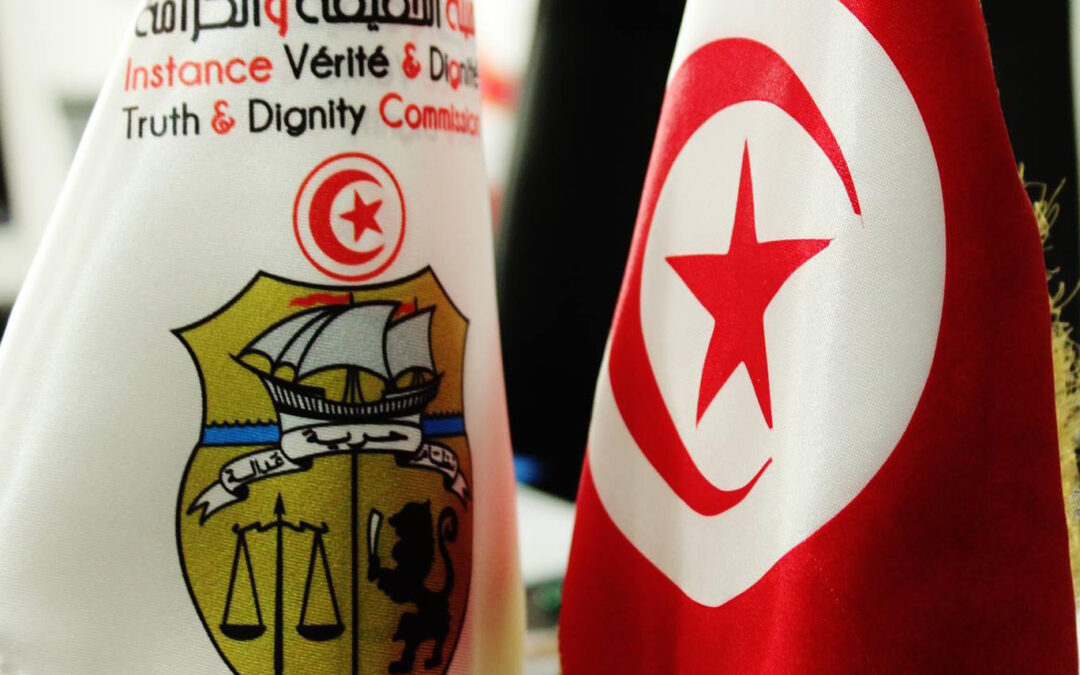
The statement alerts the public of the danger of a bill which dismantles the specialized criminal chambers in Tunisia and replaces them with an institution which would guarantee impunity for those who committed gross violations of human rights in Tunisia between 1955 and 2013.
The statement has been signed by the ICJ as well as other members of the Coalition for Transitional Justice
The statement can be downloaded here:
Link to French Version
Link to Arabic Version
Apr 10, 2019 | News
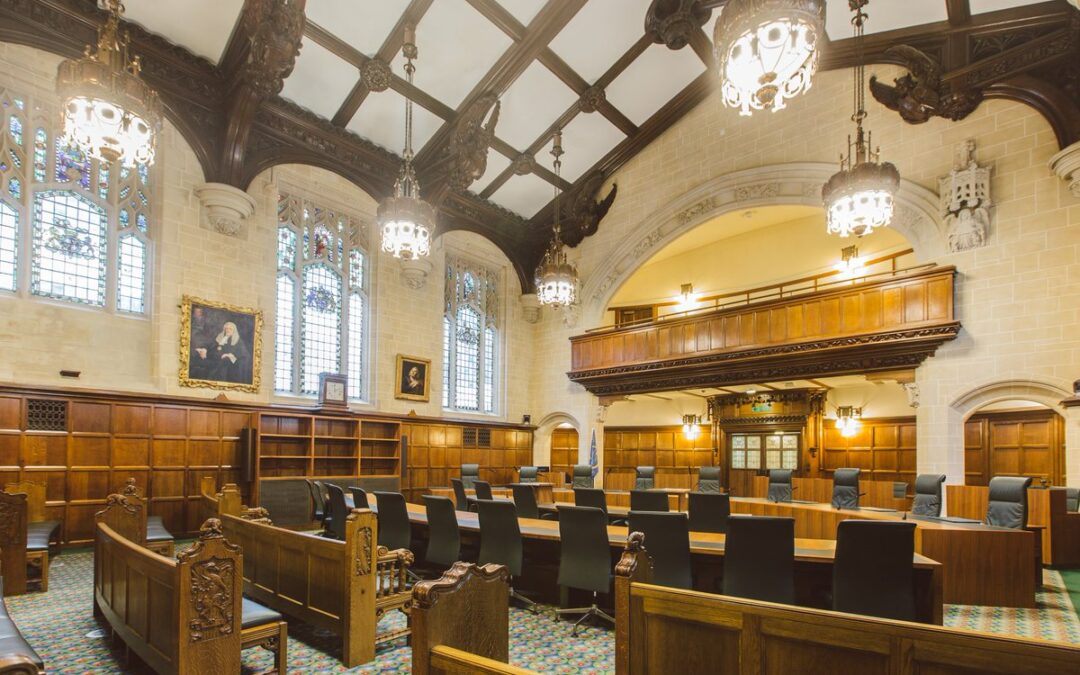
Today, the ICJ and the CORE Coalition welcomed the decision of the United Kingdom Supreme Court to allow a complaint to proceed against Vedanta Resources Plc and its Zambian subsidiary Konkola Copper Mines (KCM), alleging serious harm from extraction activities in Zambia.
The damage to health and livelihood was allegedly caused to local communities living in the Chingola District by the discharge of toxic waste from the Nchanga Mine operated by KCM.
The companies challenged the jurisdiction of the UK courts to hear the complaint for negligence and breach of statutory duty, saying there was no case against them arguable in a UK court and, in relation to KCM, that Zambia was the proper forum where any case would have to be heard.
The judgment, confirming the decision of lower courts, dismissed the appeal by the companies, allowing the case to now proceed to trial on the merits. The ICJ and CORE Coalition acted as interveners in the case.
“Today’s Supreme Court decision will make it possible for the Zambian claimants to find justice, even so long after events took place,” said ICJ Senior Legal Adviser Carlos Lopez.
“The ruling makes clear that, from available evidence at this stage, it is arguable in trial that a parent company like Vendanta owes a duty of care in relation to people living in the vicinity of their subsidiaries and this decision will have important implications to similar cases concerning parent company duties around the world,” said Lopez.
Although access to justice for alleged victims harm from subsidiaries of parent companies has been elusive, the UK Supreme Court clarified that the principles applicable to these cases were “not novel at all.”
“Many other victims face insurmountable hurdles in their efforts to hold companies to account. The case is a reminder of the urgent need for legislation to require companies to take action to prevent human rights abuses, and to make it easier to hold them to account when they fail to do so,” said Marilyn Croser, Director of CORE.
The judgment regarded published material in which Vedanta fairly asserted assumption of responsibility for the maintenance of proper standards of environmental control over activities of its subsidiaries. The Court said that this was “sufficient on their own to show that it is well arguable that a sufficient level of intervention by Vedanta in the conduct of operations at the Mine may be demonstrable at trial.”
Today’s Supreme Court judgment also made clear that Zambian courts could not be necessarily relied on to address claims against KCM and that there was a real risk that the claimants would not obtain “substantial justice” in Zambia.
Contact:
Marilyn Croser, Director CORE Coalition, t: + 44 203 752 5712
Carlos Lopez, Senior Legal Adviser, ICJ, t: + 41 22 9793816