Aug 23, 2018 | News
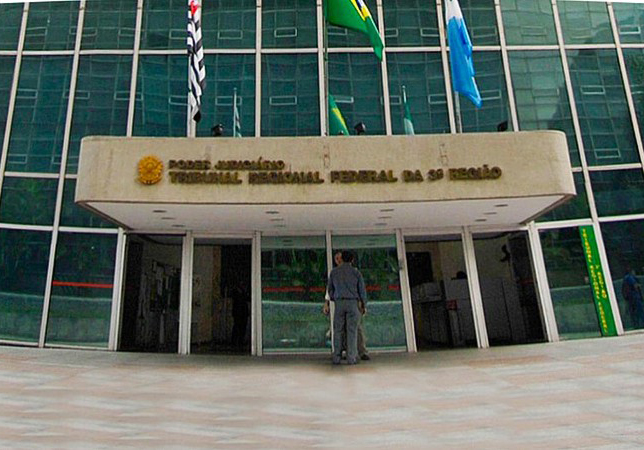
The Regional Federal Tribunal (TRF-3), in a watershed judgment, ruled that prescription or statute of limitations was not applicable to claims of reparation by a victim of torture during the military regime in the 1970s. The Court accepted the arguments of ICJ Commissioner Belisário dos Santos Jr.
The hearing in the lawsuit against the Union and the State of São Paulo took place on Wednesday 22, after the case had been dismissed by the court first instance.
Belisário dos Santos Jr., Executive Committee Member of the ICJ, argued the case for the victim at the invitation of the Juridical Department of CA XI.
He noted: “On the one hand there could be no statute of limitation on torture claims, while on the other hand the the application of the statute of limitations which adopted by Decree 20.910 / 32 had to be considered.”
The lawsuit, which began in 2012, alleges political persecution and torture that took place beginning 1971 .
Belisário dos Santos Jr. argued that the rationale for the law and jurisprudence affirming the inapplicability of statute of limitation lies in the seriousness of the violation of torture, which had been committed on a widespread and systematic basis by order or with the knowledge of high-level State authorities in Brazil at the time.
“The obligation to provide reparation under the UN Convention against Torture could not be superseded by provisions of the domestic law of a State. In addition, the obligation to provide a remedy and reparation is a legal duty of the State which must not depend on the conduct or activity of the victims. For these reasons, the case could not have the same treatment of other lawsuits against the Public Treasury,” he said.
Belisário dos Santos Jr. also pointed out that, pursuant to article 14 of the UN Convention against Torture, which was ratified by Brazil in 1991, “the reparation must be fair and adequate, as recognized by the jurisprudence of the Supreme Court of Justice and TRF 3, itself in accordance with international human rights law and jurisprudence. ”
The TRF-3 decided by 3-2 majority that the statute of limitation was inapplicable and, unanimously, granted the appeal on merit, allowing the lawsuit to proceed.

Jul 30, 2018 | News
On 25 July 2018, the ICJ facilitated an integrated meeting of governmental stakeholders in the justice chain involved in different aspects of combatting sexual and gender-based violence (SGBV) in the Kingdom of Eswatini (Swaziland), the first meeting of its kind.
The meeting was convened by ICJ Commissioner and Principal Judge of the High Court of Eswatini, Justice Q. M. Mabuza. It followed a meeting held in February 2018 on combating SGBV in Eswatini and an ICJ report on key challenges to achieving justice for gross human rights violations in Eswatini, the latter of which recommended that justice sector stakeholders involved in the investigation, prosecution and sanctioning of, and provision of redress to victims for, acts of SGBV should convene six-monthly meetings so as to develop a common and integrated approach to the effective combating of SGBV.
The integrated meeting involved senior officials from the Office of the Deputy Prime Minister, the Office of the Attorney General, the Office of the Director of Public Prosecutions, the police, correctional services, and the judiciary.
The meeting discussed the fight against SGBV in the context of the Guidelines on Combating Sexual Violence and its Consequences in Africa, and other international standards. It considered the national legal and policy framework on SGBV; practices and challenges in the investigation and prosecution of SGBV; the sanctioning of SGBV offences; and the rehabilitation of sexual and domestic violence offenders by correctional services. Perspectives of the Office of the Deputy Prime Minister, the police and the judiciary were emphasized during discussions.
Stakeholders discussed issues with a view to identifying gaps and challenges in national law, policy and practice when measured against regional and global standards and best practices, as well as with a view to considering potential solutions to those gaps and challenges. The meeting agreed on next steps, including on concrete action that aligns with and/or augments the National Strategy to End Violence. Stakeholders agreed that they should all be involved in the early stages of cases involving SGBV.
Stakeholders also agreed that the recently enacted Sexual Offences and Domestic Violence Act will only be effectively implemented if justice sector stakeholders are well coordinated. Stakeholders agreed that integrated meetings should be held regularly, at intervals of no less than six months including, if possible, before the end of 2018.

Jul 27, 2018 | News
On 26 July 2018, the ICJ Secretary General, Sam Zarifi, met Myanmar’s Union Attorney General, U Tun Tun Oo.
The ICJ Legal Adviser Sean Bain and senior staff from the Union Attorney General’s Office (UAGO) joined the meeting in Nay Pyi Taw.
Rule of law developments in Myanmar were discussed, including progress integrating international standards into the work of the UAGO, such as the new “Code of Ethics for Law Officers”.
The participation of UAGO staff in the ICJ’s recent workshops on the Minnesota Protocol on the Investigation of Potentially Unlawful Deaths was another topic discussed.
Noting the UAGO’s stated reform commitments, Sam Zarifi renewed the ICJ’s call on Myanmar’s prosecution authorities to drop the charges against Wa Lone and Kyaw Soe Oo, two Reuters journalists, which do not appear to have a valid legal rationale.
Efforts to effectively prosecute the assassination of lawyer U Ko Ni were also discussed.
Sean Bain noted the UAGO’s efforts to draft an umbrella land law according to the government’s National Land Use Policy, and highlighted the importance of public participation and consultation in this process, to ensure compliance with Myanmar’s obligations under the International Covenant on Economic, Social and Cultural Rights.
The Attorney General thanked the ICJ for the organization’s ongoing honest advice and support for human rights.
The ICJ has worked with the UAGO since 2014 to provide assistance on prosecutorial independence and human rights in the context of Myanmar’s broader democratic reforms.
Jul 15, 2018 | News
On 14 July 2018, the ICJ co-organized a discussion on extrajudicial killings in Thailand, focusing on the cases of Chaiyaphum Pasae and Abe Saemu.
The discussion was held at the Student Christian Centre in Bangkok.
Chaiyaphum Pasae, a Lahu youth activist, was killed by a military officer in the Chiang Dao district of Thailand’s northern Chiang Mai province in March 2017. The killing took place during an attempt to arrest him as an alleged drug suspect. Officials claimed Chaiyaphum Pasae had resisted arrest and was subsequently shot in “an act of self-defence”.
Abe Saemu, from the Lisu hill tribe, was killed by a military officer in February 2017 in the Chiang Dao district of Chiang Mai province in an attempt to arrest him on allegations of drug coffences. Officials claimed Abe Saemu had resisted arrest and was killed in “self-defence”.
During the discussion, ICJ’s National Legal Adviser Sanhawan Srisod addressed the audience to set out the international law and standards that apply to investigating potentially unlawful deaths, including the rights of victims and family members, referring to the standards set out in the revised Minnesota Protocol on the Investigation of Potentially Unlawful Death (2016), which was launched in Thailand on 25 May 2017.
Participants in the event included members of the families of Chaiyaphum Pasae and Abe Saemu, the lawyers in both of their cases, interested members of the public, media representatives, students and academics.
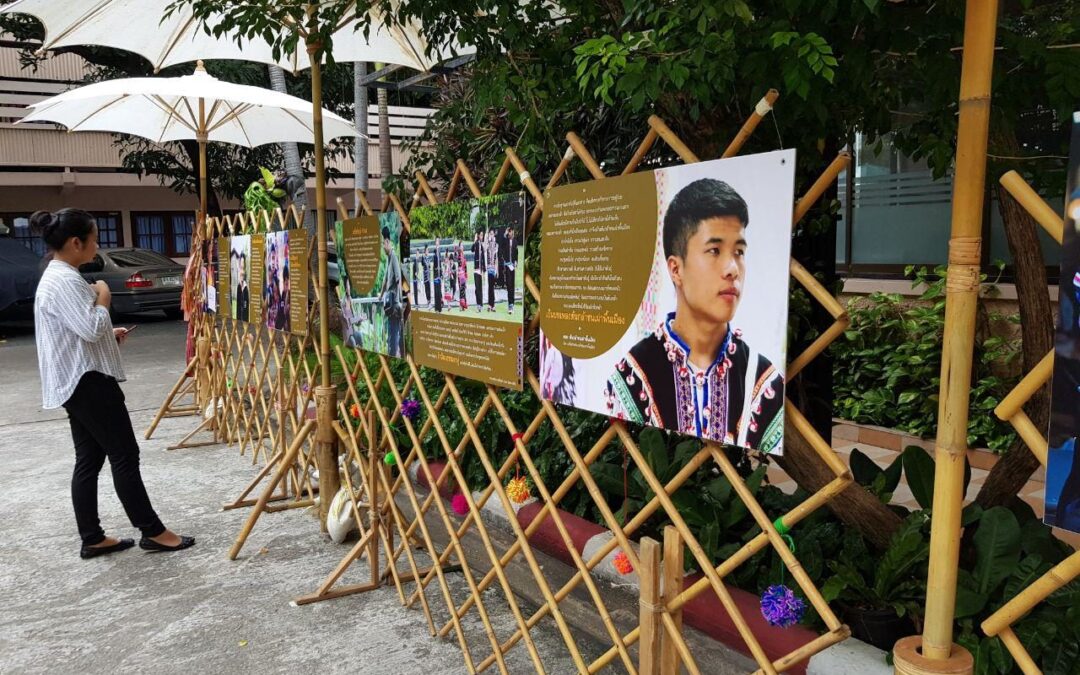
The discussion opened with an art exhibition and Lahu dance show by the Save Lahu group. Human Rights Commissioner Angkhana Neelapaijit then made a presentation on challenges in seeking accountability for extrajudicial killings in Thailand.
A panel discussion on the latest updates in the cases of Chaiyaphum Pasae and Abe Saemu followed, moderated by Pranom Somwong from Protection International.
The panel included relatives of Chaiyaphum Pasae and Abe Saemu; Ratsada Manuratsada, a lawyer representing the families in both cases and Krissada Ngamsiljamras, a representative from the National Human Rights Commission of Thailand.
A second panel considered challenges on the administration of criminal justice in the context of unlawful deaths.
Moderated by Pratubjit Neelapaijit of UN Office of the High Commissioner for Human Rights, the panel included Malee Sittikreangkrai (Chiang Mai University); Sumitchai Hattasan (Human Rights Lawyers’ Association); Namtae Meeboonsalang (Provincial Chief Public Prosecutor, Office of the Attorney-General); Kritin Meewutsom (Forensic doctor, Ranong Hospital); and Sanhawan Srisod (ICJ).
The event was conducted in collaboration with Cross Cultural Foundation (CrCF); Protection International (PI); UN OHCHR; Human Rights Lawyers’ Association (HRLA); Thai Volunteer Services (TVS); Dinsorsee Creative Group; Center for Ethnic Studies and Development, Chiang Mai University (CESD); Legal Research and Development Center, Chiang Mai University (LRDC) and Network of Indigenous Peoples in Thailand (NIPT).
Contact
Kingsley Abbott, Senior Legal Adviser, ICJ Asia Pacific Regional Office, kingsley.abbott(a)icj.org

Jul 13, 2018 | News
The Sri Lankan Government should reconsider and reverse its decision to bring back the death penalty for drug related offences, the ICJ said today.
On 10 July, the Sri Lankan Cabinet unanimously approved an action plan to implement the death penalty for “drug smugglers”.
According to the spokesperson of the Cabinet, 19 people convicted for “large scale drug offences” who “are still involved in drug trafficking…from within prisons” would initially be those initially designated for execution.
Sri Lanka has had a moratorium on the death penalty for over four decades.
The last execution carried out in the country was in 1976.
“The resumption of executions of convicted drug offenders would constitute a violation of the right to life under international law,” said Ian Seiderman, ICJ’s Legal and Policy Director.
”And, based on experience around the globe, it will not in any way serve the purported objective of tackling the problems of drug-related crime in Sri Lanka,” he added.
Article 6 of the International Covenant on Civil and Political Rights (ICCPR), which Sri Lanka acceded to in 1980, guarantees the right to life and requires that states that have not yet abolished the death penalty must restrict capital punishment to only the “most serious crimes”.
The UN Human Rights Committee, the supervisory body for the ICCPR, considers that the death penalty may never be used for drug offences.
The extraordinarily retrograde measure of resuming executions following a 42-year moratorium would also constitute a violation of article 6, which contemplates at least progressive movement towards abolition.
The UN General Assembly has repeatedly adopted resolutions emphasizing that that the use of the death penalty undermines human dignity and calling on those countries that maintain the death penalty to establish a moratorium on its use with a view to its abolition.
In 2016, an overwhelming majority of 117 UN Member States – including Sri Lanka – voted in favor of a worldwide moratorium on executions as a step towards abolition of the death penalty.
“At least 150 countries have now either abolished the death penalty in law or practice,” added Seiderman.
The ICJ considers the death penalty to be a violation to the right to life and the right not to be subjected to cruel, inhuman or degrading punishment.
The ICJ urges Sri Lanka to reinstate its moratorium on executions and take steps towards taking all necessary measures to abolish the death penalty.
Contact:
Ian Seiderman, ICJ’s Legal and Policy Director, email: ian.seiderman(a)icj.org
Reema Omer, ICJ’s International Legal Advisor, South Asia, email: reema.omer(a)icj.org