Oct 3, 2018 | News
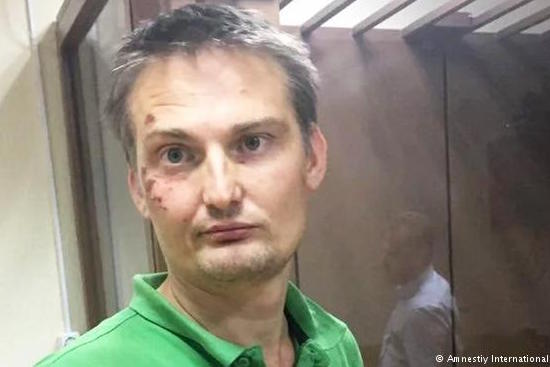
Today, the ICJ expressed concern at ongoing criminal proceedings against Mikhail Benyash, a lawyer practicing in Russia, who is charged with use of force against the police and impeding justice.
The lawyer has been detained until 23 November. The ICJ called on the responsible authorities to drop any criminal charge relating to his conduct of professional duties in the courtroom, and to ensure that the lawyer’s rights are protected and that allegations of his ill-treatment are fully investigated.
Benyash alleges that following his apprehension by the police on 9 September, the police beat him up in the car. According to the police report he inflicted the injuries on himself, contrary to demands of the police that he stop doing so.
He was charged with disobedience to the police, which according to the police report was due to “the fact that the police asked Benyash not to injure himself, but he continued self-beating”. Benyash was convicted and sentenced to 14 days of imprisonment and 40 hours of correctional works.
On 23 September, the day of his release, Benyash was arrested again. He was charged with two further offences: violence against a representative of authority (Criminal Code Article 318(1)) based on an allegation, seemingly not raised at the time of his earlier charge and conviction in relation to the same incident, that in the course of his arrest on 9 September he allegedly bit a police officer and hit another.
On 23 September he was also charged with obstruction of justice (Criminal Code Article 294(1)), reportedly on the basis of an allegation that in a court hearing on 6 May 2018, Benyash had “repeatedly interrupted, gave instructions and objections to the decisions of the judge” and after he had been removed from the courtroom “continued unlawful behaviour”.
According to the lawyer, he was taken out of the courtroom by force due to his motions to allow certain members of the public to be present at the open hearing.
The ICJ is concerned that the criminal obstruction charge against Mikhail Benyash appears to relate at least in part to statements he made in court in the course of carrying out his professional duties of representation of his clients.
The fact that this charge was only laid following his recent arrest, some five months after the alleged incident occurred, also raises questions as to the motivation for bringing the charge forward now.
“Benyash is currently charged on account of his alleged attack on a police officer and obstruction of justice. While the first charge requires an impartial and independent inquiry, the second charge should be of concern to the entire lawyers’ community”, said Karinna Moskalenko, ICJ honorary member. “We fear that this may lead to lawyers in Russia being charged with obstruction of justice simply for actively expressing their position and objections in accordance with the procedure prescribed by law”, she added.
Furthermore, the ICJ emphasises that under international human rights law, states have obligations to investigate allegations of treatment that may amount to torture or inhuman or degrading in violation of Article 3 of the European Convention on Human Rights, as well as other international law norms binding on the Russian Federation.
The investigative authorities have duty to investigate allegations of ill-treatment of the lawyer by police following his arrest on 9 September promptly, effectively and impartially and any persons responsible should be brought to justice.
Read the ICJ’s full statement here: Russia-Statement on Benyash-News-Web Story-2018-ENG
Oct 1, 2018 | News
The Inter-American Commission of Human Rights (IACHR) held a special hearing on the role of the International Commission against Impunity in Guatemala (CICIG) in Boulder, Colarado.
Ramón Cadena, the ICJ Director stated “We regret that the Government of Guatemala requested the IACHR to hold the hearing behind closed doors since all the points discussed were of public interest. The discussions should have been open to the press and the general public. We urge the authorities to ensure there will be no retaliations against the work carried out by human rights organizations and human rights defenders.”
The ICJ welcomed the participation of many NGOs at the event and the frank dialogue that took place on this crucial issue for human rights in that country. The Guatemalan government delegation claimed that the Inter-American System of Human Rights was not competent to consider the matter. However, the IACHR maintained it was competent, according to the American Convention of Human Rights and other regional human rights legislation. As an “external observer”, the IACHR stated it was “surprised” by the latest decisions taken by government authorities at the highest level not to extend the CICIG mandate nor allow the entry of Commissioner Iván Velásquez into the country. It considered these decisions were “excessive” and in no way strengthened the rule of law in Guatemala.
The government delegation further argued that the CICIG acted as a “parallel prosecutor” which affects the internal order of the country. The NGO delegation stated that on the contrary the CICIG acted as a “complementary prosecutor”. The delegation further noted that before the CICIG mandate was approved, the Constitutional Court, in an opinion published in the official gazette on 8 May 2007 (document no 791-2007), considered that the CICIG did not violate the constitutional order nor the rule of law in Guatemala.
The Constitutional Court referred to the CICIG as having “the function of supporting, assisting and strengthening the state institutions responsible for investigating crimes committed by illegal and clandestine security forces .. and does not exclude the possibility of receiving support from other institutions in the collection of evidence, provided that the participation has been established in a legal manner, as in the present case.”
The IACHR considered that the essential question was whether the State of Guatemala already had the judicial independence and strong institutions necessary to fight against corruption in Guatemala without the support of the CICIG. The NGO delegation considered, based on different arguments, that the presence of the CICIG in Guatemala was still necessary.
The IACHR also informed the government delegation that it was in their interest to invite an in-situ visit of the IACHR as soon as possible so as to better understand the human rights situation.
The ICJ Director for Central America Ramón Cadena participated in the hearing at the request of the Central American Institute for Social Democracy Studies (DEMOS), the Committee for Peasant Development (CODECA) and the Network of Community Defenders. The Indigenous Peoples Law Firm had been requested to attend by these organizations but was unable to do so at the last moment.
Sep 20, 2018 | Advocacy, Non-legal submissions
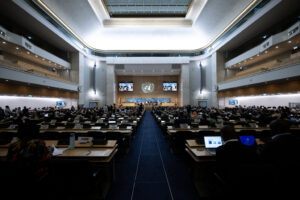
The ICJ today put the spotlight the lack of independence of the legal profession in Azerbaijan speaking at the UN Human Rights Council in Geneva.
The statement, made during the consideration of the Universal Periodic Review (UPR) of Azerbaijan, read as follows:
The International Commission of Jurists (ICJ) welcomes the acceptance by Azerbaijan of the recommendations by France (140.70), by Greece (141.12), Austria (141.13), Estonia (141.68), Slovenia (141.71), and Mexico (141.77), to respect the rights of lawyers.
The ICJ regrets, however, that Azerbaijan only noted and did not explicitly support the recommendations by Sweden (141.33), USA (141.39), Czechia (141.67) and Germany (141.76) and rejected the recommendation by the United Kingdom (141.60) to “End all interference in the work of lawyers through disbarment or other disciplinary measures on improper grounds such as expressing critical views.”
These recommendations call for the amendment of the Law on Advocates and Advocates’ Activities to ensure the effective independence of the Bar Association of Azerbaijan. They also call for the setting up of independent and transparent mechanisms for lawyers’ admission to practice, and disciplinary proceedings against lawyers, in conformity with the UN Basic Principles on the Role of Lawyers.
The ICJ notes that Azerbaijan’s support of most recommendations is predicated on the assumption that the situation of the independence of the legal profession in Azerbaijan is in line with international law.
This, however, is not the situation in the country.
The ICJ expresses concern at the persistent lack of independence of the Bar Association of Azerbaijan; indeed, it has actually played a role in undermining the work of lawyers defending human rights. The situation is exacerbated by recent hasty reforms that prohibit lawyers from appearing in any court hearing unless they are members of this non-independent Bar association, furthermore without a sufficient and meaningful transition period. This seriously curtails access to justice for human rights violations in the country.
Sep 14, 2018 | News
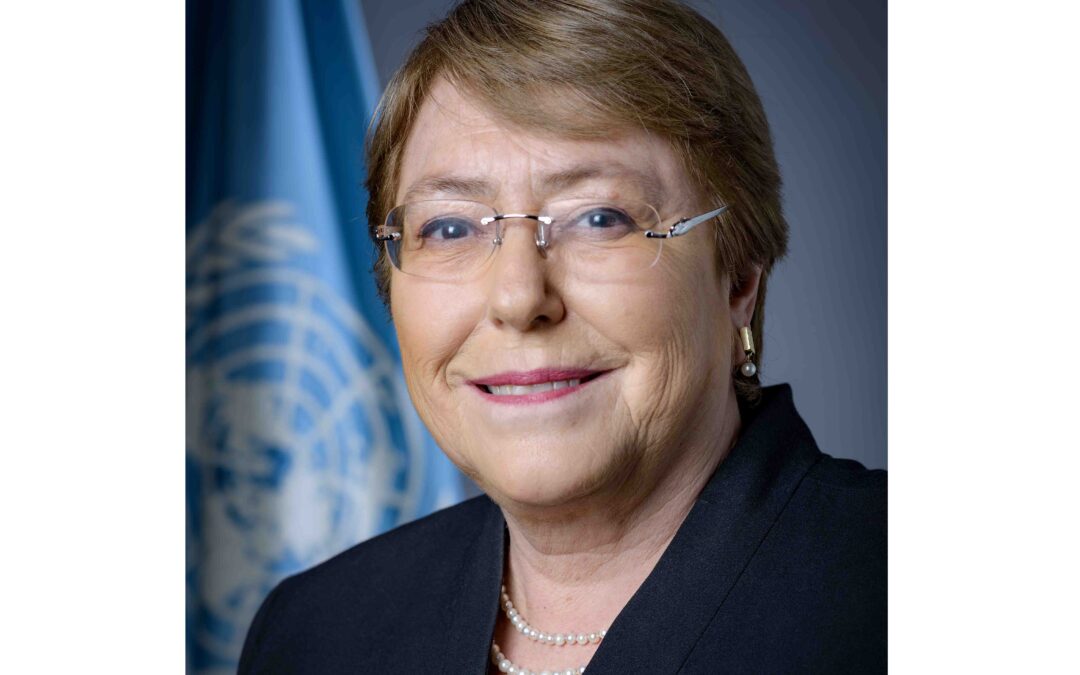
On 14 September 2018, the ICJ joined 67 other international and Guatemalan civil society organizations in a letter to the High Commissioner for Human Rights, Michelle Bachelet, to express grave concern about recent developments to curtail anti-impunity efforts in the country.
These include President Jimmy Morales’ decision on 31 August 2018 not to extend the mandate of the International Commission against Impunity in Guatemala (CICIG); the Guatemalan authorities’ subsequent decision on 4 September 2018 to prohibit the re-entry into the country of the CICIG’s Commissioner Iván Velásquez; and judicial reforms adopted by Congress on 6 September 2018 that threaten to undermine the independence of the judiciary and the function of the Constitutional Court judges and the office of the Human Rights Ombudsman.
The signatories welcomed the High Commissioner’s critical reference of these developments in her opening remarks to the 39th session of the Human Rights Council.
They asked that the High Commissioner give continued support in the fight against corruption and impunity in Guatemala and called on her to press the Guatemalan authorities to adopt necessary measures to facilitate compliance with the mandate of the CICIG under the terms of the Agreement signed between Guatemala and the United Nations.
The letter is available here (in Spanish): Guatemala-Letter to Michelle Bachelet-News-2018-SPA
Sep 3, 2018 | News
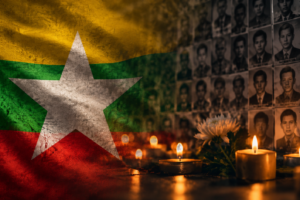
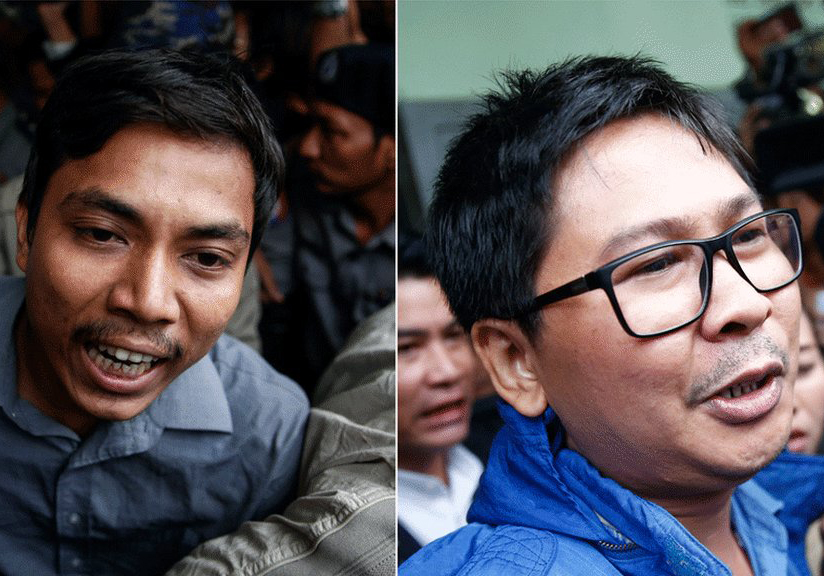
The Yangon District Court’s decision today to sentence Reuters journalists Wa Lone and Kyaw Soe Oo to seven years’ imprisonment for violating the Official Secrets Act deals a massive blow to human rights and the rule of law in Myanmar, said the ICJ.
“The Court’s decision effectively punishes these two courageous journalists for exposing human rights violations, following a grossly unfair trial,” said Frederick Rawski, Asia Pacific Director for the ICJ.
“The decision is a miscarriage of justice that inflicts needless suffering on them and their families, threatens freedom of expression, damages Myanmar’s global standing, and undermines its justice institutions all at once,” he added.
The ICJ has monitored the case since the journalists’ initial detention in December 2017.
As previously noted by the ICJ, the detention and trial has violated numerous basic fair trial guarantees.
The prosecutors had a duty to drop charges and the judge should have dismissed the case given the lack of evidence and the unlawfulness of detention because of fair trail rights violations.
“The case is emblematic of how the justice system ends up reinforcing rather than challenging military impunity,” said Rawski.
“The result undermines government claims that it can deliver accountability for human rights violations on its own, and does nothing to build trust that justice system can act independently and impartially after emerging from decades of military rule,” he added.
Members of security forces generally enjoy impunity for the perpetration of human rights violations, including for crimes under international law.
The ICJ has previously reported that victims and their families, as well as journalists, often face retaliation for publicizing human rights violations by the military.
Wa Lone and Kyaw Soe Oo were arrested in December 2017, and held incommunicado for nearly two weeks, before being charged under the colonial-era Official Secrets Act for allegedly possessing documents related to the operations of security forces in northern Rakhine State, during “clearance operations.”
The two reporters had been reporting on human rights violations in Rakhine State, including the killing of Rohingya by the military in Inn Dinn Village.
In a report issued just last week, the UN Independent International Fact Finding Mission found that security forces had perpetrated crimes under international law during these operations, including crimes against humanity and possibly the crime of genocide.
The detention and prosecution of anyone, including journalists, based solely on the collection and publication of evidence relevant to serious human rights violations, is a violation of international law and standards on freedom of expression, the right to participation in public affairs and on the role of human rights defenders.
Legal options remaining for the journalists include appealing of today’s decision, and requesting a Presidential amnesty.