May 7, 2018 | News
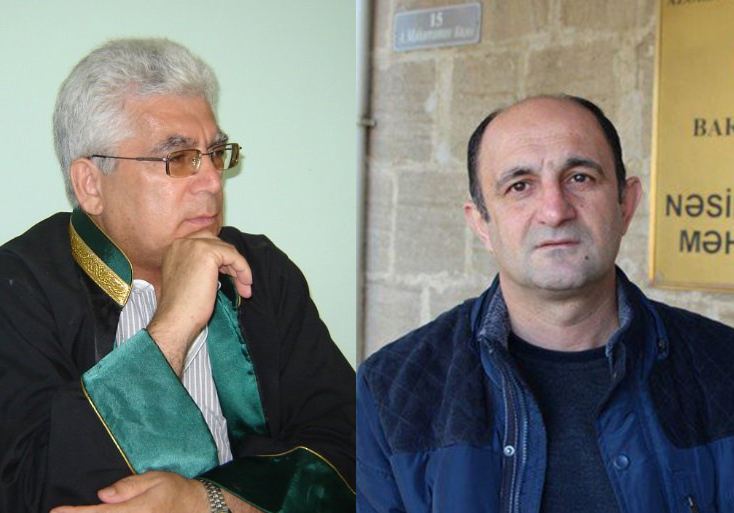
The ICJ today denounced the decision of the Presidium of the Azerbaijan Bar Association, of 23 April 2018, to suspend the licences of two Azerbaijan human rights lawyers Asabali Mustafayev (photo, on the left) and Nemat Karimli (photo, on the right).
The ICJ called on the Presidium to reverse their decision and allow the lawyers to resume their practice.
It stressed that disciplinary proceedings pending against the lawyers should be immediately terminated.
The ICJ said that the decision of the Presidium was contrary to international standards on the role of lawyers including the right to freedom of expression as guaranteed under international law.
The ICJ understands that the proceedings against the two lawyers, initiated following a submission of the Deputy Prosecutor General, were related to the critical statements made by the lawyers in the media, regarding high profile criminal cases.
Nemat Karimli, had stated in media interviews that his client Afgan Mukhtarli, an opposition activist convicted on charges of smuggling, had been illegally and forcibly transferred from Georgia to Azerbaijan and that his life could be at risk if he was returned to Azerbaijan.
The lawyer also complained of excessive searches and being prevented from communicating in private while visiting his client in detention.
The disciplinary proceedings against Asabali Mustafayev relate to allegations he made on social media that the prosecution of politician Gozal Bayramli, on a charge of smuggling, was politically motivated.
Both lawyers were charged with spreading false statements and slanderous information about investigative authorities.
The submission of the Prosecutor to the Bar Association, on 25 October 2017, alleged that lawyers Nemat Karimli and Asabali Mustafayev in their interviews to the media had “politicized” the criminal cases of Bayramli and Mukhtarli, tried to mislead the public and slandered investigative authorities. According to the information provided by the lawyers, no evidence had been attached to this submission.
Instead, the Disciplinary Commission collected evidence to submit to the Presidium of the Bar Association, which subsequently suspended the licence of the lawyers.
Furthermore, the lawyers state that, contrary to what is required by the Law on Lawyers and Advocates Activities, they have not received a copy of the opinion of the Disciplinary Commission submitted to the Presidium of the Bar Association.
The ICJ is concerned that the suspension of the lawyers’ licences, for comments which drew attention to possible violations of human rights, may violate the lawyers’ right to freedom of expression.
These comments appear to be within the bounds of lawyers professional responsibility to protect their clients in every appropriate way (UN Basic Principles, principle 13(b)).
The right to freedom of expression is protected under international treaties to which Azerbaijan is a party, including by Article 19 of the International Covenant on Civil and Political Rights (ICCPR) and article 10 of the European Convention on Human Rights (ECHR).
The UN Basic Principles on the Role of Lawyers specify that lawyers “…have the right to take part in public discussion of matters concerning the law, the administration of justice and the promotion and protection of human rights …”.
The European Court of Human Rights has emphasized that lawyers are entitled to comment in public on the administration of justice, provided that their criticism does not overstep certain bounds, based on principles of dignity, honor, integrity, and respect for the fair administration of justice.
The ICJ emphasizes that protection of lawyers’ freedom of expression, in particular as regards issues of the rule of law and the administration of justice, is not only important to the individuals in question, it also serves as an important safeguard for the protection of human rights.
Where lawyers are subject to disciplinary sanctions for such statements, the role of lawyers in upholding the rule of law in the administration of justice is undermined.
The ICJ therefore calls on the Azerbaijan Bar Association to lift the disciplinary sanctions that would unjustifiably interfere with lawyers’ freedom of expression.
The ICJ also calls on the Azerbaijan Bar Association to ensure that the lawyers subject to disciplinary proceedings obtain a copy of the opinion to be able to prepare their arguments and defence.
Background
Asabali Mustafayev represented Gozal Bayramli who was found guilty and sentenced to three years in prison for smuggling €12,000 ($13,400) in cash. Mustafayev had expressed his opinion about the arrest of Gozal Bayramli in his social media profile, alleging that it was politically motivated. He stated that when he shared this opinion he was not yet engaged as Gozal Bayramli’s lawyer.
Nemat Karimli represented Afgan Mukhtarli, an opposition activist based in Tbilisi, who was convicted of smuggling € 10,000, illegally crossing the border and resisting police arrest and was sentenced to six years in prison. Karimli in an interview stated that Mukhtarli was taken to Azerbaijan illegally and called on the Georgian authorities not to hand him to Azerbaijan authorities since it might endanger Mukhtarli’s life.
Apr 25, 2018 | News
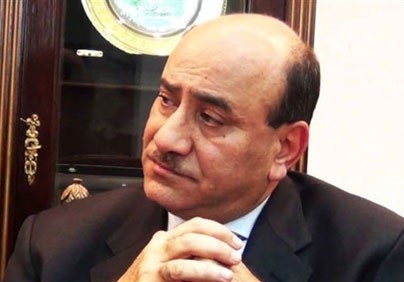
The ICJ today called on the Egyptian authorities to quash the conviction of, and immediately release Hisham Geneina, a former judge and former head of the Central Auditing Authority in Egypt.
A Cairo military court convicted Geneina on Tuesday 24 April and sentenced him to five years in prison for “publishing false information harmful to the national security.”
The charges were related to a media interview in which Geneina criticized the interference of the Egyptian authorities in the election process and referred to the existence of documents that incriminate political and military leaders since 2011, including in cases of human rights violations.
The first hearing of the military trial took place on 18 April.
At the defense request, it was adjourned to 20 April so that the lawyers can have access the case file. The judgement was issued 4 days later.
“Genina’s detention, prosecution and conviction solely for peacefully and legitimately exercising his right to the freedom of expression is a testament to the length to which Egypt’s military and government would go to silence critical voices,” said Saïd Benarbia, ICJ MENA Director.
“After a grossly unfair trial before a military court that he should never have been prosecuted before in the first place, Egyptian authorities must stop the charade and immediately and unconditionally release Hisham Geneina,” he added.
Egypt – Geneina – News – Webstory – 2018 – ARA (Arabic translation in PDF)
Background
Hesham Genena was arrested on 13 February following a media interview in which he claimed, among other things, that the former Chief-of-staff Sami Annan was in possession of documents incriminating the country’s political and military leadership.
One day before his arrest, the military spokesperson said that Genena’s statement casts doubts on the State and its institutions in the time where the armed forces are combating terrorism in Sinai.
He added that the armed forces will use their rights as provided for in the Constitution and the law to protect national security, and that they will refer the matter to the relevant authorities to take legal action.
According to information provided by his lawyer, Geneina is currently in solitary confinement in the Cairo Appeal Prison and his health condition is deteriorating due to injuries related to a physical attack against him on 27 January, for which he needs surgical intervention.
Apr 3, 2018 | News
The secret military trials of civilians charged with terrorism-related offences are a continuing breach of Pakistan’s international human rights obligations, the ICJ said today.
Military courts were first empowered to try civilians for certain terrorism-related offences on 7 January 2015 by the 21st amendment to the Constitution and amendments to the Pakistan Army Act, 1952, which were in operation for a period of two years.
One year ago, on 31 March 2017, President Mamnoon Hussain signed into law the 23rd amendment to the Constitution to renew military courts’ jurisdiction over civilians until 6 January 2019.
“The renewal of military trials for civilians accused of terrorism last year has only weakened the rule of law, and undermined the right to fair trial and equality before the law in Pakistan,” said Matt Pollard, ICJ’s Senior Legal Adviser.
“Pakistan should end the role of military courts in such cases, and instead strengthen the ability of ordinary courts and law enforcement to ensure investigations and trials that are both fair and effective, in line with its domestic law and international human rights obligations,” he added.
According to the military’s media office and information collected by the ICJ, military courts have convicted 346 people since January 2015, out of which 196 people have been sentenced to death and 150 people have been given prison sentences.
At least 56 people have been hanged. Only one person has been acquitted.
The ICJ has documented serious fair trials violations in the operation of military courts, including: denial of the right to counsel of choice; failure to disclose the charges against the accused; denial of a public hearing; failure to give convicts copies of a judgment with evidence and reasons for the verdict; and a very high number of convictions based on “confessions” without adequate safeguards against torture and ill treatment.
Such use of military courts to try civilians is inconsistent with international fair trial standards, and the imposition of the death penalty after such trials violates the right to life.
Families of more than a hundred people convicted by military courts have alleged the convicts were denied a right to a fair trial in petitions to the Supreme Court and various high courts in the country.
Despite acknowledging possible denial of fair trial, the ordinary courts have thus far refused to provide relief to the petitioners due to their lack of jurisdiction over military courts.
The expansion of the jurisdiction of military tribunals through the amendments to the Constitution and the Pakistan Army Act were a part of the Pakistani government’s 20-point “National Action Plan”, adopted following the horrific attack on the Army Public School in Peshawar in December 2014.
The NAP contemplated military courts only as a short-term “solution” to try “terrorists”, on the basis that they would be operational only for a short period during which the Government would bring about necessary “reforms in criminal courts system to strengthen the anti-terrorism institutions.”
However, with less than a year left before the extension under the 23rd Constitutional Amendment is set to expire, no such reforms have taken place.
Contact
Matt Pollard, ICJ Senior Legal Adviser and UN Representative (Geneva); e: matt.pollard@icj.org
Reema Omer, ICJ International Legal Adviser for South Asia (London), t: +447889565691; e: reema.omer@icj.org
Background
The 23rd constitutional amendment allows military tribunals to try civilians who allegedly belong to “a terrorist group or organization misusing the name of religion or a sect” and are suspected of committing a number of offences, including: abducting any person for ransom; raising arms of waging war against Pakistan; causing any person injury or death; using or designing vehicles for terrorist attacks; creating terror or insecurity in Pakistan; and attempting, aiding or abetting any of these acts.
In July 2017, in its Concluding Observations after Pakistan’s first periodic review under the International Covenant on Civil and Political Rights (ICCPR), the UN Human Rights Committee stated that it was concerned by the extension of the jurisdiction of military courts over civilians and allegations of fair trial violations in military courts’ proceedings.
The Human Rights Committee recommended that Pakistan “review the legislation relating to the military courts with a view to abrogating their jurisdiction over civilians and their authority to impose the death penalty” and “reform the military courts to bring their proceedings into full conformity with articles 14 and 15 of the Covenant in order to ensure a fair trial.”
Mar 28, 2018 | Advocacy, Non-legal submissions
The ICJ today submitted a report to the UN Committee against Torture, calling for recommendations to be made on prevention of and accountability for continued recourse to torture and ill-treatment in Tajikistan.
The ICJ’s submission is made ahead of consideration by the Committee against Torture in April to May 2018 of Tajikistan’s third periodic report on the implementation of its obligations under the Convention against Torture and Other Forms of Cruel, Inhuman or Degrading Treatment or Punishment.
The ICJ’s report draws from an earlier study on Achieving Justice for Gross Human Rights Violations in Tajikistan and calls on the Committee against Torture to make recommendations concerning:
- The obligation to adequately sanction torture;
- The obligation to prevent torture and other forms of ill-treatment, including in places of detention;
- The obligation to investigate allegations of torture and ill-treatment;
- The use of amnesties and pardons for torture;
- The prohibition against the use of evidence obtained by torture;
- The right to complain about torture and ill-treatment; and
- The right of victims to effective remedies and reparation.
Tajikistan-CAT-Advocacy-AlternativeReport-2018ENG (download the ICJ’s submission, in PDF)
Mar 27, 2018 | Advocacy, Non-legal submissions
On 27 March 2018, the ICJ, Thai Lawyers for Human Rights (TLHR) and Cross Cultural Foundation (CrCF) made a joint follow-up submission to the UN Human Rights Committee on Thailand’s implementation of the Committee’s prioritized recommendations.
On 23 March 2017, during its 119th Session, the Human Rights Committee adopted its concluding observations on the second periodic report of Thailand under article 40 of the International Covenant of Civil and Political Rights (ICCPR).
Pursuant to its rules of procedure, the Committee requested Thailand to provide a follow up report on its implementation of the Committee’s recommendations made in paragraphs 8 (constitution and legal framework) 22 (extrajudicial killings, enforced disappearances and torture) and 34 (conditions of detention) of its concluding observations by 23 March 2018. To date, the Thai authorities are yet to file their follow-up report with the Committee.
In their joint submission to the Human Rights Committee, the ICJ, TLHR and CrCF detailed their concerns in relation to Thailand’s failure to implement the Committee’s recommendations in paragraphs 8 and 22 of its concluding observations. The three organizations’ submission focuses on their concerns arising from the following:
Constitution and legal framework
- Orders by the Head of the National Council for Peace and Order (‘HNCPO’); and
- Escalation in use of HNCPO Order No. 3/2558 to restrict fundamental freedoms.
Extrajudicial killings, enforced disappearances and torture
- Allegations of widespread use of torture and other ill-treatment;
- Incommunicado detention;
- Southern Border Provinces; and
- Threats and reprisals against persons working to bring to light cases of alleged torture, ill–treatment and enforced disappearance.
Read also
ICJ and Thai Lawyers for Human Rights, Joint submission to the UN Human Rights Committee, 13 February 2017
Contact
Kingsley Abbott, ICJ Senior International Legal Adviser for Southeast Asia, e: kingsley.abbott(a)icj.org
Thailand_Joint-Follow-up-Human-Rights-Committee-Submission-march-2018 (Full submission in ENG, PDF)
Thailand-Follow up HRC-Advocacy-Non legal submission-2018-THA (Thai version, in PDF)