Dec 11, 2017 | News
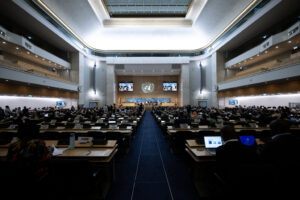
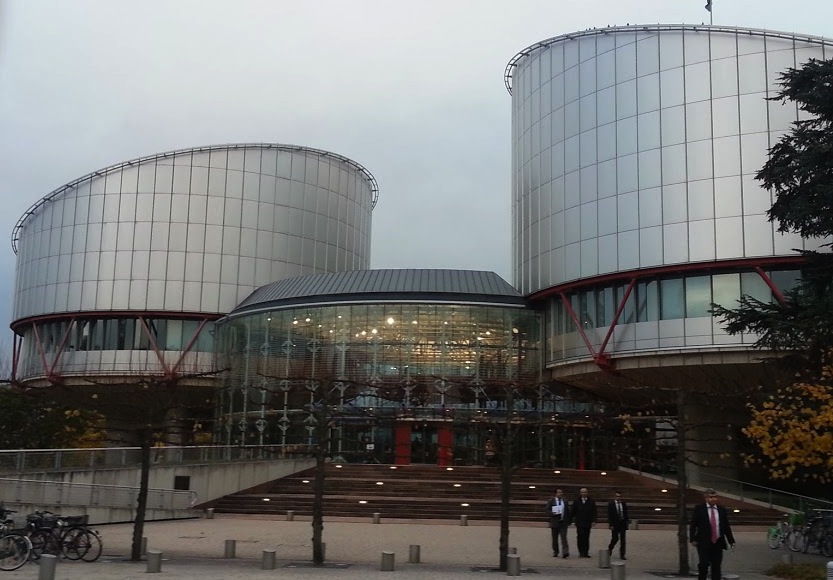
Discussions on the future of the European human rights system should focus on effective national implementation of human rights obligations and should protect the Court from undue political pressure, the ICJ and other NGOs said today.
The ICJ and other human rights NGOs that participated in the High-Level Expert Conference ‘2019 and Beyond: Taking Stock and Moving Forward from the Interlaken Process’, held in Kokkedal, Denmark from 22-24 November 2017, commended the Danish Chairmanship of the Council of Europe for its stated commitment to involving civil society throughout the process leading up to the adoption of a political Declaration on the European Convention on Human Rights’ system in April 2018.
The NGOs believe that the anticipated Copenhagen Declaration should emphasize:
- The need for enhanced measures at the national level to prevent and address violations of the Convention rights – in particular to remedy systemic and institutional problems – and to implement the Court’s judgments.
- The need for the Committee of Ministers to take more effective action to support and ensure thorough and prompt execution of judgments, through individual and general measures.
- The importance of nominating the most- qualified candidates as judges of the Court.
- That it is a fundamental principle of the rule of law that the Court should be free from political interference.
The NGOs urged the Danish Chairmanship and all Member States to refrain from any reforms that would place undue pressure on the Court in its interpretation and application of the Convention. Any undermining of established jurisprudential principles, such as the dynamic interpretation of the Convention, must be rejected.
Europe-NGO statement on ECHR reform-News-web story-2017-ENG (full story in PDF)

Dec 4, 2017 | News
The ICJ called today on the Polish Parliament (Sejm) to reject two draft laws that, if approved, would significantly undermine the independence of the judiciary.
The Sejm is reportedly set to approve tomorrow draft bill no. 2002 that, among other measures, will allow Parliament and the Government to appoint a majority of the members of the National Judicial Council, the institution in charge of defending the independence of the judiciary and appointing judges.
This law gives the Polish legislature and executive, which have increasingly demonstrated deep disregard for human rights and the rule of law, undue influence over the judiciary.
Additionally, draft bill no. 2003, which will also come before the Parliament for approval, will lower the age of retirement for Supreme Court judges from 70 to 65 years and allow the President of the Republic to decide which judges are to be reinstated.
“These draft laws tabled by President Duda are a direct blow to the principle of separation of powers, the bedrock of the rule of law,” said Massimo Frigo, Senior Legal Adviser with the ICJ Europe Programme. “The changes made to the draft laws rejected by the President last July have not remedied in any way their adverse implications for judicial independence”.
In July, President Andrzej Duda vetoed two draft laws approved by Parliament that would have automatically dismissed all judges of the Supreme Court and entrusted the Minister of Justice with any decision on their reappointment.
The provision on the appointment of the members of the National Judicial Council was also included in the draft laws rejected in July and has changed only with regard to the parliamentary majority needed for such appointments.
“These series of legislative attacks on the independence of the judiciary in Poland must stop. These actions are inconsistent with the international obligations of Poland to ensure the independence of judges,” said Massimo Frigo.
“If these laws are approved and enter into force, this will be a decisive blow to the rule of law in Poland. A EU Member State that directly undermines the checks and balances of its own legal system threatens the founding values of the EU of the rule of law and respect for human rights, and makes it essential that the EU intervene through its article 7 procedure.” he added.
An article 7 procedure can lead to a State losing its voting rights within the EU decision-making processes. It is triggered by the European institutions, or one third of Member States, when they consider that there is a “clear risk of a serious breach by a Member State” of EU values, among which the rule of law and human rights. It is the European Council that then decides on the exclusion, if it determines that the breach of these values is “serious and persistent”.
Contact
Massimo Frigo, ICJ Senior Legal Adviser, t: +41 22 979 3805 ; e: massimo.frigo(a)icj.org
Poland-Draft law judiciary-News-Press releases-2017-ENG (full text in PDF)
Dec 4, 2017 | News
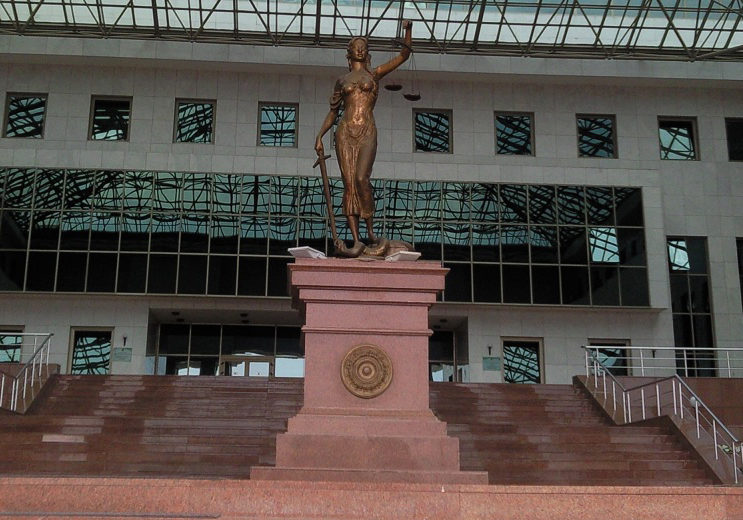
Today, the International Commission of Jurists (ICJ) began a two-day mission on the reform of the legal profession in Kazakhstan.
The ICJ mission will discuss comparative experiences and international standards on the role and independence of lawyers.
The ICJ mission will include representatives of the Bar Associations of Germany, the Netherlands and the United Kingdom.
The experts will have an opportunity to share their views on the reform and discuss their own country practices on the role of lawyers and institutional guarantees of the independence of the legal profession.
In Astana, the ICJ mission will meet, among others, with the Minister of Justice, the Supreme Court of Kazakhstan, members of the Parliament, the Kazakhstan Collegium of Lawyers and National Public Association of Commercial Lawyers “Kazakhstan Bar Association” (“KazBar”).
Contact:
Temur Shakirov, Senior Legal Adviser, ICJ Europe Programme, temur.shakirov(a)icj.org
Nov 22, 2017 | News
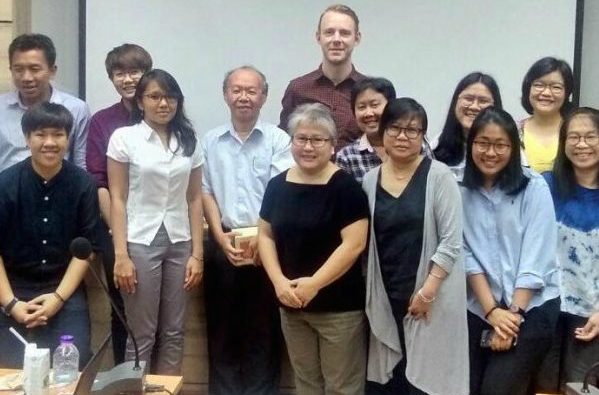
On 22 November, the ICJ, in collaboration with the Legal Research and Development Center under Chiang Mai University’s Faculty of Law, held a roundtable discussion on “Human Rights Litigation concerning the Special Economic Zones in Myanmar and Thailand”.
The objective of the discussion, held on campus at Chiang Mai University, was to identify legal issues and to share experiences regarding strategic litigation and advocacy strategies concerning human rights violations associated with the development of Special Economic Zones (SEZs) in Thailand and Myanmar.
In recent years, both the Thai and Myanmar governments have been trying to attract foreign direct investment into their countries by demarcating specific areas where special regulations concerning, inter alia, public administration, the environment, land or labour rights might be applied.
Proponents of SEZs tend to link their development with jobs and economic growth, however, there is generally limited publicly available information about their economic or public purpose rationale.
The development of SEZs, which requires a lot of land, can undermine the protection of human rights and the rule of law by creating governance structures and permitting processes less stringent than that required under national and international law.
Participants at the discussion included postgraduate students and lecturers from Chiang Mai University’s Faculty of Law, lawyers and representatives from Thai civil society organisations.
The ICJ shared with participants its report analysing the legal framework of SEZs in Myanmar and human rights concerns arising from a case study of Kyauk Phyu SEZ, ‘Special Economic Zones in Myanmar and the State Duty to Protect Human Rights’, during the discussion.
The speakers at the discussion were:
· Sean Bain, ICJ International Legal Advisor, Myanmar
· Sumitchai Hattasan, Director, Center for Protection and Revival of Local Community Rights
· Supaporn Malailoy, EEC Watch, Human Rights and Environmental Lawyer

Nov 1, 2017 | News
The ICJ welcomes the Pattani Provincial Prosecutor’s decision to end the criminal prosecution of three prominent human rights defenders who raised allegations of torture in Thailand’s restive deep South: Ms Pornpen Khongkachonkiet, Mr Somchai Homlaor, and Ms Anchana Heemmina.
On 24 October 2017, the Region 9 Senior Expert Public Prosecutor, on behalf of the Pattani Provincial Prosecutor, informed the Superintendent of the Muang District Pattani Police Station of the decision to end the prosecution of the three defenders for criminal defamation and violation of the Computer Crime Act.
The ICJ has previously expressed concern that the prosecutions were unwarranted and abusive and were aimed at chilling the exercise of critical human rights work in Thailand.
“While we welcome the decision to end these prosecutions, they have already caused a tremendous amount of damage to complainants of serious human rights violations like torture and ill-treatment, civil society, and the local community in the deep South that must now be repaired,” said Kingsley Abbott, the ICJ’s Senior International Legal Adviser for Southeast Asia.
“An important first step would be to pass legislation which criminalizes torture and ill-treatment and provides meaningful protections for those who wish to come forward with allegations of violations,” he added.
On 28 February 2017, the UN Office of the High Commissioner for Human Rights announced that it had been informed that the Thai National Legislative Assembly (NLA) would not enact legislation then under consideration criminalizing torture and enforced disappearance, the Draft Prevention and Suppression of Torture and Enforced Disappearance Act (Draft Act).
The following day, an NLA official speaking to BBC Thai confirmed that the Draft Act would be “returned [to the Thai Cabinet] for more consultations… with Interior officials, police authorities, the national security sector, military authorities and prosecutors.”
The Draft Act remains with the Thai Cabinet.
“It is long past time for Thailand to make good on its repeated commitments on the international stage to pass this essential piece of legislation in accordance with its international human rights obligations,” added Abbott.
Contact
Kingsley Abbott, Senior International Legal Adviser, ICJ Asia Pacific Regional Office, t: +66 94 470 1345, e: kingsley.abbott(a)icj.org
Background
On 10 February 2016, three Thai organizations, the Cross Cultural Foundation (CrCF), Duay Jai Group (Hearty Support Group), and the Patani Human Rights Organization (HAP), issued a report that documented 54 cases of alleged torture and ill-treatment by the Thai security forces in the deep South since 2004.
In response, the Internal Security Operations Command (ISOC) Region 4 (Forward Command) – created to resolve the situation in the deep South – made complaints of criminal defamation against the three co-editors, Pornpen Khongkachonkiet (Director of the CrCF), Somchai Homlaor (Senior legal advisor to CrCF and Hearty Support Group), and Anchana Heemmina (founder and Director of the Hearty Support Group).
On 26 July 2016, the Thai police charged the three defenders with criminal defamation by means of publication under Article 326 and 328 of the Penal Code, and importing false information to a computer system under Article 14 (1) of the Computer-Related Crime Act B.E. 2550 (2007).
On 7 March 2017, the ISOC 4 Forward Command announced its intention to drop the complaints at a press conference in Bangkok.
Thailand is a State party to the International Covenant on Civil and Political Rights (ICCPR), the Convention against Torture and other Cruel, Inhuman or Degrading Treatment or Punishment (CAT) and has signed, but not yet ratified, the International Convention for the Protection of All Persons from Enforced Disappearance (ICPPED).
Further reading on these criminal proceedings
Thailand: ICJ welcomes dropping of complaints against human rights defenders but calls for investigation into torture
Thailand: stop use of defamation charges against human rights defenders seeking accountability for torture
Thailand: immediately withdraw criminal complaints against human rights defenders
Further reading on the Draft Prevention and Suppression of Torture and Enforced Disappearance Act
Thailand: ICJ commemorates international day in support of victims of enforced disappearances
Thailand: pass legislation criminalizing enforced disappearance, torture without further delay
Thailand-News-Pressreleases-humanrightsdefenders-2017-THAI (full press release in Thai, pdf)