Feb 21, 2014 | Advocacy, News, Non-legal submissions
The ICJ and other human rights organizations issued a public statement calling on Spanish lawmakers not to pass draft legislation that, if approved, would seriously limit Spanish courts’ ability to investigate and prosecute serious crimes under international law.
The draft legislation, tabled in Parliament by the Popular Party (PP), provides that, for cases involving allegations of genocide, crimes against humanity and war crimes not occurring on Spanish territory to be investigated and prosecuted in Spain, the suspect must either be a Spanish national or a foreigner habitually resident in Spain or a foreigner who is in Spain, whose extradition has been denied by Spanish authorities.
For case of torture and enforced disappearance, the proposed legislation requires that the suspect be a Spanish national or, alternatively, that the victim be a Spanish national at the time when the crime was committed and that the suspect be present in Spain when jurisdiction is assumed.
Where these conditions are not met, the proposal would allow Spanish courts to hear cases for those crimes for which prosecution is required by international treaties where the suspect is a foreigner on Spanish soil, so long as Spain has received and denied an extradition request.
The ICJ and other organizations stressed in their statement that if enacted, this legislation would close the doors of Spanish courts to certain victims of gross human rights violations who are unlikely otherwise to be able to obtain justice, particularly within their own jurisdictions.
Spain-Universaljurisdiction-NGOsJointStatement-2014-eng (download the joint statement in English)
Spain-Universaljurisdiction-NGOsJointStatement-2014-SPA (download the joint statement in Spanish)
Jan 23, 2014 | News
The ICJ criticized the Phnom Penh Municipal Court’s decision to deny bail to 23 people who were arrested and detained earlier this month following protests by garment factory workers seeking a higher minimum wage.
The detainees’ lawyers told the ICJ that the court denied bail for the first nine detainees, arrested on 2 January 2014, in order to “guarantee their presence for further legal proceedings”, “to preserve public order” and “to prevent instability that results from the commission of crimes”.
The remaining 13 detainees, arrested on 3 January 2014, were denied bail in order to “end crime”, “prevent new crime” and “ensure detainees are available for trial”.
The decision to deny bail to the 22 detainees followed the Court’s decision on 13 January 2014 to deny bail to Vorn Pao, President of the Independent Democracy of Informal Economy Association (IDEA).
Considering his application separately from the others, the court, similarly, provided the same reasons as in the case of the first nine detainees.
“International law is clear that pre-trial detention could only be exercised in exceptional situations, and avoided if suitable alternatives are possible,” said Sam Zarifi, ICJ’s Regional Director for Asia and the Pacific. “The reasons presented by the Court don’t justify holding these activists in prison right now.”
All 23 of those whose bail applications have been denied have been charged with causing intentional violence and damage to property. Three face additional charges for violent resistance against a public official, as well as a traffic offence.
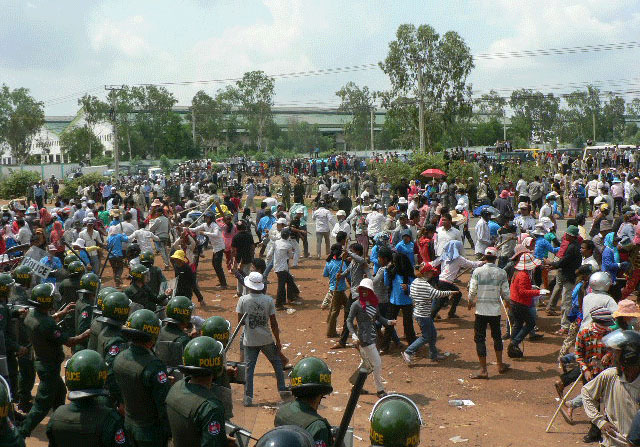
They were arrested as part of the government’s response to striking garment workers and demonstrators protesting the 28-year-rule of Prime Minister Hun Sen (photo).
Security forces shot and killed at least four protesters on 3 January. The government has banned further protests.
Article 9(3) of the International Covenant on Civil and Political Rights (ICCPR), to which Cambodia is a party, guarantees the right to liberty. It states, “It shall not be the general rule that persons awaiting trial shall be detained in custody, but release may be subject to guarantees to appear for trial”. Such guarantees include bail.
“There are alternatives to the detention, such as bail or other conditions the court could impose on these 23 detained activists if the Court is concerned, on the basis of substantiated and objective grounds that there is a risk that each of them will abscond before the trial or interfere with the investigation,” said Zarifi. “In the absence of such proof and the serious consideration of alternatives the continued pre-trial detention of each of the 23 individuals would amount to arbitrary detention under international human rights standards.”
Vorn Pao’s lawyers filed an appeal on 14 January 2014 and the Court is expected to issue a decision on his appeal by 3 February 2014.
According to the Cambodian Centre for Human Rights, Vorn Pao appears weak and continues to suffer pain from the head injuries he sustained.
Lawyers for the other 22 detainees have also expressed their intention to appeal the Court’s decision to deny them bail.
Contact:
Sam Zarifi, ICJ Asia-Pacific Regional Director, (Bangkok), t:+66 807819002, e-mail: sam.zarifi(a)icj.org
Craig Knowles, ICJ Media & Communications, (Bangkok), t:+66 819077653, e-mail: craig.knowles(a)icj.org
Dec 19, 2013 | News
The ICJ deplores the death sentences handed down by the People’s Court of Hanoi on December 17 to two former shipping executives and urges the government of Viet Nam to desist from carrying out the planned executions.
Viet Nam National Shipping Lines (Vinalines) former chairman Duong Chi Dung and former general director Mai Van Phuc were found guilty of embezzling nearly USD $1 million from the state-owned company and sentenced to death.
“The announced death sentences fly in the face of encouraging human rights developments in Viet Nam, such as the State’s signing the Convention Against Torture and other Cruel Inhuman or Degrading Treatment or Punishment in November,” said Sam Zarifi, ICJ’s regional director for Asia and the Pacific. “This is a major setback at a time when it appeared Viet Nam was making progress towards ending capital punishment.”
The ICJ considers the death penalty to constitute a violation of the right to life and the right to be free from cruel, inhuman or degrading punishment.
Following the Human Rights Council’s Universal Periodic Review in 2009, Viet Nam agreed to revise its legislation on the death penalty in line with the country’s international obligations.
Since then it has reduced the number of crimes punishable by death, and changed its method of administering the sentence from firing squad to injection by lethal substance.
It is estimated that more than 600 people remain on death row in the country. Most were convicted on drug-related offences.
“At present, approximately two thirds of the world’s countries have already either abolished capital punishment or have moratoriums on executions,” said Zarifi. “It is regrettable that Viet Nam has chosen to exclude itself from this global trend.”
The ICJ calls on the Government of Viet Nam to immediately put in place a moratorium on its practice, with a view to abolishing the death penalty, as demanded by the United Nations General Assembly in repeated resolutions on the question.
CONTACT:
Sam Zarifi, ICJ Asia-Pacific Regional Director, (Bangkok), t:+66 807819002, e-mail: sam.zarifi(a)icj.org
Craig Knowles, ICJ Media & Communications, (Bangkok), t:+66 819077653, e-mail: craig.knowles(a)icj.org
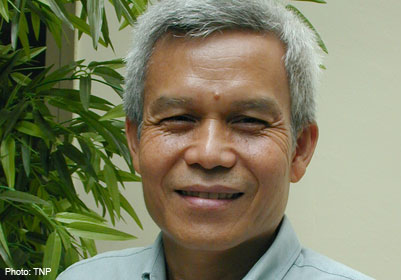
Dec 14, 2013 | News
The ICJ today urged the Lao PDR government to reverse its inaction in determining the fate of community activist Sombath Somphone, who was allegedly subjected to enforced disappearance a year ago.
In a legal memorandum on the one-year anniversary of Sombath’s enforced disappearance, the ICJ called on the Lao authorities to fulfill their country’s obligations under international law and carry out a thorough and impartial investigation into his whereabouts.
It also said the government must cooperate with regional and international human rights mechanisms, particularly the ASEAN Intergovernmental Commission on Human Rights (AICHR) and the UN Working Group on Enforced and Involuntary Disappearances.
“It is deplorable that one year after Sombath Somphone was abducted after being stopped by traffic police, the public prosecutor has yet to institute formal
or criminal proceedings into his disappearance’’, said Sam Zarifi, ICJ Asia-Pacific regional director.
“The government of the Lao People’s Democratic Republic must immediately take effective measure to ensure animpartial and thorough investigation and bring justice to those responsible for crimes against Sombath Somphone,” he added.
Sixty-two-year old Sombath Somphone, Lao PDR’s most prominent community development advocate and a Ramon Magsaysay Award winner, was last seen on December 15, 2013, on a road in the capital Vientiane.
Closed circuit Television (CCTV) footage showed him being stopped at a police checkpoint, exiting his vehicle, getting into another vehicle with unidentified men and being driven away. He has not been seen since.
The Lao PDR government has denied any involvement in Sombath Somphone’s abduction. But reports released by police reveal a wholly inadequate investigation that lacks any credible explanation as to his fate or whereabouts.
In January this year, the ICJ called on the AICHR to play a proactive role in the case and to use the opportunity to address issues of enforced and involuntary disappearances in the region. To date, the AICHR has yet to take any meaningful action.
If the AICHR is to have any meaning, it must fulfill its mandate under Article 4, paragraph 1.11 of its Terms of Reference and develop a common position and strategy for tackling the widespread impunity of all acts of enforced disappearances in ASEAN, the legal memorandum said.
“An effective investigation, conducted in accordance with international standards, is essential in order that family members of Sombath Somphone and the public as a whole may discover the truth about his fate and whereabouts, and bring justice and reparation,’’ said Zarifi.
Background
Sombath Somphone is the founder and former director of the Participatory Development Training Center (PADETC), a non-governmental organization that supports holistic education and youth development as well as promoting eco-friendly technologies and micro-enterprises.
In October 2012, Sombath assisted the Lao government and non-governmental organizations convene an Asia-Europe People’s Forum (AEPF). The event was widely attended, drawing 948 participants from Lao PDR as well as other Asian countries.
It was the first time groups publicly criticized human rights abuses in Lao PDR, a Communist-run Southeast Asian country bordering Thailand, Cambodia, Vietnam, Myanmar and China.
The legal memorandum also covers the right of a family member to the right to information in such cases of enforced disappearances pursuant to both international standards as well as domestic laws in Lao PDR.
Recommendations
The key recommendations in the legal memorandum include:
(a) The public prosecutor, to launch a credible, prompt, thorough, impartial and effective investigation into the fate and whereabouts of Sombath Somphone. In the event that the public prosecutor fails to do so, an independent and credible authority should be established to undertake prompt, thorough and impartial investigation, consistent with international standards, into the alleged enforced disappearance as well as allegations of arbitrary detention, torture or ill-treatment;
(b) In furtherance of this investigation, the investigating authority should immediately seek and accept assistance from foreign experts on analysis of forensic evidence; and
(c) The investigating authority should provide relevant material and conclusions from any investigation to Sombath Somphone’s wife, to the extent compatible with the prosecution of the case.
CONTACT:
Sam Zarifi, ICJ Asia-Pacific Regional Director, (Bangkok), t:+66 807819002, e-mail: sam.zarifi(a)icj.org
Craig Knowles, ICJ Media & Communications, (Bangkok), t:+66 819077653, e-mail: craig.knowles(a)icj.org
Lao-Legal Memorandum-annex on the case of Sombath Somphone-advocay-2013 (download in pdf)

Dec 10, 2013 | News
The ICJ urgently calls on Bangladesh President Abdul Hamid to intervene to stop the execution of Abdul Quader Mollah.
The Supreme Court handed down its judgment against Abdul Quader Mollah on 5 December 2013.
The 790-page judgment was sent to the International Crimes Tribunal on 8 December 2013 and a death warrant was issued against Abdul Quader Mollah (photo) on the same day.
It was immediately sent to the Dhaka Central Jail and he may be executed at any time unless President Abdul Hamid or the Supreme Court intervenes.
Last week, the United Nations High Commissioner for Human Rights Navi Pillay issued a statement, expressing her deep concern over the rising levels of political violence in Bangladesh, calling on both sides to ‘’halt their destructive brinkmanship.’’
‘‘In an increasingly volatile situation, executing Abdul Quader Mollah risks pushing the Government towards a state of emergency, placing democracy and rule of law in peril,’’ said Ben Schonveld, ICJ South Asia Director. ‘‘The timing of the Supreme Court’s decision and the Tribunal’s subsequent death warrant raise serious questions about the political motivations behind the ICT process as well as the independence and impartiality of the judiciary.’’
The ICJ is concerned that the International Crimes Tribunal has not adhered to international standards.
As a State party to the International Covenant on Civil and Political Rights, Bangladesh is obligated to guarantee the right to a fair trial to all suspects, which includes special protections for those facing the death penalty.
The ICJ considers the death penalty to constitute a violation of the right to life and the right to be free from cruel, inhuman or degrading punishment.
It calls on the government of Bangladesh to impose a moratorium on the carrying out death sentences with a view to abolition, in compliance with repeated United Nations General Assembly resolutions on the question.
“The use of the capital punishment is particularly egregious in the Abdul Quader Mollah case, given that Parliament retroactively changed the law to enable the Supreme Court to impose a sentence of death on appeal,’’ added Schonveld. ‘‘Retroactively changing laws to influence the outcome in a case not only goes against the prohibition on retroactivity, it undermines the independence of the judiciary and the judicial function.’’
The ICJ urges President Abdul Hamid to intervene to stop the execution of Abdul Quader Mollah.
CONTACT:
Ben Schonveld, ICJ South Asia Director (Kathmandu), t:+97714432651 ; email: ben.schonveld(a)icj.org
Sheila Varadan, ICJ International Legal Advisor, South Asia Programme (Bangkok), t: +66857200723; email: sheila.varadan(a)icj.org
BACKGROUND:
Political violence has continued to escalate in Bangladesh
Abdul Quader Mollah was indicted on six counts of crimes against humanity before the International Crimes Tribunal (ICT). On 5 February 2013, the ICT rendered its verdict, finding him guilty on five counts and acquitting him on the sixth count. The ICT sentenced him to life imprisonment on two counts for his involvement in the Alubdi mass murder and the murder and rape of a family. He was sentenced to 15 years imprisonment on the remaining three counts.
At the time of the verdict, section 21(2) of the International Crimes (Tribunal) Act 1973 did not permit the Prosecution to appeal a sentence to obtain a heavier sentence.
The ICT verdict in the Mollah case sparked widespread protests, drawing tens of thousands of protesters to Shabagh Square, demanding that Mollah be sentenced to death.
Responding to public outcry, on 14 February 2013, the Parliament of Bangladesh drafted an amendment to change Section 21(2) of the International (Crimes) Tribunal Act 1973 to allow Prosecution to appeal a sentence in a conviction to seek a heavier sentence. The amendment was passed on 17 February and deemed to apply retroactively from 14 July 2009.
Acting on the basis of the Amendment to Section 21(2), the prosecution appealed the life sentences given to Mollah, seeking the death penalty. The prosecution also appealed the acquittal handed down. The defence in turn appealed the convictions on the five counts.
On 17 September 2013, the Appellate Division of the Supreme Court issued an oral decision with no reasons overturning the acquittal and entering a conviction; overturning one of the life sentences and imposing a sentence of death; dismissing the appeal made by the defence.
On 5 December 2013, the Appellate Division of the Supreme Court issued its 790-page judgment giving its reasons for overturning the life sentence and handing down the death penalty. The 790-page judgment was forwarded to the ICT-2 on 8 December 2013. The ICT-2 then issued a warrant of death against Abdul Quader Mollah and sent it to the Central Dhaka jail to be executed.