Feb 8, 2018 | News
A proposed new law regulating public assembly adopted by the Philippine House of Representatives would allow for unlawful restrictions on the right to peaceful assembly, the ICJ said today.
On 5 February 2018, the House of Representatives passed on third reading House Bill 6834, which proposes to repeal the Public Assembly Act of 1985.
The law would prohibit persons below the age of 15 from organizing a public assembly and would subject participants or organizers to potential criminal liability for holding a peaceful assembly without the approval of local executives.
“This legislation deceives us into thinking that there is no more need to obtain prior permission to holding a public assembly,” said Emerlynne Gil, ICJ’s Senior International Legal Adviser for Southeast Asia.
“But in effect, organizers will still need to secure the approval of the local executive before holding a public assembly,” she added.
The proposed law states that any person or group intending to organize a public assembly will only need to serve notice to the city or municipal mayor at least three days prior to the assembly without having to secure a permit.
However, at the same time it prohibits the “holding of a public assembly at a time and place other than that approved by the city or municipal mayor.”
“The proposed law does not improve on the old one. It now increases the penalty for holding a public assembly without approval of local authorities to six (6) years,” Emerlynne Gil said.
“The law is also silent as to who may be penalized. Hence, the ICJ fears that organizers and participants alike could be held liable,” she added.
Under international standards, freedom of people to assemble should generally not require prior permission.
The law would also contravene the rights of children that are protected under the Philippines’ legal obligations.
“The provision incorporates into law the arcane and discredited attitude that ‘children should be seen but not be heard’,” said Emerlynne Gil.
“If children are prohibited from organizing a peaceful assembly, this prevents them from exercising their right to impart information freely,” she added.
Under the Convention on the Rights of the Child, children must be guaranteed the right to freedom of assembly.
The bill now goes to the Philippine Senate for its consideration.
The ICJ calls on lawmakers in the Philippines not to adopt the proposed law in its current form.
Any new legislation should conform to international standards, including on the right to freedom of assembly without prior permission and the rights of children to assemble freely, the ICJ adds.
Contact
Emerlynne Gil, Senior International Legal Adviser for Southeast Asia, tel. no. +662 619 8477 (ext. 206); e: emerlynne.gil(a)icj.org
Philippines-Public assembly act 1985-News-Web stories-2018-ENG (Full story in PDF)
Feb 2, 2018 | News
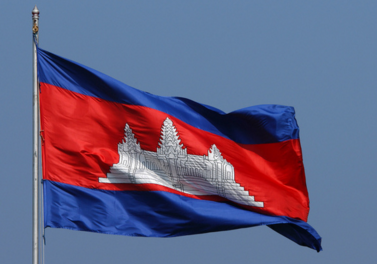
Cambodia should halt efforts to radically limit the right to freedom of expression through adoption of lèse-majesté legislation which would criminalize the exercise of some expression, said the ICJ today.
The Spokesperson for the Cambodian Council of Ministers, Phay Siphan, reportedly announced on Facebook today that the Council of Ministers had approved an amendment to the Cambodian Criminal Code which would make it a crime to insult the Cambodian King, carrying a penalty of one to five years imprisonment and/or a fine of two million Riel (USD 500) to ten million Riel (USD 2,500).
“The Cabinet’s approval of a lèse-majesté law appears to be a further attempt by the Government to ‘weaponize’ the country’s legislation against its perceived opponents,” said Kingsley Abbott, ICJ’s Senior International Legal Adviser.
“The Government’s ongoing misuse of the law is particularly concerning given the lack of independent and impartial judges to provide appropriate checks and balances on its power,” he added.
The ICJ has previously raised concerns about abuses arising from the lèse-majesté law in neighboring Thailand to curb freedom of expression.
Exercises of expression which are critical to a democratic society under the rule of law, including commenting on public policy and political questions, are sometimes stifled and punished under these laws.
The right to freedom of expression is protected under international law and should never be subject to criminal penalties, let alone imprisonment, which is a manifestly disproportionate penalty for the exercise of the fundamental right to free expression, the ICJ said.
Contact
Kingsley Abbott, Senior International Legal Adviser, ICJ Asia Pacific Regional Office, t: +66 94 470 1345, e: kingsley.abbott(a)icj.org
Background
Article 19 of the International Covenant on Civil and Political Rights (ICCPR), to which Cambodia is a State party, protects the right to freedom of expression. This right includes the “freedom to seek, receive, and impart information and ideas of all kinds.”
In its General Comment No. 34 on article 19, the United Nations Human Rights Committee (HRC), the body that monitors compliance of State parties with the ICCPR, expressed concern about the use of lèse-majesté laws and asserted that “imprisonment is never an appropriate penalty” for defamation.
The HRC further clarified that “all public figures, including those exercising the highest political authority such as heads of state and government, are legitimately subject to criticism and political opposition” and that “laws should not provide for more severe penalties solely on the basis of the identity of the person that may have been impugned”.
In February 2017, the United Nations Special Rapporteur on the promotion of freedom of opinion and expression, David Kaye, urged Thailand to refrain from using the lèse-majesté law as a “political tool to stifle critical speech” and asserted that “(l)esè-majesté provisions have no place in a democratic country”.
The legislative amendments ratified by the Council of Ministers will now be sent to the National Assembly, the lower house of the Parliament of Cambodia, for approval.
Upon approval by Parliament, the amendments would come into force when signed by the King.
At the same time as approving a lèse-majesté law, the Council of Ministers reportedly approved other constitutional amendments which appear to impose impermissible restrictions on the rights to free association and freedom of assembly, also protected under the ICCPR.
These legislative amendments reportedly include provisions that (i) the right to vote or the right to stand as an election candidate can be restricted by domestic legislation, (ii) the right to form a political party would require “placing the nation’s interests first”, (iii) prohibit individuals from “undermining the interests of the nation” and (iv) allow Secretaries of the State to be appointed by Royal Decree rather than by Parliamentary vote.
Read also
ICJ’s October 2017 Report: Achieving Justice for Gross Human Rights Violations in Cambodia
Jan 29, 2018 | Advocacy, Non-legal submissions
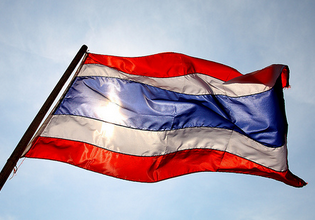
Today, the ICJ and Thai Lawyers for Human Rights (TLHR) filed their joint submission to the UN Committee against Torture (Committee).
The Committee will consider it during the adoption of a list of issues prior to reporting (LOIPR) for the examination of the Second Periodic Report of Thailand under Article 19 of the Convention against Torture and Other Cruel, Inhuman or Degrading Treatment or Punishment (CAT).
During its 63rd session, from 23 April to 18 May 2018, the Committee will prepare and adopt a LOIPR on Thailand.
Once adopted, the LOIPR will be transmitted to the State party. Thailand’s formal response to the LOIPR will then constitute its Second Periodic Report under article 19 of the Convention.
Thailand ratified the CAT in 2007. Following its review of Thailand’s initial report under CAT, the Committee adopted its Concluding Observations at its 52nd Session in May 2014.
The ICJ and TLHR’s joint submission to the Committee highlights a number of ongoing concerns with respect to the country’s implementation of and compliance with the provisions of the CAT.
In addition, the joint submissions formulates certain questions and recommends that the Committee should include them in its LOIPR and address them to the Government of Thailand, including on the following pressing issues:
- The fact that, since the coup d’ état of 22 May 2014, the constitutional and legal framework in force in Thailand has increased opportunities for legally-sanctioned impunity;
- The failure to criminalize through the adoption of bespoke domestic legislation the crimes of torture, cruel, inhuman or degrading treatment or punishment and enforced disappearance, consistent with the CAT and other relevant international law;
- The failure to conduct investigations of credible allegations of enforced disappearances, as well as into credible reports of the widespread use of torture and other ill-treatment in a prompt, effective, independent and impartial manner in numerous cases; and
- Threats and reprisals against persons working to bring to light cases of alleged torture, other ill-treatment and enforced disappearance.
Contact
Kingsley Abbott, Senior International Legal Adviser, ICJ Asia Pacific Programme, t: +66 94 470 1345, e: kingley.abbott@icj.org
Thailand-CAT Submission-Advocacy-non-legal submission-2017-ENG (Full submission in PDF)
THAILAND-CAT additional info-Advocacy-2018-ENG (additional information, updated in April 2018)

Jan 9, 2018 | News
The ICJ today called on the Government of Pakistan to take immediate measures against the increasing practice of enforced disappearances in the country.
A significant number of recent victims were said to be human rights defenders and political activists.
The ICJ highlighted the particular case of Raza Mahmood Khan. Raza, a human rights defender and peace activist, has been “missing” since 2 December 2017 after he organized a public event in Lahore to discuss recent political developments, including religious extremism and the role of state institutions.
Raza is known for his work on human rights, building inter-faith harmony, and promoting peace and tolerance between Pakistan and India. His family and friends have appealed to the police and the courts to trace him, but more than a month since his alleged “disappearance”, his whereabouts are still unknown.
“Many of the victims of enforced disappearances in Pakistan have been activists like Raza, which indicates the shrinking space for activism and dissent in the country,” said Frederick Rawski, ICJ’s Asia Director.
Given that circumstances in which Raza went “missing” are very similar to other cases of enforced disappearance reported recently, the ICJ called on Pakistani authorities to conduct a prompt, impartial, and thorough investigation to determine his fate and whereabouts and hold perpetrators criminally responsible.
“It is not enough for the authorities to deny knowledge of the fate or whereabouts of disappeared people. Are they properly questioning eyewitnesses to abductions? Are they looking for forensic evidence or electronic data from mobile phones? There are clear steps that authorities can and should take to investigate such crimes, and they must act immediately to establish the truth about these cases,” added Rawski.
Pakistan’s Supreme Court has, in multiple judgments, acknowledged the role of security and intelligence agencies in enforced disappearances and secret detentions, holding that the practice constitutes a violation of the “fundamental rights” recognized by the Constitution of Pakistan as well as international human rights law.
The State Commission of Inquiry on Enforced Disappearances has more than 1500 unresolved cases of enforced disappearances as of January 2018.
In 2017 alone, the Commission received 868 reports of alleged enforced disappearances – one of the highest since the Commission’s establishment in 2011. The UN Working Group on Enforced or Involuntary Disappearances also has more than 700 pending cases from Pakistan.
“Despite hundreds, if not thousands, of cases of enforced disappearance reported from across Pakistan, not a single perpetrator of the crime has been brought to justice,” added Rawski. “Not only does this impunity deny truth and justice to victims of the crime, it is also eroding the rule of law and emboldening perpetrators of human rights violations.”
The UN Working Group on Enforced or Involuntary Disappearances (WGEID) has on a number of occasions expressed concern about lack of implementation of the recommendations it made following a country visit to Pakistan in 2012, citing among other things continuing impunity arising from failure to diligently investigate allegations.
The UN Human Rights Committee also, in its review of Pakistan’s implementation of the International Covenant on Civil and Political Rights (ICCPR), noted with concern “the high incidence of enforced disappearances and extrajudicial killings allegedly perpetrated by the police and military and security forces.”
Pakistan must ensure all persons held in secret or arbitrary detention are immediately released or charged with a recognizable criminal offence and brought promptly before a competent, independent and impartial tribunal for a trial that meets international standards.
The ICJ called on Pakistan to become a party to the International Convention for the Protection of All Persons from Enforced Disappearance; recognize enforced disappearance as a distinct, autonomous offence; and hold perpetrators of enforced disappearance, including military and intelligence personnel, to account, through fair trials before civilian courts.
Contacts
Frederick Rawski, ICJ Asia Pacific Regional Director, t: +66 64 478 1121, e: frederick.rawski(a)icj.org
Reema Omer, ICJ International Legal Adviser for Pakistan (London), t: +447889565691; e: reema.omer(a)icj.org
Dec 8, 2017 | News
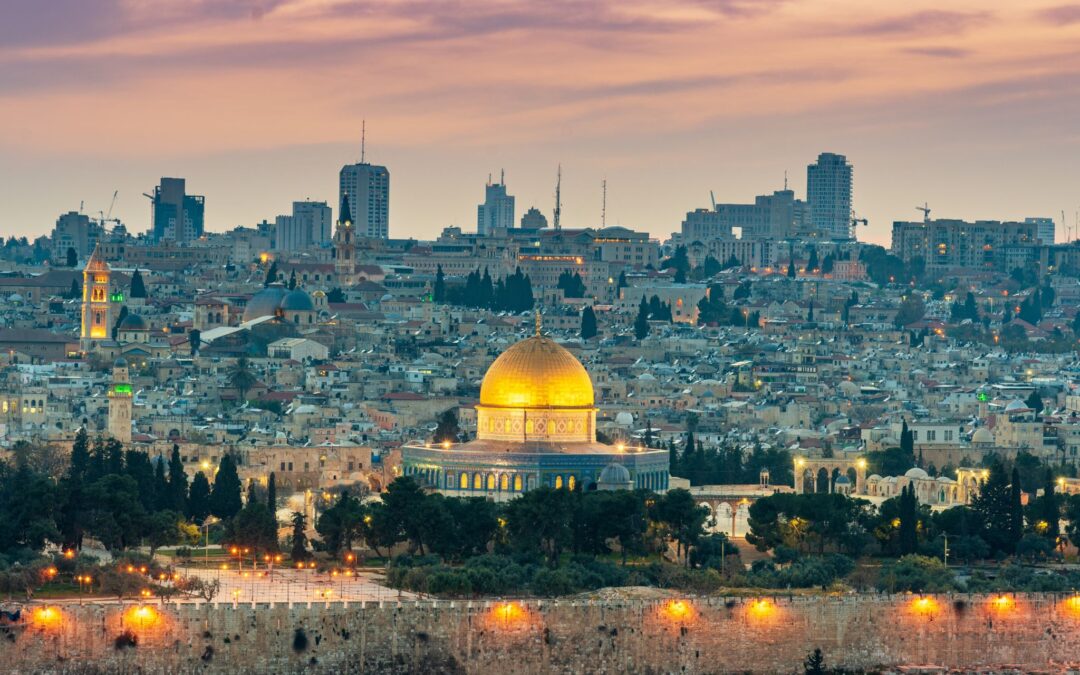
US President Donald Trump’s declaration recognizing Jerusalem as Israel’s capital and indicating an intention to move its embassy there, dangerously ignores long-standing international law, the ICJ said today.
Numerous United Nations Security Council’s Resolutions have reiterated the inadmissibility of the acquisition of territory by war, and have urged the withdrawal of Israel armed forces from territories occupied in the 1967 conflict, including East Jerusalem.
Trump’s announcement turns a blind eye on this legal reality and the related 50 years of occupation.
It also implicitly condones Israeli policies and practices that aim at altering the character and status of the Palestinian territory, including through the annexation of East Jerusalem, particularly by failing explicitly to similarly endorse Palestinian claims to East Jerusalem.
“Trump’s declaration cannot form the basis for any alteration of the status of Jerusalem under international law. However, it has the potential of provoking and fuelling a new cycle of violence in the region,” said Said Benarbia, ICJ MENA Director.
Thousands of Palestinians have taken to the streets to protest against Trump’s declaration. Dozens were injured in clashed with Israeli forces.
“The Israeli authorities should guarantee the right to peaceful protest and refrain from any disproportionate use of force against protesters, including the unlawful use of lethal force,” Benarbia added.
Background
The 2016 UN SC Resolution 2334 specifically reiterate that the Security Council “will not recognize any changes to the 4 June 1967 lines, including with regard to Jerusalem, other than those agreed by the parties through negotiations,” and that “the establishment by Israel of settlements in the Palestinian territory occupied since 1967, including East Jerusalem, has no legal validity and constitutes a flagrant violation under international law and a major obstacle to the achievement of the two-State solute on and a just, lasting and comprehensive peace.”
This reaffirms a series of similar resolutions by the Security Council since 1967.
Palestine-Trump Decla-News-2017-ARA (Statement in Arabic, PDF)