Jun 23, 2017 | News
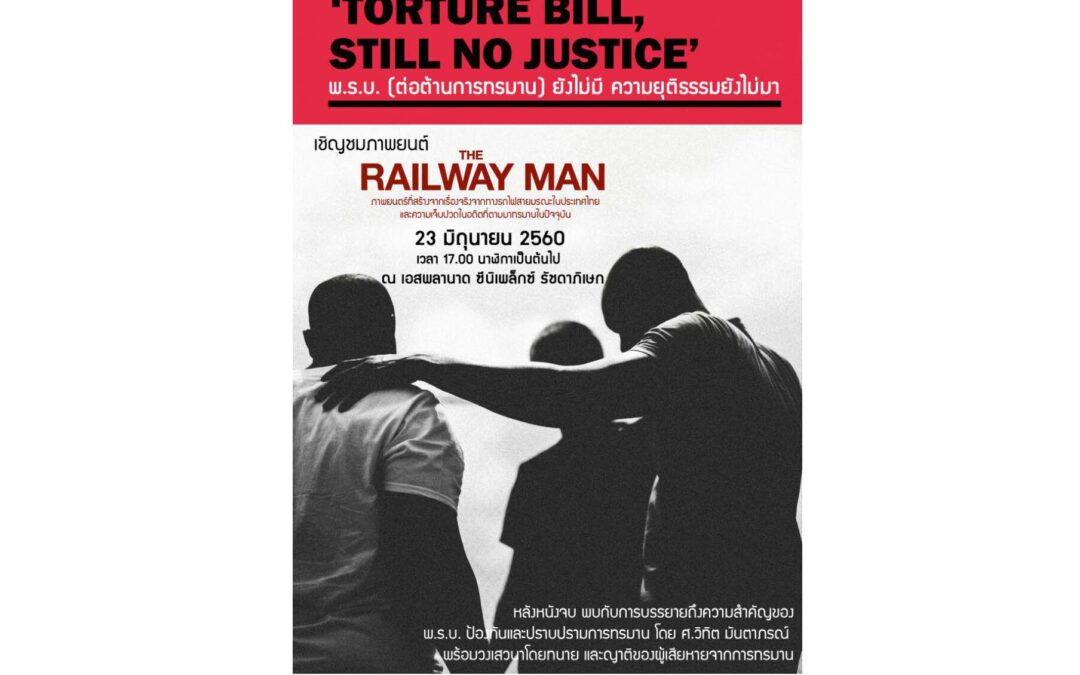
Today, the ICJ co-hosted an event in Bangkok, Thailand, named “Torture Bill, Still No Justice” to commemorate International Day in Support of Victims of Torture.
The event began with a keynote address by Professor Vitit Muntarbhorn, Special Rapporteur on violence and discrimination based on sexual orientation and gender identity and former ICJ Commissioner.
Following a screening of the film “The Railway Man”, the ICJ moderated a panel discussion which included victims of torture.
The event focused on the decision in February this year of Thailand’s National Legislative Assembly (NLA) to further delay the passage of essential legislation criminalizing torture and enforced disappearance.
Thailand is a State party to the International Covenant on Civil and Political Rights (ICCPR), the Convention against Torture and other Cruel, Inhuman or Degrading Treatment or Punishment (CAT), and has signed, but not yet ratified, the International Convention for the Protection of All Persons from Enforced Disappearance (ICPPED).
The other organizers of the event were the Southeast Asia Regional Office of the Office of the High Commissioner for Human Rights, Amnesty International Thailand, the Cross-Cultural Foundation (CrCF), the Association for the Prevention of Torture (APT) and the Canadian Embassy in Bangkok.
A comic in English and Thai named “Torture is a Crime” was produced especially for the event by Shazeera Zawawi of APT.
Contact
Kingsley Abbott, ICJ Senior International Legal Adviser for Southeast Asia, t: +66 94 470 1345 ; e: kingsley.abbott(a)icj.org
Thailand-Comic-Torture is A Crime-Advocacy-2017-ENG (English version of the comic, PDF)
Thai version here
Jun 16, 2017 | Advocacy, Non-legal submissions
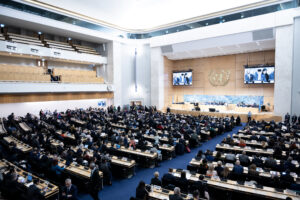
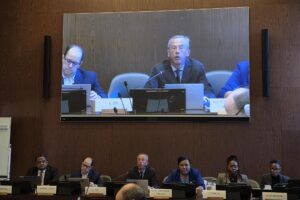
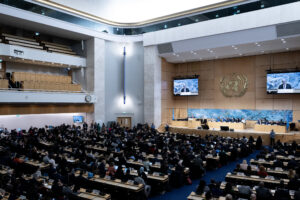
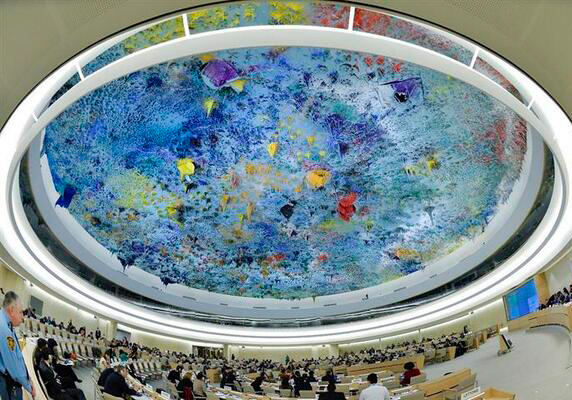
The International Commission of Jurists today drew to the attention of the Human Rights Council the failure of responsible States to ensure accountability for renditions and secret detention in several countries across the world.
The issue was highlighted by an oral statement in the General Debate on human rights situations that require the Council’s attention.
The ICJ statement continued as follows:
The US-administered rendition and secret detention programme of the last decade led to the commission of egregious violations of human rights and crimes under international law on a global scale with the complicity of several States, including in Europe.
Similar practices have been adopted in the Russian Federation where abductions of “terrorism” or “extremism” suspects and transfer to Central Asian States continue, in disregard of the principle of non-refoulement.
None of the States involved in the US-led renditions programme, or in abduction and transfer practices occurring in the Russian Federation, have ensured full accountability of those responsible and full redress for victims.
The ICJ calls on this Council to issue a strong call to all UN Member States to provide full accountability and redress for victims for the human rights violations that occurred during these operations.
May 31, 2017 | News
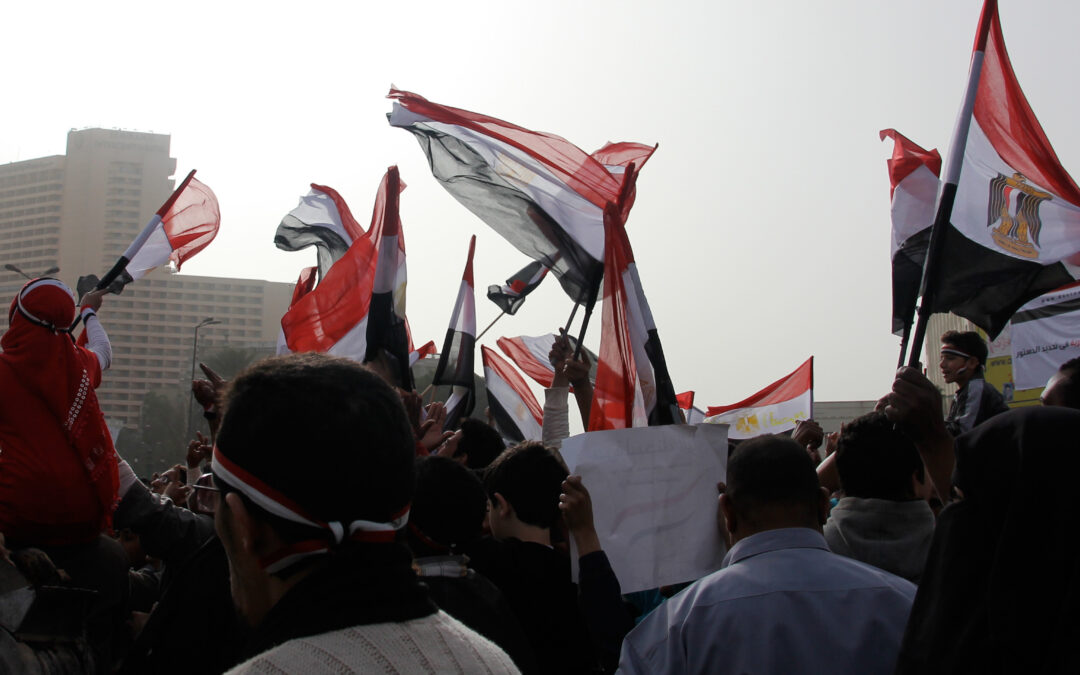
The ICJ today called on the Egyptian authorities to act immediately to repeal the law on civic associations.
The law was adopted by Egypt’s Parliament on 15 November 2016 and signed into law by President El-Sisi on 29 May 2017.
Until the law is repealed, the authorities should desist from enforcing it, the ICJ says.
The law effectively prohibits most Egyptian human rights non-governmental organizations (NGOs) from registering and working in Egypt, stipulating that civic associations’ work shall take place in the fields of development and social welfare consistent with “the State’s plans and its developmental needs and priorities.”
Egyptian and international NGOs are also forbidden to advocate against any law or its implementation, as well as to carry out “political activities” or any that “harm national security, public order, public morals or public health.”
They are prohibited from conducting public surveys, research or reports without permission and approval of the results of such work must be given by the authorities prior to publication (articles 14, 87).
The law also provides for an entity to be formed by presidential decree from representatives of three security bodies, which will decide on all matters related to NGO funding, the registration and issues relating to the work of international NGOs, and cooperation between Egyptian associations and any foreign body.
“The law on civic associations, if implemented in its present form, would be tantamount to an official death certificate of independent civil society in Egypt,” said Said Benarbia, ICJ Middle East and North Africa Director.
“By signing it into law, President El-Sisi is silencing the very organizations that could act as a check on the abusive and arbitrary exercise of his power,” he added.
The adoption of this repressive law is just the latest measure in a sustained, relentless campaign by Egypt’s military and executive authorities aimed at dismantling Egyptian civil society through highly politicized judicial proceedings and arbitrary travel bans against NGOs and human rights defenders.
For instance, the foreign funding case taken against NGOs (no. 173/2011) saw leading Egyptian human rights organizations, such as the Cairo Institute for Human Rights Studies (CIHRS), the Arabic Network for Human Rights Information (ANHRI) and the Hicham Mubrak Law Center (HMLC), subject to arbitrary investigations.
The grounds included “receiving funds to harm national interests and destroy the basic foundations of the state (the army, police, and judiciary),” “establishing an entity operating as a civic association without official registration,” and “income tax evasion.”
Four of these organizations and six NGO directors/board members have been subjected to asset freezes.
In the last two months, many NGO staff and directors have been summoned for interrogation by investigative judges, including ICJ partners Mustapha El-Hassan, Director of HMLC, Gamel Eid, Founder and Director of ANHRI, and Mohamed Zaree, CIHRS’ Programme Director and short-listed candidate for the Martin Ennals Award 2017.
The ICJ has previously documented how the Egyptian authorities have used the justice system as a repressive tool in their efforts to silence many of those suspected of opposing them.
“Egyptian authorities must comply with their obligations under international law and put an immediate end to their campaign to silence human rights defenders and NGOs. A first step in that direction would be the immediate repeal of the law on civic associations,” Benarbia said.
Contact
Said Benarbia, Director of the ICJ Middle East and North Africa Programme, t: +41 22 979 38 17: said.benarbia(a)icj.org
Egypt-NGO Law-News-Press release-ARA (Press release in Arabic, PDF)
May 27, 2017 | News
On 24 May 2017, States at the UN reached an agreement to prepare an “international regulatory framework” to protect human rights and ensure accountability for violations and abuses relating to the activities of private military and private security companies (PMSCs).
The agreement, reached at Working Group level, has still to be ratified by the full UN Human Rights Council.
It would be the first universal international instrument on human rights and private security companies negotiated and adopted at the UN.
This could pave the way to further developments towards increased monitoring and accountability of the private security industry.
The agreement constitutes a landmark achievement. The intergovernmental Working Group over the past six years have been mired in circular debates as to whether or not it is desirable to develop a legally binding instrument on PMSCs.
Last’s week agreement leaves aside for the moment the decision about the nature of the instrument and will instead allow for a constructive focus on the contents of the future instrument.
Activities of private and military security companies became the object of heightened international scrutiny particularly after events in the context of the armed conflict in Iraq over the past decade.
These include unlawful killings at Nisoor Square and torture and ill-treatment at Abu Graib prison.
A Working Group of experts on mercenary activity appointed by the UN Human Rights Council started to look at the issues in 2007, generating proposals for international instruments to fill perceived regulatory gaps.
Many States have now accepted that the absence of an international regulatory framework combined with limited or non-existent regulation at national level offers a “breeding ground” for human rights abuses committed by PMSCs.
The main clients of these companies are governments that contract them to carry out specific functions, including some that many believe should remain firmly in the hands of public officials.
One key issue that the future instrument should address is the circumstances under which PMSCs can be considered to act on behalf of the State when they are contracted to perform functions that are typically State functions.
International law already governs some aspects of PMSC activity. International human rights law provides for a general obligation of States to protect against the adverse consequences of PMSC activity.
There has also been other international regulatory activity outside of UN auspices in this area.
In 2008 a select group of mostly Western States led by the Government of Switzerland and the International Committee of the Red Cross (ICRC) elaborated the Montreux Document on pertinent obligations for States regarding PMSCs.
Other initiatives such as a Code of Conduct for the PMSCs themselves followed suit. But many States and civil society organizations regard these initiatives as insufficient and lacking the universality afforded by UN processes.
One notable weakness in current approaches is the dearth of standards and mechanisms squarely addressing accountability of private security industry and to ensure access to remedy for those victims of abuse.
Experience shows that States legal frameworks have limited effectiveness when abuses occur at the cross-border level, involving more than one company in more than one jurisdiction, especially in conflict or post-conflict environments.
The prospective international regulatory framework should surely build on existing initiatives, research and findings.
To that end, broad participation by all stakeholders should be ensured.
In this regard, participation of civil society and NGOs specialized in human rights has not been optimal so far.
States leading this new process should make all and every effort to fill that gap, ensuring that international and national civil society receive timely information and facilities for meaningful participation.
May 17, 2017 | News
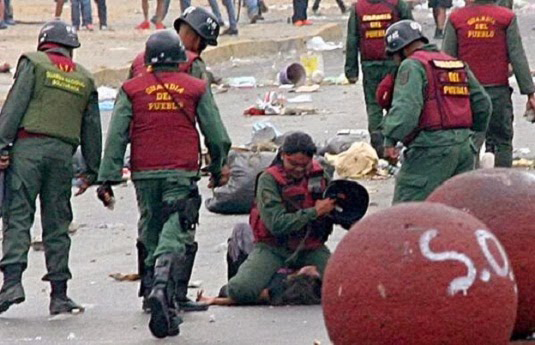
La CIJ condena enérgicamente la violenta represión de las manifestaciones por parte del Gobierno venezolano y sus cuerpos de seguridad, así como el juzgamiento de civiles por tribunales militares de ese país.
Entre el 4 de abril y el 16 de mayo de 2017, han fallecido de manera violenta más de 40 personas en el contexto de manifestaciones, por la acción de los cuerpos de seguridad del Estado venezolano y grupos armados de civiles afectos al Gobierno.
Asimismo, centenares de personas han sido detenidas arbitrariamente, muchas de las cuales han sido trasladadas a prisiones militares, instalaciones de organismos de seguridad o a cárceles de máxima seguridad.
Numerosos detenidos han denunciado golpizas, tratos crueles e inhumanos así como actos de tortura.
Igualmente, por lo menos 275 civiles están procesados por tribunales militares, acusados de delitos previstos en el Código Militar, como los de “rebelión” y “traición”.
En muchos casos, a los abogados defensores se les limita el acceso a las salas de audiencia, sólo están autorizados a hablar uno pocos minutos antes de las audiencias con sus defendidos y se les restringe el acceso al expediente penal.
La CIJ recuerda que todas estas prácticas vulneran derechos y libertades fundamentales y constituyen una violación flagrante por parte del Estado venezolano de sus obligaciones constitucionales e internacionales de garantizar y proteger los derechos humanos.
Desde hace varios años la CIJ ha venido siguiendo la situación en Venezuela y ha podido constatar el vertiginoso y sistemático deterioro de los derechos humanos y de las libertades fundamentales, la pérdida de independencia del Poder judicial y, en general, el ocaso del Estado de Derecho.
Al respecto ver los informes de la CIJ: Fortaleciendo el Estado de Derecho en Venezuela (2014) y Venezuela: el ocaso del Estado de Derecho (2015).