
Tunisia
Tunisia is undergoing comprehensive reform of its political and legal system, following the December 2010-January 2011 popular uprising. The ICJ considers the adoption of the new Constitution in 2014 marks a significant step forward towards establishing the rule of...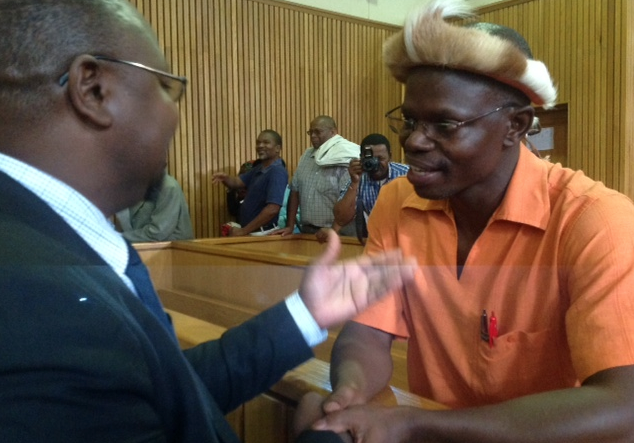
Leading legal voices intervene at UN level in the case of detained Swazi lawyer Thulani Maseko
Alleging a range of human rights violations by Swaziland in the cases of Thulani Maseko and Bheki Makhubu, leading legal advocates today filed a petition with the UN Working Group on Arbitrary Detention (UNWGAD) in Geneva.
The American Bar Association’s Center for Human Rights, the global law firm Hogan Lovells and the ICJ jointly produced a petition calling for the UNWGAD to issue an opinion regarding the lawfulness of the continued incarceration of Thulani Maseko, an internationally recognized human rights lawyer and feature writer for The Nation magazine.
“The consequences of this arbitrary action against Thulani Maseko have not only violated his rights and exacted a heavy personal toll, but have also highlighted the rule of law deficit in Swaziland,” said Wilder Tayler, ICJ’s Secretary General. “Thulani Maseko has been denied his right to express an opinion on public affairs and the administration of justice, guaranteed under international law and affirmed in the UN Basic principles on the Role of lawyers.”
Thulani Maseko and journalist Bheki Makhubu were charged with two counts of contempt of court emanating from articles published in February and March 2014, in which they questioned circumstances surrounding the arrest of a government vehicle inspector.
They were sentenced to two years of imprisonment, without the alternative option of a fine at the end of a trial largely condemned by leading international rights groups as unfair and not complying with international standards on the right to a fair trial.
Some of the fair trial guarantees that have been breached, according to the legal petition filed with the UNGWAD, include the right to be tried by an independent and impartial tribunal; right to a public hearing; right to a legal counsel; right to the presumption of innocence; right to bail; and right to protection of the law.
“The use of contempt of court proceedings to suppress the right to freedom of expression is a violation of international human rights law,” said Marc Gottridge, partner at Hogan Lovells. “The right to freedom of expression is guaranteed in the Swazi constitution and international law, including treaties to which Swaziland is a party.”
“The general failings of the Swazi judiciary with respect to independence and impartiality makes it reasonable to conclude that there cannot be an effective domestic remedy for Thulani Maseko,” he added.
Contact:
Arnold Tsunga, Director, ICJ Africa Regional Programme, t +27 716 405 926 or +41 762 399 032, e arnold.tsunga(a)icj.org,
Matt Pollard, Senior Legal Adviser, ICJ, Centre for Independence of Judges and lawyers, t +41 22 979 38 12, e matt.pollard(a)icj.org
Marc Gottridge, Partner Hogan Lovells, t +1 212 918 3000, e marc.gottridge(a)hoganlovells.com
Ginna Anderson, Senior Counsel, Center for Human Rights, American Bar Association, t +1 202 442 3438, e ginna.anderson(a)americanbar.org
Background:
Thulani Maseko was arrested on 17th March 2014 following a warrant of arrest that was issued by the Chief Justice Michael Ramodibedi on his own motion.
This was after he had written an article titled “Where the Law Has No Place” criticising the courts for the way that a fellow Swazi citizen Mr Gwebu Bhantshana had been arrested and detained and the wider implications of that case on the rule of law in Swaziland.
Save for 3 days in April 2014 when he was released following Judge Mumcy Dlamini’s judgment declaring his arrest and detention wrongful and illegal, Thulani has been in custody since his initial arrest. Mr. Maseko was initially held at Sidwashini Correctional facility before he was taken to Big Bend Correctional facility, where he is currently lodged.
Further background material can be found here:
http://www.americanbar.org/news/abanews/aba-news-archives/2014/04/statement_of_jamesr.html
https://www.icj.org/swaziland-icj-concerned-at-detention-of-human-rights-lawyer-and-journalist/
Download the petition:
Swaziland-Maseko WGAD Petition-Advocacy-2015-Eng (full text in PDF)
The lawyers at Hogan Lovells US LLP who worked on this petition are Marc Gottridge, Dianne Milner, Allison Holt and Hans H. Hertell.

Federal Court judgment on Anwar Ibrahim’s ‘sodomy II’ appeal a blow to human rights in Malaysia
The ICJ today expressed deep concern over the ruling of the Federal Court upholding the conviction on “sodomy charges” of opposition leader Anwar Ibrahim by the Court of Appeal under the colonial-era Section 377B of the Penal Code.
The decision today was on the final appeal against the March 2014 decision of the Court of Appeal, which overturned the 2012 High Court’s decision to acquit Anwar Ibrahim (photo) of “sodomy charges”.
The ICJ has called on Malaysia to repeal Section 377B, which criminalizes consensual same-sex relations.
The Federal Court also upheld the Court of Appeal’s decision to sentence Anwar to five years’ imprisonment.
“It is clear from the decision of the Federal Court today that the Government of Malaysia has once again inappropriately used Section 377B of the Penal Code against its political opponents,” said Justice Elizabeth Evatt, Commissioner of the ICJ who was in Putrajaya to observe the proceedings.
“This is deplorable, especially since Section 377B criminalizes consensual same-sex relations and thereby violates a range of international law and standards, including on the rights to privacy, non-discrimination and equal protection,” she added.
This relic of British law has long since been abandoned in the United Kingdom, but is still in force in Malaysia.
However, in the last few years, it has only been used against opposition leader Anwar Ibrahim.
The conviction today amounts to the second sodomy conviction for Anwar Ibrahim within the past 14 years.
His first conviction in August 2000 resulted in an imprisonment term of nine years. That decision was overturned by the Federal Court in September 2004.
The ICJ recalls that such “sodomy” charges cannot be considered recognizable criminal offences under international human rights law and standards.
“The criminalization of consensual same-sex conduct is in contravention of a number of human rights, including the right to dignity; equality before the law and equal protection of the law; non-discrimination; liberty and security of person; privacy; opinion and expression; association and peaceful assembly,” said Emerlynne Gil, ICJ’s International Legal Adviser for Southeast Asia, who also observed the hearings.
“Anwar Ibrahim should never have been investigated, charged with, tried, let alone convicted of and sentenced for such charges. The confirmation of his conviction and sentencing on these charges are an affront to human rights and the rule law,” she added.
The ICJ also noted with concern that the right to a fair trial of Anwar Ibrahim was violated in a number of respects, particularly his right to be presumed innocent.
Under international law, a person charged with committing a crime is considered innocent until proven guilty. Hence, this imposes upon the prosecution the burden to prove his guilt beyond reasonable doubt.
“In this case, however, it appeared that the Court of Appeal adopted an approach wherein the burden was on Anwar Ibrahim to prove that he had a credible defense, rather than raising reasonable doubt as to the prosecution’s case,” Justice Evatt said.
The ICJ says that by dismissing the final appeal of Anwar Ibrahim, the Federal Court has in effect adopted the same approach of the Court of Appeal to these issues.
This decision is a clear setback for the rule of law in Malaysia and is incompatible with the presumption of innocence principle, the Geneva-based organization adds.
Anwar Ibrahim has now exhausted all avenues of appeal and has immediately begun serving his sentence.
The ICJ observed the hearings in this case before the Court of Appeal in September 2013, February 2014, and March 2014, and before the Federal Court from 28 to 30 October 2014.
Elisabeth Evatt, a former judge of the Australian Federal Court and Commissioner of the ICJ, acted as the trial observer on behalf of the ICJ at the Court of Appeal and the Federal Court.
Contact:
Emerlynne Gil, International Legal Adviser, tel. +662 6198477 ext. 206 or email: emerlynne.gil(a)icj.org
Myanmar must follow through on promising efforts to improve the independence and accountability of its legal system
Myanmar must follow through on promising efforts to improve the independence and accountability of its legal system, and particularly its judiciary, said the ICJ today at the launch of one of its landmark book in Yangon.
The ICJ launched today the Myanmar language version of its Practitioners’ Guide to the Independence and Accountability of Judges, Lawyers and Prosecutors.
“The judiciary in Myanmar has taken important steps towards asserting its independence from the other branches of government, but we heard repeatedly from the judiciary that they still face significant obstacles in this regard,” said Wilder Tayler, ICJ’s Secretary-General.
The book launch wrapped a series of discussions regarding judicial ethics and the rule of law with the Supreme Court of the Union of Myanmar, as well as with the parliamentary Committee on Rule of Law and Tranquility.
The ICJ’s Practitioners’ Guide n°1 is the first of its kind to be published in the Myanmar language providing detailed references to international and comparative standards on the independence and accountability of judges and lawyers.
“The Supreme Court emphasized its belief that an independent judiciary plays a key role in ensuring access to justice and the protection of human rights, but with independence must come accountability,” Tayler added. “The Myanmar judiciary must be accountable not just in deciding cases according to the law and facts, but also as a separate and equal branch of the government, and ultimately, to the people of Myanmar.”
In the course of its discussions at an earlier workshop in Naypyidaw, the ICJ was repeatedly told that the judiciary is trying to address challenges to its institutional independence, as well as the independence of individual judges.
Corruption, which remains a serious problem throughout all social sectors, including the judiciary, interferes with the judiciary’s ability to provide a remedy for human rights violations and bringing perpetrators to justice.
Undue influence by powerful political and economic actors continues to hamper the push for greater trust and credibility for the judiciary among the general public.
“As we heard at the workshop, at all levels of the system, from the Supreme Court to the Townships, a lack of resources, poor working conditions and low remunerations contribute to an environment where the temptations of corruption, or outside pressure, undermine judicial independence and impartiality,” said Tayler.
“We also heard strong support from all levels of the judiciary for establishing a judicial code of conduct that incorporates international standards and best practices in response to the demands of the people of Myanmar for more rule of law. Producing such a code, and implementing it, would go a long way toward increasing the judiciary’s independence and accountability,” he added.
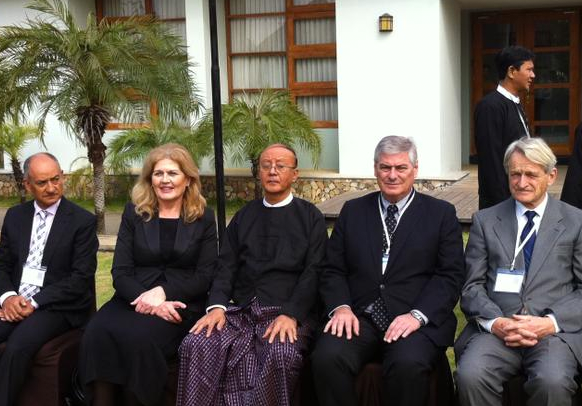
Wilder Tayler was joined by a senior panel of international legal experts on judicial integrity, including three ICJ Commissioners: Justice Azhar Cachalia of the Supreme Court of Appeals of South Africa, Justice Radmila Dicic of the Supreme Court of Serbia, and retired Justice Ketil Lund of the Supreme Court of Norway.
Recent News
 Tunisia: Quash sham conviction and sentence of judges’ association President, Anas Hmedi06 Apr 2026
 The UN Human Rights Council makes significant but limited progress in addressing human rights around the world, as atrocities multiply in the Middle East and elsewhere02 Apr 2026
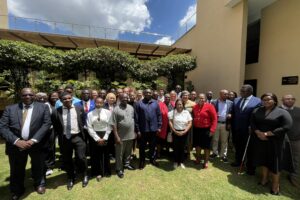 ICJ hosts an African Regional Convening in Kenya on Transformative Equality Jurisprudence31 Mar 2026
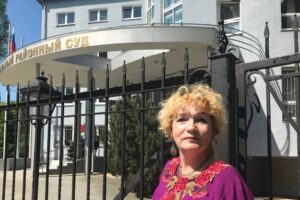 Russian Federation: Arbitrarily detained human rights lawyer Maria Bontsler must be released30 Mar 2026