Dec 5, 2014 | Multimedia items, News, Video clips
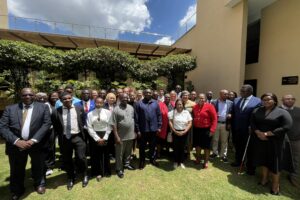
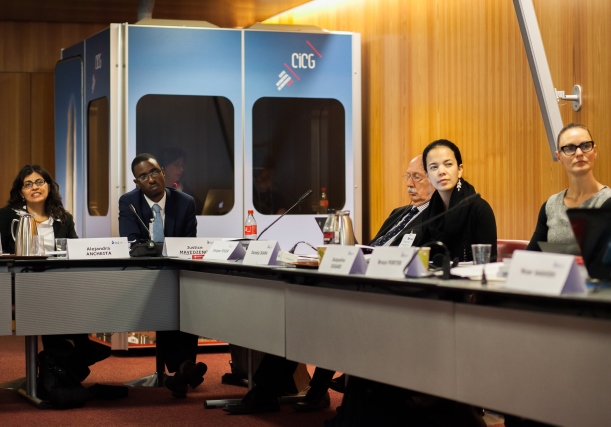
Jacqueline Dugard, Hina Jilani, Rodrigo Uprimny Yepes, Gilles Badet, Alejandra Ancheita and Harsh Mander talk about their experience and the situation of economic, social and cultural rights in their respective countries.
These prominent participants in ICJ’s Geneva Forum 2014 give their views on judicial protection of economic, social and cultural rights (ESCR) as well as on what needs to be changed to address obstacles to guarantee an effective remedy for victims of violations of their socio-economic rights.
They also tell about the main opportunities and key challenges for the realization of ESCR in their respective countries.
The 2014 Geneva Forum of Judges and Lawyers is a joint initiative of the ICJ Center for the Independence of Judges and Lawyers (CIJL) and the ICJ Programme on Economic, Social and Cultural Rights.
It has been made possible with the support of the République et Canton de Genève, the Permanent Mission of Germany to the United Nations in Geneva, and the Taipei Bar Association.
Dec 4, 2014 | Events, News
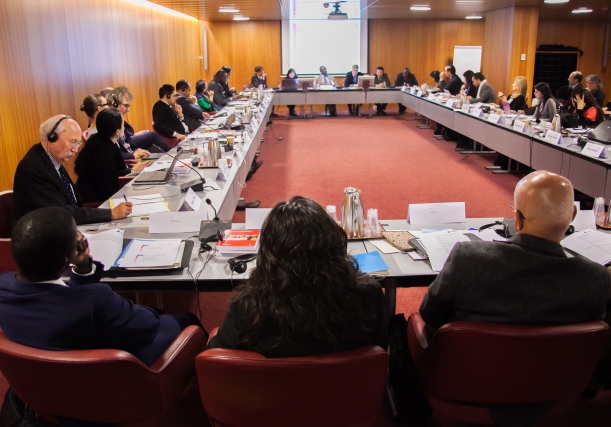
Today and tomorrow, the ICJ welcomes judges and lawyers from all regions of the world to discuss the “Judicial Enforcement of Economic, Social and Cultural Rights”.
The 2014 Geneva Forum of Judges and Lawyers is a joint initiative of the ICJ Center for the Independence of Judges and Lawyers (CIJL) and the ICJ Programme on Economic, Social and Cultural Rights.
Participants are exchanging views on the progress made over the past two decades, including the entry into force of the Optional Protocol to the International Covenant on Economic, Social and Cultural Rights in May 2013.
The Protocol allows individuals to bring complaints of violations of such rights to an independent international body of experts for adjudication.
Discussions are held also in relation to challenges to the justiciability of these rights, including as regards the principle of separation of powers between the judicial, executive and legislative branches of government.
Managing potential implications for public human and financial resources of judicial orders for enforcement of ESCR, and the conflicts that may arise between state development plans, public interest and the interests and rights of the individuals, will also be topics of discussion.
Participants are invited to ground the discussion of conceptual issues in examples from their own actual experience and practice in their national jurisdictions.
Alejandra Ancheita, recent winner of the Martin Ennals Award 2014 – The Nobel Prize of Human Rights – is among the guest speakers.
A report of the discussions will be published in 2015.
The draft agenda for the 2014 Geneva Forum is available here:
Universal-Programme GVA Forum 2014-Events-2014-ENG (English)
Universal-Programme GVA Forum 2014-Events-2014-ESP (Español)
The 2014 Geneva Forum has been made possible with the support of the République et Canton de Genève, the Permanent Mission of Germany to the United Nations in Geneva, and the Taipei Bar Association.
The Geneva Forum has been convened annually by the CIJL since 2010.
Information on, and reports of, the previous Geneva Forums can be found here:
Geneva Forum 2013 (photo)
Geneva Forum Series no. 1: Women and the Judiciary
Geneva Forum 2012
Third Geneva Forum for Judges and Lawyers: the report is published
Geneva Forum 2011
2nd ICJ Geneva Forum of Judges and Lawyers: final report
Geneva Forum 2010
1st ICJ Geneva Forum of Judges and Lawyers: accountable national security policies – the role of judges and legal practitioners
Dec 1, 2014 | News
The ICJ expresses deep concern that the Legislative Assembly of Bolivia continues to threaten three Constitutional Court judges with removal, and possibly criminal punishment, based solely on legislators’ disagreement with a legal opinion and ruling issued by the judges.
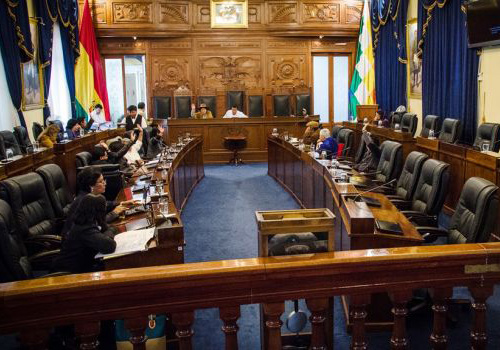
A “trial” of the three judges conducted by the Senate is scheduled to begin on 4 December 2014.
The ICJ has previously condemned the proceedings as fundamentally flawed and in violation of international standards for the independence of judges.
The legislature and government now appear to accept some of the ICJ’s criticisms.
Last-minute legislative amendments would apparently specify that the legislative assembly process is disciplinary in character and that the only sanction the assembly can directly impose is permanently to remove judges from office; if a disciplinary violation is found, the case would be referred onward for criminal prosecution before the ordinary courts. (Legislators were previously reported to be seeking for the Senate itself to impose a sentence of 10 years’ imprisonment.)
The ICJ reaffirms, however, that the case against these three judges remains inherently flawed because the allegations on which the proceedings are based cannot be a valid basis for any removal from office or criminal punishment.
“It is fundamental to the independence of the judiciary, and the rule of law, that judges must be able to decide cases without fear of punishment for their legal opinions and rulings, including those that the government or legislature may not like,” said Matt Pollard, Head of the Centre for Independence of Judges and Lawyers at the ICJ.
“The procedural amendments under consideration could be an improvement for other kinds of cases in the future,” said Pollard. “However, the stated reason for pursuing these three judges – disagreement with the content of their legal opinion and ruling – cannot form a valid basis for their removal from office or criminal punishment under any procedure.”
“The case against these three judges cannot be cured by legislative ‘quick fixes’ and must simply be dropped immediately,” Pollard added.
The ICJ is also concerned that the legislature has said it will press ahead immediately with the “trial” on 4 December, a few days from now, while fundamental changes to the procedure are still underway.
Further, the media has reported that Chamber of Deputies President Marcelo Elío has stated that the judges could avoid trial by “voluntarily” resigning before 4 December.
It would be unacceptable to use the threat of unjust or unclear procedures to pressure a judge to resign.
The ICJ welcomes the decision by the legislature to review and potentially reform judicial accountability procedures in Bolivia.
At the same time, reform of procedures that are of such fundamental importance to the rule of law and democracy should be based on a process of broader consultation with all concerned stakeholders, and more considered, comprehensive and detailed assessment and analysis in relation to international standards.
For instance, under the new amendments, it would appear that the Senate (photo) has no option in any case to impose a disciplinary penalty less than permanent removal from office, even if this would be disproportionate.
Placing all responsibility for disciplinary proceedings with an independent Judicial Council should also be considered.
In October, the ICJ sent an open letter and analysis brief to members of the Legislative Assembly, explaining why the proceedings violate international law and standards, urging that proceedings against the three judges immediately be ended, and recommending a process of longer-term reform of judicial accountability processes in Bolivia.
Contact:
English: Matt Pollard, Head of the Centre for Independence of Judges and Lawyers at the ICJ, t: +41 79 246 54 75; e: matt.pollard(a)icj.org
Spanish: Carlos Ayala, ICJ Commissioner, t: +58 212 952 8448; e: carlos.ayala(a)icj.org
Bolivia-Procedimento magistrados-News-Press Release-2014-SPA (full text in PDF)
(Update: the proceedings were suspended on 4 December, and are to continue on 9 December)
Nov 27, 2014 | News
The ICJ today strongly condemned the decision by Prime Minister Najib Razak to retain and even strengthen the country’s 1948 Sedition Act despite having made a commitment in 2012 to repeal the Act.
The ICJ has repeatedly expressed its concern that the Sedition Act has been used to stifle and criminalize the exercise of freedom of expression and to silence human rights defenders, lawyers, political activists, among others.
The ICJ considers the Act as it stands to be incompatible with international human rights standards and to be made still more repugnant by the politically loaded manner in which it is typically applied.
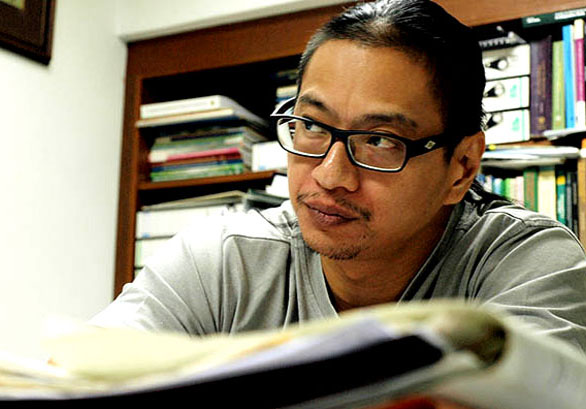
In early September, the ICJ denounced the use of sedition against two members of the legal profession, Dr. Azmi Sharom (photo) and N. Surendran for commenting on questions of law and public policy.
On 20 September 2014, Edmund Bon a prominent human rights and constitutional lawyer, was questioned by the police regarding comments made in a based on the decision of a Malaysian Federal Court.
On 30 September 2014, Dr. Abdul Aziz Bari, a law professor at the University of Selangor, was summoned for a police interview over comments made about the selection process of the new Chief Minister by the Sultan of Selangor.
Background:
The 1948 Sedition Act, originally enacted by the British colonial government and amended several times over the years, criminalizes speech and publications considered to have “seditious tendencies”.
The term “seditious tendencies” is ambiguously defined to mean any kind of speech or publication that causes “hatred or contempt, or excite disaffection” against any ruler or the government or promotes “ill will and hostility between the different races or classes”.
The law also considers “seditious” any speech or publication that questions the special privileges of the Malay people, as provided in the Constitution.
Furthermore, sedition is a strict liability offence in Malaysia, which means that the intention of a person allegedly making seditious statements is irrelevant.
For instance, a person making a statement may not have the intent to cause “hatred or contempt” towards the government, but may nonetheless be held liable for sedition if authorities believe that the person in fact incited such feelings.
The ICJ considers that the Act, by its very terms, contemplates restrictions on the exercise of freedom of expression that are grossly overbroad and inconsistent with basic rule of law and human rights principles.
Nov 27, 2014 | News
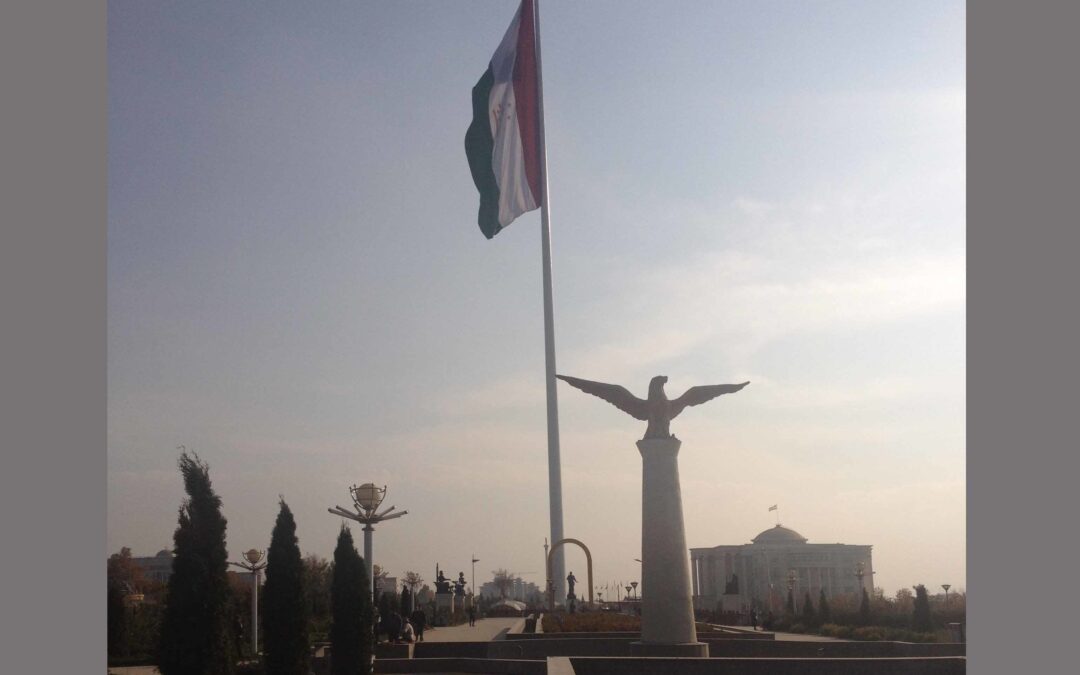
Following a visit to the country from 15 to 19 November, the ICJ called on the government of Tajikistan to take meaningful steps to ensure that the institutional independence of the legal profession and the personal integrity of individual lawyers are secured.
The ICJ expressed concern at the continued detention of lawyer Shukhrat Kudratov, on criminal charges. It welcomed the release of another lawyer, Fakhriddin Zokirov, who had been on trial on charges that appeared to constitute an act of retaliation for his work as a defence lawyer. He was released on 3 November as a result of an amnesty.
“While the release of Fakhriddin Zokirov is a positive step, we are concerned that Shukhrat Kudratov remains in detention pending trial on similar criminal charges. We have received credible information that the charges against him are linked to his representation of a client, contrary to international standards on the independence of lawyers”, said Róisín Pillay, Director of the Europe and CIS programme at the ICJ.
The ICJ reiterated its concern at aspects of the reform of the legal profession presently under consideration under the draft law on Advokatura.
Following a mission to Tajikistan in 2013, the ICJ expressed concerns that the independence of the legal profession would be undermined by requirements in the draft law that all lawyers go through a new qualification process, administered by a body in which the Ministry of Justice would play a prominent role.
Amendments recently introduced to the draft law have not altered the inappropriate role which the Ministry of Justice would play in regulating the profession.
Under the draft law, the Deputy Minister of Justice would serve as an ex officio Chair of the Qualification Commission which determines who may be accredited as a lawyer.
This significant role by a member of the executive would jeopardize the independence of the profession.
The ICJ also remains concerned that the draft law would still require requalification of many lawyers, with exemptions only for those with at least 15 years of professional experience as defence lawyers.
Such provisions are contrary to international standards on the independence of the legal profession, including the UN Basic Principles on the Role of Lawyers.
The ICJ recalls Tajikistan’s earlier commitment during the UN Human Rights Committee’s session of 2013 that the Qualification Commission would be placed under the Ministry of Justice only for a short transitional period. A provision to this effect has not yet been introduced in the draft law.
Contact:
Róisín Pillay, Director, ICJ Europe Programme, roisin.pillay(a)icj.org
Temur Shakirov, Legal Adviser, ICJ Europe Programme, temur.shakirov(a)icj.org
Notes:
From 15 to 19 November, an ICJ legal expert, Dr Stefan Strobl, visited Tajikistan and held meetings with a number of international and local civil society organizations and lawyers to discuss recent progress on the reform of the legal profession and the wide ranging challenges it faces.
The visit followed an ICJ mission to Tajikistan in November 2013.
Tajikistan-Independence of legal profession-News-webstory-2014-RUS (full text in PDF)