
Jun 9, 1995 | News
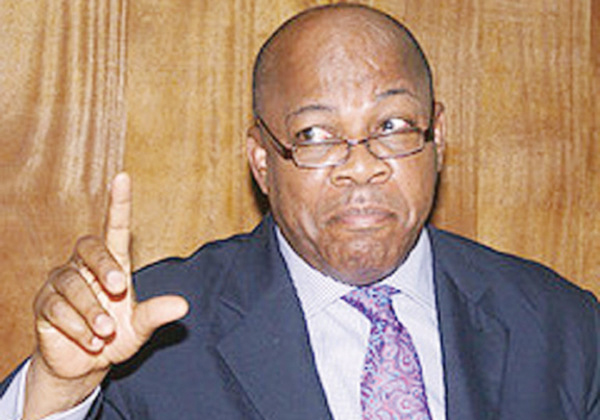 Today, the ICJ received news of the arrest of Mr. Olisa Agbakoba (photo), the President of the Civil Liberties Organization. This arrest is the latest in a series of disturbing developments occurring in Nigeria.
Feb 21, 1995 | News
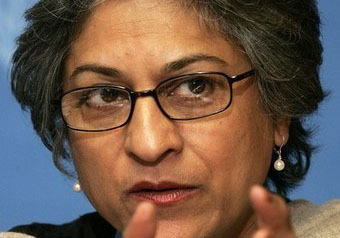
The ICJ’s Centre for the Independence of Judges and Lawyers intervened today with the Government of Pakistan, expressing its deep concern over the recent attack on Advocate Asma Jahangir.

Dec 13, 1994 | News
Today, the ICJ responded to the Tunisian Government about the Government’s intimidation of Tunisian judges.

Dec 9, 1994 | News
Today, the ICJ denounced the pressure which has been exerted against Tunisian judges who participated in a Seminar entitled Judicial Independence and Functions in Tunisia.
The Seminar was organized between 14-24 November 1994 in Tunis by the ICJ in collaboration with the Arab Institute for Human Rights and other governmental and non-governmental Tunisian institutions.
After the Seminar ended, the Ministry of Justice in Tunis exerted direct pressure on the Tunisian participants and asked them to withdraw their support of the document entitled Sommaire d’activités des cours (Summary of the Activities of the Course), a collection of reports drafted by participants during the Seminar.
The ICJ denounce the fact that the Ministry of Justice pressured participating judges to sign a new document significantly different in content.
The entire Seminar, including the session where the original document was discussed and adopted, was videotaped. Currently, the Ministry of Justice is in possession of the only copy of the videotape.
On this occasion, the ICJ Secretary-General, Adama Dieng, said: “We see these acts as direct attacks against the independence of the judiciary in Tunisia. We hope that no reprisals have been taken against those who had the courage to refuse to bow to pressure and sign the new document.”
The ICJ gave the opportunity to the Tunisian Government to remedy the situation before making their concern public. To date, however, no adequate response has been received. The ICJ, once again, invite the Tunisian Government to take urgent measures to remedy this situation.

Nov 22, 1994 | News
The ICJ’s Centre for the Independence of Judges and Lawyers condemns the assassination of attorney Eugene Tan and his driver, Mr. Eddie Constantino.
The ICJ takes note of the Order issued by the President of the Philippines, President Ramos, to all law enforcement agencies to investigate the murders and to effect an arrest within the week.
Attorney Eugene Tan was a human rights lawyer, and the former National President of the Integrated Bar of the Philippines.
On 14 November 1994, Attorney Eugene Tan and his driver, Mr. Eddie Constantino were kidnapped at gunpoint at about 7:30 in the evening near his residence, in Metro Manila. The kidnap was not announced publicly until the two bodies were later found. The car was found later in the evening at Holiday Village, Imus, Cavite.
On 18 November 1994, the bodies of both Attorney Eugene Tan and Mr. Constantino were found in Sitio Barangay Sampaloc, Cavite – south of Metro Manila. Both bodies bore signs of torture and strangulation. Several gun shots and stab wounds were evident on the bodies, as well.
The autopsy reports indicate that both were handcuffed when shot, and that Attorney Tan had 5 to 6 broken ribs. Reports attribute the cause of the death of Attorney Tan to a gun shot wound to the right temple of the head. The type of firearm used is not yet determined.
The reasons for the assassination are not yet clear. The ICJ calls on the Government of the Philippines to thoroughly investigate the assassination and to bring the perpetrators of the crime to justice, and to guarantee the protection of human rights activists in the Philippines.