Mar 13, 2017 | Advocacy, Non-legal submissions
The ICJ today delivered a joint NGO oral statement to the UN Human Rights Council on the need in Myanmar for an international Commission of Inquiry and for an independent and self-governing legal profession.
In the statement, the International Commission of Jurists, joined by the International Bar Association’s Human Rights Institute and Lawyers’ Rights Watch Canada, welcomed the report of the Special Rapporteur on the situation for human rights in Myanmar, and her recommendation for a Commission of Inquiry to investigate persecution of Rohingya and other minorities in Rakhine State.
Since 9 October 2016, Myanmar’s security forces have reportedly targeted Rohingya during “clearance operations” which have no basis in law. Attacks against women, men, and children allegedly have involved extrajudicial killings; enforced disappearances; torture and other ill-treatment including rape and other sexual violence; hundreds of arbitrary arrests and detentions; forced displacement; and looting and destruction of homes, food and other property.
To date, authorities in Myanmar appear to have been unwilling or unable to investigate abuses or hold perpetrators accountable. Several national investigation commissions have lacked impartiality and independence. National judicial and law enforcement authorities lack capacity and independence to address this situation. Accordingly, we urge Council to adopt a resolution at this session establishing an international, independent Commission of Inquiry to assess facts, identify causes and perpetrators, and issue recommendations including remedies for victims.
The recent killing of lawyer U Ko Ni, who strongly advocated against religious discrimination and for inter-communal peace, must be subject to a prompt, impartial and effective investigation capable of identifying all those responsible and holding them accountable in a fair trial. It also underscores the urgent need for an independent and self-governing legal profession in Myanmar, enabled to uphold human rights and the rule of law without fear.
The statement may be downloaded in PDF format here: HRC34-OralStatement-Myanmar-2017
Mar 12, 2017 | Advocacy, Non-legal submissions
The ICJ made an oral statement to the Human Rights Council, on the role of judges and lawyers in relation to large movements of migrants and refugees.The statement, made in an Enhanced Interactive dialogue on human rights and large movements of migrants, was as follows:
THE ROLE OF JUDGES AND LAWYERS IN RELATION TO LARGE MOVEMENTS OF REFUGEES AND MIGRANTS
10 March 2017
Mr. President,
The International Commission of Jurists (ICJ) welcomes the Principles and Guidelines included in the High Commissioner’s report and conference room paper. The ICJ appreciates their emphasis on equal and effective access to justice for migrants, and the recognition that this requires legal assistance that is competent, independent, confidential, and, when needed, without charge, as well as due process guarantees. We welcome the clear affirmation of the essential role of judges and lawyers in upholding and protecting the human rights of migrants and the rule of law.
To complement these and other relevant standards, the International Commission of Jurists is developing a set of Principles and recommendations specifically focussed on the role of judges and lawyers in relation to large movements of refugees and migrants. The ICJ principles and recommendations are based on global consultations with senior judges, lawyers, UN agencies, regional human rights mechanisms, and other relevant legal experts.
The ICJ Principles and recommendations address the role of judges and lawyers in status determination procedures, in relation to detention and removal, the right to an effective remedy, the importance of ensuring independence and impartiality of judicial decision-makers, equality before the law, and the relationship between national judiciaries and international law.
In addition to a consultation we convened yesterday at a parallel event, we welcome further feedback on the draft ICJ Principles from all stakeholders, before we launch the final version at the June session of the Human Rights Council.
Thank you.
Download the draft Principles here: https://www.icj.org/refugeesmigrantsconsultation/
Please send written feedback to un(a)icj.org, until 14 April 2017.
Mar 8, 2017 | Events, News
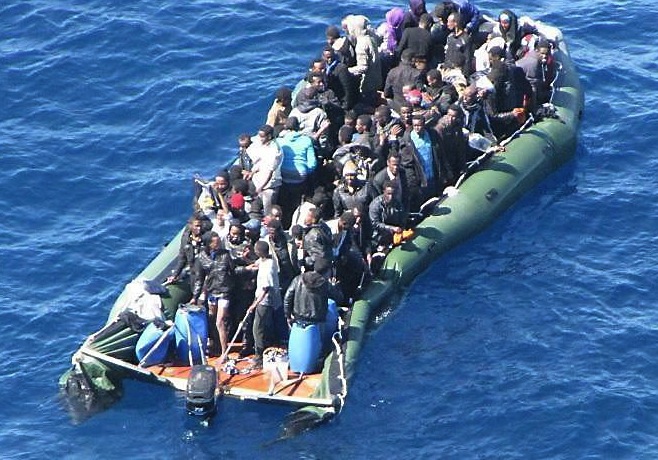
During March to April 2017 the ICJ conducted consultations on draft Principles and Guidelines on the role of judges and lawyers in relation to large movements of refugees and migrants.
The initial consultation meeting took place in Geneva on Thursday, 9 March 2017, 15:00 – 16:30 at the Palais des Nations, Room XXI.
At this side event the ICJ presented and received feedback from States and civil society on draft ICJ Principles on the Role of Judges and Lawyers in relation to Large Movements of Refugees and Migrants.
The Principles were developed by the ICJ on the basis of consultations with senior judges, lawyers, and legal scholars working in the field of international refugee and migration law. The ICJ published the final version of the Principles, together with commentary, in May 2017.
The Principles seek to help judges and lawyers, as well as legislators and other government officials, better secure human rights and the rule of law in the context of large movements of refugees and migrants. They are intended to complement existing relevant legal and other international instruments, as well as the Principles and practical guidance on the protection of the human rights of migrants in vulnerable situations within large and/or mixed movements being developed by the OHCHR.
The final version of the Principles is available here.
More information about the earlier consultations and overall process of development of the Principles is available here.
Feb 27, 2017 | News
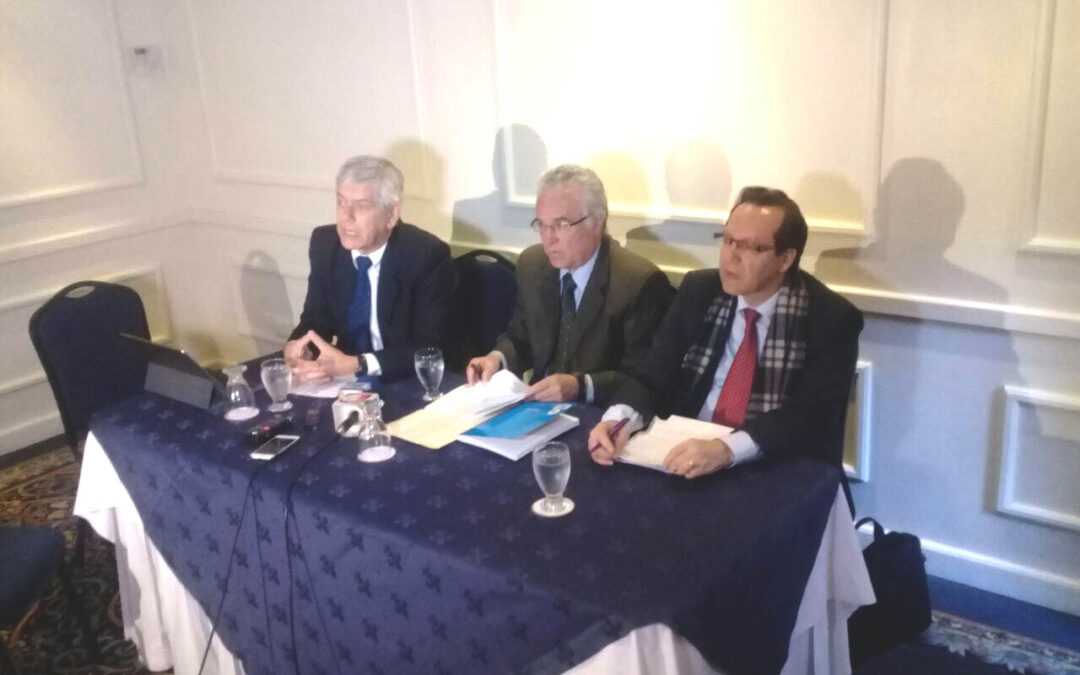
La visita se enmarcó dentro de los esfuerzos que la CIJ lleva a cabo en distintos países para acompañar procesos de fortalecimiento del Estado de Derecho y respeto de los derechos humanos.
Guatemala-Conclusions of Mission-News-web story-2017-SPA (informe completo, PDF)
Feb 22, 2017 | News
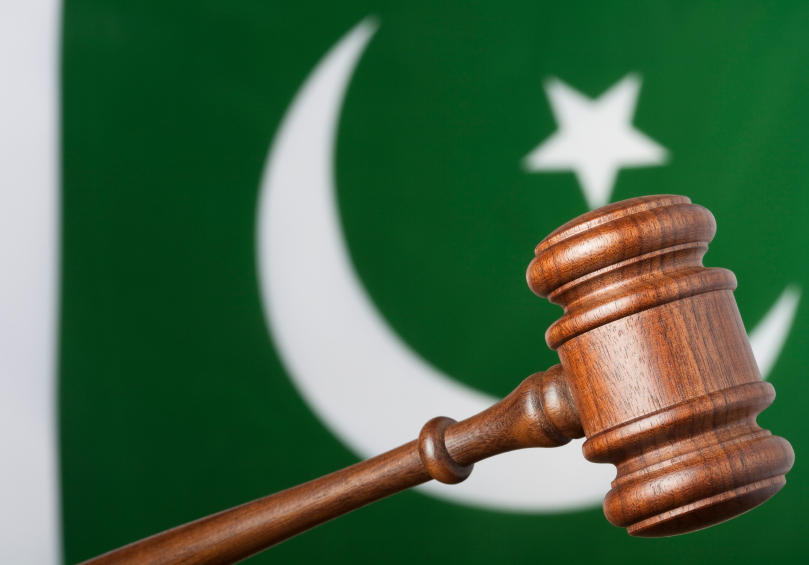
The Pakistan Government must not bring back military courts to try civilians for terrorism-related offences, the ICJ said today.
An earlier law giving military courts authority to try civilians lapsed after two years on 6 January 2017.
The use of military courts to try civilians is inconsistent with international standards, the ICJ recalled.
“Evidence from practice clearly shows that not only have military trials of civilians been blatantly unjust and in violation of the right to a fair trial, they have also been ineffective in reducing the very real threat of terrorism in Pakistan,” said Sam Zarifi, ICJ’s Asia Director.
According to media reports, the draft amendment, if adopted, would extend the “exceptional” use of military courts for another three years. The ICJ fears that repeated extensions risk making the practice effectively permanent.
It would also give military courts jurisdiction over any offence considered to be an act of terrorism, a broader mandate than 2015 constitutional amendment, which was applicable only to “terrorism motivated by religion or sectarianism” and where the accused were “members of proscribed organizations”.
“Bringing back military courts deflects attention from the real issue: the Government’s complete failure to enact necessary reforms to strengthen the criminal justice system in the two years military courts were in operation,” Zarifi said.
“The Government must account for its failure to deliver on the promise of delivering justice for the victims of terrorism and other abuses in Pakistan instead of once again extending the “exceptional” use of military courts for civilian trials,” he added.
The Government has scheduled a meeting with opposition parties on 23 February in an attempt to achieve consensus over a constitutional amendment to restore military courts.
Constitutional amendments require a two-thirds majority vote in both houses of parliament to be enacted.
While the ruling party has the requisite majority in the National Assembly (lower house), it appears to lack the numbers in the Senate (upper house) to pass the amendment.
The Pakistan Parliament must stand up to the executive in defense of the rights of all people in Pakistan, instead of allowing the administration to bring back—and even expand—a discredited and abusive process, the ICJ says.
Pakistan passed the 21st amendment to the Constitution in January 2015, authorizing military courts to try civilians for terrorism-related offences for a period of two years. The 21st amendment lapsed on 6 January 2017.
Military courts have convicted 274 people in the two years since they have been used to try civilian terror suspects. . One hundred and sixty-one people were sentenced to death and 113 people were given prison sentences. At least 12 people given death sentences have been executed by hanging.
The ICJ has documented serious fair trials violations in the operation of military courts including: denial of the right to counsel of choice; failure to disclose the charges against the accused; denial of a public hearing; failure to give convicts copies of a judgment with evidence and reasons for the verdict; and a very high number of convictions based on “confessions” without adequate safeguards against torture and ill treatment.
The ICJ unequivocally opposes the use of the death penalty as a violation of the right to life and freedom from cruel, inhuman or degrading punishment.
Contact
Sam Zarifi, ICJ Asia Pacific Regional Director (Bangkok), t: +66 807819002; e: sam.zarifi(a)icj.org
Reema Omer, ICJ International Legal Adviser for Pakistan (Lahore), t: +923214968434; e: reema.omer(a)icj.org